
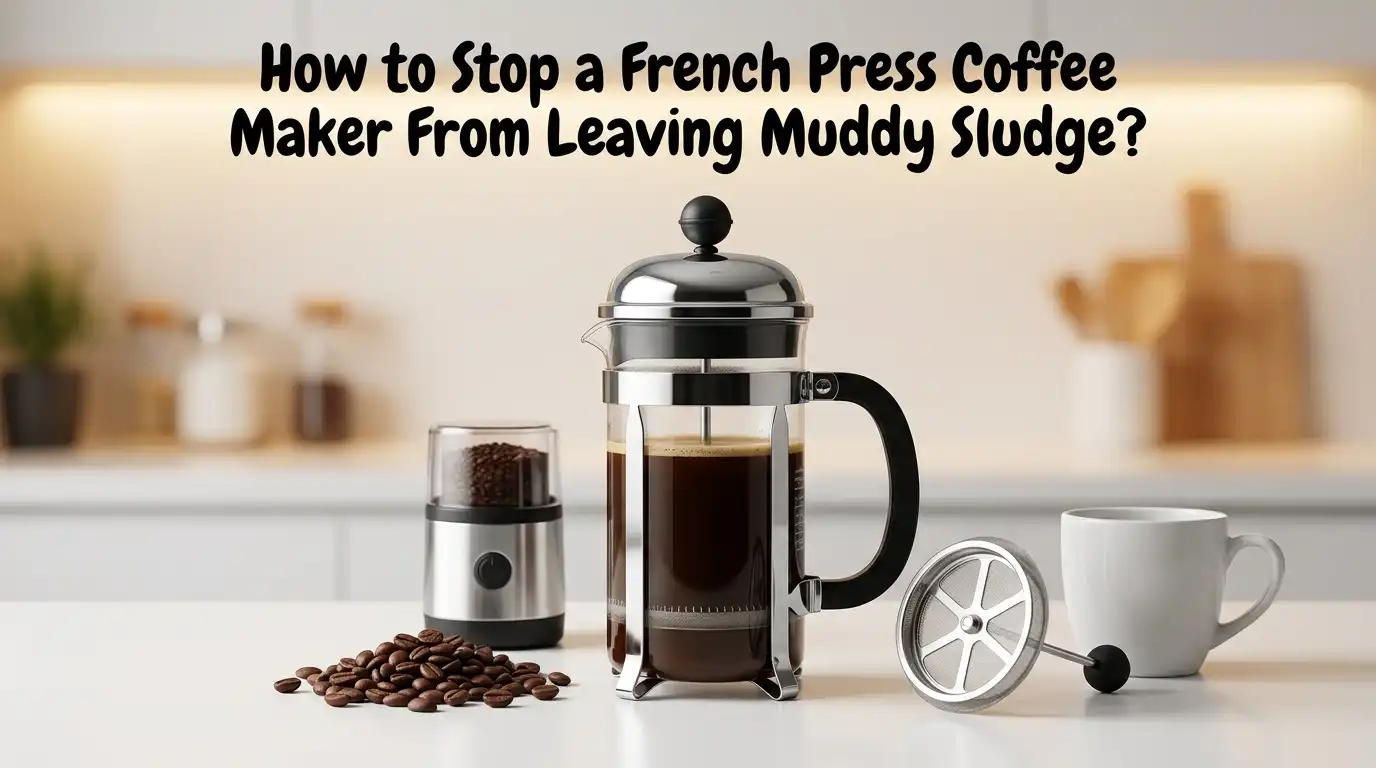
How to Stop a French Press Coffee Maker From Leaving Muddy Sludge?
If your French press coffee tastes rich at first but ends with a muddy bottom, you are not alone. This is one of the most common problems with this brew method. The good news is that the fix is usually simple.
You do not need a fancy machine. You need a better process. Most sludge comes from fine coffee particles, rough plunging, weak filter care, or poor timing.
A French press can still make a clean and full cup if you control those few steps. This guide breaks the problem down into clear actions. You will learn what causes the grit, what changes help fast, and which method fits your routine best.
In a Nutshell
- Most French press sludge comes from fine particles. A grind that is too small creates dust like coffee bits. Those bits slip through the metal screen and settle in your cup. A slightly coarser and more even grind usually gives the fastest improvement.
- Your grinder matters more than many people think. A blade grinder makes mixed particle sizes. That means big chunks and powder at the same time. A burr grinder makes a more even grind and helps cut sludge without making the coffee weak.
- Steeping and resting are different steps. Many people brew for four minutes and press right away. That pushes floating particles through the filter. If you let the coffee sit after the crust breaks, more fines fall to the bottom.
- The plunge should stay slow and calm. A hard plunge stirs the bed and sends silt into the drink. A gentle press protects the settled grounds and keeps the cup cleaner.
- You should pour all the coffee out after brewing. If coffee sits in the press, it keeps extracting and the settled bed gets disturbed later. A full pour into cups or a carafe helps flavor and clarity.
- Some extra methods can help if you want an even cleaner cup. A fine mesh strainer, a paper filter step, or a better cleaning routine can lower sludge even more. Each fix has pros and cons, so you can choose based on time, taste, and effort.
Why Your French Press Leaves Sludge in the First Place
A French press uses a metal mesh filter. That filter stops large grounds, but it does not trap every tiny particle. Fine coffee dust can pass through the screen and stay in the liquid. Later, it sinks to the bottom and creates that muddy layer. This is normal to a point, because French press coffee has more body than paper filtered coffee.
The real problem starts when the cup becomes too gritty to enjoy. That usually means your grind is too fine, your grinder is uneven, your plunge is too rough, or your filter is dirty or worn.
Water temperature and brew time can also make the cup taste heavier and harsher. Pros: French press gives strong body and deep flavor. Cons: It lets more fines and oils into the cup than paper methods.
Use a Coarser and More Even Grind
Start with the grind. This is the easiest fix and often the best one. If your coffee looks like table salt or finer, go coarser. A better target is a rough texture that looks closer to coarse sea salt. Larger particles are less likely to slip through the mesh, and they settle better during the rest stage.
Do not go extremely coarse just to avoid sludge. That can make the cup thin and sour. Move one small step coarser at a time and taste each brew.
If the coffee loses flavor, keep the grind a little finer but extend the steep very slightly. Pros: Fast fix, no new gear needed if you already own a grinder. Cons: Too coarse a grind can lower sweetness and make the cup taste weak.
Switch From a Blade Grinder to a Burr Grinder
If you use a blade grinder, your coffee likely contains large chunks and dusty fines together. That mix creates two problems. The big pieces under extract, and the tiny pieces create sludge. A burr grinder gives a more even particle size, which helps flavor and clarity at the same time.
This change matters more than most small recipe tweaks. Even a basic burr grinder usually beats a blade grinder for French press coffee. You get more control, repeatable results, and less mud in the cup.
If you already use a burr grinder, clean it often because old coffee oils and stuck particles can still hurt grind quality. Pros: Cleaner cup, better flavor, easier repeat brewing. Cons: Costs more than a blade grinder and takes a little more counter space.
Fix Your Coffee to Water Ratio and Water Temperature
A balanced recipe helps keep the cup full without becoming heavy and dirty. A strong starting point is 1 part coffee to 15 or 16 parts water. Many brew guides also land near 60 to 70 grams per liter. If you use too much coffee, the brew can feel thick and leave more sediment in the final sip.
Water temperature matters too. Aim for 195 to 205 F, or about 90 to 96 C. Water that is too cool can leave the cup dull.
Water that is too hot can pull harsh notes that make the muddy feel seem worse. Preheat the press with hot water first, then add fresh hot water for brewing. Pros: Better balance and clearer flavor. Cons: You may need a scale and a kettle for repeatable results.
Wet All the Grounds and Break the Crust
A lot of people pour water, wait four minutes, and plunge. That simple routine often leaves dry pockets and floating grounds. A better method wets all the coffee early, then breaks the crust that forms on top. This step helps more grounds sink instead of floating into the cup.
After you pour the water, wait about 30 to 45 seconds. Then stir gently or swirl enough to wet everything. Later, at about four minutes, break the crust on top with a spoon and skim off the foam and floating bits if you want a cleaner cup.
This small move can remove many surface fines before pressing. Pros: Better extraction and less floating debris. Cons: Adds one more step and needs care with glass presses.
Let the Coffee Rest Before You Press
This is one of the best fixes for a muddy French press. After you break the crust, do not rush to plunge. Let the coffee sit for several more minutes. During this rest, many fine particles fall to the bottom on their own. Gravity does part of the filtering for you.
A useful routine is four minutes of brewing, then a rest of five minutes or a bit more. Yes, it takes longer, but the cup often tastes better and looks cleaner.
The coffee also cools slightly, which can make the flavor easier to judge. If you are always disappointed by the last sip, this step may solve the problem fast. Pros: Very effective, free, and easy. Cons: Slower morning routine and less ideal if you need coffee fast.
Press Gently and Stop Forcing the Plunger
The plunger should move down with calm pressure. If you shove it hard, you disturb the settled bed and force fines around the mesh. That sends sludge back into the liquid. A slow plunge protects the cleanest part of the brew.
If the plunger feels tight, stop. Lift it a little, then continue with light pressure. Never force it to the bottom like a pump.
Some coffee experts even let the plunger rest near the top and use it more like a loose screen while they pour. That keeps the settled grounds even calmer. Pros: Cleaner cup and less bitter finish. Cons: It takes patience, and some people prefer the old full plunge habit.
Pour All the Coffee Out Right Away
Once the brew is ready, pour it all out. Do not leave half the batch sitting in the press. The longer coffee stays inside, the more it extracts, and the more likely you are to disturb the settled grounds later. Decanting right away protects both taste and texture.
If you brew more than one mug, pour the rest into a warm carafe or separate cups. This simple habit stops the brew from getting stronger and muddier over time. It also keeps the last cup from tasting worse than the first one.
Many people blame the French press for bitterness when the real issue is delayed pouring. Pros: Better consistency from first cup to last cup. Cons: You need another container if you are not serving everyone at once.
Add a Fine Mesh or Paper Finish if You Want a Cleaner Cup
If you love French press flavor but want much less sediment, add a second filtering step. You can pour the brewed coffee through a fine mesh strainer or even through a paper filter set in a dripper. This removes extra fines that the metal press screen misses.
A fine mesh strainer keeps more oils, so the drink still feels rich. A paper filter gives the cleanest cup, but it also removes some body and aroma carrying oils. This is a trade off, not a perfect fix.
Use it when clarity matters more than weight on the tongue. Pros: Big drop in sediment and a smoother final sip. Cons: More cleanup, slower serving, and paper can reduce the classic French press feel.
Clean the Filter and Check for Wear
A dirty or damaged filter can make sludge worse. Old coffee oils stick to the mesh and frame. Tiny bends or loose parts can open gaps that let more grounds escape. A clean filter works better and tastes better.
Take the plunger apart often. Wash the mesh, cross plate, and spring well. Rinse away oils, then dry fully. If the screen looks warped, frayed, or loose, replace it. Many people keep changing recipes when the real problem is worn hardware.
Also check that the filter is assembled in the right order and fits the wall of the press well. Pros: Cheap fix, better flavor, and more reliable brewing. Cons: It needs regular attention and can feel annoying if you prefer quick cleanup.
A Simple No Sludge French Press Routine to Use Every Day
Use this easy routine if you want one method that works well for most people. Grind coffee a bit coarse and aim for a 1 to 15 or 1 to 16 ratio. Add hot water near 195 to 205 F. Stir or swirl after about 30 seconds so all grounds get wet. At four minutes, break the crust and skim any floating foam.
Then wait another five minutes so the fines can sink. Place the plunger on top and press very gently, or just use it as a light screen while you pour. Pour all the coffee out right away.
This routine gives a clean cup without losing the rich French press body. Pros: Balanced flavor, less mud, easy to repeat. Cons: Takes longer than the basic four minute plunge method.
FAQs
Can I remove all sludge from a French press?
You can reduce it a lot, but a tiny amount is normal with a metal filter. If you want almost zero sediment, use a paper filter as a final step.
Does darker roast create more muddy coffee?
It can feel heavier in the cup, especially if the grind is uneven. Dark roast also shows harsh flavors faster if the water is too hot or the brew sits too long.
Should I stir the coffee a lot during brewing?
No. Stir only enough to wet the grounds well. Too much movement lifts fines and makes the cup dirtier.
Is pre ground coffee okay for French press?
It can work, but it often contains more fines than fresh ground coffee. Fresh ground coffee from a burr grinder usually gives the cleanest result and the best taste.

Hi, I’m Emma Lee — the coffee-obsessed creator behind Morning Drip Vault. I spend my days testing coffee machines, exploring brewing techniques, and reviewing the latest coffee gear. My mission is simple: helping you find the perfect machine to brew your best cup, every single morning.