How to Adjust Dosage on an Automatic Coffee Machine for Stronger Shots?
Your morning espresso tastes weak. The crema looks pale. The flavor feels watery instead of bold. You bought an automatic coffee machine to skip the guesswork, yet your shots still miss the mark. The good news is simple. You can fix this.
Most automatic coffee machines hide powerful settings behind a few buttons. Once you learn where to look, you can pull rich, intense shots that rival any cafe. This guide walks you through every setting that affects strength.
You will learn how to tweak dose, grind size, water volume, and temperature step by step. Each method comes with clear pros and cons so you can pick what works for your beans, your machine, and your taste.
In a Nutshell:
- Increase the bean dose first. Most automatic machines let you raise the coffee strength setting from a low aroma level to a high one. This adds more grams of coffee per shot and is the fastest way to a bolder flavor.
- Tighten the grind size. A finer grind slows water flow through the puck. Slower flow means more extraction, which gives you a thicker, more intense shot with better crema.
- Reduce the water volume. Pulling a shorter shot with the same coffee dose creates a higher coffee to water ratio. Less water plus more coffee equals a stronger cup.
- Pick the right beans. Dark roasts and espresso blends carry more body and punch than light roasts. Bean choice matters as much as machine settings.
- Check brew temperature. A slightly higher brew temperature pulls more flavor from the grounds. Most machines offer a low, medium, or high temperature option.
- Clean the brew unit weekly. Old oils block water flow and weaken every shot. A clean machine always brews stronger.
Understand What “Strength” Really Means
Many people think strength means more caffeine. That is only part of the story. In espresso terms, strength refers to the concentration of dissolved coffee solids in your cup. A strong shot tastes thick, syrupy, and bold.
Two factors decide this. The first is the dose, which is the weight of ground coffee used. The second is the yield, which is the weight of liquid espresso that ends up in your cup. The ratio between them shapes the flavor.
A standard espresso uses a 1:2 ratio. That means 9 grams of coffee gives you 18 grams of liquid. To make it stronger, you can either raise the dose, lower the yield, or both. Knowing this rule changes how you use your machine.
Find the Strength or Aroma Setting on Your Machine
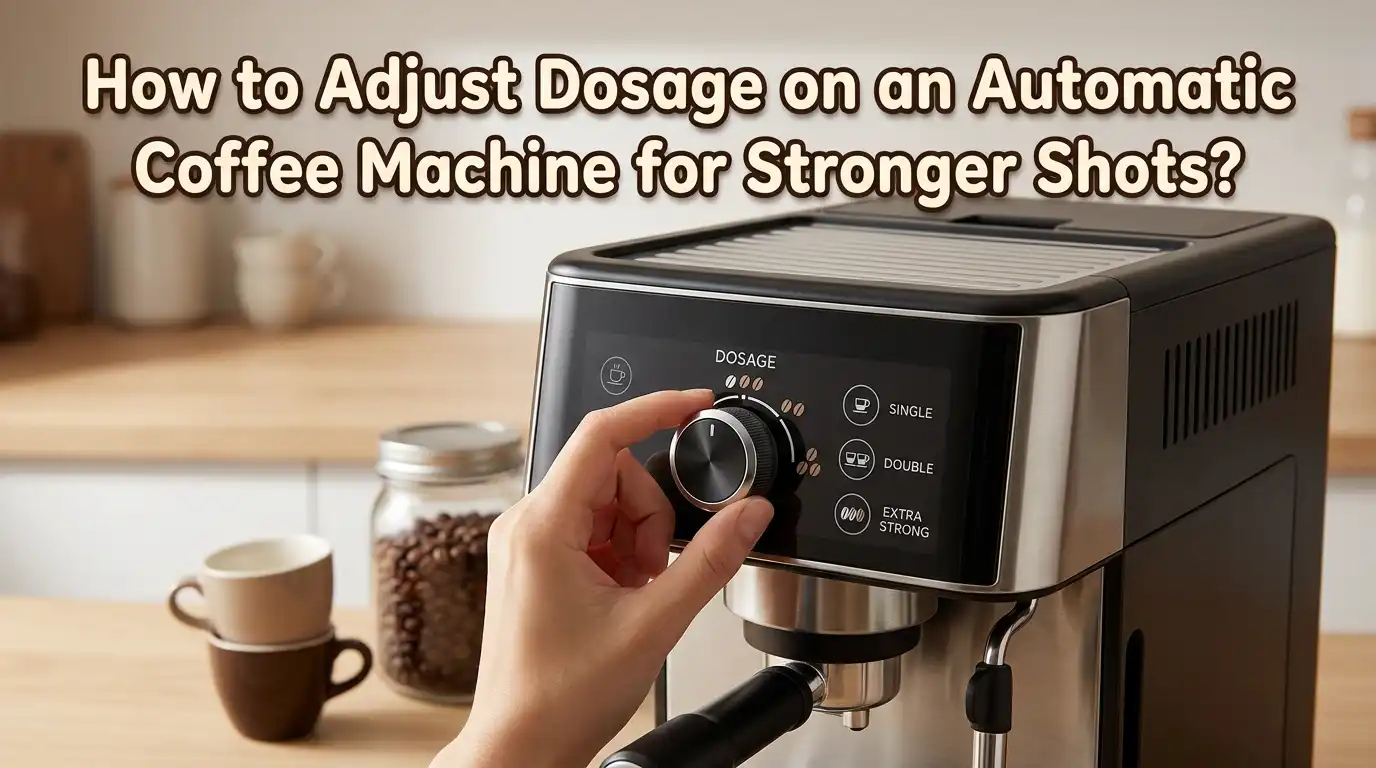
Almost every automatic coffee machine includes a built in strength selector. Brands like Delonghi, Jura, Philips, Saeco, and Miele label this differently. You may see icons like bean symbols, aroma dots, or a slider marked Mild to Strong.
This setting tells the grinder how long to run. A higher level grinds more beans, which raises the dose for that shot. The dose range usually sits between 7 grams and 14 grams.
To adjust it, press the strength or aroma button before brewing. Pick the highest level your machine allows. On touchscreen models, open the drink menu and slide the strength bar to maximum.
Pros: Easy to change, no tools needed, instant results.
Cons: Limited dose range, may not be enough for very weak beans, uses beans faster.
Adjust the Grind Size for Bolder Flavor
The grinder dial sits inside the bean hopper on most automatic machines. You will need to turn it while the grinder is running. This protects the burrs from damage.
A finer grind creates more surface area. Water then takes longer to push through the puck. This longer contact pulls out more flavor compounds. The result is a thicker, darker shot with rich crema.
Turn the dial one notch finer at a time. Brew a test shot. If the shot drips slowly and tastes balanced, stop there. If it chokes the machine and barely flows, move one notch coarser.
Pros: Major impact on shot quality, controls extraction directly, works with any bean.
Cons: Requires testing, too fine can clog the brew unit, changes take a few shots to settle.
Lower the Water Volume Per Shot
Your machine remembers how much water to push through each shot. By default, this is often too much. A long pour dilutes the espresso and weakens the taste.
Most machines let you reprogram the cup size. Hold the espresso button while the shot pulls. Release it when the cup reaches your target volume. The machine saves this new setting.
Try a yield of 30 to 40 milliliters for a double shot. That gives you a tight, concentrated drink. You keep the same coffee dose but cut the water. The flavor jumps in intensity right away.
Pros: Free to change, instant flavor boost, no extra beans needed.
Cons: Smaller drink size, may taste bitter if pulled too short, requires reprogramming.
Raise the Brew Temperature
Hotter water extracts faster and pulls more body from the coffee. Many automatic machines offer three temperature settings. Low, medium, and high. Some premium models let you pick exact degrees.
Move the setting up one level. Brew a fresh shot. The cup should taste fuller and slightly more bitter. If it tastes harsh or burnt, drop back down one step.
Dark roasts usually shine at lower temperatures around 90 degrees Celsius. Light roasts prefer higher temperatures near 94 degrees Celsius. Match the setting to your beans for the best result.
Pros: Unlocks hidden flavor, easy menu change, works alongside other tweaks.
Cons: Too hot creates burnt notes, takes time to stabilize, not all machines allow precise control.
Pick Beans That Brew Strong
No setting can save weak beans. Fresh, oily, dark roasted beans always pull stronger shots. Look for bags labeled espresso blend, Italian roast, or French roast.
Check the roast date on the package. Beans taste best between 7 and 30 days after roasting. Older beans lose oils and aromatics. Stale beans always brew flat shots no matter how hard you tweak the machine.
Store your beans in a sealed container away from light and heat. Avoid the fridge. Cold air creates moisture, which ruins the grind. A cool pantry shelf works best.
Pros: Massive flavor boost, no machine changes needed, supports every other setting.
Cons: Costs more than supermarket beans, requires fresh purchase cycles, oily beans can clog some grinders.
Use the Pre Infusion Feature
Pre infusion soaks the coffee puck with a small amount of water before full pressure begins. This wets every ground evenly and prevents channeling. The result is a more uniform extraction.
Many automatic machines hide this in the menu under settings or brew options. Turn it on if available. Some models let you set the pre infusion time between 2 and 8 seconds.
A longer pre infusion creates a sweeter, fuller shot. It also boosts crema thickness. Combine this with a fine grind and a high dose for the strongest possible result.
Pros: Improves extraction quality, reduces bitter notes, enhances crema.
Cons: Not on every model, adds a few seconds to brew time, effect is subtle without other tweaks.
Clean the Brew Unit and Group Head
Coffee oils build up fast inside any machine. Old residue blocks water channels and weakens every shot. A clean machine always brews stronger than a dirty one.
Remove the brew unit weekly. Rinse it under warm water. Skip soap, since it leaves a film. Let it dry before sliding it back in.
Run a descaling cycle every two months or when the machine prompts you. Scale buildup inside the boiler lowers brew temperature and pressure. Both kill shot strength fast.
Pros: Restores full machine power, extends machine life, costs almost nothing.
Cons: Takes 10 minutes weekly, descaling solution costs a small amount, requires drying time.
Try a Double Shot Instead of a Single
Single shots use less coffee and less water. Double shots use more of both, but the ratio stays similar. The taste of a double shot feels much richer.
Most automatic machines have a double shot button. Press it instead of the single. Some models let you assign two grinds to one cup, which doubles the dose.
If your machine lacks this feature, brew two singles back to back into the same cup. This stacks the dose without diluting the drink. The flavor turns dense and bold.
Pros: Bigger flavor punch, common on most machines, easy one button choice.
Cons: Uses more beans, larger drink may not suit short cup styles, takes longer to brew.
Customize Your User Profile Settings
Premium automatic machines store user profiles. Each profile saves dose, grind, temperature, and volume preferences. This lets you switch between styles without resetting the machine.
Create a profile called Strong. Set the dose to maximum. Lower the volume to 35 milliliters. Raise the temperature one level. Save it.
Now one button gives you a powerful shot every time. Family members can keep their own milder profiles untouched. This keeps everyone happy without daily fiddling.
Pros: Saves time, prevents reset frustration, supports multiple users.
Cons: Only on higher end models, takes setup time, menus can feel confusing at first.
Use a Bypass Doser for Pre Ground Coffee
Some automatic machines include a bypass doser. This small chute lets you add pre ground coffee directly to the brew unit. You skip the grinder entirely.
Use this to add a stronger pre ground espresso to the existing dose. Some users mix dark Italian pre ground with their regular beans for extra punch. Others use decaf or flavored grinds.
Always grind fine and fresh. Add only one scoop, since the brew unit has a fixed capacity. Overfilling causes jams and weak shots.
Pros: Lets you experiment without changing beans, useful for guests, adds flexibility.
Cons: Not on every machine, easy to overfill, ground coffee stales fast.
Track and Test Your Adjustments
Strong espresso comes from steady tracking. Change one setting at a time. Brew a shot. Taste it. Write down what worked.
Keep a small notebook by your machine. Log the bean name, grind level, dose, volume, and temperature. Note the flavor on a one to ten scale.
After a week, you will spot patterns. Maybe your beans love a fine grind and high dose. Maybe a medium grind and longer pre infusion wins instead. Data beats guessing every time.
Pros: Builds a personal recipe book, removes guesswork, helps when beans change.
Cons: Takes effort, requires patience, slows down the morning routine briefly.
Frequently Asked Questions
Why is my espresso still weak after raising the strength setting?
The strength setting only changes the dose. If your grind is too coarse or your water volume is too high, the shot will still taste weak. Adjust grind size and reduce yield together for a real change.
How fine should I grind for stronger shots?
Aim for a texture between table salt and powdered sugar. The shot should drip out slowly in 25 to 30 seconds. If water rushes through in 10 seconds, your grind is too coarse.
Will more caffeine come from a stronger shot?
Not always. Caffeine depends on bean type and dose. A stronger tasting shot may not have more caffeine than a weaker one. Robusta beans carry more caffeine than Arabica.
Can I damage my machine by setting the dose too high?
Yes. Overfilling the brew chamber strains the motor and clogs the unit. Stick to your machine’s recommended dose range, usually printed in the manual.
Why does my shot taste bitter after I made it stronger?
Over extraction causes bitterness. Pull back on grind fineness, lower the temperature, or shorten the shot volume. Strong should taste rich, not harsh.
How often should I redial my settings?
Redial whenever you change beans, after deep cleaning, or if the weather shifts dramatically. Humidity and freshness affect grind size more than most people realize.

Hi, I’m Emma Lee — the coffee-obsessed creator behind Morning Drip Vault. I spend my days testing coffee machines, exploring brewing techniques, and reviewing the latest coffee gear. My mission is simple: helping you find the perfect machine to brew your best cup, every single morning.