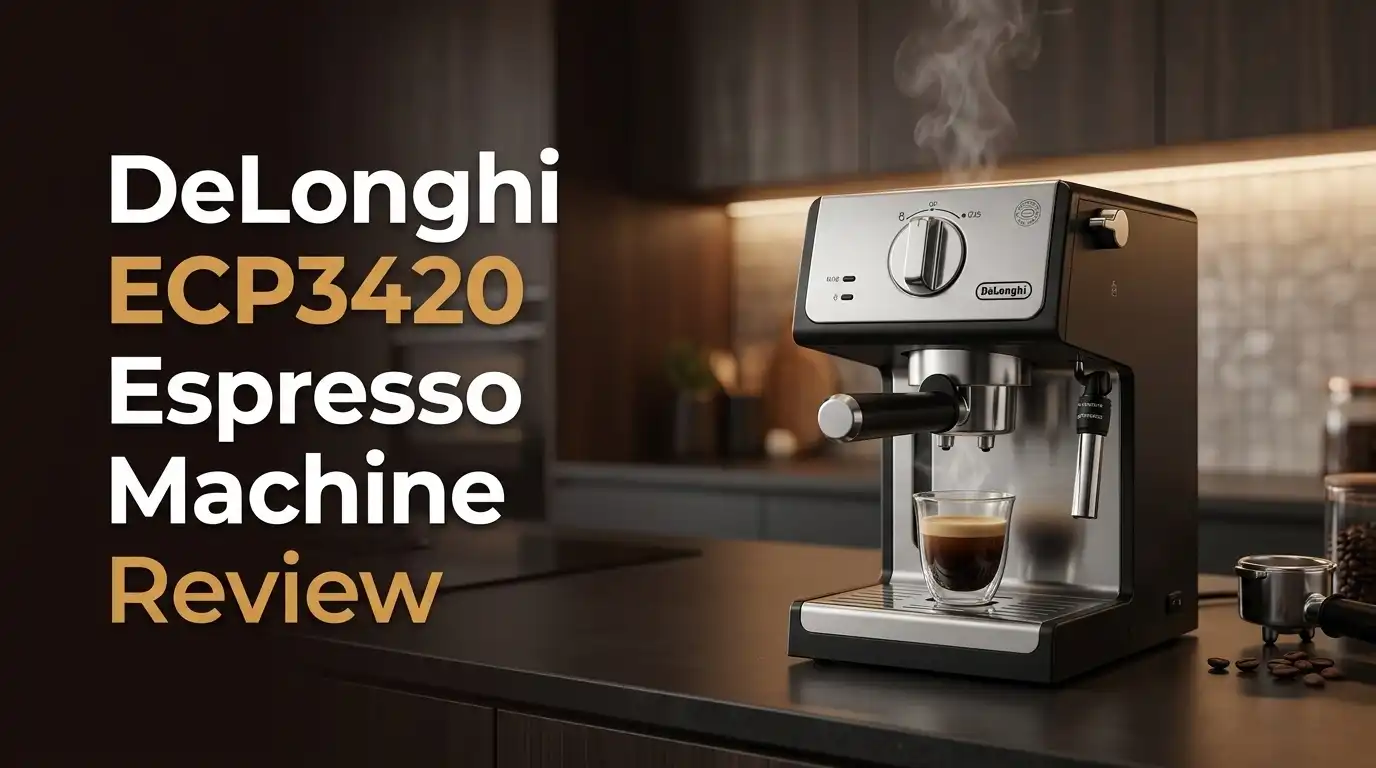
DeLonghi ECP3420 Espresso Machine Review 2026: Still Worth It?
Espresso machines can cost more than a used car. The DeLonghi ECP3420 asks for a fraction of that. It sits on kitchen counters across the country, and it keeps showing up as one of the best selling espresso machines online.
That popularity raises an obvious question. Can a machine this cheap actually pull a real shot of espresso?
I spent weeks with this machine. I pulled good shots, bad shots, and several truly ugly ones. I fought with the steam wand. I measured, tamped, re-tamped, and cleaned up more coffee grounds than I care to admit.
In a Nutshell:
- The ECP3420 makes real espresso, not fake espresso. It uses a 15 bar pump, a stainless steel boiler, and a 51mm pressurized portafilter. The shot tastes noticeably better than pod machine coffee. It will not match your local cafe, but it beats almost everything in its price class.
- The steam wand is the weak point. The Panarello wand runs out of steam pressure in roughly 20 to 30 seconds. You often need two rounds of steaming for one cappuccino. Latte art is not happening here.
- It heats up fast. The machine is ready in about 40 seconds to one minute. That speed matters on busy weekday mornings.
- It is built for pre ground coffee. The pump struggles with very fine grinds. Use medium fine coffee or you will clog the basket and get nothing in your cup.
- Build quality is plastic heavy. The tamper is plastic and nearly useless. Some units develop small leaks after months of use.
- Value is the real selling point. If your budget stops near $200, this is the sensible pick. If you can stretch higher, better machines exist.
DeLonghi ECP3420 Espresso Machine Overview


Last update on 2026-11-17 / Affiliate links / Images from Amazon Product Advertising API
The ECP3420 is a semi automatic espresso machine. You control the start and stop of every shot yourself. There is no automatic volume dosing and no digital display. A single rotary dial runs the whole machine.
The specs are simple. The machine measures 7.25 inches wide, 9.6 inches deep, and 11.9 inches tall. It weighs around 10 pounds. The removable water tank holds 37 ounces. Cup clearance is 5 inches, or 6 inches with the drip tray removed.
Inside sits a stainless steel and brass boiler paired with a 15 bar pump. The portafilter is 51mm and takes three baskets: single shot, double shot, and ESE paper pods. That three in one setup gives beginners flexibility without extra purchases.
The machine also has a self priming system. You do not need to run long warm up routines before your first coffee.
Unboxing Experience: What Arrives in the Box
The box is small and light. You can carry it from the car with one hand. Inside, the machine sits in molded cardboard with minimal plastic waste, which is a nice touch.
You get the machine body, the water tank, the 51mm portafilter, three filter baskets, a plastic measuring scoop with a tamper on the end, and a short instruction manual. That is everything.
The first impression is honest. The machine looks better than its price suggests. Stainless steel accents across the front hide the plastic body well. It feels light in the hand, closer to 9 or 10 pounds, so moving it around the counter is easy.
The tamper is where the mood drops. It is a flat plastic disc on the end of the scoop. It feels like a toy. Most owners replace it within a month with a proper 51mm metal tamper.
Setup takes under ten minutes. Rinse the tank, fill it, run water through the group head twice, and you are brewing.
Design and Build Quality
The body is ABS plastic. DeLonghi did not hide this fact, and the price explains it. The plastic feels thick and sturdy rather than hollow. The machine does not wobble when you lock in the portafilter.
Controls sit on the front panel. One dial handles power, brewing, and steam. Two indicator lights show power and ready status. A side lever opens the steam valve. A beginner can learn this layout in about two minutes.
The water tank sits at the back and lifts out easily. The lid doubles as a storage spot for your spare filter baskets, which is a genuinely clever design choice.
The weak spots show in the accessories. The portafilter handle attaches with glue that can soften under heat. The basket sits loose inside the portafilter instead of clipping in. Knock out a puck and the basket often flies out with it.
Top 3 Alternatives for DeLonghi ECP3420

Last update on 2026-11-17 / Affiliate links / Images from Amazon Product Advertising API
Breville Bambino Espresso Machine

Last update on 2026-11-18 / Affiliate links / Images from Amazon Product Advertising API
De’Longhi EC685M Dedica Deluxe Espresso Machine

Last update on 2026-11-19 / Affiliate links / Images from Amazon Product Advertising API
De’Longhi Stilosa EC260BK Espresso Machine
Espresso Quality: How Good Is the Shot?
This is where the ECP3420 earns its reputation. The espresso is real espresso. It has body, it has crema, and it carries flavor that pod machines cannot touch.
The 15 bar pump pushes water through the pressurized basket and creates crema mechanically. That crema is thinner and fades faster than cafe crema, but it is there. Shot temperature is adequate once the machine is fully warm.
The results depend heavily on your technique. If you scoop coffee in and brew without measuring, the shot comes out thin or harsh. If you weigh your dose and your output, quality jumps noticeably.
Two limits hold the machine back. The pump cannot push evenly through very fine grinds, so you lose the syrupy texture a good shot should have. Temperature control also drifts between shots, which creates inconsistency.
The double basket holds around 14 grams. That is on the small side for a proper double.
The Steam Wand: The Weakest Link
I will be blunt. The steam wand is the part that frustrates almost every owner.
It is a Panarello style wand with a plastic sleeve that pulls air into the milk automatically. This design makes frothing easy for beginners. It also makes microfoam impossible. You get big, soapy bubbles that collapse within seconds of pouring.
The bigger problem is steam pressure. The wand starts strong and then fades within 20 to 30 seconds. That is not long enough to heat a standard pitcher of milk to proper temperature.
You will often steam in two rounds. Froth, stop, wait for the ready light, then froth again. For one cappuccino. Every morning.
The wand also spits water droplets into the milk, which thins out the drink. The nozzle sits short, so a tall milk pitcher does not work well. Use a short cup instead.
Ease of Use for Beginners
Despite the complaints, this machine is friendly to new users. The learning curve is short and forgiving.
Turn the dial to ON. Wait for the green ready light. Lock in the portafilter. Turn the dial to the coffee icon. Watch the cup and turn it back when you have enough.
That is the whole process. No menus, no settings, no programming.
My biggest recommendation is patience during warm up. The ready light turns green long before the group head and portafilter are properly hot. Give the machine three to five extra minutes and pull a blank shot of water first. The difference in taste is large.
A kitchen scale changes everything with this machine. Weigh 14 grams of coffee in, stop at roughly 28 grams out, and your shots become consistent. Without a scale, you are guessing.
Cleaning and Maintenance
Daily cleaning is quick. Rinse the portafilter and basket after each shot. Wipe the steam wand immediately after frothing, then purge it for a second. Run a short flush through the group head.
The drip tray and water tank both lift out. Neither is dishwasher safe, so wash them by hand. Plan on cleaning the tray every week or two and the tank weekly.
Descaling is required roughly every two months, and more often with hard water. The process takes about twenty minutes with a descaling solution.
Here is the annoying part. The machine has no descale reminder light. You must track it yourself. Skipping descaling will shorten the machine’s life.
The portafilter basket also refuses to stay put during knockout. Most owners end up tapping the puck into a bin while holding the basket with a thumb.
What the ECP3420 Does Not Do Well
Honest reviews list failures. Here are the real ones.
It cannot make a proper latte. The milk foam is too coarse to blend into espresso, so your drink separates into coffee and foam.
It cannot handle fine grinds. Grind too fine or tamp too hard and the pump chokes. Water stops flowing entirely.
It does not hold temperature well between shots. Pull three in a row and quality drifts.
It is not built for ten years of daily use. A fair number of units develop slow water leaks from the base after months of regular brewing. The leak is usually small and the machine keeps working, but it signals internal wear.
The plastic tamper is effectively unusable for producing a level, compressed puck. Budget another $15 for a real one.
The portafilter handle can loosen from heat over time.
Who Should Buy the DeLonghi ECP3420
Last update on 2026-11-17 / Affiliate links / Images from Amazon Product Advertising API
This machine fits a specific buyer. It is a strong match if your budget caps around $150 to $200 and you want real espresso today rather than saving for six months.
It suits small kitchens. The footprint is tiny and the weight is low, so it tucks into a corner easily.
It works well for people who drink straight espresso, americanos, or iced coffee. Those drinks skip the steam wand entirely, which removes the machine’s worst feature from the equation.
It is a solid learning tool. You will learn dose, tamp, timing, and ratio on cheap hardware before investing in something serious.
Skip it if you drink two lattes a day. Skip it if you already own a burr grinder and want to use fresh fine grinds. Skip it if you want a machine that lasts a decade.
Pros and Cons
Pros
- Excellent price to performance ratio. No other machine near this price pulls a comparable shot.
- Heats up in roughly 40 seconds to one minute thanks to the self priming system.
- Compact 7.25 inch width fits tight counters and small apartments.
- Three filter baskets included for single shots, double shots, and ESE pods.
- Removable 37 ounce water tank with handy basket storage in the lid.
- Simple single dial operation that beginners understand immediately.
- Adjustable drip tray creates 6 inches of cup clearance for taller mugs.
- Lightweight at around 10 pounds, easy to move and clean around.
Cons
- Panarello steam wand produces coarse foam only, with no microfoam and no latte art.
- Steam pressure fades after 20 to 30 seconds, forcing two rounds of frothing.
- Pump cannot handle fine grinds, which limits espresso intensity and texture.
- Plastic tamper is too light to compress coffee properly.
- Some units begin leaking water after several months of use.
- No descale warning light, so you must track maintenance yourself.
- Filter basket falls out of the portafilter during knockout.
- Inconsistent brew temperature between back to back shots.
Tips to Get Better Espresso From This Machine
Small changes produce large improvements on the ECP3420.
Warm everything first. Run hot water through the empty portafilter and into your cup before brewing. Cold metal steals heat from your shot.
Use medium fine pre ground coffee. Grind size matters more than bean price on this machine. Too fine means no flow. Too coarse means sour water.
Buy a 51mm metal tamper. This single purchase improves puck consistency more than anything else.
Weigh your coffee. Fourteen grams in the double basket, then stop the pump at roughly 28 grams in the cup. Aim for 25 to 30 seconds.
For milk drinks, use cold milk and a short pitcher. Start the wand deeper in the milk to reduce giant bubbles. Swirl the pitcher after frothing to break up foam.
Descale every two months without fail.
Price and Value in 2026
The ECP3420 typically sells between $120 and $180 depending on sales. At that price, nothing else makes espresso this well.
Compare the options honestly. Pod machines cost similar money and produce weaker coffee with ongoing capsule costs. Moka pots cost less but make a different drink. Machines that genuinely outperform the ECP3420 start around $300.
That gap is the entire argument for this machine. You pay roughly one third the price of a Breville Bambino and get maybe sixty percent of the espresso quality, with much worse milk performance.
For a first machine, that math works. You learn the craft cheaply. If you fall in love with espresso, you upgrade in a year with real knowledge about what you want. If you do not, you spent very little.
Running costs stay low since no capsules are required.
Final Verdict
The DeLonghi ECP3420 is a good budget espresso machine with clear limits. It makes genuinely enjoyable espresso for the money. It heats fast, takes little space, and asks almost nothing from a beginner.
It also frustrates. The steam wand is poor. The pump cannot handle fine coffee. The plastic parts feel cheap because they are cheap. Some units leak.
Buy it if you drink espresso, americanos, or iced coffee and your budget sits under $200. You will get your money’s worth easily.
Avoid it if milk drinks are your main reason for buying an espresso machine. The disappointment there is real and it will not improve with practice.
In 2026, this machine still holds its spot as the cheapest honest entry into home espresso.
Frequently Asked Questions
Is the DeLonghi ECP3420 good for beginners?
Yes. The single dial control and pressurized baskets make it forgiving. New users can pull a drinkable shot on day one without special equipment or deep knowledge.
Can the ECP3420 make real latte art?
No. The Panarello steam wand creates large bubble foam, not microfoam. The texture collapses quickly and will not hold a pattern in the cup.
Can I use whole beans with this machine?
You can grind beans yourself, but use a medium fine setting. The pump cannot push water through very fine grinds and the basket will clog.
How long does the DeLonghi ECP3420 last?
With regular descaling, most owners report two to four years of use. Some units develop small base leaks sooner, usually after heavy milk steaming sessions.
Does the ECP3420 work with Nespresso pods?
No. It accepts ESE paper pods only, along with regular ground coffee. Nespresso and Nescafe capsules do not fit this portafilter.
What size portafilter does it use?
The machine uses a 51mm portafilter with three included baskets for single shots, double shots, and ESE pods.

Hi, I’m Emma Lee — the coffee-obsessed creator behind Morning Drip Vault. I spend my days testing coffee machines, exploring brewing techniques, and reviewing the latest coffee gear. My mission is simple: helping you find the perfect machine to brew your best cup, every single morning.