DeLonghi PrimaDonna Soul Espresso Machine Review 2026: Still Worth It?
Most bean to cup machines promise barista coffee. Very few actually taste like it. The DeLonghi PrimaDonna Soul sits near the top of the brand’s lineup, and it carries a price that makes people pause before they click buy.
I spent weeks with this machine, pulled shots with three different bean bags, broke the milk carafe routine on purpose, and tracked every small annoyance along the way.
This review covers the good parts, the frustrating parts, and the parts nobody mentions in the glossy product photos. If you want to know whether the Soul still earns its spot in 2026, keep reading. The answer depends on one specific thing, and I explain it below.
Key Takeaways:
- Coffee quality sits at the top of the automatic class. Once Bean Adapt is set up, espresso from the Soul tastes rich, syrupy, and aromatic. It still loses to a good manual machine paired with a quality grinder, so set your expectations honestly.
- The 4.3 inch touchscreen is the best part of daily use. Icons are large, the menu learns your habits, and you genuinely never need the manual. Three user profiles let a household stop arguing about drink settings.
- Bean Adapt Technology is real, not marketing fluff. You answer a few questions in the app about roast level and origin. The machine then sets grind size, dose, and brew temperature. My shots improved noticeably after one wizard run.
- The LatteCrema carafe makes excellent foam for an automatic. It is not silky microfoam from a steam wand. It is thick, warm, and consistent, which is what most latte drinkers want anyway.
- Three real weaknesses exist: the app setup is clumsy, the machine is physically large, and grind adjustment hides inside menus instead of a dial.
- Availability is the big 2026 catch. The Soul was never launched officially in North America, so US buyers often land on the PrimaDonna Aromatic instead.
What Is the DeLonghi PrimaDonna Soul?
No products found.
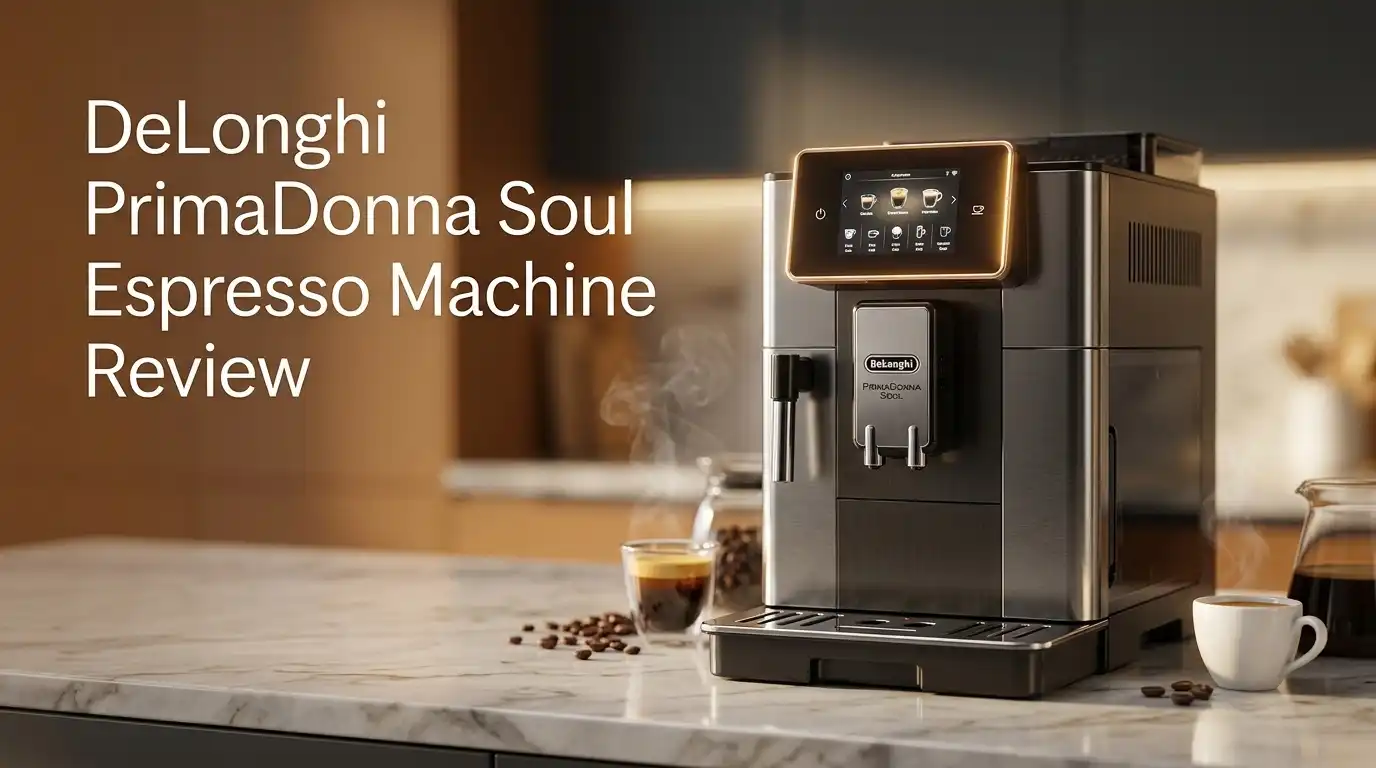
The PrimaDonna Soul is a fully automatic bean to cup espresso machine. It grinds, doses, tamps, brews, froths, and ejects the puck without any input from you. The headline model is the ECAM610.75.MB in Metal Black, with the ECAM612.55.SB silver version sold in several regions.
It serves 21 drink types, including 18 one touch recipes. You get espresso, lungo, americano, cappuccino, flat white, latte macchiato, hot milk, hot water, and even a tea function with temperature presets.
A 500 gram bean hopper sits on top. A 2.2 liter water tank slides into the right side. The insulated milk carafe clips onto the left. Pump pressure runs at 19 bar, and the brew unit lifts out for rinsing under the tap.
Unboxing Experience and First Setup
The box is heavy. Really heavy. At roughly 23 pounds with packaging on top of that, I needed two hands and a clear counter before lifting it out. Plan your space first, because this machine does not move around easily once it lands.
Inside you get the milk carafe, a water filter, a measuring scoop, a cleaning brush, a water hardness test strip, a descaler bottle, and a filter coffee jug. Everything sits in molded cardboard rather than foam.
Setup took me about twelve minutes. The water tank hides inside the chrome side panel, so finding it is the first small puzzle. After filling, the screen walks you through language, water hardness, and a rinse cycle. Leave a cup under the spout, because the first flush is messy.
Design and Build Quality on Your Counter
The Soul looks expensive, and it should. The curved profile, metal black finish, and silver trim give it a premium presence that cheaper DeLonghi models never achieve. The screen dominates the front panel, and it looks clean when the machine sleeps.
Every removable part clicks with a solid feel. The water tank, grounds bin, and milk carafe all seat with a confident thunk rather than a rattle. Build quality here matches the price tag.
Size is the honest problem. At roughly 13.7 inches tall and 16.9 inches wide, it swallows counter space. I could not slide mine fully under my wall cabinets, because the bean hopper lid needs clearance above. Measure your gap before you order.
Fingerprints also show on the dark finish. Keep a microfiber cloth nearby.
Top 3 Alternative for DeLonghi PrimaDonna Soul


Last update on 2026-11-18 / Affiliate links / Images from Amazon Product Advertising API
De’Longhi Eletta Explore Fully Automatic Espresso Machine

Last update on 2026-11-17 / Affiliate links / Images from Amazon Product Advertising API
De’Longhi PrimaDonna Aromatic Fully Automatic Espresso Machine

Last update on 2026-11-16 / Affiliate links / Images from Amazon Product Advertising API
De’Longhi Dinamica Plus Connected Espresso and Coffee Machine
Bean Adapt Technology Explained Simply
Bean Adapt is the feature that separates the Soul from cheaper automatics. Most bean to cup machines treat every bean the same way. A light Ethiopian roast and a dark Italian blend get identical grind settings, which is why so many machines produce flat coffee.
Bean Adapt fixes that. You open the app, enter the roast level, origin, and your taste preference. The machine then sets grind size, dose weight, and infusion temperature on its own.
In my testing the difference was clear. My default espresso tasted thin and watery. After running the wizard with a medium roast, the same beans produced a thicker body with nutty and chocolate notes that were simply absent before.
One catch exists. Bean Adapt only runs through the app, never on the machine itself.
Touchscreen Interface and User Profiles
The 4.3 inch color TFT touchscreen is genuinely good. Response is quick, icons are large, and drink images are easy to read from across a kitchen. Anyone who has used a phone will operate this machine in under a minute.
Tap a drink icon to brew. Tap the plus button to adjust strength, volume, or temperature before brewing. The screen also prompts you to empty the grounds bin or set the carafe dial correctly.
Three user profiles make the biggest practical difference. Each person gets a home screen that reorders itself based on what they actually drink. My espresso and flat white moved to the front within a week.
This is the feature I would miss most on a cheaper machine.
Drink Menu and LatteCrema Milk System
Twenty one drinks sounds excessive until you live with the machine. The hot milk option became my hot chocolate base. The tea function, with its separate water temperatures, replaced my kettle for green tea. The filter coffee jug handles weekend guests.
The LatteCrema carafe handles all milk drinks. A dial on the lid controls foam density, and the screen tells you which position suits the selected drink. Foam comes out thick, warm, and consistent every time.
It is not steam wand microfoam. Latte art will not work with it. For an automatic carafe system, though, the texture is among the best available.
Dairy, oat, and soy all frothed well in my tests, with oat performing surprisingly close to whole milk.
Espresso Taste Test Results
My first shot disappointed me. The default espresso was watery and bland, with thin crema that collapsed in seconds. That result is normal for a fresh machine on factory settings.
I dropped the grind one step finer through the menu. The shot immediately gained body and flavor. Small adjustments matter more than people expect.
Then I ran Bean Adapt. The espresso went from acceptable to genuinely enjoyable. Crema held steady, the aroma filled the cup, and the finish lasted.
Honest comparison: a Gaggia Classic with a decent grinder still produces a better shot. The Soul gets close enough that most people will never care, and it does the job in forty seconds without any skill required.
Temperature runs hot. Some drinks need a short rest before sipping.
Coffee Link App Performance
The Coffee Link app is the weakest part of this machine. Pairing took me four attempts. I created an account online, opened the app, and waited while it failed to detect the machine twice. Turning the machine off and on finally worked.
Once connected, the app behaves well. You adjust settings, browse recipes, read the manual, and run the Bean Adapt wizard from your phone.
Remote brewing exists, and I recommend ignoring it completely. The machine flushes water through the spout at startup, so your cup fills with rinse water before coffee arrives. Milk left in the carafe overnight will spoil.
Treat the app as a setup tool, not a remote control. That framing keeps expectations realistic.
Cleaning and Maintenance Routine
Daily cleaning takes about two minutes. After each milk drink, you turn the carafe dial to the clean position and the machine blasts steam through the milk circuit. That single feature saves enormous hassle compared with washing a separate frother.
The drip tray and grounds bin slide out together, then separate for rinsing. You must remove the milk carafe first, which is mildly annoying.
The brew unit lifts out weekly for a rinse under warm water. No soap, no scrubbing.
Descaling happens every few months depending on water hardness. The screen tells you when. Use DeLonghi descaler, because generic products can void warranty coverage.
Almost nothing goes in the dishwasher, so plan on hand washing the carafe parts.
What the PrimaDonna Soul Does Not Do Well
Authentic reviews cover failures, so here are mine. No cold brew or cold extraction exists on this machine. If iced coffee matters to you, the Eletta Explore or the Aromatic serve you better.
Grind adjustment lives in a menu instead of a dial, and Bean Adapt locks that setting until you have brewed three drinks. That delay frustrated me on day one.
Coffee arrives extremely hot. Several owners report waiting five to ten minutes before drinking, even on the lowest temperature setting.
The bean hopper gives no low level warning. Mine stopped mid brew and asked for beans, which wasted a partial shot.
The ground coffee bypass holds only one dose, so you cannot preload it.
Pros and Cons of the DeLonghi PrimaDonna Soul
Pros
- Bean Adapt Technology produces a real, tasteable improvement in espresso quality rather than a marketing gimmick.
- The 4.3 inch touchscreen is fast, clear, and genuinely intuitive for every member of a household.
- LatteCrema foam is thick and consistent, and the automatic milk circuit cleaning takes seconds.
- Build quality feels premium, with solid metal trim and parts that seat firmly instead of rattling.
- Twenty one drinks including tea and filter coffee cover almost every household request.
- Three user profiles reorder the menu around each person’s actual habits over time.
Cons
- The Coffee Link app pairing process is unreliable and genuinely frustrating on first setup.
- No cold brew or cold foam function exists, which feels dated against 2026 competitors.
- The machine is large and tall, and it may not fit under standard wall cabinets.
- Grind size hides inside menus and stays locked during early Bean Adapt use.
- Coffee dispenses hotter than many people prefer, even at the lowest setting.
- Official availability in North America is limited, so warranty support varies by region.
PrimaDonna Soul vs Eletta Explore vs PrimaDonna Aromatic
The Eletta Explore costs noticeably less and adds cold extraction, cold foam, and over 50 recipes. Its housing is plastic and its display uses sensor buttons rather than a full touchscreen. For variety per dollar, it wins easily.
The PrimaDonna Aromatic is the newer flagship. It brings stainless steel housing, a 5 inch touchscreen, cold brewing, drip coffee, and the same electronic grinder concept. It also costs considerably more.
The Soul sits between them. It delivers the best hot espresso experience of the three for its price, with a cleaner interface than the Eletta and a lower cost than the Aromatic.
Choose the Soul if hot coffee quality leads your priorities and iced drinks do not.
Who Should Buy the PrimaDonna Soul in 2026?
Buy this machine if you drink two or more coffees daily and value convenience as much as taste. The payback math works fast against daily cafe visits.
It suits households with mixed preferences best. One person takes espresso, another takes a flat white, and the profiles handle both without fiddling.
Skip it if you enjoy the ritual of manual brewing. A Gaggia Classic plus a grinder costs less and tastes better, though it demands practice and time.
Skip it also if iced coffee is your main drink, or if your counter space is tight.
Buyers in the United States should check current listings carefully, because the Soul arrived through limited channels and the Aromatic now fills that slot.
Final Verdict on the DeLonghi PrimaDonna Soul
No products found.
The PrimaDonna Soul remains one of the most satisfying automatic coffee machines you can own. Bean Adapt Technology genuinely lifts shot quality, the touchscreen removes every barrier to daily use, and the milk system produces foam that keeps latte drinkers happy.
It is not flawless. The app fights you during setup, the footprint is large, and the missing cold brew function now looks like a real gap in 2026.
My rating sits at 4.3 out of 5. It earns that score on coffee quality and daily usability, and loses points on software polish and feature gaps.
If hot espresso is your priority and your budget stretches this far, you will enjoy owning it for years.
Frequently Asked Questions
Is the DeLonghi PrimaDonna Soul available in the United States?
Official US distribution was limited, and DeLonghi positioned the PrimaDonna Aromatic as the North American flagship instead. You can find imported units and marketplace listings, but check warranty terms and voltage before buying.
Does the PrimaDonna Soul make cold brew or iced coffee?
No. The Soul uses hot extraction only. For cold extraction and cold foam, look at the Eletta Explore or the PrimaDonna Aromatic, both of which include dedicated cold functions.
How often should I descale the machine?
The screen prompts you based on water hardness and usage, usually every two to three months. Using the included water filter extends that interval. Always use DeLonghi approved descaler to protect your warranty.
Can I use oat milk in the LatteCrema carafe?
Yes. Oat and soy both froth well in my testing, with barista style oat milk producing foam very close to whole milk. Rinse the carafe after each session to prevent residue.
Do I need the app to use the machine?
No. Every drink works from the touchscreen alone. The app is only required for the Bean Adapt wizard, which is worth setting up once even if you never open the app again.
How long does the machine take to warm up?
Expect roughly 40 to 50 seconds from power on to the first drink, including the automatic rinse cycle. Subsequent drinks brew almost immediately.

Hi, I’m Emma Lee — the coffee-obsessed creator behind Morning Drip Vault. I spend my days testing coffee machines, exploring brewing techniques, and reviewing the latest coffee gear. My mission is simple: helping you find the perfect machine to brew your best cup, every single morning.