TIMEMORE Chestnut C3 ESP Pro Manual Coffee Grinder Review
You want café quality coffee at home or on the road, but you don’t want to spend a fortune on a grinder. That’s why so many coffee lovers look at the TIMEMORE Chestnut C3 ESP Pro.
This small hand grinder has a folding handle, an aluminum body, and fine steps that can reach espresso. It costs much less than most premium hand grinders.
Is it really that good? This review covers the unboxing, the grind quality, and the daily use. It also covers the flaws that many reviews skip. Read on before you buy.
Key Takeaways
- Excellent grind consistency: The 38mm S2C stainless steel conical burr gives an even grind with few fines. Filter coffee tastes clean, sweet, and balanced, and the results compete with grinders that cost twice as much.
- Real espresso capability: The ESP version has 30 clicks per rotation, and each click moves the burr about 0.0233mm. That gives you fine control for espresso, Moka pot, and AeroPress. Grinding for espresso is slow, though, and takes over a minute.
- Travel friendly design: The patented folding handle lies flat against the body. The grinder slips easily into a backpack or carry on bag, so you can take it on trips, camping weekends, or office desk duty.
- Premium build for the price: The body is aluminum with a grooved grip, and the knob spins on a bearing. The catch cup screws on firmly and has a rubber pad on the bottom.
- Some honest drawbacks: The capacity is small at 20 to 25 grams. To change the grind setting, you must remove the catch cup and turn the dial under the burr. Light roasts at espresso settings can feel stiff to turn.
- Best for: Beginners, travelers, and filter coffee fans who want great value without moving up to a $150+ grinder.
TIMEMORE Chestnut C3 ESP Pro Manual Coffee Grinder

Last update on 2026-11-18 / Affiliate links / Images from Amazon Product Advertising API
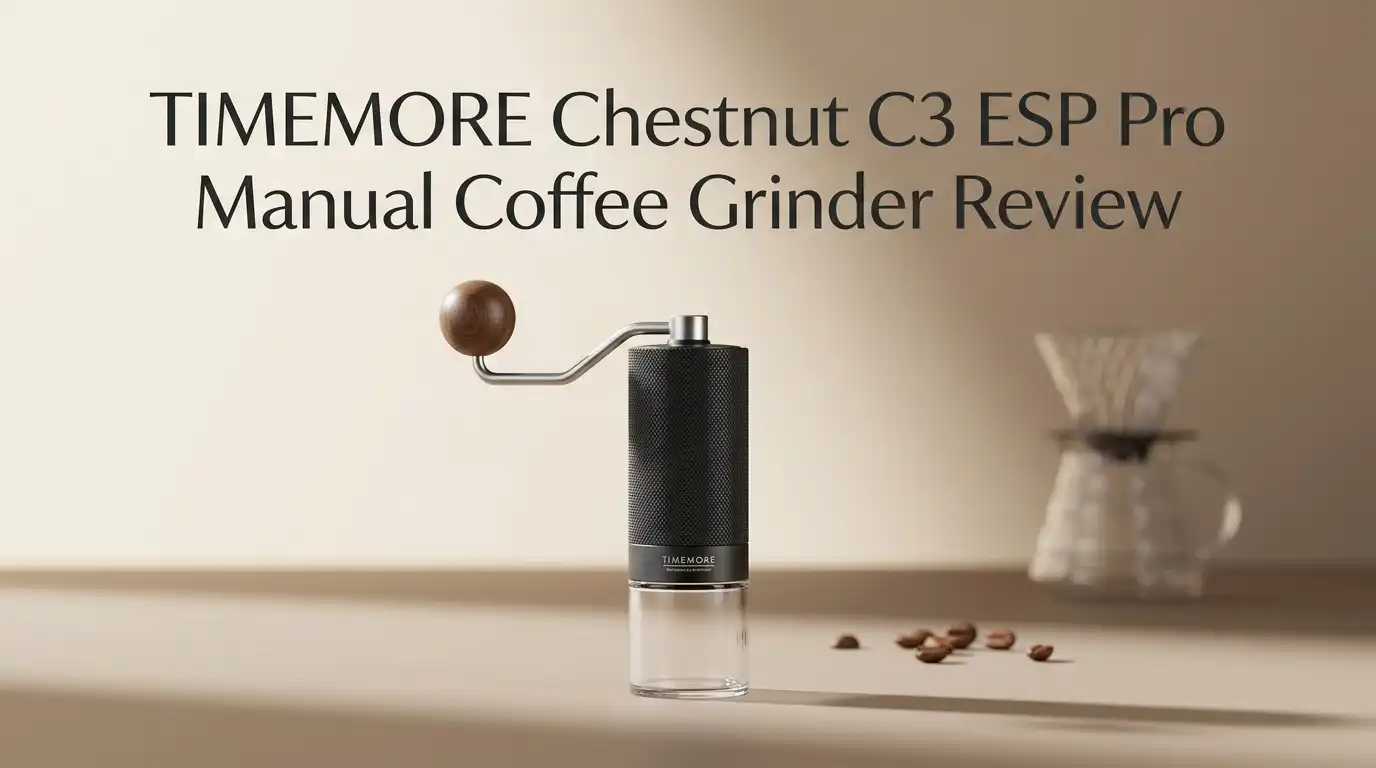
The TIMEMORE Chestnut C3 ESP Pro is a compact hand grinder made by Timemore, a Chinese coffee gear brand. Timemore is known for stylish design and strong value.
The “ESP” in the name means the grinder has finer adjustment steps for espresso. The “Pro” means it has the folding handle. A cheaper C3 ESP without the folding handle also exists.
The grinder uses a 38mm S2C conical burr made of stainless steel. The burr design is called Spike to Cut. The spikes break the beans first, and then the cutting edges shape the grounds.
The grind range runs from very fine to about 1000 microns. That covers espresso, Turkish style fine grounds, pour over, AeroPress, and French press. The capacity is about 20 to 25 grams of beans.
Unboxing Experience
The unboxing feels premium for a budget grinder. Timemore uses clean, minimal packaging, and the box looks closer to a high end gadget than a kitchen tool.
Inside, the grinder sits snugly in a foam insert. You also get a small cleaning brush and a printed instruction card. The handle comes folded flat against the body.
The first thing you notice is the weight. The grinder feels solid and dense in your hand, with no rattles and no cheap plastic shell.
One small complaint is the manual. Many new owners find the grind setting instructions confusing, especially the part about finding the zero point. Expect to spend a few minutes learning how the dial works. After that, it becomes easy.
Design and Build Quality
The body is made of aluminum alloy. Timemore adds a grooved texture to the outside. The grooves give you a firm grip, and the grinder does not spin in your hand while you crank.
Many rival grinders use a smooth body with a rubber ring. Timemore skips the ring and builds the grip into the metal, which looks cleaner and lasts longer.
The knob on the handle spins on a ball bearing. It turns smoothly and can’t pop off by accident. Some competing brands use a clip system that sometimes comes loose.
The catch cup screws onto the body instead of using magnets. It has no inner ledge, so grounds pour out cleanly. A rubber pad on the bottom protects your countertop and keeps the grinder steady.
Top 3 Alternative for TIMEMORE Chestnut C3 ESP Pro
1Zpresso J Manual Coffee Grinder

Last update on 2026-11-18 / Affiliate links / Images from Amazon Product Advertising API
KINGrinder K6 Manual Coffee Grinder

Last update on 2026-11-18 / Affiliate links / Images from Amazon Product Advertising API
TIMEMORE Chestnut C3S Pro Manual Coffee Grinder

Last update on 2026-11-20 / Affiliate links / Images from Amazon Product Advertising API
Folding Handle Design
The folding handle is the star feature of the Pro version. Timemore holds a patent on this design, so you won’t find the same system on other brands.
To fold the handle, you pull it out slightly and swing it down. It then sits flush against the grinder body. A small rubber stopper keeps the metal from scratching the aluminum.
Some other grinders have removable or folding handles too. But they still stick out and take up space. The Timemore handle disappears almost completely.
This makes a real difference in a bag, because it’s one less awkward shape to pack around. The handle itself is stainless steel and feels strong. It locks firmly into place when you unfold it, with no wobble during grinding.
Grind Adjustment System
The C3 ESP Pro has an internal adjustment dial. The dial sits directly under the burr, inside the grinder.
Regular C3 and C3S models give you 12 clicks per rotation. The ESP version gives you 30 clicks per rotation. Each click moves the burr about 0.0233mm, and that tiny step makes espresso tuning possible.
Settings use a simple format. For example, a setting of 1.6 means one full rotation plus six marks. Espresso usually falls around 0.5 to 0.8, and pour over often sits around 1.6 to 2.0.
To set zero, you turn the dial finer until the burrs touch. You count every click from there. Once you learn this, you can move between brew methods with confidence.
S2C Burr Performance
The S2C burr is the heart of this grinder. It comes from the burr design Timemore first used in the discontinued Chestnut X, a much more expensive model.
The spikes on the burr crush the beans into smaller pieces first. The lower cutting edges then slice those pieces into even grounds. This two step action produces a uniform particle size.
In practice, you get very few fines and few boulders. Fines are tiny dust particles that cause bitterness. Boulders are large chunks that cause sour, weak flavors.
Reviewers often say the C3 grind quality matches grinders at twice the price. Filter coffee comes out sweet and clear, and you can taste fruity and floral notes in light roasts. That is impressive for a grinder under $100.
Espresso Performance
Yes, the C3 ESP Pro can make good espresso. Many home baristas use it with lever machines, entry level espresso machines, and portable espresso makers.
The fine 30 click dial lets you dial in shots. You can adjust a few clicks at a time to fix fast or slow shots. A setting around 0.5 is a common starting point for 16 to 18 grams.
There is a catch, though. The 38mm burr is small for espresso. Grinding 16 to 18 grams at espresso fineness takes a minute or more. Grinders with 47mm or 48mm burrs finish in about 40 seconds.
Static can also make grounds cling to the cup. A tiny spray of water on the beans before grinding helps a lot. Use a WDT tool to break clumps before you tamp.
Pour Over and Filter Coffee
This is where the C3 ESP Pro truly shines. Timemore grinders have always done their best work at medium and coarse settings.
At pour over settings, the grinder works fast and smooth. You can grind 15 grams for a V60 in well under a minute. The handle turns easily with little effort.
The grind looks even and fluffy. Water flows through the bed at a steady rate, and your drawdown times stay consistent from cup to cup.
The grinder also handles AeroPress, Chemex, Kalita Wave, and French press well. French press needs the coarsest settings, and the grind holds up fine there. For most home brewers who drink filter coffee, this grinder delivers excellent cup quality every morning.
Grinding Speed and Effort
Speed depends heavily on your grind size. Coarse grinding is quick. Fine grinding is slow and takes more arm work.
For pour over, expect about 30 to 45 seconds for 15 grams. For espresso, expect 60 to 90 seconds for 18 grams, depending on the roast.
Light roasts are harder than dark roasts. Some owners report that the handle feels stiff and almost jams at fine settings. A few even complain about wrist strain.
There is a simple fix. Start turning the handle before you pour in the beans. Then add the beans slowly while you crank. This stops the beans from wedging the burr at the start. Most users find grinding much smoother with this trick.
Cleaning and Maintenance
Cleaning the C3 ESP Pro is simple and quick. You don’t need any tools beyond the included brush.
First, unscrew the catch cup. Then turn the adjustment dial until it comes off completely. Pull out the burr and the central shaft. Brush away the old grounds from the burr and the inside walls.
Reassemble in reverse order. Then reset your zero point before grinding again. This step is important, because the dial position shifts after you take it apart.
Never wash the burr with water unless you dry it fully right away. Moisture can cause rust over time. A dry brush every week and a deeper clean every month will keep the grinder working well for years. Retention is very low, so little stale coffee builds up.
Travel Friendliness
For travel, this grinder is one of the best options at its price. It is small, light, and tough.
The grinder weighs roughly half a kilogram. With the handle folded, it fits in a jacket pocket, a backpack side pouch, or a carry on bag. The aluminum body survives bumps far better than plastic grinders.
It pairs nicely with portable brewers like the AeroPress Go, Wacaco Pipamoka, or a collapsible pour over dripper. You get fresh ground coffee in hotels, campsites, and offices.
The small capacity works well for one person. If you brew for two people, though, you will need to grind twice. That gets tiring on a camping trip with friends.
What It Does Not Do Well
No grinder is perfect. Here is where the C3 ESP Pro falls short.
Changing grind size is a hassle. The dial sits inside, under the burr. You must unscrew the catch cup, flip the grinder, and turn the dial each time. Switching between espresso and pour over every day gets annoying.
Capacity is small. It holds only 20 to 25 grams, so batch brewing for a family is not practical.
Espresso grinding is slow. The 38mm burr takes longer than larger burrs, and light roasts feel stiff at fine settings.
The handle angle feels awkward for some users, since the straight handle gives less leverage than a dropped design. Also, aligning the dial after cleaning can be tricky for beginners.
Pros and Cons
Pros
- Excellent grind consistency for pour over and filter coffee
- 30 clicks per rotation give fine control for espresso
- Patented folding handle lies flat for easy travel
- Aluminum body with a grooved, non slip grip
- Bearing mounted knob that spins smoothly and stays secure
- Very low retention and easy cleaning
- Great value compared with grinders twice the price
Cons
- Grind adjustment requires removing the catch cup
- Small 20 to 25 gram capacity
- Slow grinding at espresso settings
- Stiff cranking with light roasts at fine settings
- Instructions for setting zero can be confusing
Who Should Buy It
The C3 ESP Pro suits beginners who want their first quality hand grinder. It teaches you grind size basics without a big investment.
It also suits travelers and campers. The folding handle and tough body make it an easy packing choice.
Filter coffee fans will love the cup quality. If you mostly brew V60, AeroPress, or Chemex, this grinder covers you well.
Occasional espresso drinkers can use it too. It works fine for a shot or two on weekends.
Who should skip it? Daily espresso drinkers who pull several shots a day will tire of the slow grinding. People who switch brew methods often will dislike the internal dial. Those users should look at larger burr grinders with external adjustment.
Final Verdict
The TIMEMORE Chestnut C3 ESP Pro delivers far more than its price suggests. The build feels premium, the grind is consistent, and the folding handle is genuinely clever.
For pour over and travel brewing, it scores close to perfect. For espresso, it works well but asks for patience and some arm strength.
The flaws are real but manageable. The internal dial and small capacity matter most to heavy users. Casual brewers will hardly notice them.
So, is it worth it? Yes, for most people. If you want a compact, stylish, and capable hand grinder under $100, this is one of the smartest buys in 2026. If you need fast daily espresso, though, spend more on a 48mm burr model.
FAQs
Can the TIMEMORE C3 ESP Pro grind for espresso?
Yes. The 30 click dial allows fine espresso adjustment. Grinding takes about one minute or more for 18 grams.
What is the difference between the C3 ESP and the C3 ESP Pro?
Both share the same burr and adjustment system. The Pro version adds the patented folding handle for easier storage and travel.
How many grams of coffee does it hold?
It holds about 20 to 25 grams of whole beans. That is enough for one to two cups.
Why does the handle feel stiff at fine settings?
Beans can wedge the burr at the start. Turn the handle first, then add beans slowly while grinding.
How do I find the zero point?
Turn the adjustment dial finer until the burrs touch and the handle stops turning. That position is zero. Count clicks from there.
Is the TIMEMORE C3 ESP Pro good for French press?
Yes. The coarse settings work well for French press and cold brew.
Can I wash the burr with water?
It’s better to clean it with a dry brush. If you use water, dry every part fully to prevent rust.
Is it better than the KINGrinder K6?
The K6 grinds faster and has external adjustment. The C3 ESP Pro is smaller, lighter, and better for travel.

Hi, I’m Emma Lee — the coffee-obsessed creator behind Morning Drip Vault. I spend my days testing coffee machines, exploring brewing techniques, and reviewing the latest coffee gear. My mission is simple: helping you find the perfect machine to brew your best cup, every single morning.