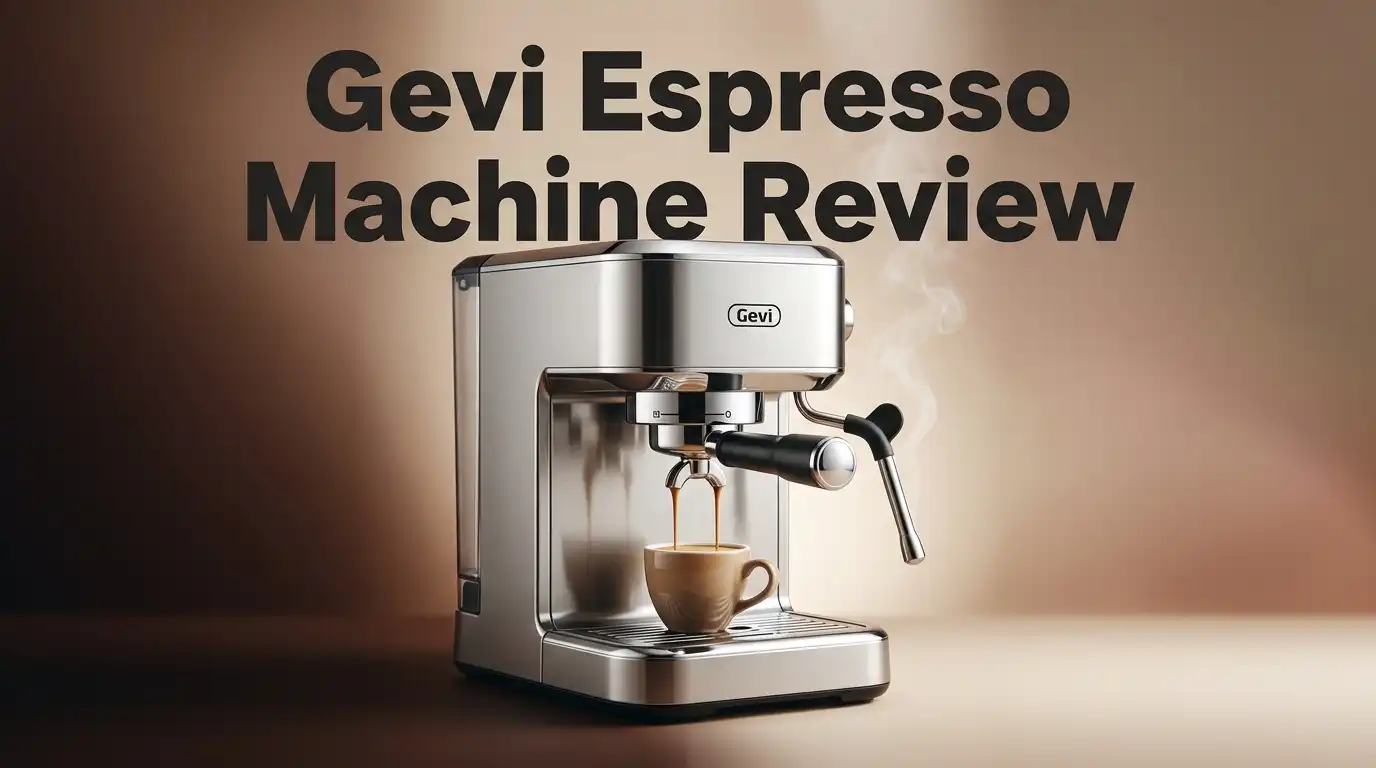
Gevi Espresso Machine Review 2026: Worth Buying?
Espresso machines under $200 usually ask you to lower your expectations. Gevi keeps refusing to play along.
The brand has spent the last few years selling stainless steel machines with 20 bar pumps, LED panels, and steam wands at prices that feel like a typo. Thousands of Amazon buyers have taken the bet, and the ratings stay surprisingly high.
But high ratings do not tell you how the portafilter feels at 6am, or whether the crema is real. This review walks through the two Gevi machines most people actually shop for in 2026, covers the unboxing, the shot quality, the milk foam, and the parts that genuinely annoy owners.
In a Nutshell:
- Gevi builds the best budget espresso hardware per dollar right now. You get a thermoblock heater, a 20 bar pump, a steam wand, and a stainless steel face for roughly $120 to $200. Machines at double the price often skip the LED display.
- The 20 bar number is marketing, not magic. Real espresso extraction needs about 9 bars. The pump simply has headroom. A 15 bar machine can taste identical if you dial in your grind properly.
- Shot quality is good, not great. Testers describe Gevi espresso as bold and full bodied but a little flat in flavor depth. The pressurized double wall baskets are the main reason.
- Milk foam is a genuine strength. The steam wand pushes plenty of power and makes thick, pillowy foam in under a minute. Microfoam for latte art stays difficult.
- The build is light and plasticky in places. The machine slides on the counter when you lock the portafilter. The included tamper is plastic. Budget about $40 for a metal tamper, a milk pitcher, and a single wall basket.
- Best for beginners, students, small kitchens, and RV owners. Serious home baristas chasing complex single origin shots will outgrow it within a year.
Why Gevi Keeps Showing Up in Every Budget Coffee List

Last update on 2026-10-22 / Affiliate links / Images from Amazon Product Advertising API
Gevi is a kitchen appliance brand that found its lane and stayed in it. The company sells ice makers, kettles, and blenders, but espresso machines made its name. The strategy is simple. Take the features people notice on expensive machines, put them in a compact body, and undercut everyone on price.
That approach works because most home coffee drinkers are not chasing competition level espresso. They want a latte that beats the drive through, and they want it before work. Gevi machines hit that target with room to spare.
The 2026 lineup splits into three groups. Compact manual machines sit at the bottom around $120. Machines with built in conical burr grinders sit in the middle. Dual boiler models with touchscreens sit at the top near $400.
The value sweet spot has stayed in the middle tier. Bean to cup convenience at a price where the competition still sells you a plain steam wand. That is the reason Gevi keeps appearing in budget roundups year after year.
Gevi 20 Bar Espresso Machine with Milk Frother
This is the machine most people picture when they hear the Gevi name. It is the compact stainless steel unit with a side dial, a 1 liter removable tank, and a panarello steam wand on the right side.
The heating system uses a thermoblock rather than a traditional boiler. That means roughly 45 seconds from cold to ready, instead of the ten minute wait older machines demanded. Two separate thermostats manage brew temperature and steam temperature, so your shot does not come out scalded right after you froth milk.
You get a 51mm portafilter, two pressurized filter baskets, a plastic scoop tamper, and a drip tray with a red float that pops up when the tray fills. The lid doubles as a passive cup warmer.
The volume of single and double shots is programmable, though the button sequence is fiddly and lives in the back of the manual. At around 9 pounds, this machine fits in a camper van or a dorm room without complaint.
Gevi 20 Bar Espresso Machine with Grinder and Steam Wand

Last update on 2026-10-22 / Affiliate links / Images from Amazon Product Advertising API
This model is the all in one version, and it solves the biggest weakness of the cheaper unit. A conical burr grinder sits on the left, feeding ground coffee straight into the portafilter. No separate grinder purchase. No stale preground coffee.
The water tank jumps to 2.8 liters, which matters if you make several drinks each morning. Dual heating handles brewing and steaming, and the grind dial is clearly labeled so beginners can adjust without guesswork.
A former barista who tested this machine praised the honesty of the design. There are no menus, no touchscreens, and no hand holding. If the shot tastes bad, the fix is yours to find through grind size and dose.
The steam wand behaves unpredictably on this model. Steam can arrive in 10 seconds or take 35, and the small indicator light is easy to miss. Frothing 5 ounces of milk to serving temperature takes roughly 56 seconds once steam actually shows up.
Top 3 Alternative for Gevi Espresso Machine

Last update on 2026-10-22 / Affiliate links / Images from Amazon Product Advertising API
CASABREWS 3700 Essential Stainless Steel Espresso Machine


Last update on 2026-10-22 / Affiliate links / Images from Amazon Product Advertising API
De’Longhi Stilosa Compact Manual Espresso Machine

Last update on 2026-10-22 / Affiliate links / Images from Amazon Product Advertising API
Breville BES500BSS Bambino Plus Espresso Machine
The Unboxing Experience: First 20 Minutes
Gevi ships these machines in a plain brown box with molded foam inserts. Nothing luxurious, nothing damaged. The machine sits in a clear plastic bag, and the accessories hide in a small cardboard tray below it.
Lifting the machine out surprises most people. It feels lighter than it looks in photos. The stainless steel front panel is real metal, but the sides, top, and base are plastic with a metallic finish. That gap between expectation and reality is the single most common complaint in owner reviews.
Inside the accessory tray you find the portafilter, two filter baskets, the plastic scoop tamper, and a thin manual. No milk pitcher. No cleaning brush. No descaling solution.
Setup takes about ten minutes. Rinse the tank, fill it, run two cycles of plain water through the group head, then purge the steam wand. The manual recommends this and you should actually do it, because the first cycle tastes like warm plastic.
How the Espresso Actually Tastes
This is where honesty matters more than enthusiasm. Testers who pulled shots on the Gevi with a 14 gram dose reported an even extraction and a decent golden crema layer. The preset double shot lands around 2 ounces, which is correct.
The flavor verdict is mixed. One detailed review described the espresso as bold and full bodied but lacking depth and complexity, and noted that no amount of tweaking fixed it. That is a fair description. You get strength. You do not get the layered fruit and chocolate notes a $600 machine reveals.
The pressurized double wall baskets carry most of the blame. They force crema artificially by pushing coffee through a tiny hole, which hides grind mistakes but also flattens flavor.
Swapping in a single wall 51mm basket changes the experience considerably. Suddenly grind size matters, the machine rewards fresh beans, and the shots taste more like real espresso. That $15 upgrade is the highest value purchase any Gevi owner can make.
Steam Wand and Milk Foam Performance
The milk side genuinely impresses for the money. Gevi uses a stainless steel panarello wand with a rubber heat shield near the top, so your fingers stay safe while you adjust the pitcher.
Steam power is strong. Five ounces of cold whole milk reach serving temperature in under a minute. The foam comes out thick and pillowy, exactly what a cappuccino needs, and it holds shape long enough to drink slowly.
Latte art is another story. Panarello wands inject air through side holes, and that produces bubbly foam rather than the glossy microfoam that pours rosettas. If latte art is your goal, this is not your machine.
The wand also has limited range of motion because it is not mounted on a ball joint. You will reposition your pitcher more than the wand. The tip unscrews easily for cleaning, and testers found it less prone to milk buildup than rival machines at the same price.
Heat Up Speed and Daily Workflow
Speed is one of the strongest arguments for buying a Gevi. Flip the rear power switch and the thermoblock reaches brew temperature in roughly 45 seconds. Icons on the LED panel stop flashing when the machine is ready.
A realistic morning routine looks like this. Power on, grind and dose while it heats, lock the portafilter, place your cup, select single or double, and turn the side dial. Total time from cold machine to finished latte sits near three minutes.
Auto shutoff kicks in after 15 minutes of inactivity, which is helpful if you rush out the door.
The workflow has one real irritation. The machine is light enough to slide across the counter when you twist the portafilter into the group head. You end up bracing it with one hand every single time. Owners learn this within a day, but it never stops feeling cheap.
What the Gevi Does Not Do Well
Every honest review needs this section, so here it is without softening.
The housing is mostly plastic despite marketing photos suggesting otherwise. The included tamper is plastic and too small for the basket, so your tamp will be uneven until you replace it.
Accessories are missing across the board. No milk pitcher, no cleaning brush, no single wall baskets, and no pod adapter unless you buy it separately. Competing machines often include more in the box.
Cup clearance tops out near 4.4 inches. Removing the drip tray does not reliably create space for a travel mug, so tall tumblers are out.
There is no pressure gauge on the cheaper model, which makes diagnosing a bad shot harder for beginners. There is no manual temperature control either.
Steam timing on the grinder model is genuinely unpredictable, ranging from 10 to 35 seconds, and the indicator light is small enough to miss entirely.
Pros and Cons of the Gevi Espresso Machine
Here is the balanced summary in list form.
Pros
- Outstanding price to feature ratio. Thermoblock heating, LED display, and a real steam wand at a price where rivals offer none of the three.
- Fast heat up near 45 seconds, which makes weekday espresso realistic rather than aspirational.
- Compact and lightweight at about 9 pounds, so it fits small counters, dorm rooms, offices, and camper vans.
- Strong steam power that produces thick, warm foam for cappuccinos in under a minute.
- Simple controls with a short learning curve, ideal for first time espresso owners.
Cons
- Plastic body and plastic tamper undercut the stainless steel appearance in product photos.
- Pressurized baskets flatten flavor, and single wall baskets are not included.
- The machine slides during portafilter locking because it is too light to stay planted.
- No milk pitcher, brush, or pod adapter included, so budget for extras.
- Latte art is out of reach with the panarello style wand.
- Short cup clearance blocks travel mugs and tall glasses.
Cleaning and Maintenance Routine
Maintenance is straightforward, and skipping it is the fastest way to kill any budget machine.
After every drink, purge the steam wand and wipe it with a damp cloth. Gevi machines have no auto purge function, so milk left inside the wand will dry and clog the tip. The tip unscrews for a deeper clean once a week.
Knock out the puck, rinse the basket, and backflush the group head with plain water every few days. The drip tray lifts straight out with no awkward latches, and the red float tells you when to empty it.
Descaling matters more than most owners realize. Run a descaling cycle every two months, or monthly if your water is hard. The manufacturer recommends a citric acid based descaler.
Never put any component in the dishwasher. Heat and detergent warp the plastic parts and degrade the group head seal. A damp cloth handles the exterior and the water tank perfectly well.
Accessories Worth Buying With Your Gevi
Think of the Gevi as a strong base that needs three cheap upgrades. Each one costs less than a bag of specialty beans.
A stainless steel tamper comes first. The included plastic scoop cannot deliver even pressure across the puck, and uneven tamping causes channeling. A proper 51mm tamper costs around $15 and fixes the problem permanently.
A single wall filter basket comes second. This is the upgrade that changes flavor. Real espresso extraction produces real crema and much clearer taste. Pair it with fresh beans and a decent grinder.
A milk pitcher comes third. Frothing in a mug is unsafe and produces poor foam. A 12 ounce stainless steel pitcher costs about $12.
If you bought the model without a grinder, add a burr grinder to the list. Preground coffee loses its aromatic oils within days, and no espresso machine can recover what is already gone.
Who Should Buy a Gevi Espresso Machine in 2026
The Gevi fits a specific person very well and disappoints a different person completely.
Buy it if you are new to espresso. The controls are simple, the price limits your risk, and you learn real barista skills like dosing, tamping, and steaming without spending $700 first.
Buy it if space or mobility matters. Small apartments, office kitchens, dorm rooms, and camper vans all suit a 9 pound machine with a 45 second warmup.
Buy it if milk drinks are your priority. Cappuccinos and lattes come out genuinely good, and the espresso underneath milk tastes better than it does on its own.
Skip it if you are already a home barista. If you weigh your dose, track extraction time, and chase tasting notes, the pressurized baskets and lack of pressure control will frustrate you within weeks. Spend more and buy once.
Price and Value Verdict for 2026
The compact Gevi with a milk frother sits near $120 to $130. The grinder equipped model runs closer to $200 to $300 depending on the sale. Dual boiler models reach $360 to $600.
At $120, the value is hard to argue with. You are getting a functioning espresso machine with a thermoblock and a real steam wand for roughly the cost of a month of cafe lattes. Break even arrives in about five weeks.
At $200 with a built in grinder, the value stays strong because separate grinders alone cost that much.
Above $350, the math gets weaker. At that level you are competing with established brands that offer better temperature stability, better portafilters, and better resale value.
Gevi is not the best espresso machine. It is the best inexpensive espresso machine, and those are different achievements. Buy it knowing exactly which one you are getting, and it will serve you well.
Frequently Asked Questions
Is Gevi a good espresso machine brand?
Yes, for the price bracket it targets. Gevi delivers a strong ratio of features to cost and its machines carry solid Amazon ratings. The brand does not compete with premium Italian machines on build quality or flavor nuance, and it does not pretend to.
Does 20 bar pressure make better espresso?
No. Proper espresso extraction happens at about 9 bars. A 20 bar pump simply has extra headroom and loses pressure across the system before the coffee sees it. A well dialed 15 bar machine tastes just as good.
Do I need a separate grinder for a Gevi espresso machine?
You need one for the compact models, which accept only ground coffee. The all in one models include a conical burr grinder. Fresh grinding improves flavor more than almost any other change you can make.
Can I make latte art with a Gevi machine?
Realistically, no. The panarello style wand produces thick, bubbly foam rather than the silky microfoam latte art requires. You can make excellent cappuccinos, but pouring hearts and rosettas will be very difficult.
How long does a Gevi espresso machine last?
Owners commonly report two to four years of daily use with regular descaling. The one year warranty covers repair or replacement for manufacturing defects. Consistent cleaning and soft water extend the lifespan considerably.
Is the Gevi worth it compared to a De’Longhi Stilosa?
The Gevi offers faster heat up and an LED display, while the Stilosa offers a heavier, more planted body. Both use pressurized baskets. Choose Gevi for speed and features, Stilosa for stability and brand support.

Hi, I’m Emma Lee — the coffee-obsessed creator behind Morning Drip Vault. I spend my days testing coffee machines, exploring brewing techniques, and reviewing the latest coffee gear. My mission is simple: helping you find the perfect machine to brew your best cup, every single morning.