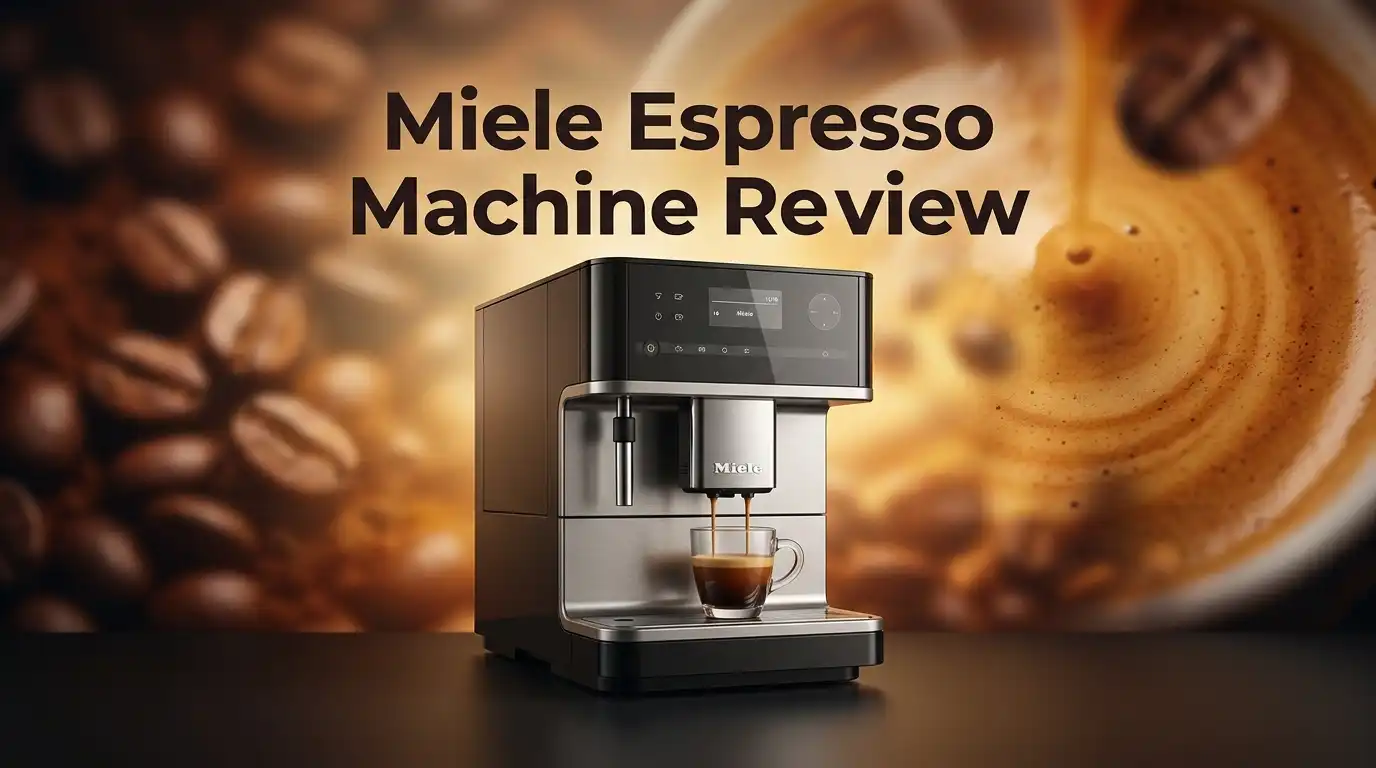
Miele Espresso Machine Review 2026: Worth It?
Miele does not shout. While other brands push touchscreens, app ecosystems, and glowing lights, Miele keeps building the same quietly confident bean to cup machines it has built for years.
That restraint confuses some shoppers. It also explains why a Miele espresso machine still sits on kitchen counters a decade after purchase.
This review covers the CM 5310 Silence, the CM 6360 MilkPerfection, and the flagship CM 7750 CoffeeSelect. You will read about the chocolate heavy espresso, the clever double milk hose, and the milk valve that clogs when owners skip cleaning. Real praise. Real problems. Let us pour.
In a Nutshell:
- Build quality leads the category. Miele housings use plastic with stainless steel parts, and several components carry a dishwasher safe symbol. Very few competitors print that symbol on a drip tray. Owners regularly report five to ten years of daily service.
- Espresso tastes rich and chocolatey. The AromaticSystem preinfusion soaks the puck before full pressure arrives. The machine also doses generously, so shots pour thick and syrupy rather than thin and sharp.
- The milk system splits opinion. The double hose rinses itself without removing the tube from the jug, which is brilliant. Yet milk temperature lands near 120 degrees Fahrenheit, and some owners call that lukewarm.
- Cleaning discipline is mandatory. The milk valve contains two small balls. Skip rinsing for two or three days and those balls seize with dried milk. This causes most milk complaints you will read online.
- The app adds almost nothing. Reviewers and owners describe it as half baked. Treat WiFi as a bonus, never as a reason to buy.
- Pricing sits high. Expect roughly $1,750 for the CM 5310, around $2,599 for the CM 6360, and over $6,000 for the CM 7750.
Why Miele Still Matters in 2026


Last update on 2026-10-20 / Affiliate links / Images from Amazon Product Advertising API
Miele launched its countertop coffee range decades ago and has refined it slowly ever since. The brand sells appliances, not gadgets. That mindset shapes every machine in the CM lineup.
You get a text display with physical sensor buttons. No swiping. No menus hidden three layers deep. Press cappuccino and a cappuccino arrives. My grandmother could operate a CM 6360 in four minutes, and that is a compliment.
Competitors chase features. Miele chases consistency. The grinder, the brew unit, and the pump have barely changed because they already work. Some reviewers find this boring. Daily users find it reassuring.
The brand also keeps parts available for years and runs an authorized service network across the United States. For a machine in this price bracket, serviceability matters more than drink counts printed on a box.
Miele CM 6360 MilkPerfection Review
The CM 6360 sits in the sweet spot of the range. It carries a 1.8 liter water tank, a 300 gram bean hopper, a stainless steel conical burr grinder, and 15 bar pump pressure. Seventeen drink options live in the menu, plus eight user profiles.
The headline feature is the double milk pipework. A second tube carries rinse water while a valve closes the milk supply. You no longer yank a sticky hose out of the jug after every latte. That single detail saves real effort every morning.
Drinks arrive very hot from the factory settings. You will probably turn the temperature down, not up. Espresso smells like melted chocolate before the cup fills. The included glass milk flask looks expensive because it is.
At roughly $2,599, the CM 6360 asks a lot. It also delivers the most complete Miele experience without jumping to flagship money.
Miele CM 5310 Silence Review

Last update on 2026-10-20 / Affiliate links / Images from Amazon Product Advertising API
The CM 5310 Silence is the entry door into Miele ownership. It costs around $1,750, which is still serious money, yet it shares the same brewing philosophy as its pricier siblings.
The name earns itself. Miele wrapped the grinder and pump in sound insulation, so morning brewing will not wake a sleeping household. Owners consistently mention this as the standout trait.
The machine includes OneTouch for Two, so it pulls two cappuccinos at once. The 1.3 liter tank sits smaller than the CM 6360 tank, and the milk container is a simple insulated flask rather than glass. Drink variety is narrower too.
Espresso quality stays full bodied and syrupy with medium and dark roasts. Amazon ratings hover near 3.4 stars, which deserves honesty. Early firmware caused descaling cycles to stall on some units, and Miele addressed this through service updates.
Unboxing Experience: What Actually Arrives
The box feels heavier than expected. A CM 6360 weighs about 21.8 pounds, and the packaging uses molded cardboard inserts rather than loose foam peanuts.
Lift the lid and the accessories sit in a labeled tray. You find the glass milk container, a stainless steel milk rod, a starter sachet of cleaning tablets, descaling tablets, a cleaning brush, and a printed instruction booklet. Miele still prints a real manual, and it is genuinely readable.
The machine arrives wrapped in soft fabric rather than static plastic. Fingerprints show immediately on obsidian black, so keep the cloth. Peel the film from the display and the drip tray.
First setup takes about twelve minutes. You pick a language, set water hardness, fill the tank, and run a rinse cycle. The grinder sounds alarming on the very first run, then settles.
Top 3 Alternative for Miele CM 6360

Last update on 2026-10-20 / Affiliate links / Images from Amazon Product Advertising API
Jura E8

Last update on 2026-10-20 / Affiliate links / Images from Amazon Product Advertising API
De’Longhi Dinamica Plus

Last update on 2026-10-20 / Affiliate links / Images from Amazon Product Advertising API
Philips 5400 LatteGo
Coffee and Espresso Quality in Real Cups
Taste is where Miele justifies the invoice. The AromaticSystem preinfuses the coffee bed, which means water wets the grounds gently before the pump reaches full pressure. Extraction becomes more even as a result.
Chocolate dominates the flavor profile. Brazilian and Central American beans turn syrupy and sweet. Dark roasts shine. The DoubleShot function grinds a second dose midway through brewing, which pushes intensity higher without burning the shot.
Here is the honest caveat. Light and medium roast fans sometimes find the cup too mild. One owner using 100 percent arabica crema beans struggled to escape a bitter or sour result until adjusting dose and volume.
Expert Mode lets you set water volume between roughly 0.6 and 10 ounces, adjustable even during brewing. Dial espresso near 1.2 ounces and coffee near 4 ounces as a starting point, then taste and tweak.
The Milk System Explained Without Marketing Talk
Miele markets a “double Venturi process” and claims it steams milk twice for a lighter texture. Strip away the language and the reality is simpler. The machine uses a second steam burst and a dual hose path.
What genuinely works: foam texture on small drinks. Cappuccino and espresso macchiato come out balanced, fine, and glossy. The automatic rinse through the second tube is the best cleaning idea in the category.
What does not work for everyone: heat. Milk exits around 120 degrees Fahrenheit. A trained barista expects nearer 150. One owner tried preheating milk, then discovered warm milk refuses to foam properly.
Larger drinks suffer most. A latte macchiato in a tall glass cools fast. If scalding hot milk defines your morning, a machine with a manual steam wand will satisfy you more.
Grinder, Noise, and Grind Settings
The stainless steel conical burr grinder lists five settings, yet the adjustment dial feels close to stepless in practice. Setting two from the finest gives a solid espresso baseline.
On paper the grinder measures around 74.8 decibels. That number looks loud. In a real kitchen the sound arrives dull and brief rather than piercing, because dense housing materials absorb vibration. The CM 5310 goes further with added insulation.
Miele uses steel burrs rather than ceramic. Steel cuts faster and handles oily dark roasts without clogging as readily. Very oily beans still gum up any burr set, so store beans sensibly.
A bypass chute accepts preground coffee for decaf drinks. The hopper holds 300 grams, which covers about four days for a two person household pulling four drinks daily.
Cleaning and Descaling: The Part Nobody Reads
This section decides whether you love or hate your machine. Miele guides you through rinsing at startup and shutdown, and the prompts are hard to ignore.
Dishwasher safe parts are the real luxury. The water tank and drip tray carry the symbol and survive a cycle without warping. The brew unit must always be washed by hand under warm water.
Now the warning. The milk valve contains two tiny balls that stick when dried milk builds up. Owners who skip the rinse for a few days report blocked milk flow. Remove the valve weekly, soak it, and the problem disappears.
Descaling uses Miele tablets and runs automatically only when the machine is switched off. Some owners hit a repeating descale prompt, which usually traces back to an interrupted cycle or a missing milk valve.
What Miele Does Not Do Well
Authentic reviews name the weak spots. Here they are without softening.
The app is pointless. Owners and reviewers reach the same conclusion. It starts a brew remotely, which rarely helps since you still need a cup positioned.
Milk temperature underdelivers for anyone who likes very hot lattes. This is the single most repeated complaint.
The tea settings are gimmicky. They essentially dispense hot water at varied temperatures. Calling them tea profiles oversells them.
The display looks dated next to Jura and KitchenAid color screens. Function wins, style does not.
Amazon ratings sit modest near 3.3 to 3.4 stars, largely from early firmware faults during cleaning cycles. That history deserves disclosure even though service updates resolved it.
Running costs add up. Proprietary cleaning tablets, descaling tablets, and water filters are ongoing purchases.
Pros and Cons of Miele Espresso Machines
Pros
- Exceptional build quality with stainless steel internals and dishwasher safe outer parts
- Rich, chocolatey espresso thanks to preinfusion and generous dosing
- Clever double milk hose that rinses without removing the tube from the jug
- Very simple button and text display interface that anyone can operate
- Quiet operation, especially on the Silence models
- Eight user profiles on the CM 6360 with full control over volume, strength, and temperature
- Strong authorized service network and long parts availability
Cons
- Milk arrives cooler than many people want, around 120 degrees Fahrenheit
- Milk valve clogs if you skip regular rinsing and weekly soaking
- The companion app offers little real value
- Display design feels old next to color touchscreen rivals
- High purchase price plus proprietary consumables
- Light roast drinkers may find cups underwhelming
- Tea functions feel like filler rather than features
Miele CM 7750 CoffeeSelect: The Flagship Option
The CM 7750 is the showpiece. It carries three separate bean hoppers, so you can keep espresso beans, a breakfast blend, and decaf loaded at once. The machine selects the right hopper per drink automatically.
You also get a 2.2 liter water tank and roughly twenty one touch recipes, including cold milk options. The cup illumination and motorized spout feel appropriately theatrical for the money.
Then comes the number. Expect somewhere above $6,000, which places it against commercial equipment. Coffee quality does not triple at triple the price.
Buy the CM 7750 for one reason only. If your household genuinely drinks three different coffees and you refuse to swap beans, the triple hopper solves a real problem. Otherwise the CM 6360 pours very similar coffee for far less.
Price, Warranty, and Long Run Costs
Miele prices shift with promotions, so treat these as guides. The CM 5310 lands near $1,750. The CM 6360 sits around $2,599. The CM 7750 climbs past $6,000.
Standard warranty runs two years in the United States. Dealers and retailers sometimes bundle extended coverage, and that extension changes the value equation considerably. Ask before buying.
Budget for consumables. Cleaning tablets, descaling tablets, and water filters cost roughly $100 to $150 per year for a busy household. Bulk packs on Amazon reduce this noticeably.
Compare against café spending honestly. Two daily lattes at $6 each total about $4,380 per year. A CM 6360 pays for itself inside eight months for a two person household. That math, not the spec sheet, convinces most buyers.
Who Should Buy a Miele Espresso Machine
Buy a Miele if you value durability over novelty. The ideal owner wants excellent milk drinks every morning, hates fiddly setups, and plans to keep the machine for a decade.
The CM 5310 suits couples in apartments who want quiet operation and strong espresso without the flagship bill. The CM 6360 suits families with several coffee preferences and a kitchen where appearance matters.
Skip Miele if you chase light roast clarity, demand very hot milk, or love tinkering with pressure profiles. A manual machine with a separate grinder serves that person better for similar money.
Also skip it if cleaning routines annoy you. Miele forgives occasional laziness, but the milk valve does not forgive weeks of neglect. Honest self assessment saves disappointment here.
Final Verdict: Is Miele Worth It in 2026?
Yes, with conditions. A Miele espresso machine buys you build quality, consistency, and genuinely delicious chocolatey espresso. It does not buy you cutting edge technology or barista hot milk.
The CM 6360 MilkPerfection remains the smartest pick across the range. It offers the best milk hardware, eight profiles, and a design that looks good in any kitchen. The CM 5310 Silence makes a strong budget case for quiet households.
Set your expectations correctly and this machine will delight you daily. Expect a Swiss watch and you will be fine. Expect a spaceship and you will feel shortchanged.
My recommendation stands simple. If longevity and low effort mornings matter most, Miele earns the money. If flavor experimentation drives you, spend less here and more on beans.
Frequently Asked Questions
Does Miele make good espresso machines?
Yes. Miele builds some of the most durable bean to cup machines available, with stainless steel grinders, preinfusion, and dishwasher safe outer parts. Espresso quality is rich and consistent. The main weakness is milk temperature rather than coffee quality.
How long does a Miele coffee machine last?
Owners commonly report eight to twelve years of daily use with proper rinsing and descaling. Miele supports its machines through an authorized service network, and replacement parts stay available for years after purchase.
Why does my Miele machine keep asking to descale?
Usually the cycle was interrupted or the milk valve was not inserted. Automatic descaling only runs when the machine switches off, so leaving it powered on blocks completion. Reinsert the valve, switch the machine off, and let the full cycle finish.
Is Miele better than Jura?
Both brands pour excellent coffee. Miele wins on cleaning access and dishwasher safe parts. Jura wins on screen design and drink variety. Miele machines are also easier for owners to clean thoroughly, which matters over many years.
Why is my Miele milk not frothing?
Dried milk inside the valve is the usual cause. Two small balls inside the valve stick when cleaning is skipped. Remove the valve, soak it in warm water, clear the hoses, and foaming returns.
Which Miele espresso machine should I buy first?
Start with the CM 5310 Silence if budget leads your decision. Choose the CM 6360 MilkPerfection if you drink milk based coffee daily and want the improved milk system plus eight user profiles.

Hi, I’m Emma Lee — the coffee-obsessed creator behind Morning Drip Vault. I spend my days testing coffee machines, exploring brewing techniques, and reviewing the latest coffee gear. My mission is simple: helping you find the perfect machine to brew your best cup, every single morning.