Bosch Espresso Machine Review 2026: Worth It?
Bosch is famous for dishwashers, drills, and ovens. Now the German brand wants a spot on your kitchen counter with a lineup of super automatic espresso machines.
The VeroCafe family arrived in North America recently, and it promises café drinks at the tap of a screen. But promises and great espresso are two different things.
This review covers the 800 Series, the 500 Series, and the 300 Series in plain language. You will learn what each machine does well, what it fumbles, and whether your money belongs here or somewhere else in 2026.
In a Nutshell:
- Bosch builds three main countertop models. The 300 Series sits near $498, the 500 Series lands around $799, and the flagship 800 Series costs roughly $1,499. All three use a ceramic flat burr grinder and a sealed bean hopper.
- The 800 Series has the best screen in the family. The 5 inch color touchscreen is bright, fast, and genuinely easy to read. You can brew 36 drinks through the CoffeeWorld menu, though many taste nearly identical.
- Espresso quality is fine, not thrilling. Shots come out balanced with chocolate and nut notes. Depth and complexity are missing. Milk drinks taste better than straight espresso on every Bosch model I tried.
- Build quality does not match the price. The bodies are mostly plastic. The dispenser spout feels flimsy. The water tank lid on the 800 Series fits loosely.
- Cleaning is a real strength. The Calc’nClean routine walks you through every step on screen. The brew unit pops out from the front and rinses under the tap in seconds.
- Value is the weak spot. Each Bosch machine costs more than rivals with better grinders and more grind settings. Buy on sale, not at full price.
Why Bosch Jumped Into the Espresso Market


Last update on 2026-10-20 / Affiliate links / Images from Amazon Product Advertising API
Bosch has made home appliances for almost two centuries. The company has also sold fully automatic coffee machines in Europe for more than fifty years. North America simply never saw most of them.
The post pandemic home coffee boom changed that. People started buying grinders, scales, and bean subscriptions. Bosch saw the opportunity and shipped the VeroCafe line stateside.
The strategy makes sense on paper. Bosch already owns kitchen credibility. Shoppers who love their Bosch dishwasher may trust a Bosch coffee machine without much research.
The problem is competition. DeLonghi, Philips, Jura, and Gaggia have spent decades refining their super automatics in this market. Bosch arrived late and priced itself like a veteran. That decision shapes almost every criticism in this review.
Bosch 800 Series VeroCafe: The Flagship
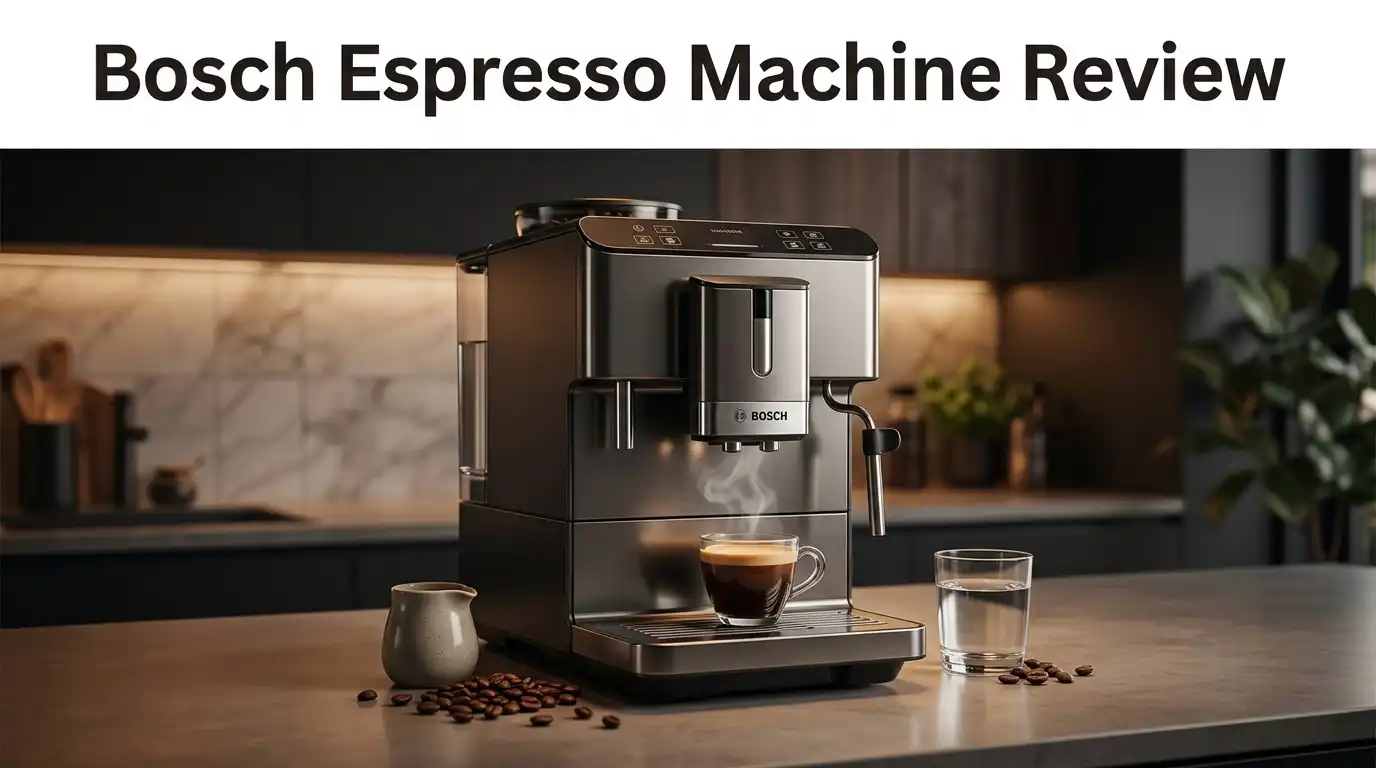
The 800 Series VeroCafe is the machine Bosch wants you to see first. Model number TQU60307 carries a 5 inch TFT touchscreen, a 2.4 liter side loading water tank, and a 19 bar pump.
The grinder is a ceramic flat burr unit Bosch calls Ceram Drive. The hopper holds 320 grams of beans, enough for a full retail bag.
Milk comes from a 700 milliliter carafe that plugs into the side. The machine froths automatically and steam rinses the circuit afterward.
You also get WiFi, Home Connect app support, Alexa, and Google Home. The double cup function brews two drinks at once, including milk drinks.
On paper this is a complete package. The sticking point is the $1,499 asking price, which puts it against some very serious competition.
Unboxing the Bosch 800 Series VeroCafe
The box is big but surprisingly light. The whole machine weighs only 22 pounds, which tells you how much plastic sits inside that silver shell.
Bosch packs a tidy welcome kit. You get a Mavea water filter, a filter insertion aid, a microfiber cloth, two cleaning tablets, one descaling tablet, and a water hardness test strip.
Setup took me about ten minutes. You test your water hardness, slot in the filter, fill the tank, and run a rinse cycle. The screen walks you through each step with clear icons.
I never opened the user manual. That says something good about the interface design. First shot landed in the cup about fifteen minutes after I cut the tape.
Top 3 Alternative for Bosch 800 Series VeroCafe

Last update on 2026-10-20 / Affiliate links / Images from Amazon Product Advertising API
De’Longhi Magnifica Evo Automatic Espresso Machine

Last update on 2026-10-23 / Affiliate links / Images from Amazon Product Advertising API
Philips 3200 Series Fully Automatic Espresso Machine with LatteGo

Last update on 2026-10-22 / Affiliate links / Images from Amazon Product Advertising API
Breville BES870XL Barista Express Espresso Machine
Bosch 500 Series VeroCafe: The Middle Child

Last update on 2026-10-20 / Affiliate links / Images from Amazon Product Advertising API
The 500 Series VeroCafe costs around $799 and wears a clean piano black finish. Model TPU40109 uses a color TFT screen surrounded by touch buttons rather than a full swipe screen.
Honestly, I prefer this approach. The menu holds nine drinks including ristretto, cappuccino, and flat white. Nothing feels buried.
Milk works through a hose system. You attach a tube to the spout, drop the other end in your own milk container, and the machine pulls what it needs. Your milk goes straight back in the fridge afterward, which is smarter than a separate carafe.
The double cup function grinds twice instead of splitting one shot. That detail matters, and plenty of pricier machines skip it. The 1.9 liter tank sits at the rear, so measure your cabinet clearance first.
Bosch 300 Series VeroCafe: The Entry Point
The 300 Series VeroCafe is the cheapest way into the family at roughly $498. In Europe this same machine sells as a budget model, which makes the North American price feel ambitious.
You get a compact body, a 1.4 liter tank, and a 250 gram hopper. The display is a simple text screen with illuminated sensor keys.
The grinder offers only three grind settings. By 2026 standards that is hard to defend. Avoid very light and very dark roasts, because the burrs cannot cope with either extreme.
Milk frothing uses an odd wand that dips into your cup. It works, but it belongs to an earlier decade. Four drinks total means espresso, coffee, cappuccino, and latte macchiato, with no americano option.
Design and Build Quality
Bosch went modern with the VeroCafe styling. The 800 Series looks more like a small 3D printer than a coffee machine. Boxy edges, silver panels, and a big glowing screen dominate the look.
The 500 Series is calmer. Its black finish blends into most kitchens without shouting for attention.
All three machines share the same weakness. The housings are mostly plastic with a few stainless accents. The dispenser spout on the 800 Series flexes more than I would like at this price.
The water tank lid also sits loosely. Small things, but at $1,499 small things get noticed. Maximum cup height is 5.5 inches across the range, so tall travel mugs will not fit.
The Ceramic Grinder Explained
Every VeroCafe uses a ceramic flat burr grinder. Bosch brands it Ceram Drive, which sounds impressive but just means ceramic burrs.
Ceramic burrs resist heat and stay sharp for a long time. They do not automatically run quieter, though. I measured the 300 Series at 72.9 decibels, and the noise quality resembles a lawnmower chewing a twig.
Grind adjustment is the real issue. The 800 and 500 Series give you six settings. The 300 Series gives you three.
Six settings is workable. Three is restrictive. For comparison, a similarly priced DeLonghi offers thirteen steps. More steps mean better control over extraction, especially when you switch bean origins or roast levels.
What Is the AromaMax System?
Bosch mentions AromaMax everywhere in its marketing. The explanation stays vague no matter where you look.
From what I can gather, AromaMax describes the grinder, pump, flow heater, and brew unit working together. Some controller manages dose, water volume, flow rate, and brew temperature.
Here is my honest take. That describes what every fully automatic espresso machine already does. Jura, Philips, and DeLonghi all invent similar names for the same engineering.
On the 800 Series you can pick three AromaSelect profiles: mild, balanced, and distinctive. You also get four strength levels. In testing, maxing out both settings produced the best cup every single time, which suggests the lower settings exist mostly to fill the menu.
Milk Frothing Systems Compared
Each Bosch model handles milk differently, and the differences matter more than the spec sheet suggests.
The 800 Series uses a 700 milliliter carafe that clicks into the side. It is easy to use and dishwasher safe. It is also completely uninsulated, so you must return it to the fridge after every session. Swapping between dairy and oat milk means emptying the whole container.
The 500 Series uses a hose. You drop it into any container you like, which makes switching milks painless.
The 300 Series uses a frothing wand that you push down into your cup. Fill the cup one third full or it overflows. None of these systems allow manual steaming, so latte art is off the table entirely.
Drink Menus and the CoffeeWorld Feature
The 800 Series advertises 36 drinks through its CoffeeWorld menu. Recipes include café au lait, cortado, americano, Viennese styles, and regional specialties. The screen even shows a landmark from each drink’s home country while it brews.
It looks fun. It is also mostly theatre. The machine has coffee, water, and milk. No syrups, no sweeteners, no flavor pods.
Many recipes produce near identical results under different names. A few genuinely shine, though. The café con leche came out strong, sweet, and legitimately delicious. The latte macchiato looked and tasted right, and you can even program the pause between foam and espresso.
The Slow Brew option tasted pleasant but thin. Skip the cold brew setting completely. Five minutes of waiting produced a flat, disappointing drink.
How the Espresso Actually Tastes
This section decides whether a coffee machine earns its keep. I tested with a direct trade Brazilian blend at a medium light roast.
I pushed strength to maximum, set aroma to distinctive, dialed the grinder to its finest setting, and raised brew temperature. The espresso came out acceptable rather than exciting.
Chocolate and hazelnut notes appeared. Caramel sweetness showed up too. Depth and complexity did not.
The 300 Series had a bigger problem. Its espresso landed at only 127 degrees Fahrenheit, which is simply too cold. Preheating cups did not fix it.
Milk drinks save the day across the lineup. Espresso hidden under warm foam tastes rich and satisfying. If you drink cappuccinos, you will be happy. If you drink straight espresso, look elsewhere.
Smart Controls and the Home Connect App
Only the 800 Series offers app connectivity. It pairs with WiFi, Home Connect, Alexa, and Google Home.
The app builds a personalized coffee playlist based on your habits. You can start a brew from bed, which feels genuinely luxurious on cold mornings.
There are limits worth knowing. You still need to fill the tank, hopper, and milk carafe in advance. You also need a cup sitting under the spout, or you will mop the counter instead of sipping coffee.
I recommend remote brewing only for black coffee. The milk carafe is not insulated, so leaving dairy sitting out while you sleep is a bad idea. The 500 and 300 Series have no app at all.
Cleaning and Maintenance
Cleaning is where Bosch quietly outperforms expectations. Every model includes the Calc’nClean function, which displays step by step instructions on screen.
The machines rinse automatically at startup and shutdown. That single habit prevents most flavor buildup in the brew path.
The service door opens from the front. The brew unit slides out, rinses under hot water, and air dries. No tools, no puzzle.
The drip tray, grounds bin, and milk carafe all detach for washing. The included water filter does more for machine longevity than anything else in the box.
Expect to descale every few months depending on your water hardness. Ignore those reminders and limescale will slowly kill the machine.
What Bosch Espresso Machines Do Not Do Well
Honest reviews name the flaws, so here they are without softening.
Espresso temperature runs low, especially on the 300 Series. Grind adjustment is limited across the whole range. Plastic construction undercuts the premium feel at premium prices.
The 800 Series milk carafe has no insulation. The cold brew function produces something I would not serve to a guest. The ristretto setting blocks aroma adjustment for no clear reason.
There is no pre ground coffee bypass on the 800 Series, so evening decaf means emptying the hopper. The 300 Series cannot make an americano because it lacks a hot water spout.
Most importantly, nothing here beats similarly priced rivals on raw coffee quality. Bosch sells convenience and screens, not extraction excellence.
Pros and Cons of Bosch Espresso Machines
Pros
- The touchscreen on the 800 Series is bright, fast, and genuinely intuitive. I never needed the manual.
- Cleaning is simple thanks to Calc’nClean, a removable brew unit, and automatic rinse cycles.
- The 500 Series hose milk system handles dairy and plant milks without any hassle.
- Double cup brewing on the 500 and 800 Series grinds twice, giving each cup a full dose.
- Milk based drinks taste consistently good, and the café con leche is excellent.
- Compact footprints fit most kitchen counters, and all models run quietly enough in the morning.
Cons
- Prices sit above comparable machines from DeLonghi, Philips, and Gaggia.
- Grind settings are limited, with only three on the 300 Series.
- Straight espresso lacks depth and often arrives below ideal temperature.
- Plastic housing, a flexing spout, and a loose tank lid feel cheap at these prices.
- The cold brew function produces poor results and wastes five minutes.
- No manual steam wand means no latte art ever.
Who Should Buy a Bosch Espresso Machine?
Buy a Bosch VeroCafe if convenience ranks above craft. You want a button, a screen, and a drink. You do not want to weigh beans or time shots.
The 500 Series suits most households. It costs the least per useful feature and handles milk intelligently.
Choose the 800 Series only if the touchscreen and app genuinely excite you, and only if you find it discounted.
Skip the 300 Series at full price. Three grind settings and cold espresso do not justify $498.
Avoid the whole lineup if you are a hands on home barista. You will want pressure control, finer grind steps, and a real steam wand. A semi automatic machine with a separate grinder will make you far happier.
Price and Value in 2026
Pricing moves constantly, so treat these figures as a snapshot. The 300 Series hovers near $498, the 500 Series near $799, and the 800 Series near $1,499. Black variants of the 800 Series have dipped closer to $1,298 during sale events.
Prime Day and holiday promotions bring real discounts. I have seen the 800 Series drop several hundred dollars.
At full retail, value is weak. At 25 percent off, the 500 Series becomes a reasonable choice. At 35 percent off, even the 800 Series starts to make sense.
Set a price alert and wait. Bosch machines go on sale often enough that paying list price feels unnecessary.
Frequently Asked Questions
Is the Bosch 800 Series worth $1,499?
Not at full price in my opinion. The screen and app are excellent, but espresso quality matches machines costing half as much. Wait for a sale.
Can Bosch espresso machines use plant milk?
Yes. Oat and soy milk froth acceptably on all three models. The 500 Series handles milk swaps best because you simply move the hose to a different container.
How many grind settings do Bosch machines offer?
The 800 and 500 Series offer six. The 300 Series offers only three, which limits your bean choices significantly.
Do Bosch machines make real cold brew?
No. The 800 Series has a cold brew setting, but the result is thin and disappointing. Pull a double shot over ice instead.
How often should I descale my Bosch machine?
Follow the on screen prompts. In hard water areas expect descaling every two to three months. Using the included water filter stretches that interval considerably.
Can I make latte art with a Bosch VeroCafe?
No. All three models use automatic frothing with no manual steam wand. Foam texture is fine for drinking but wrong for pouring designs.
What warranty does Bosch offer?
Bosch includes a two year warranty on these countertop machines. Retailers sometimes sell extended coverage separately.
Which Bosch model offers the best value?
The 500 Series VeroCafe. It balances price, drink quality, and a sensible milk system better than its siblings, especially during a promotion.

Hi, I’m Emma Lee — the coffee-obsessed creator behind Morning Drip Vault. I spend my days testing coffee machines, exploring brewing techniques, and reviewing the latest coffee gear. My mission is simple: helping you find the perfect machine to brew your best cup, every single morning.