
De’Longhi Stilosa Espresso Machine Review 2026: Still Worth It?
Espresso at home used to mean spending hundreds of dollars. The De’Longhi Stilosa broke that rule. It sits near the bottom of the price chart, yet it pulls real espresso with a real pump and a real steam wand. That combination keeps it on the bestseller lists year after year.
But cheap machines hide trade offs, and this one hides several. I spent weeks pulling shots, steaming milk, and cleaning drip trays to find out where the Stilosa shines and where it frustrates.
This review covers the unboxing, the shot quality, the steam power, the annoying parts nobody mentions, and the upgrades that change everything. If you want honest answers before you spend your money, keep reading.
In a Nutshell:
- The Stilosa makes genuine espresso, not fake coffee. A 15 bar pump and a stainless steel boiler push hot water through a 51 mm portafilter. With decent beans and a decent grinder, shots taste rich and sweet.
- The price is the main attraction. The list price sits around $149.95, but street prices often drop near $99. That puts it under the cost of a month of café lattes for many people.
- Build quality matches the price. Plastic dominates the body, the portafilter handle, and the tamper. Nothing feels premium, and nothing pretends to.
- Steaming is the weakest area. The pannarello wand produces bubbly foam rather than silky microfoam. Small milk quantities work fine. Large lattes fight back.
- Upgrades unlock huge gains. A bottomless portafilter, a precision 51 mm basket, and a proper tamper turn this budget box into a surprisingly capable brewer.
- Beginners win here. Enthusiasts may outgrow it. The machine teaches espresso basics cheaply, and it rewards patience, but it lacks a PID, a pressure gauge, and steam power.
What Is the De’Longhi Stilosa Espresso Machine?


Last update on 2026-10-22 / Affiliate links / Images from Amazon Product Advertising API
The Stilosa is a manual espresso machine from De’Longhi, sold in the US as model EC260BK. Manual here means you control the shot. You grind, you dose, you tamp, and you flip a switch. The machine does not grind beans and does not froth milk automatically.
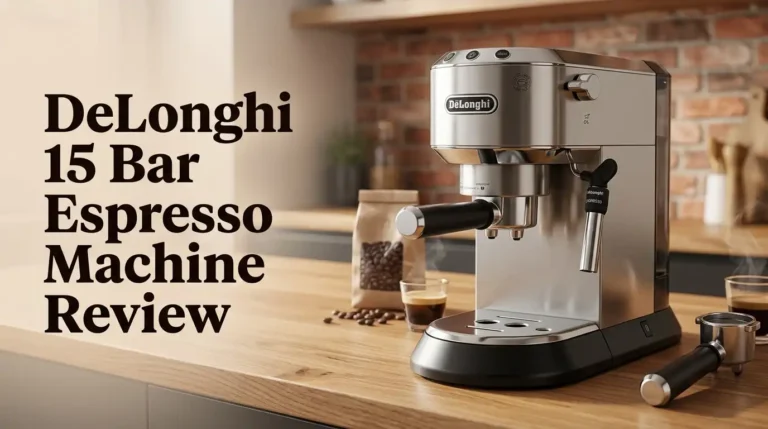
It uses a 15 bar pump and a stainless steel boiler. A 51 mm portafilter locks into the group head with two lugs. A pannarello style steam wand handles milk and hot water.
De’Longhi aims this model at first time espresso buyers. The goal is simple access, not professional control. You get the core espresso experience in a footprint smaller than most toasters, and you get it for roughly the price of a nice dinner out.
Unboxing Experience: What Arrives in the Box
The box is small and light. Mine weighed under ten pounds with packaging, so carrying it from the doorstep took one hand.
Inside, cardboard inserts hold the machine firmly. The body arrives wrapped in a plastic sleeve. The power cord sits taped to the back panel.
Lift the water tank lid and you find the accessories hiding inside the reservoir. That includes the portafilter, two filter baskets, and a plastic tamper and scoop combo tool.
That tamper is honestly a joke. It weighs almost nothing and feels like a bottle cap on a stick. Most owners replace it within a week.
A short instruction manual completes the package. There is no descaler, no cleaning brush, and no coffee sample. The unboxing takes about ninety seconds, and then you are staring at a very small espresso machine wondering if it can really work.
Key Specifications at a Glance
The US model runs on 120 volts and draws 1100 watts. Dimensions measure roughly 13.5 inches deep, 8.07 inches wide, and 11.22 inches tall. Shipping weight lands near 8.61 pounds.
The water tank holds 33.8 ounces, which equals about one liter. It removes for filling and sits behind a window so you can check the level without lifting the lid.
The boiler holds roughly 150 ml of water. That is small, even compared to other single boiler machines. Small boilers heat quickly and cool quickly.
Heat up takes about three to five minutes from cold. Switching from brew to steam takes around 35 seconds.
One control knob handles everything. You choose standby, brew, or steam. There is no display, no PID, no pressure gauge, and no timer. Simplicity is the design philosophy here.
Top 3 Alternative for De’Longhi Stilosa Espresso Machine

Last update on 2026-10-22 / Affiliate links / Images from Amazon Product Advertising API
De’Longhi EC685M Dedica Deluxe Espresso Machine

Last update on 2026-10-22 / Affiliate links / Images from Amazon Product Advertising API
Breville BES450BSS Bambino Espresso Machine

Last update on 2026-10-22 / Affiliate links / Images from Amazon Product Advertising API
CASABREWS 3700 Essential Espresso Machine
Build Quality and Design
Plastic covers most of the Stilosa. The side panels, the top lid, the drip tray, and the portafilter handle all use it. A stainless steel accent panel on the front adds a little visual polish.
The machine feels light enough to slide across the counter when you lock in the portafilter. Many owners hold the body with one hand while twisting.
This is the honest reality of a sub $150 espresso machine. De’Longhi spent the budget on the pump and the boiler, not the shell.
The cup tray sits low, so tall mugs do not fit under the group head. You can remove the drip tray grate for a little extra clearance.
The design is compact and tidy, and it looks fine in a small kitchen. It just never feels like an heirloom appliance.
How the 15 Bar Pump Performs
Fifteen bars sounds impressive on the box. In practice, espresso tastes best around six to nine bars of brew pressure. The Stilosa runs hotter and harder than ideal.
The saving grace is water flow. The machine pushes water slowly, around 184 ml per minute, which is far below the typical 400 ml per minute of similar models. That slow flow softens the aggressive pressure and gives the coffee puck time to saturate.
There is no pressure gauge, so you cannot read what is happening. You judge by taste and by the look of the stream.
Experienced users can even fake pressure profiling. Flip the switch on for a few seconds, pause for preinfusion, then resume. That trick costs nothing and improves flavor noticeably.
Espresso Taste Test Results
Here is the surprise. The Stilosa can pull genuinely good espresso.
With a burr grinder, fresh beans, and an unpressurized basket, testers have measured extraction yields above 22 percent. That number sits right in professional territory.
Shots come out sweet, thick, and aromatic when the grind is correct. Crema forms properly rather than foaming up and collapsing.
The US model ships with pressurized baskets. Those baskets create artificial crema and forgive bad grinding. Convenient for beginners, limiting for anyone chasing flavor.
Temperature runs a few degrees hot after idling. Purge a short burst of water through the group head before brewing, and the taste improves right away.
Bean quality matters more than the machine here. Stale supermarket coffee will taste stale no matter what you do.
Milk Frothing and Steam Wand Performance
This is where the Stilosa struggles most. The pannarello wand injects air automatically, which produces thick and bubbly foam rather than glossy microfoam.
Steam power is modest. Small volumes work reasonably well. In testing, 120 ml of oat milk reached 57 degrees Celsius in about 35 seconds, though the wand added over 11 ml of water to the milk.
Large latte volumes expose the limits. The boiler runs out of steam before the milk reaches proper texture.
Latte art is possible but hard. You will spend time skimming bubbles off the top before pouring.
Some owners remove the pannarello sleeve to expose the bare steam tip. That mod gives more control but demands better technique. Cappuccino drinkers will be happier than flat white purists.
Daily Use and Workflow
The routine is simple. Fill the tank, flip the switch, wait three to five minutes, and lock in the portafilter to preheat it.
Grind, dose, tamp, and lock the portafilter into place. Flip to brew and watch the shot.
For milk drinks, switch to steam and wait for the ready light. Purge the wand, steam the milk, then purge again.
One quirk matters. After steaming, the boiler sits too hot for brewing. Run about 60 ml of water through the group head, roughly 20 seconds, before pulling another shot.
Back to back drinks take patience. Making four cappuccinos for guests turns into a slow project.
The small boiler recovers faster than heavier machines, which is one benefit of all that light construction.
What the Stilosa Does Not Do Well
Honest reviews list the failures, so here they are.
The stock tamper is useless. Replace it immediately with a 51 mm metal tamper.
The stock portafilter is bulky and holds a plastic insert. Many third party baskets will not seat correctly inside it.
There is no PID temperature control, so brew temperature drifts. There is no pressure gauge, so you brew blind.
Steam power disappoints for anything larger than a small cappuccino.
Tall cups do not fit under the group head.
The body is light enough to shift when you lock in the portafilter.
Long term durability worries some owners. Reports of pumps and switches failing after two or three years appear regularly in owner forums. This is a budget appliance, not a lifetime purchase.
Cleaning and Maintenance
Cleaning takes minutes, not hours. The drip tray slides out and rinses in the sink.
Knock the used puck into the trash, rinse the basket, and wipe the portafilter. Doing this after every shot prevents stale oils from building up.
The steam wand needs attention right away. Purge it, then wipe it with a damp cloth before milk dries inside the pannarello sleeve. The sleeve pulls apart for deeper cleaning, which you should do weekly.
Descaling matters most of all. Hard water kills small boilers faster than anything else. Descale every two to three months, or monthly if your water is very hard.
Filtered water is the cheapest insurance you can buy for this machine. It reduces scale and improves taste at the same time.
Best Upgrades for the Stilosa
Three cheap upgrades transform this machine.
First, buy a bottomless portafilter. Make sure it has two lugs, not three, because the Dedica models use a different fitting. A bottomless unit lets you see extraction flaws and fits better baskets.
Second, add a precision 51 mm basket. Brands like IMS make baskets with consistent hole patterns that improve flow and flavor dramatically.
Third, buy a real tamper. A flat metal 51 mm tamper costs very little and gives even pressure.
A burr grinder is the biggest upgrade of all. No espresso machine can fix inconsistent grounds. Pair the Stilosa with a modest hand grinder and the shots jump several levels in quality.
Pros and Cons
Pros
- Very low price for a true pump driven espresso machine with a steam wand
- Pulls genuinely strong shots with extraction yields that rival expensive machines
- Fast heat up of roughly three to five minutes from cold
- Removable one liter tank with a visible water level window
- Compact footprint that fits small kitchens and dorm counters
- Simple one knob operation that beginners learn in one morning
- Accepts cheap 51 mm aftermarket upgrades
- Stainless steel boiler rather than aluminum
Cons
- Mostly plastic construction that feels flimsy
- Weak steam wand that produces bubbly foam instead of microfoam
- Useless plastic tamper and scoop included in the box
- No PID and no pressure gauge, so temperature and pressure run blind
- Bulky stock portafilter with a plastic insert
- Low clearance blocks tall mugs
- Pressurized baskets in the US model limit flavor potential
- Questionable long term durability compared to metal bodied machines
Price and Value in 2026
De’Longhi lists the Stilosa at $149.95. Real prices swing lower, and sales near $99 appear often during holiday events.
At that price, the value story is strong. A Breville Bambino costs roughly three times more. A Gaggia Classic costs four times more.
You are buying a learning machine. Spend $100 here, learn whether you actually enjoy the espresso hobby, then upgrade with real knowledge. That path costs less than buying an expensive machine you never master.
Add about $50 for a bottomless portafilter, a precision basket, and a tamper. Add another $70 or more for a basic hand grinder.
Total investment stays under $250 for a setup that makes café quality espresso at home. That math is hard to beat.
Who Should Buy the De’Longhi Stilosa
Last update on 2026-10-22 / Affiliate links / Images from Amazon Product Advertising API
Buy this machine if you are new to espresso and unsure how deep the hobby will go. It teaches grind size, dose, tamp, and timing without a large financial risk.
Buy it if counter space is tight. The narrow body fits where bigger machines cannot.
Buy it if you mostly drink straight espresso or small cappuccinos. Those drinks suit the machine’s strengths.
Skip it if you want silky latte art every morning. Skip it if you brew six drinks back to back. Skip it if you refuse to buy a separate grinder.
Skip it if you expect a machine that lasts a decade. The Stilosa trades longevity for accessibility, and it makes that trade openly.
Final Verdict
The De’Longhi Stilosa punches far above its price. The pump works, the boiler heats, and the shots taste real. With a few cheap accessories, it produces espresso that embarrasses machines costing three times more.
The flaws are equally real. The plastic build feels cheap. The steam wand disappoints. The included tamper belongs in the recycling bin.
My rating sits at 4 out of 5 for value and 3 out of 5 for build quality.
If your budget is around $100 and you want honest espresso, this is the machine to buy. If your budget stretches past $300, the Bambino or Dedica will serve you better and longer. The Stilosa knows exactly what it is, and it delivers on that promise.
FAQs
Is the De’Longhi Stilosa good for beginners?
Yes. The single knob control and short heat up time make it easy to learn. You control grind, dose, and tamp, which teaches real espresso skills. The pressurized baskets forgive early mistakes while you practice.
Does the Stilosa need a separate grinder?
Yes, for the best results. Preground coffee works with the pressurized basket, but the flavor stays flat. A burr grinder produces fresher, more consistent grounds and improves shot quality more than any other upgrade.
What size portafilter does the Stilosa use?
It uses a 51 mm portafilter with two lugs. Make sure any replacement you buy has two lugs, since some other De’Longhi models like the Dedica use a three lug design that will not fit.
Can you make latte art with the Stilosa?
It is difficult. The pannarello wand creates bubbly foam rather than microfoam. You can pour simple hearts with small milk volumes after practice, but detailed art is a real challenge on this machine.
How long does the De’Longhi Stilosa last?
With regular descaling and cleaning, many owners report three to five years of daily use. Hard water and neglected maintenance shorten that life considerably. Filtered water and quarterly descaling help the most.
Is the Stilosa better than the Dedica?
The Dedica offers a slimmer body, faster thermoblock heating, and programmable shot volumes. The Stilosa costs noticeably less and has a real boiler. Choose the Dedica for convenience and the Stilosa for value.

Hi, I’m Emma Lee — the coffee-obsessed creator behind Morning Drip Vault. I spend my days testing coffee machines, exploring brewing techniques, and reviewing the latest coffee gear. My mission is simple: helping you find the perfect machine to brew your best cup, every single morning.