
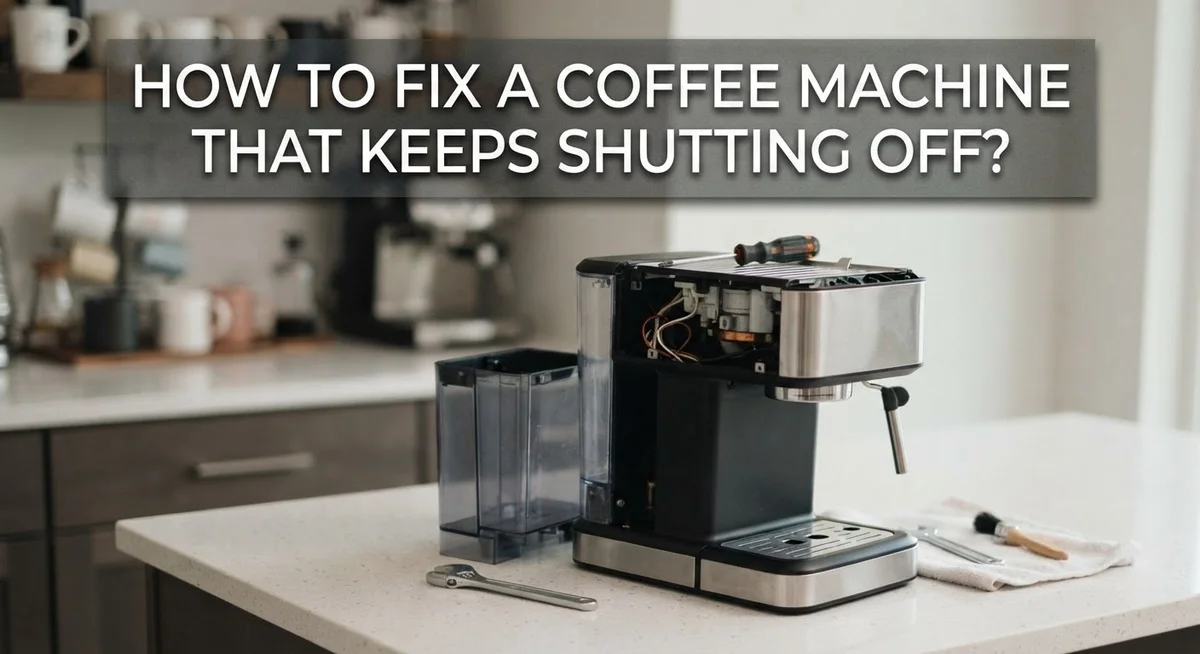
How To Fix A Coffee Machine That Keeps Shutting Off?
Nothing feels worse than watching your coffee machine turn off mid-brew. You stand there, half awake, staring at a dead screen instead of a hot cup.
The good news is that this problem is very common. Most coffee machines shut off due to a few simple reasons.
Scale buildup, loose power connections, and overheating protection are usually the top culprits. Sometimes it is something as small as an improperly seated water tank.
Other times, air bubbles or a worn out internal switch cause the shutdown. Aging parts inside the machine can also trigger random power loss.
In a Nutshell
- Check the power source first. A loose cord or unstable outlet often causes sudden shutoffs. Plug your machine into a different outlet to test this.
- Inspect the water reservoir. Make sure it sits properly in its slot. An empty tank or a faulty sensor can trick the machine into shutting down.
- Look for scale buildup. Mineral deposits block water flow and trigger overheating protection. Descaling regularly keeps your machine running smoothly.
- Clear out air bubbles. Trapped air inside the system can confuse internal sensors. Emptying and shaking the reservoir often solves this.
- Reset the machine. Unplug it for a few minutes. This simple step fixes many minor electrical glitches.
- Check internal switches and connections. Aging components or loose contacts inside the base can cause random shutdowns.
Why Coffee Machines Keep Shutting Off: Common Causes
Your coffee machine shuts off for several reasons. Understanding these causes helps you fix the problem quickly and keep your machine running smoothly.
Overheating is the most common culprit. Coffee machines have a thermal fuse that acts like a safety switch. When the internal temperature gets too high, this fuse triggers a shutdown. This protects your machine from damage. Scale buildup makes overheating worse because mineral deposits restrict water flow and force the heating element to work harder.
Scale and mineral buildup happens naturally over time. Hard water leaves deposits inside your machine. These deposits block the water needle and create back pressure. The machine senses this problem and shuts down to protect itself.
Power connection issues cause unexpected shutoffs too. A loose power cord or unstable outlet interrupts electricity flow. Your machine needs consistent power to stay on during brewing. Check that your cord fits snugly into both the machine and wall outlet.
Sensor malfunctions also trigger shutdowns. The empty water tank sensor sometimes fails. Your machine thinks the reservoir is empty when it actually contains water. This confusion causes the machine to turn off mid brew.
Air bubbles trapped inside the system confuse internal sensors. These pockets of air disrupt water flow and trigger safety mechanisms.
Aging internal components wear out over time. Old switches and loose internal connections cause random shutoffs. These parts simply need replacement after years of use.
Improper water reservoir seating is another issue people overlook. If the reservoir doesn’t click into place properly, the machine detects a problem and shuts down. Make sure it sits flush in its slot before brewing.
Understanding Mid-Brew Shutoffs and Overheating Protection
Your coffee machine has built in safety features that stop it from running when something goes wrong. Understanding how these features work helps you fix shutoff problems faster.
Thermal fuse protection is your machine’s main safety system. When water gets too hot inside the brewing chamber, a thermal fuse activates and cuts power immediately. This prevents fires and damage to internal parts. The machine restarts only after it cools down enough. This is actually a good thing, but it becomes frustrating when it happens during brewing.
Scale buildup triggers shutoffs by blocking water flow. When minerals accumulate inside the heating chamber, water cannot move freely. Pressure builds up behind the clogged area. The machine senses this pressure change and shuts down to protect itself. This happens more often in areas with hard water.
Clogged needles create similar problems. The needle that punctures coffee pods or filters can get blocked by coffee grounds or mineral deposits. Blocked needles force water to back up, which raises pressure inside the system. Your machine detects this pressure spike and powers off.
Empty tank sensors sometimes malfunction. These sensors tell your machine when the water reservoir is empty. A faulty sensor might think the tank is empty even when it is full. The machine shuts off to prevent running dry and damaging the heating element.
Air bubbles trapped in the water lines confuse your machine’s sensors. These bubbles block water flow and create false pressure readings. The machine interprets this as a problem and stops brewing.
Understanding these protection systems helps you troubleshoot effectively. Your machine is not broken. It is simply doing its job by shutting down when it detects something abnormal.
Step-by-Step Troubleshooting Guide
Start by unplugging your machine from the wall outlet completely. Wait at least 30 seconds before plugging it back in. This simple reset often clears temporary glitches that cause shutoffs.
Next, check your water reservoir carefully. Remove it from the machine and inspect the seating area where it connects. Make sure the reservoir clicks firmly into place. A loose reservoir can trigger sensors that think the tank is empty, causing the machine to shut down mid-brew.
Examine your power cord for any visible damage like cuts, fraying, or exposed wires. Test the outlet by plugging in another appliance like a lamp. If that device works fine, your outlet is stable. If it doesn’t work, try a different outlet to rule out electrical problems.
Now inspect the machine’s base. Look for any loose wires or connectors where the cord enters the device. Gently push connections to ensure they’re tight. Don’t force anything, but confirm nothing is wiggling.
Fill the reservoir with fresh water and run a test cycle without coffee. Watch for any unusual sounds or immediate shutoffs. If it shuts down quickly, the problem likely involves internal components.
Check for mineral scale buildup inside the water lines. This blockage restricts flow and triggers overheating protection. The machine thinks it’s overheating and shuts down to protect itself.
If none of these steps solve the problem, your machine may have a faulty thermal fuse, broken internal switch, or malfunctioning sensor. These components require professional repair or replacement. Document which step revealed the issue so you can explain the problem clearly to a technician.
Checking Power Connections and Electrical Issues
Power connections are often the first place to check when your coffee machine shuts off unexpectedly. Start by unplugging the machine completely from the wall outlet. Wait at least 30 seconds before plugging it back in. This simple reset can fix temporary electrical glitches.
Next, inspect your power cord carefully. Look for cuts, fraying, or any exposed wires along the entire length. A damaged cord creates safety risks and causes shutdowns. If you see damage, stop using the machine immediately.
Check where the power cord connects to the machine’s base. Make sure this connection is tight and secure. Loose connections interrupt power flow and trigger automatic shutoffs. Gently wiggle the cord at the connection point to feel for any movement or looseness.
Examine your wall outlet next. Plug a different appliance into the same outlet to test if it works properly. A faulty outlet won’t deliver steady power to your machine. Try using a different outlet in another room to see if the problem stops.
Look at the machine’s control board if you can access it safely. Inspect the internal connections where wires attach to the board. Corrosion or loose wires here cause power interruptions. Make sure all connections appear clean and tight.
Check your home’s circuit breaker. If the breaker trips when you use the coffee machine, you likely have an electrical overload or short circuit. This is a serious issue requiring professional help.
Test with a different power outlet if possible. Sometimes the problem isn’t your machine at all. A weak or unstable outlet causes random shutoffs. Moving your machine to a different location can reveal whether the outlet itself is the culprit.
Descaling and Clearing Scale Buildup
Scale buildup is one of the most common reasons your coffee machine shuts off unexpectedly. Minerals from water accumulate inside your machine’s internal tubes and heating elements. This buildup restricts water flow and forces your machine to work harder.
When water cannot flow freely, pressure builds up inside the system. Your machine’s thermal protection then kicks in and shuts everything down to prevent damage. This happens even if your machine is relatively new.
Descaling removes mineral deposits that block water pathways. You should descale your machine every one to three months, depending on your water hardness. Machines used daily need more frequent descaling than those used occasionally.
Start by emptying your water reservoir completely. Fill it with a descaling solution mixed with water according to standard ratios. Run the solution through your machine slowly into a cup or container below.
Let the solution sit inside your machine for about 15 to 20 minutes. This gives the descaling liquid time to break down mineral deposits. Then run more solution through the system.
After descaling, refill your reservoir with fresh water only. Run several cycles of plain water through your machine. This rinses out any remaining descaling solution completely.
Pay special attention to the needle that punctures coffee pods or grounds. Scale often clogs this needle, creating dangerous back pressure. Use a small brush or pipe cleaner to gently clear any visible buildup around this area.
Regular descaling prevents most shutoff problems caused by mineral accumulation. Your machine will run more smoothly and heat water faster. You’ll also notice better tasting coffee since minerals won’t affect the brewing process.
Preventive Maintenance to Stop Future Shutoffs
Preventive maintenance stops most coffee machine shutoffs before they start. The key is consistency and attention to small details that keep your machine running smoothly.
Clean your water reservoir every week. Empty it completely and rinse the inside with warm water. Wipe away any residue or mold that builds up on the walls. A clean reservoir prevents sensor confusion and keeps water flowing properly.
Descale your machine every one to three months. This depends on your water hardness. Hard water needs more frequent descaling. Scale blocks water flow and triggers the thermal protection system. Your machine shuts off to protect itself from overheating when water cannot circulate freely.
Check your power outlet monthly. Plug in a lamp or phone charger to confirm it works. Loose outlets cause intermittent power loss. Tighten the outlet if possible or switch to a different one nearby.
Inspect your power cord every few months. Look for cracks, fraying, or exposed wires. A damaged cord creates electrical problems that cause unexpected shutoffs.
Empty and refill your water tank properly. Make sure the reservoir sits completely in place. A loose tank triggers empty water sensors. Listen for a click when you insert it.
Run test cycles without coffee grounds. This flushes air bubbles from the system. Air pockets confuse sensors and interrupt brewing cycles.
Store your machine in a dry location away from humidity. Moisture damages internal electrical components over time.
Check all visible connections inside the machine base twice yearly. Loose wires and contacts cause intermittent shutoffs. Tighten them gently if you can access them safely.
These simple steps prevent 80 percent of shutoff problems. Regular care keeps your machine reliable for years.
Common Mistakes That Make the Problem Worse
Many people make mistakes that actually make their coffee machine shutoff problem worse. Understanding these errors helps you avoid them.
The first big mistake is ignoring scale buildup. People often think their machine just needs rest, but mineral deposits keep building up inside. Ignoring this creates more pressure on the system. The machine shuts off to protect itself from damage. You must address scale buildup directly instead of hoping it goes away.
Another common error is not seating your water reservoir properly. The tank needs to click or lock into place completely. If it sits loose, sensors cannot detect water levels correctly. Your machine thinks the tank is empty and shuts down. Always push your reservoir firmly into position until you feel it secure.
Many people overlook air bubbles trapped in the system. These bubbles block water flow and cause pressure problems. When pressure builds, your machine activates its safety shutoff. Simply shaking out your water tank and refilling it slowly helps remove trapped air.
Failing to check your power supply stability is another mistake. People assume the outlet works fine, but loose connections or unstable power cause shutoffs mid brew. Test your outlet with a different appliance to confirm it works properly.
Don’t keep using your machine when it shuts off repeatedly. Each shutoff cycle strains internal components more. This accelerates wear on your thermal fuse and control board. Address the problem immediately instead of pushing through multiple brewing attempts.
Finally, people often skip regular maintenance thinking their machine is fine. Waiting until problems appear means more damage has already occurred. Weekly cleaning and monthly checks prevent most shutoff issues before they start.
When to Seek Professional Repair
Your coffee machine needs professional help when basic troubleshooting stops working. Know the right time to call a technician so you don’t waste money or damage your machine further.
Call a professional if your machine keeps shutting off after you’ve tried all the simple fixes. Unplug it, check connections, descale it, and test it several times. If the problem persists, internal parts likely need replacement.
Thermal fuse failure requires professional service. This safety component protects your machine from overheating. When it breaks, only a technician can replace it safely. You’ll notice your machine powers on but shuts off within seconds or minutes.
Control board damage is another sign you need help. If your machine randomly shuts off without any pattern, the circuit board may be faulty. Technicians have tools to test and repair these electronic components.
Water leaks combined with shutoffs mean internal seals are failing. Don’t attempt to fix this yourself. Water and electricity create serious safety hazards.
Strange sounds before shutdown indicate mechanical problems inside. Grinding, clicking, or buzzing sounds suggest internal components are wearing out or breaking.
Power cord damage is dangerous and needs professional attention. Never try to repair a damaged cord yourself. Frayed wires or exposed copper create fire and shock risks.
If your machine is relatively new and still under warranty, contact the manufacturer first. They often provide free repairs or replacements. Check your warranty paperwork for contact information and coverage details.
Professional repair usually costs less than replacing your entire machine. Technicians can diagnose problems quickly and fix them correctly. This saves you time and prevents further damage to your coffee maker.
Final Thoughts
A coffee machine that keeps shutting off feels frustrating. But most causes are simple to fix at home.
Scale buildup and loose water reservoirs cause most problems. Regular cleaning solves these issues fast.
Start with the basics every time. Check your water tank placement first. Then look at power connections.
Descaling remains your best defense against shutoffs. Mineral buildup blocks water flow and triggers safety switches. Consistent descaling prevents this entirely.
Small habits make a big difference here. Emptying your reservoir weekly stops moisture damage. Checking cords monthly catches problems early.
Your machine sends warning signs before failing completely. Strange sounds or repeated shutoffs signal deeper issues. Listen to these signals carefully.
Don’t ignore small problems hoping they disappear. They usually get worse over time. Quick action saves you money and stress.
Some fixes need professional hands. Thermal fuse failures and control board damage require expert repair. Trying to fix these yourself can be dangerous.
Trust your instincts about your machine’s health. If basic troubleshooting fails repeatedly, call for help. This protects both you and your machine.
Think about your machine’s age too. Older machines develop more internal issues naturally. Sometimes repair costs exceed replacement value.
Balance repair costs against buying new. A simple calculation helps here. Compare repair estimates with replacement prices honestly.
Most shutoff problems have straightforward solutions. Patience and regular maintenance keep your machine running smoothly. Your morning coffee routine deserves reliable equipment.
Take these steps seriously from today. Small efforts now prevent bigger headaches later. Your machine will thank you with consistent, reliable performance for years to come.
Frequently Asked Questions
Why does my coffee machine shut off in the middle of brewing?
Your machine likely shuts off due to overheating protection kicking in. When water gets too hot, a safety component stops the brewing process. Scale buildup inside the machine restricts water flow, which causes pressure to build up and triggers the shutdown. A clogged needle creates back pressure too. Power interruptions or loose connections can also cause mid-brew shutoffs.
How do I fix a coffee machine that keeps shutting off?
Start by unplugging your machine completely for several minutes. This resets the internal system. Check that your water reservoir sits properly in place and isn’t loose. Inspect your power cord for damage and ensure the outlet works correctly by plugging in another device.
Empty your water tank and shake out any trapped water or air bubbles. These bubbles block water flow and trigger shutdowns. Look at your control board connections to make sure nothing is loose.
What maintenance prevents my machine from shutting off?
Regular descaling is your best defense. Mineral buildup restricts water flow and causes overheating. Clean your water reservoir and brew basket weekly. Check your power outlet stability to rule out electrical issues.
Should I repair or replace my machine?
If basic troubleshooting doesn’t work, your machine needs professional service. Thermal fuse failure, control board damage, and power cord problems require expert hands. If your machine is new and under warranty, contact the manufacturer first. Consider your machine’s age before spending money on repairs.

Hi, I’m Emma Lee — the coffee-obsessed creator behind Morning Drip Vault. I spend my days testing coffee machines, exploring brewing techniques, and reviewing the latest coffee gear. My mission is simple: helping you find the perfect machine to brew your best cup, every single morning.