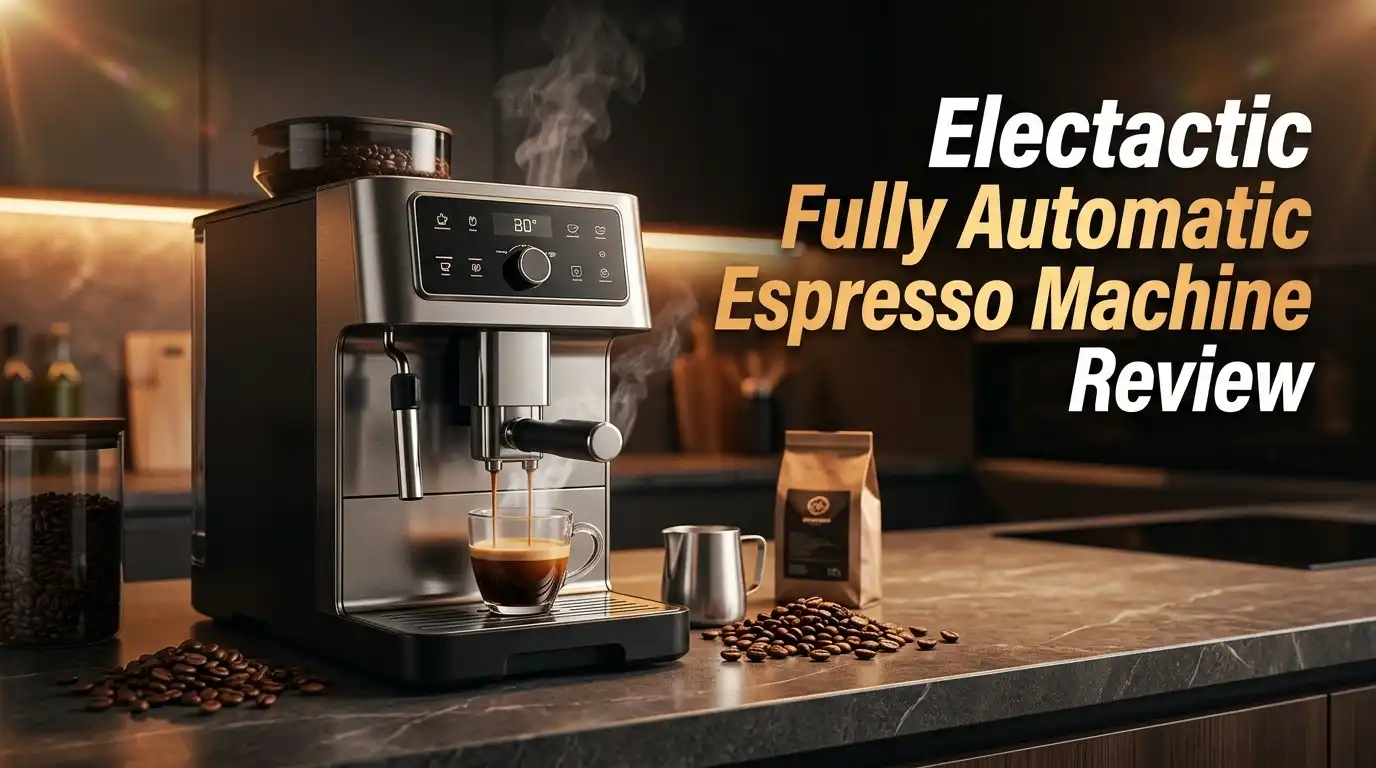
Electactic Fully Automatic Espresso Machine Review 2026: Worth Buying?
Coffee lovers keep asking the same thing in 2026. Can a bean to cup machine under $400 really replace a café visit? The Electactic Fully Automatic Espresso Machine promises exactly that.
It grinds whole beans, tamps them, brews espresso, and froths milk while you stand there doing nothing. That sounds great on paper. The brand sits in the crowded space of newer Amazon kitchen labels, so questions about quality are fair.
This review covers the unboxing, the espresso quality, the milk system, the noise, the cleaning routine, and the flaws nobody mentions in the product photos.
In a Nutshell: Key Takeaways
- The Electactic Fully Automatic Espresso Machine is a true bean to cup unit. You add whole beans, press one button on the touchscreen, and the machine grinds, doses, tamps, and brews without any manual work. That convenience is the main reason people buy it.
- Espresso quality sits above pod machines but below a good manual setup. Crema forms reliably. Flavor tastes clean and sweet with fresh medium roast beans. Dark oily beans cause more grinder complaints.
- The automatic milk frother removes the learning curve. You pour milk into the detachable tank, pick latte or cappuccino, and foam lands in your cup. Steam wand skills are no longer required.
- Cleaning is simple but constant. The self cleaning rinse handles the brew path. You still rinse the milk tank daily and empty the grounds bin every 8 to 12 shots.
- Price is the strongest argument. It usually sells between $300 and $400, which undercuts Philips, De’Longhi, and Ninja super automatics by a wide margin.
- Brand support is the weakest argument. Electactic is young, parts availability is thin, and long term reliability data barely exists. That risk is real and you should price it in.
Electactic Fully Automatic Espresso Machine


Last update on 2026-10-29 / Affiliate links / Images from Amazon Product Advertising API
The Electactic Fully Automatic Espresso Machine is a compact super automatic built for home kitchens. It pairs a conical burr grinder with 15 grind settings, a 20 bar pump, a touchscreen panel, and an automatic milk frothing system with a detachable milk tank. You control coffee volume, milk foam amount, and brew strength for each drink.
The machine covers espresso, double espresso, americano, latte, cappuccino, hot water, and manual frothing. Smart alerts tell you when beans run low, water runs low, or the grounds container fills up. An auto clean function flushes the brew path after use.
The core promise is simple. Press one button, get a café style drink, walk away. For households that drink two to four milk based coffees a day, that workflow saves real time every single morning.
Unboxing Experience and First Impressions
The box arrives heavier than expected, around 25 pounds with packaging. Inside, dense foam blocks hold the machine firmly, and the body sits inside a cloth bag that keeps the finish scratch free. Nothing shifted during shipping in my case.
The accessory pack includes a water hardness test strip, a cleaning brush, a measuring scoop, a drip tray, the detachable milk container, and a quick start guide. The manual is short and readable, with clear diagrams and very little translation weirdness, which is a pleasant surprise at this price.
Lifting the machine out takes two hands. The stainless steel front feels cool and solid. The plastic side panels feel lighter than the photos suggest. First setup took me about 12 minutes, including rinsing the tank, filling beans, running the priming cycle, and flushing two throwaway shots.
Design, Build Quality, and Counter Footprint
The Electactic uses a tall and narrow shape rather than a wide one. The unit measures roughly 17 inches deep, 7 inches wide, and 12 inches tall, so it slides into a slim gap beside a toaster. Depth matters more than width here. Check your counter before buying.
The front panel is brushed stainless steel. The bean hopper lid, drip tray, and side panels use plastic. The adjustable spout moves up and down to fit espresso cups or tall latte glasses, which is a detail cheaper machines skip.
Build quality lands in the middle. It feels sturdier than a $150 pod machine and lighter than a Philips or De’Longhi. The drip tray slides with a slight wobble. The bean hopper lid seals well enough to keep beans fresh for several days.
Top 3 Alternative for Electactic Fully Automatic Espresso Machine

Last update on 2026-10-29 / Affiliate links / Images from Amazon Product Advertising API
De’Longhi Magnifica Start Automatic Espresso Machine

Last update on 2026-10-26 / Affiliate links / Images from Amazon Product Advertising API
Philips 3200 Series Fully Automatic Espresso Machine with LatteGo

Last update on 2026-10-28 / Affiliate links / Images from Amazon Product Advertising API
Ninja Luxe Café Premier 3 in 1 Espresso Machine
Built In Grinder and Grind Settings
The conical burr grinder sits on top and feeds beans straight into the brew unit. You get 15 grind settings, adjusted with a dial inside the hopper. Always change the grind while the grinder runs. Turning the dial on a static burr can jam the mechanism, and the manual says so clearly.
Settings 5 through 8 produced the best results with medium roast beans. Finer settings pushed extraction time past 35 seconds and made shots taste harsh. Coarser settings gave fast, thin, sour shots.
Oily dark roast beans are the weak point. After two weeks of French roast, grind consistency dropped and the chute needed brushing. Medium roasts caused zero problems across the same period. Burr noise measures loud but short, around 6 seconds per single shot.
Brewing Performance and Espresso Quality
The 20 bar pump works with a pressurized brew chamber, which means crema appears almost no matter what you do. That crema looks thick and golden. Experienced drinkers will notice it dissipates faster than crema from a non pressurized portafilter.
Shot temperature stayed steady across back to back drinks in my testing, with the thermoblock heater reaching brewing temperature in under 40 seconds from cold. A double shot pulled in roughly 28 seconds at the recommended grind.
Flavor is genuinely good for the category. Chocolate and caramel notes come through on medium roasts. Bright fruity single origins taste flatter, since the pressurized system smooths out the high notes. This machine makes consistent, pleasant espresso rather than exciting espresso. For milk drinks, that difference matters very little.
Automatic Milk Frother and Drink Menu
The detachable milk tank clips onto the side and connects through a short tube. You fill it, select latte or cappuccino, and the machine draws milk, heats it, aerates it, and dispenses it before or after the coffee depending on the recipe. No wand technique needed.
Foam quality is solid for cappuccino. The bubbles sit slightly larger than true microfoam, so latte art is off the table. Whole milk produced the thickest foam. Oat milk performed well with barista blends. Skim milk made airy, dry foam that collapsed quickly.
The tank is the best design choice on this machine. It pops off and goes straight into the refrigerator with leftover milk inside. That one feature removes the biggest daily annoyance of automatic frothers, which is wasted milk.
Touchscreen Controls and Daily Workflow
The control panel mixes a small touchscreen with physical buttons. Icons show espresso, double espresso, americano, latte, cappuccino, hot water, manual froth, and cleaning. Response feels quick, though the screen needs a firm press rather than a light tap.
Customizing a drink takes seconds. Hold the drink icon, adjust coffee volume, milk volume, and strength, then save. The machine remembers your settings for next time. My saved latte uses a double shot with reduced milk, and it repeats perfectly every morning.
Smart alerts appear as icons for low beans, low water, full grounds bin, and cleaning due. The icons are not always obvious. I checked the manual twice during the first week to decode two of them. After that, the workflow becomes muscle memory and you stop thinking about it.
Water Tank, Bean Hopper, and Capacity
The removable water tank holds about 1.4 liters, which covers roughly eight to ten milk drinks before a refill. It lifts out from the side with a handle and fills easily under a standard faucet. The fill line is marked clearly inside.
The bean hopper holds around 250 grams of whole beans. That equals about 25 double shots. A sealing ring on the lid slows oxidation, though I still recommend filling only what you drink in three or four days.
The used grounds container sits behind the drip tray and holds 8 to 12 pucks. The capacity numbers suit one or two coffee drinkers comfortably. A busy household of four will refill water daily and empty grounds every other day, which is normal for machines in this size class.
Cleaning, Self Cleaning Cycle, and Descaling
The automatic rinse runs when you power the machine on and off. It flushes hot water through the brew path, which keeps old coffee oils from building up. That cycle takes about 20 seconds and drains into the drip tray.
The milk system gets its own cleaning program. You run water through the tube after each use, which takes one minute. Skipping it causes sour milk smells within two days, so this step is not optional.
The brew unit detaches for rinsing under the tap, a feature many sealed machines lack. Rinse it weekly. Descaling depends on water hardness, typically every two to three months. Plan on about five minutes of cleaning per day. Filtered water reduces scale and extends the life of internal parts noticeably.
Noise Level and Speed
The grinder is the loudest part of the process. It registers around 75 to 80 decibels for about six seconds, roughly the volume of a blender on low. If your bedroom shares a wall with the kitchen, people will hear it.
The pump adds a mid level hum during extraction. The milk system makes a sucking and hissing sound that surprises first time users. None of these noises last long.
Total time from pressing the latte button to a finished drink runs about 70 to 85 seconds from a warm machine. Add roughly 40 seconds from a cold start. That speed beats manual espresso workflows by several minutes once you count grinding, tamping, and wand cleanup. Back to back drinks come out without any waiting between them.
What the Electactic Does Not Do Well
Honest reviews list the problems, so here they are. Latte art is impossible with this frother. The foam is too bubbly and the dispensing is automatic, so you never pour milk yourself.
Oily dark roast beans cause grind inconsistency and chute buildup. Stick to medium roasts if you want trouble free months.
The pressurized brew system limits flavor clarity. Specialty light roasts taste muted compared to a proper manual machine with a quality grinder.
Brand support is thin. Electactic is a newer label, replacement parts are not stocked widely, and warranty response times vary between buyers. Reviews on the broader Electactic catalog also sit in the 3.5 star range, which signals inconsistent quality control across batches. Some units arrive perfect. A few arrive with leaking drip trays or faulty sensors. That lottery element is the biggest risk here.
Pros and Cons
Pros
- True one button operation from whole beans to finished latte, which removes every manual step for busy mornings
- Detachable milk tank stores directly in the refrigerator, cutting milk waste and daily cleanup time significantly
- 15 grind settings and adjustable volume, strength, and foam give more control than most machines at this price
- Removable brew unit allows real cleaning under running water, a feature many sealed competitors skip entirely
- Compact and narrow footprint fits slim counter gaps where wider super automatics simply will not go
- Price sits hundreds below Philips, De’Longhi, and Ninja super automatic models with similar drink menus
Cons
- Pressurized brewing produces fast fading crema and muted flavor with light roast specialty coffee beans
- Automatic frother creates bubbly foam rather than silky microfoam, so latte art is not achievable
- Oily dark roast beans clog the grind path and demand extra brushing every couple of weeks
- Newer brand with limited parts availability, inconsistent quality control, and uneven warranty support experiences
- Grinder noise is loud enough to wake household members sleeping near the kitchen area
- Water tank capacity of 1.4 liters means daily refills in households with several coffee drinkers
Price and Value in 2026
Electactic super automatics typically list between $300 and $430, with frequent discounts pulling the price near $350. That number is the whole story. Comparable one button bean to cup machines from established brands start around $500 and climb past $900.
You are paying roughly half price for 80 percent of the experience. The espresso is slightly less refined. The foam is slightly less silky. The brand reputation is far less proven.
Value depends on your drinking habits. If you buy three café lattes a week at $6 each, this machine pays for itself in under five months. If you drink one black coffee a day, a simple drip brewer and a $100 grinder serve you better. For milk drink households on a budget, the math works strongly in Electactic’s favor.
Who Should Buy It and Who Should Skip It
Buy this machine if you drink lattes or cappuccinos daily, want zero manual steps, and refuse to spend $600 or more. It suits busy parents, home offices, small apartments, and anyone upgrading from pod machines. The convenience jump from pods is enormous.
It also fits people who travel often and want guests to make their own coffee without instructions. One button means nobody breaks anything.
Skip it if you chase specialty light roast flavor clarity, want latte art, or plan to dial in shots by weight and time. Those goals need a separate grinder and a manual machine. Also skip it if long warranty security matters to you, because established brands offer far more dependable service networks and spare part availability.
Maintenance Tips to Make It Last
Use filtered water from day one. Scale is the number one killer of thermoblock heaters, and filtered water roughly doubles the interval between descaling cycles. This single habit matters more than any other.
Run the milk cleaning program after every session. Sour milk residue hardens inside the tube within 48 hours and becomes very hard to remove.
Brush the grind chute every two weeks, more often with darker roasts. Remove the brew unit weekly, rinse it under warm water, and let it dry fully before reinstalling. Never use soap on it.
Empty the grounds container before it reads full. Overfilling jams the brew unit. Keep beans in a sealed container away from the hopper and refill only a few days worth at a time for the freshest possible flavor.
Final Verdict on the Electactic Fully Automatic Espresso Machine
Last update on 2026-10-29 / Affiliate links / Images from Amazon Product Advertising API
The Electactic Fully Automatic Espresso Machine delivers what most home drinkers actually want. Fresh ground coffee, consistent espresso, automatic milk foam, and a one button routine that works before you fully wake up. It achieves that at a price no established brand matches right now.
It is not a machine for purists. The pressurized brewing smooths out flavor. The foam is too bubbly for art. The brand carries real risk around parts and support.
My recommendation is conditional. Buy it from a retailer with an easy return window, test it hard during the first month, and stick to medium roast beans. If it works well in those first weeks, you get years of easy café style drinks for a fraction of the usual cost. If it arrives faulty, return it without hesitation.
Frequently Asked Questions
Is the Electactic a true fully automatic espresso machine?
Yes. It grinds whole beans, doses them, tamps them, brews the shot, and froths milk automatically. You press one button and collect a finished drink. No portafilter handling or steam wand technique is required at any point.
Can I use pre ground coffee in this machine?
Most Electactic super automatic models include a bypass chute for pre ground coffee. Check your specific model manual. Results with pre ground are acceptable but noticeably weaker in aroma than freshly ground whole beans.
What beans work best in the Electactic?
Medium roast beans perform best. They grind cleanly, extract evenly, and avoid the oil buildup that dark roasts cause in the grind path. Buy beans roasted within the last four weeks for the best flavor.
How often does the machine need descaling?
Every two to three months with hard water, or every four to six months with filtered water. The machine displays a cleaning alert when descaling becomes necessary, so you do not need to track dates yourself.
Does it make iced coffee or cold brew?
Standard models brew hot only. You can pull a double espresso over ice to make an iced latte, which works well. Dedicated cold brew settings appear on higher priced machines from other brands.
Is the milk tank dishwasher safe?
The detachable milk container and several other removable parts are dishwasher safe on the top rack. The brew unit is not. Rinse the brew unit under warm water only and never use detergent on it.

Hi, I’m Emma Lee — the coffee-obsessed creator behind Morning Drip Vault. I spend my days testing coffee machines, exploring brewing techniques, and reviewing the latest coffee gear. My mission is simple: helping you find the perfect machine to brew your best cup, every single morning.