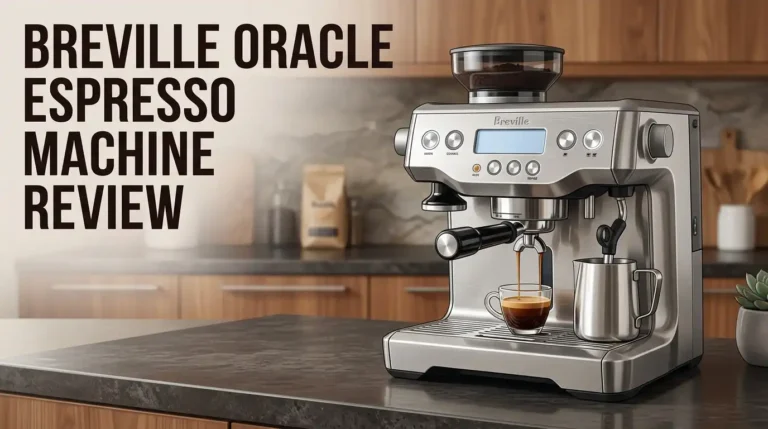
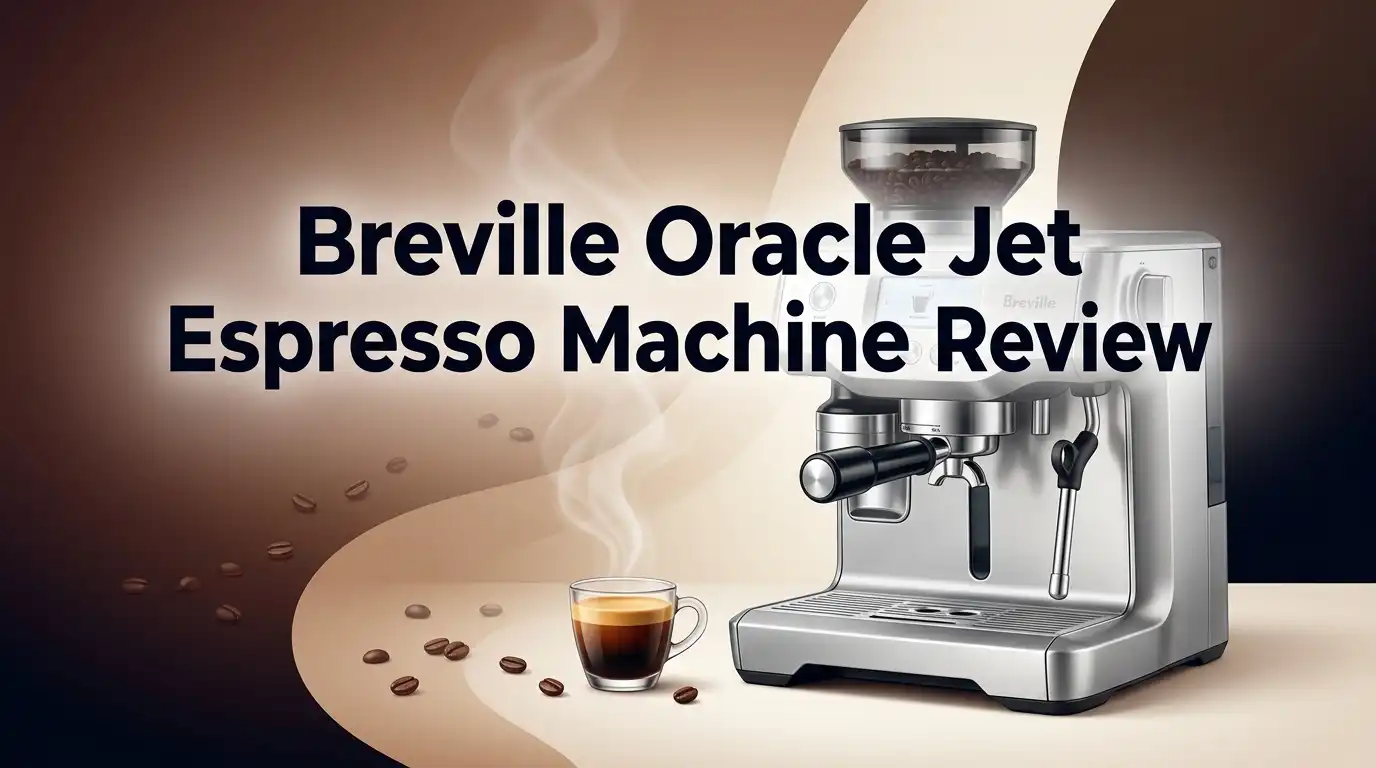
Breville Oracle Jet Espresso Machine Review 2026: Worth Buying?
The Breville Oracle Jet promises café drinks without café training. It grinds, doses, tamps, brews, and steams milk while you stand there holding an empty cup. That sounds like marketing noise until you actually use it for a few weeks.
I spent real time with this machine, pulled a lot of shots, wasted some beans, and read through hundreds of owner complaints and praise posts. This review covers what the Oracle Jet nails, what it fumbles, and whether the roughly $2,000 price makes sense in 2026.
No fluff. No recycled spec sheet. Just what happens when this machine lives on your counter.
In a Nutshell:
- The Oracle Jet is the fastest premium Breville machine. The ThermoJet system heats in about 30 seconds. A second ThermoJet sits inside the group head, so your brew temperature stays stable. You skip the long warmup that dual boiler machines demand.
- Automation is the main selling point. Auto grind, auto dose, auto tamp, and auto milk steaming remove almost every manual step. The 58 mm portafilter receives a 22 gram dose every single time without you touching a tamper.
- Shot quality is genuinely good, not just convenient. Medium and dark roasts taste full bodied with thick crema. Light roasts are harder. The machine struggles to extract them cleanly.
- The negatives are real. Shot times vary between pulls. The auto tamp can leave a soft center. WiFi drops for many owners. The hot water spout splatters. You cannot brew and steam at the same time.
- It is not for espresso purists. If you love dialing in pressure profiles and single dosing exotic beans, this machine will frustrate you. If you want excellent coffee in three minutes, it delivers.
Breville Oracle Jet Espresso Machine


Last update on 2026-10-22 / Affiliate links / Images from Amazon Product Advertising API
The Oracle Jet carries the model number BES985. It sits between the Barista Touch Impress and the flagship Oracle Touch in Breville’s lineup, though in practice it beats both in several areas.
Breville built this machine around one idea: speed without sacrificing the 58 mm professional format. You get a full size portafilter, a Baratza designed conical burr grinder with 45 settings, and a 5 inch Android based touchscreen.
The water tank holds 77.8 fluid ounces. The bean hopper takes 12 ounces. The machine weighs 26.7 pounds and measures roughly 16.6 by 14.2 by 14.9 inches. It draws 1500 watts.
Colors include Brushed Stainless Steel, Black Truffle, Sea Salt, Damson Blue, and Olive Tapenade. Breville includes a two year warranty.
Pricing sits near $1,699 direct from Breville, with street prices on Amazon often landing around $1,900 to $2,000 depending on color and stock. Sales happen. Patience pays.
Unboxing Experience: What Actually Arrives
The box is heavy but manageable for one person. Breville packs the machine in molded foam with the accessories nested in a separate cardboard tray on top.
Lifting the machine out feels reassuring. The stainless steel body has weight behind it. The first thing I noticed was the locking wheel system on the base, which lets you roll the machine forward on the counter instead of dragging 27 pounds across your granite.
Inside the accessory tray you get the 58 mm stainless steel portafilter, a 16.2 ounce stainless milk jug, a Knock Box 10, two single wall filter baskets, a cleaning kit, and a water hardness test strip.
Notice what is missing: there are no pressurized dual wall baskets. Breville expects you to grind fresh. That is a statement of intent.
Setup took me about fifteen minutes. Rinse the removable parts, fit the water filter, fill the tank, and the touchscreen walks you through time, water hardness, and default milk. A built in tutorial plays if you want it.
Design, Size, and Counter Reality
The Oracle Jet looks like an Oracle Touch that went to the gym and lost weight. It is slightly more compact and noticeably more streamlined. The brushed steel finish shows fingerprints, so keep a cloth nearby.
Measure your counter before ordering. The machine needs about 17 inches of width and real depth clearance. Cup height under the group head maxes out at 4 inches, which rules out tall travel mugs.
The water tank pulls out from the rear, which is annoying if your machine sits against a wall. Breville solved this with a small refill door on the top front. You can pour water in without moving anything. Smart detail, genuinely useful daily.
The drip tray is generous and easy to remove. The bean hopper locks with a quarter turn.
One honest gripe: the housing mixes stainless steel with plastic parts in places. At this price, more metal would feel better. It does not affect function, but it affects perception.
Top 3 Alternative for Breville Oracle Jet

Last update on 2026-10-22 / Affiliate links / Images from Amazon Product Advertising API
Breville Barista Touch Impress

Last update on 2026-10-23 / Affiliate links / Images from Amazon Product Advertising API
Breville Oracle Touch

Last update on 2026-10-21 / Affiliate links / Images from Amazon Product Advertising API
Breville Barista Express Impress
Touchscreen and Daily Workflow
Older Breville touchscreens lagged. This one does not. The 5 inch display runs a dark themed interface with a genuinely higher refresh rate, and swiping between drinks feels like using a decent tablet.
The drink menu holds around ten preprogrammed options. Espresso, lungo, americano, latte, flat white, cappuccino, hot chocolate, babyccino, cold brew, and cold espresso all sit one tap away.
Each drink screen exposes adjustable settings. You can change shot volume, brew temperature in single degree increments, preinfusion time, milk temperature between 104 and 167 degrees Fahrenheit, and eight milk texture levels.
Barista Guidance is the standout software feature. After each shot, the machine reads extraction time and tells you to grind finer or coarser. It is right more often than not, and beginners learn fast because of it.
Auto Queue lets you tap the milk icon so steaming starts the moment extraction ends. WiFi enables firmware updates, and Breville has pushed several meaningful ones since launch.
Grinder Performance and Auto Puck Prep
The integrated grinder uses high carbon hardened steel conical burrs derived from Baratza engineering. Breville bought Baratza in 2020, and that acquisition shows here.
Forty five grind settings give you fine control. Turning the side dial shows the current number on screen, and adjustment feels close to stepless in practice. This grinder is a real upgrade over older Breville units.
Workflow is simple. Drop the portafilter into the grinder cradle, press the icon, and walk away. The machine grinds roughly 22 grams, distributes it, and tamps it. The whole cycle takes seconds.
Here is the honest problem. Several owners report the tamp is firmer at the edges than in the center. You can sometimes press a quarter inch into the middle of the puck. Breaking the grounds up with a distribution tool and tamping by hand produces measurably better extraction.
The grind dial can also shift a click from grinder vibration. Check it occasionally.
ThermoJet Heating and Temperature Control
Breville dropped the dual boiler from this Oracle. That decision upset purists, and it deserves scrutiny.
The ThermoJet uses a digitally printed heating circuit. It reaches brew temperature in around 30 seconds and runs up to 32 percent more energy efficient than a standard thermoblock. Cold start to first shot takes under a minute.
The clever part is the second ThermoJet built into the group head itself. Older ThermoJet machines delivered hot water into a cold group and a cold portafilter, which killed shot temperature. Heating the group solves most of that.
Water arrives consistently near 199 degrees Fahrenheit. Over long manual pulls, the temperature holds steady. That is impressive for a single boiler design.
The tradeoff is real though. You cannot extract espresso and steam milk simultaneously. Auto Queue hides the delay well, but a busy household making four lattes will feel it.
The portafilter also stays cool. Running a blank shot before your first coffee genuinely improves the cup.
How the Espresso Actually Tastes
This is the part that matters. A machine can automate everything and still make mediocre coffee.
The Oracle Jet does not. With a medium dark Brazilian blend, shots came out thick and syrupy with dark chocolate, caramel, and almond notes sitting underneath. Crema was heavy and lasted.
I set espresso volume to about 1.2 ounces and reduced lungo to roughly 4 ounces. Default volumes run long for my taste. Adjusting them takes ten seconds in the menu.
Cup temperature measured around 149 degrees Fahrenheit for espresso when I preheated the glass, which is right where it should be. Lungo landed near 174 degrees.
Light roasts are where things get difficult. Multiple owners report sour, underextracted results with lighter beans. The machine simply does not push enough temperature or contact time for modern light roasts. Raise the brew temperature and grind finer, but manage expectations.
Medium to dark roasts are this machine’s comfort zone.
Auto MilQ Milk Steaming and Latte Art
The Auto MilQ system moved the temperature sensor into the steam wand tip rather than the drip tray. In theory that produces better textured microfoam.
In practice, the results are good but not flawless. When it works, the milk comes out glossy and pourable, easily good enough for basic latte art. Set the texture level around four or five for a flat white.
Breville includes dedicated settings for dairy, soy, almond, and oat milk. Honest assessment: the standard setting often produced the best foam regardless of milk type. The alternative milk modes feel more like a spec sheet feature than a real improvement.
Some owners report large bubbles they cannot eliminate, especially with certain milk brands. Tapping and swirling the jug helps but does not always fix it.
Manual steaming is excellent. The wand has serious power and gives you full control. Many experienced users abandon the automatic mode entirely and steam by hand, which somewhat defeats the point of paying for automation.
Cold Brew and Cold Espresso Tested
These two drinks are the Oracle Jet’s headline new features, so they deserve separate judgment.
Cold Espresso extracts in just over one minute. The machine runs water at close to room temperature through the puck at reduced pressure. The result is a crema topped, low acid shot that works beautifully poured over ice.
Use an extra fine grind for this. Poured into a glass of ice with a splash of milk, it makes a genuinely excellent iced latte in about two minutes total.
Cold Brew runs under three minutes with an unheated group head and lower pressure. This one is less successful. The brew comes out thin and slightly astringent compared to real overnight cold brew.
It is drinkable. It is not cold brew as a cold brew drinker understands it. Think of it as a fast iced coffee rather than a replacement for steeping grounds for twelve hours.
Cold Espresso is the winner. Cold Brew is a novelty.
What the Oracle Jet Does Not Do Well
Every review should have this section. Here are the flaws that matter.
Shot consistency wobbles. Owners report volumetric shots finishing in 22 seconds one pull and 42 seconds the next with identical settings. Switching to time based dosing helps some users regain control.
WiFi is unreliable. The machine frequently forgets stored credentials on power up. It refuses hidden networks. It struggles with WPA3 security, and moving it to a 2.4 GHz WPA2 network fixes it for most people. There is no visible WiFi status indicator.
The clock drifts. Several firmware versions jumped the time four hours ahead after every restart.
No simultaneous brewing and steaming. Single boiler limitation, unavoidable.
The hot water spout splatters and the machine drinks water quickly. Expect frequent refills and frequent wiping.
Customer service reports are mixed. Some owners describe slow responses and unhelpful advice. Others had smooth replacements. Buy from a retailer with a generous return window.
You cannot bypass the grinder to use pre ground coffee from an external grinder easily.
Cleaning and Maintenance
Daily maintenance is light. Knock out the puck, rinse the portafilter, wipe the shower screen, and wipe the steam wand with a damp cloth. Two minutes total.
The steam wand has a self rising purge feature after every cycle, which prevents most milk crust buildup. Still wipe it anyway. Dried milk is stubborn.
Deeper tasks are automated. The touchscreen tracks shot counts and prompts you when a backflush cleaning cycle or descale is due, then walks you through each step on screen.
The included cleaning kit contains cleaning tablets and the backflush disc. Descaling solution and replacement water filters are consumables you will buy separately.
Empty the drip tray more often than you think. This machine produces a lot of purge water, and the tray fills faster than on other Breville models.
The bean hopper releases easily for cleaning, though switching between regular and decaf beans means emptying and purging the grinder. Many owners treat the hopper as a single dose container instead.
Pros and Cons of the Breville Oracle Jet
Here is the balanced summary.
Pros
- Heats in roughly 30 seconds thanks to dual ThermoJet elements, one of which sits inside the group head for stable brew temperature.
- Professional 58 mm portafilter with a 22 gram dose, giving thinner pucks and more even extraction than 54 mm machines.
- Excellent 45 setting Baratza derived grinder that handles fine espresso grinds with real precision.
- Fully automatic grind, dose, and tamp removes the messiest part of home espresso for beginners.
- Fast, responsive touchscreen that is easily the best interface Breville has shipped.
- Barista Guidance actively teaches you to dial in shots by reading extraction time and suggesting grind changes.
- Cold Espresso is genuinely good and fast, plus five color options and free firmware upgrades over WiFi.
Cons
- Cannot brew espresso and steam milk at the same time because of the single boiler design.
- Shot times vary noticeably between pulls, even with identical settings.
- The auto tamp can leave a soft center, and serious users often retamp by hand.
- WiFi connectivity is buggy and firmware updates cannot be manually checked.
- Light roasts extract poorly and often taste sour.
- Alternative milk settings underperform the standard setting, and foam quality varies by milk brand.
- The hot water spout splatters, the tank empties fast, and plastic parts appear at a premium price.
Oracle Jet vs Barista Touch Impress vs Oracle Touch
Choosing between these three confuses most buyers, so here is the direct comparison.
The Barista Touch Impress costs around $1,479 and uses a 54 mm portafilter with 30 grind settings. It shares the same automatic steaming and temperature control. It gives you more manual involvement, which some people genuinely prefer. It is the value pick.
The Oracle Touch costs around $2,799 and remains a dual boiler machine. That means true simultaneous brewing and steaming. It shares the same grinder and tamper. Its touchscreen is slower and its warmup is much longer.
The Oracle Jet sits in the middle on price and arguably on top for daily usability. You get the 58 mm format of the Oracle Touch, a better screen, more drinks, cold extraction, and near instant heating.
My take: unless you regularly make four or more milk drinks back to back, the Oracle Jet makes more sense than the Oracle Touch and costs $800 less.
Who Should Buy the Breville Oracle Jet
Last update on 2026-10-22 / Affiliate links / Images from Amazon Product Advertising API
Buy this machine if you want café quality milk drinks with minimal effort on weekday mornings. It is ideal for households where one person cares about coffee and everyone else just wants a latte.
It suits people upgrading from pods or a superautomatic. The jump in quality is large and obvious. It also suits anyone who wants 58 mm hardware without learning puck preparation.
Skip it if you are an espresso hobbyist. If you own a scale, single dose light roasts, and enjoy pressure profiling, you will fight this machine constantly. A separate grinder plus a manual dual boiler machine serves you better at a similar price.
Skip it also if counter space is tight or if you need tall cup clearance.
The Oracle Jet is not the most capable espresso machine at $2,000. It is the most convenient one that still makes seriously good coffee. For most buyers, that tradeoff is the right one.
Frequently Asked Questions
Is the Breville Oracle Jet worth the money in 2026?
For most home users, yes. You get a 58 mm professional portafilter, a capable grinder, automatic tamping, and automatic milk steaming in one unit. Buying a comparable grinder and machine separately costs similar money and takes more counter space and skill. The value case weakens only for experienced baristas who want manual control.
Can the Oracle Jet brew espresso and steam milk at the same time?
No. It uses a single ThermoJet boiler plus a heated group head. The Auto Queue feature starts milk steaming automatically the moment extraction finishes, which hides most of the wait. Expect roughly 30 extra seconds per milk drink compared with a dual boiler machine like the Oracle Touch.
Does the Oracle Jet work well with light roast coffee?
Not especially. Multiple owners report sour, underextracted shots with light roasts. Raising brew temperature to the maximum and grinding several clicks finer improves results, but the machine clearly favors medium and dark roasts. If you drink mostly Nordic style light roasts, look elsewhere.
How long does the Breville Oracle Jet take to heat up?
Around 30 seconds from cold. The ThermoJet system reaches extraction temperature almost immediately. Your first shot of the day still tastes better if you run a blank water shot through the portafilter first, because the portafilter itself starts cold.
Why does my Oracle Jet keep losing its WiFi connection?
This is a widely reported bug. The machine often forgets stored credentials on restart and struggles with WPA3 or mixed WPA2 and WPA3 security. Connecting it to a dedicated 2.4 GHz network using WPA2 only resolves the problem for most owners. Hidden networks do not work at all.
Can I use my own grinder with the Oracle Jet?
Not conveniently. You cannot disable the internal grinder and use the tamper alone. Some owners prepare pucks completely outside the machine and skip the cradle entirely, but that removes the automatic dosing and tamping you paid for. Treating the hopper as a single dose container is the usual workaround for switching beans.

Hi, I’m Emma Lee — the coffee-obsessed creator behind Morning Drip Vault. I spend my days testing coffee machines, exploring brewing techniques, and reviewing the latest coffee gear. My mission is simple: helping you find the perfect machine to brew your best cup, every single morning.