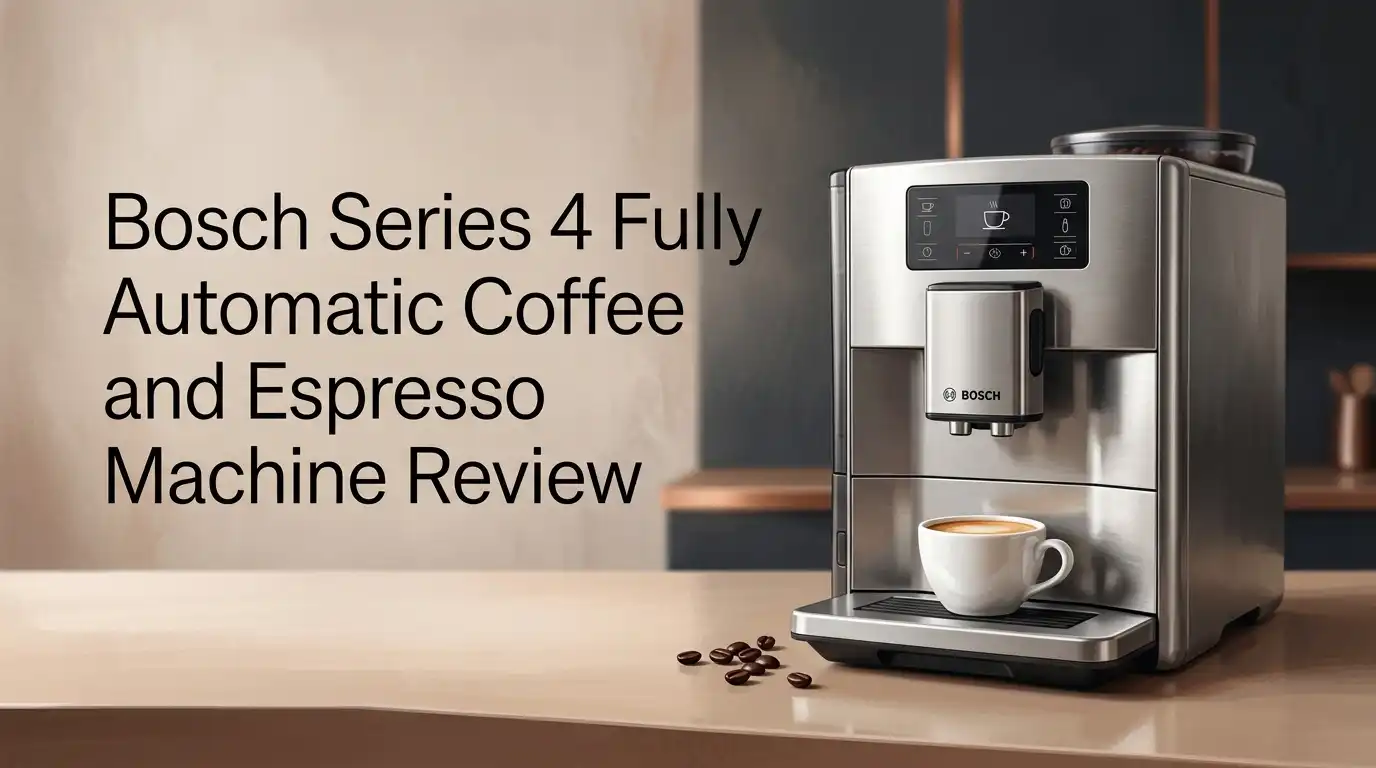
Bosch Series 4 Fully Automatic Coffee and Espresso Machine Review
Mornings feel better with a great cup of coffee. Many people want that café taste at home without the fuss. The Bosch Series 4 fully automatic coffee and espresso machine aims to deliver exactly that.
This machine grinds fresh beans for every drink. It also offers a range of drinks, from espresso to café latte. Think of it as your personal barista that never takes a break.
Bosch is a well known name in home appliances. Its fully automatic models focus on simple daily use. Some buyers love the easy cleaning cycle. Others mention that regular descaling matters for long life.
Here is what this review covers. We look at key features, daily performance, and the upkeep you can expect. We also share what users say, both good and bad. Knowing both sides helps you decide.
In a Nutshell
- Drink variety: Bosch lists up to 28 specialty drinks in its built-in espresso overview. This count is not confirmed for the Series 4 model itself.
- Automatic brewing: The machine handles the brewing process for you. You choose your drink and wait for it to finish.
- Quick cleaning: An automatic cleaning cycle runs for up to two minutes. This keeps daily routines short and simple.
- Regular upkeep: Descaling and cleaning need to happen on a steady schedule. Skipping these tasks can affect how the machine performs.
- Reported issues: One user reported a machine failure. This is a single report, so the true frequency remains unclear.
- Best fit: This machine suits people who want many drink choices with little effort. People who prefer full manual control may want a different option.
Build Quality and Design


Last update on 2026-10-26 / Affiliate links / Images from Amazon Product Advertising API
The first thing you notice is the overall look. A coffee machine sits on the counter every day, so its shape matters. The Bosch Series 4 aims for a clean and modern appearance. It can blend into many kitchen styles.
Stainless steel often shapes the feel of Bosch machines. The research we reviewed points to stainless steel and a frothing nozzle. However, those details came from a different model, the CTL636ES1. Treat them as a general pattern, not a confirmed Series 4 fact.
Surfaces need a quick wipe now and then. Stainless steel shows fingerprints and water spots. A soft cloth keeps the front panel looking fresh. Wiping after each use takes only a minute.
Think about counter space before you buy. An espresso machine needs room for its body, a cup, and the water tank. Measure your space first. Leave some room behind the machine for air flow and easy access.
A flat, steady base helps too. Vibration can make noise and shift cups during brewing. Place the machine on a level surface away from the edge of the counter. This keeps every cup stable.
Access to the parts matters. Look for a water tank that pulls out easily. A bean hopper with a clear lid makes it simple to check your supply. A drip tray that slides out smoothly saves time on busy mornings.
The control layout shapes daily use. Buttons and displays should be easy to read at a glance. Clear icons help you choose a drink without digging through a long manual. Simple controls suit people who want to brew without fuss.
Build quality shows in the small details. Check how the brew unit closes and how the doors and lids feel. Parts that fit snugly often hold up better over time. Gentle handling keeps the machine working well for years.
Who benefits most from this design? People with limited counter space may prefer a compact footprint. Busy households may value quick access to the water tank and bean hopper. Overall, the design focuses on practical use rather than flashy extras.
Drink Range and Brewing Performance
Every drink on this machine starts with the same goal: a great cup. The beans get ground right before brewing, so the coffee tastes fresh. Fresh grounds release more aroma, which makes each sip more flavorful.
The espresso shot forms the base for most drinks. A short, strong shot brings bold flavor. The machine can also brew a ristretto, which uses less water. That gives the cup a thicker, more concentrated taste.
Longer shots suit a lighter style. A lungo uses more water through the same grounds. The cup feels softer and less intense. Many people enjoy this style during a slow morning.
Milk drinks need a different kind of care. The frothing nozzle heats and foams milk for cappuccino and latte macchiato. The foam sits on top, while the espresso stays underneath. You can see distinct layers in the glass.
Café latte uses more milk and less foam. It feels smooth and mild on the tongue. This choice works well for people who want a gentle drink with a creamy finish.
Each drink follows a set routine, so results stay consistent from cup to cup. That saves time before work, especially on busy mornings. You spend less effort and still get a reliable result.
Not every listed drink suits every owner. The research ties the count of 28 drinks to a general Bosch built-in espresso overview. It does not confirm that every drink appears on this exact series. Check the menu on your model before you decide.
Cup size and strength settings also shape the result. Some people prefer a stronger brew, while others want a mild cup. Test a few settings during the first week. Small changes can make a noticeable difference in taste.
Consistency is the real win. Once you find your favorite setting, the machine repeats it. You get the same cup on weekdays and weekends. That reliability helps a lot with a daily coffee routine.
Cleaning and Maintenance
Keeping this machine clean is simple when you build a small habit. Most of the work happens in a few key spots. Knowing where to look saves time.
Empty the drip tray before it overflows. Used water collects there. Check it each day so it never spills onto your counter.
Tap out the coffee grounds container often. Wet grounds can turn sour and cause odd smells. Empty it every few days and rinse it well.
Rinse the removable brew unit once a month if your model has one. Old oil and grounds build up inside. Let it dry before you put it back.
Wipe the milk nozzle after every milk drink. Dried milk hardens fast. A damp cloth removes it in seconds.
Run a rinse cycle after milk drinks too. It flushes leftover milk from the lines. This small step keeps each cup tasting clean.
Use filtered water whenever possible. Soft water leaves less mineral buildup behind. Clean water also keeps the brew tasting fresh.
If your model uses a water filter, change it on the schedule the display shows. A fresh filter helps reduce scale and improves flavor.
Coffee dust collects in corners over time. A soft brush clears it fast. Do this once a week.
Watch the display for alerts. Many machines flag a full drip tray or an empty bean hopper. Respond right away so the machine keeps running.
Store the machine safely when you leave it idle. Drain the water tank if you plan to skip several days. Unplug it during long trips.
Keep the area around the machine dry. Splashes can dry into sticky spots on the counter. Wipe them up after each brew session.
Set a weekly reminder for these tasks. A simple checklist makes upkeep feel easy. Good habits protect the machine and keep every cup tasting great.
Top 3 Alternatives
De’Longhi Magnifica Evo

Last update on 2026-10-26 / Affiliate links / Images from Amazon Product Advertising API
This machine makes espresso with a single touch. Its LatteCrema system froths milk for smooth cappuccinos and lattes.
The built in grinder offers several settings. You can adjust the strength of each cup to suit your taste.
The milk settings are easy to change, so you can switch between drinks fast. Daily cleaning takes only a few minutes after each use.
Philips 3200 Series

Last update on 2026-10-26 / Affiliate links / Images from Amazon Product Advertising API
The Philips 3200 Series uses the LatteGo milk system. Its parts come apart easily, so cleaning takes little time.
The grinder runs quietly, which helps when others are still sleeping. You can choose from several drinks using simple buttons on the front panel.
This machine suits families who want variety without extra effort. Each drink tastes consistent, cup after cup.
Gaggia Anima

Last update on 2026-10-26 / Affiliate links / Images from Amazon Product Advertising API
The Gaggia Anima is a compact option for small kitchens. It fits neatly on a crowded counter.
It offers one touch drinks and a steam wand for hand frothing. Coffee lovers can tune the grind and brew strength to match their mood.
Its simple controls make it a good pick for first time buyers. Regular cleaning keeps the brew tasting fresh.
Capacity and Counter Footprint
Capacity means more than how many cups the machine can make in one go. It also means how often you need to refill it. Think about your daily habits before you decide if the size fits your home.
The bean hopper decides how often you add fresh beans. A larger hopper suits a busy home with several coffee lovers. A smaller one fits a couple who drink one or two cups each morning.
The water reservoir works the same way. A bigger tank means fewer trips to the sink. It also lets the machine finish a long run of drinks without stopping for a refill.
Household use changes everything. Two people who want espresso every day will refill more often than one person who drinks coffee on weekends. Match the capacity to how your home actually lives.
Next, measure the height of your space. Check the gap under upper cabinets before you set the machine in place. Tall travel mugs need extra room too, so the spout must sit high enough above the drip area.
Width matters as much as height. Leave space on both sides so you can open the bean lid with ease. Also check how far the machine sits from the wall. A small gap helps air move around the back.
Plan the power outlet early. A cord that stretches across the counter can look messy and may cause a trip hazard. Place the machine near an outlet you can reach without moving other appliances.
The research did not list exact capacity figures or dimensions. Confirm the numbers on the official product page or the spec sheet. Then compare those measurements with your own space. A quick tape measure check can save a lot of frustration later.
Daily Use and Convenience
Mornings move fast. A machine that grinds and brews on its own saves time. You press a button and wait for your cup.
The research describes freshly ground beans for each drink. You do not need to measure grounds every morning. That step alone cuts down on mess.
Switching between drinks takes seconds. You can move from a bold espresso to a milk drink without new equipment. Everyone at home gets their pick.
Guests make the machine shine too. Many people want different drinks at the same time. Keep the choices simple so the wait stays short.
A simple routine keeps things smooth. Check beans, water, and milk before each busy day. Quick checks can prevent most morning stops.
The research mentions an automatic cleaning cycle of up to two minutes. Start it after your last cup. Then you can walk away.
Watch for warning signs. One user in the research reported a machine failure. Listen for odd sounds, weak flow, or error messages.
Act early when something seems off. A quick check can save time and stress.
Weekends bring a different pace. You may want a slow, relaxed coffee with friends. The machine handles that just as well as a quick weekday shot.
Office use works well too. Many workplaces want a simple way to serve hot drinks. One machine can cover the whole team.
Plan your drinks around the day. Mornings need speed, while afternoons call for something gentler.
Small tweaks bring big rewards. Try slight changes to strength and milk amount. Your perfect cup often takes a few tries.
Users who stick to a routine tend to enjoy the machine more. Good habits make each day feel easier. That is the real convenience here.
In short, this machine suits busy days. It keeps mornings calm and delivers steady results. Households that love café drinks will feel right at home.
Pros and Cons
Pros
– Reliable performance stands out in owner reviews.
– Custom settings let each person build their own drink.
– Reviewers say the routine upkeep feels easy.
– Automatic brewing lets you step away while the cup is made.
Cons
– The research lists no clear drawbacks, so read more owner feedback.
– Regular descaling is needed to keep the machine working well.
– The research does not compare it with the Bosch 500 or 800 Series.
Who Should Buy It
This machine suits people who want café drinks at home. You do not need barista training to get a good cup. The machine handles the grinding, brewing, and milk steps for you.
Pod and instant coffee drinkers often find the switch rewarding. Fresh beans usually taste richer than capsules or instant powder. Making a cup this way feels like a small upgrade to daily life.
Milk drink fans get plenty of choice from one machine. Cappuccino, latte, and macchiato all come from the same unit. You do not need a separate espresso maker or frother for those drinks.
Beginners can start with a simple press of a button. There is no need to learn latte art or precise pouring first. Practice happens at your own pace.
Mixed tastes at the table are easy to handle. One person may want a strong espresso while another wants a soft, milky drink. Both choices come from the same machine.
Curious drinkers who enjoy trying new recipes will like the range. Each new drink becomes a small experiment. Over time, you may find a favorite you never ordered at a café.
Shoppers who want full manual control should look elsewhere. Some people enjoy adjusting every shot by hand. A fully automatic machine makes many of those choices for you.
Hand grinders and manual espresso machines suit that style better. They ask for more time and skill. Those extra steps can be the fun part for some people.
The best fit is someone who values convenience and good taste. Brewing runs with little effort from you. Good coffee appears quickly, which many busy households appreciate.
Final Verdict
The Bosch Series 4 earns a spot on a busy kitchen counter. It combines bean grinding, brewing, and milk frothing in one unit.
Think about your daily routine before you decide. This machine works best when you make drinks often. Occasional drinkers may not use every feature.
Counter space is a real win here. One machine can replace several separate tools. Your kitchen stays tidy, and your setup feels simple.
Many people learn the drink menu after a few uses. Patience pays off quickly. Most users find their favorite settings within a short time.
Who gets the most from it? Busy households with daily coffee habits will enjoy the speed. Home workers can make a fresh drink between calls.
Buyers who love hands-on craft may feel limited. The machine handles most steps for you. That trade-off suits most people.
Keep a simple weekly habit. Regular care keeps each cup tasting fresh. A short routine is easy to remember.
Pair the machine with good beans for the best taste. Fresh beans make a clear difference in every cup.
Our final take is simple. The Bosch Series 4 suits anyone who wants café drinks at home without learning barista skills. It saves time, cuts clutter, and keeps daily coffee easy.
Check the details before you buy. Confirm the model number matches the features you want. Read recent owner questions to see how others use it day to day.
Frequently Asked Questions
Does the machine clean itself?
Yes, it runs an automatic cleaning cycle that lasts up to two minutes. This saves time after a busy morning. You still need to empty the drip tray and check the water tank.
Which drink should a new user try first?
Start with a cappuccino or a latte macchiato. Both appear on the drink menu, and they show off the milk frother. Once you know your favorite, you can try the stronger ristretto or a smooth café latte.
What should I do if the machine stops working?
One owner reported a failure, so it helps to plan ahead. Keep your receipt and warranty papers in one safe place. Then contact the retailer or Bosch support if something goes wrong.
Will my cup fit under the spout?
Check your cup height before you brew. Tall travel mugs may not fit under the spout. Measure your favorite mug first, so you avoid spills and a messy counter.

Hi, I’m Emma Lee — the coffee-obsessed creator behind Morning Drip Vault. I spend my days testing coffee machines, exploring brewing techniques, and reviewing the latest coffee gear. My mission is simple: helping you find the perfect machine to brew your best cup, every single morning.