Breville Barista Pro Espresso Machine Review 2026: Worth It?
Espresso at home used to mean waiting. You pressed a button, then stood around while a machine warmed up for ten long minutes. The Breville Barista Pro changed that math. It heats in three seconds, grinds your beans fresh, and pulls a real shot with real crema before your toast pops.
But a fast machine is not always a good machine. After weeks of daily shots, messy grinds, loud mornings, and a few genuinely stunning cappuccinos, I have a clear picture of who this machine suits and who should walk away.
This review covers the unboxing, the taste, the noise, the cleaning routine, and the flaws Breville does not advertise. Let us pour.
In a Nutshell:
- The ThermoJet heating system is the headline feature. The machine reaches brewing temperature in roughly three seconds. That single change makes espresso a weekday habit instead of a weekend project.
- The built in conical burr grinder offers 30 grind settings. It dials in quickly and doses consistently by time. It is also genuinely loud, and it clumps enough that a distribution tool helps a lot.
- Espresso quality is excellent for the price. Digital PID temperature control, adjustable pre infusion, and a 54mm portafilter produce sweet, syrupy shots with thick crema once you find your setting.
- The steam wand is manual, and that is the point. You get real microfoam and real latte art practice. You also get a learning curve, because this is a single boiler machine that switches between brewing and steaming.
- It is not a one touch machine. There is no specialty drink menu, no touchscreen, and no automatic tamping. You tamp, you steam, you clean.
- Price sits near the $800 mark in 2026, though sales drop it lower. Value depends entirely on whether you want to learn espresso or just want coffee fast.
Breville Barista Pro Espresso Machine


Last update on 2026-11-17 / Affiliate links / Images from Amazon Product Advertising API
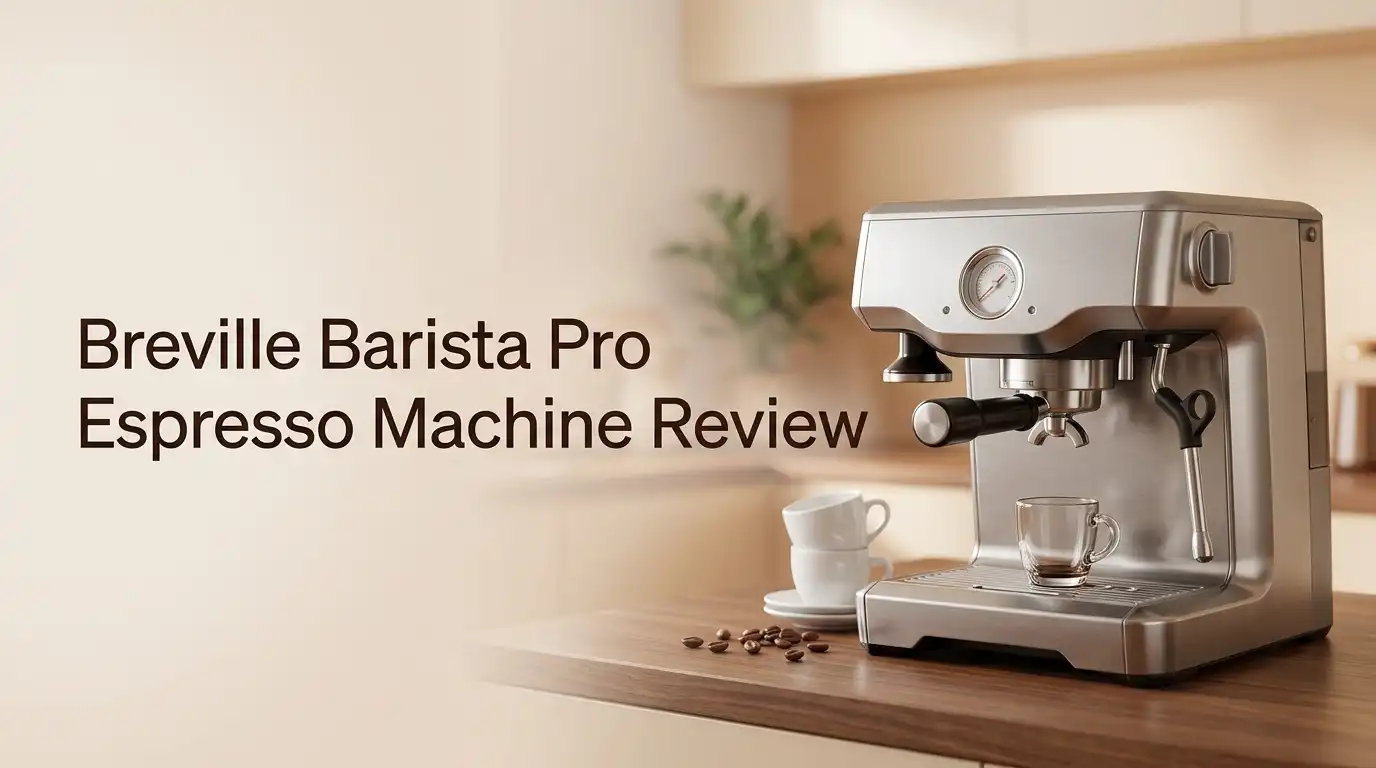
The Barista Pro, model BES878, sits in the middle of Breville’s espresso lineup. It is a hybrid machine, which means the grinder and the brewer live in one stainless steel body.
You load whole beans into the hopper on top, grind straight into the portafilter, tamp, lock, and brew.
The core specs are strong. You get a 15 bar pump, a 2 litre removable water tank, a 54mm stainless steel portafilter, and a 1680 watt ThermoJet heater.
The machine weighs about 20 pounds and measures roughly 16 by 14 by 13 inches. It ships in eight colour options, from Brushed Stainless Steel to Sea Salt and Smoked Hickory.
Breville positions this as the bridge between the Barista Express and the Barista Touch. After using it, that description holds up well.
Unboxing Experience: What Actually Arrives
The box is heavy and the packaging is sensible. Breville wraps the machine in moulded foam with the accessories tucked into a separate cardboard tray underneath. Nothing rattles, and nothing arrived scratched.
Inside you find the portafilter, four filter baskets, a stainless steel tamper, a 480ml milk jug, the Razor dose trimming tool, a cleaning kit with tablets and brushes, a water filter with holder, and the manual.
Newer units also include the dosing funnel, which older units shipped without. That omission was a real complaint for years, so check your box.
The first setup takes about ten minutes. You rinse the removable parts, fit the water filter, fill the tank, and run a flush cycle. The screen walks you through it. My first espresso happened within fifteen minutes of opening the box.
Design and Build Quality
The Barista Pro looks modern rather than retro. Breville dropped the analogue pressure gauge and replaced it with a monochrome LCD screen. Purists miss the gauge. I do too, honestly, because it helped diagnose a bad grind at a glance.
Everything else feels solid. The stainless steel housing resists fingerprints better than gloss finishes. The grind dial clicks with real resistance. The portafilter has weight to it, and the group head locks with a satisfying clunk.
The drip tray slides out smoothly and hides a storage drawer for the baskets and tools. That drawer is a small detail that saves real counter space. My only design gripe is the rubber grip on the steam wand. It sits close to the drip tray, so wiping the wand after steaming takes a bit of care.
Top 3 Alternative for Breville Barista Pro

Last update on 2026-11-17 / Affiliate links / Images from Amazon Product Advertising API
Breville Barista Express Impress

Last update on 2026-11-18 / Affiliate links / Images from Amazon Product Advertising API
Breville Bambino Plus

Last update on 2026-11-18 / Affiliate links / Images from Amazon Product Advertising API
Breville Barista Touch Impress
ThermoJet Heating: Three Seconds, Really
This is the feature people buy the machine for, and it delivers. The ThermoJet system uses a digitally printed heating circuit instead of a traditional thermoblock. Breville claims it heats in three seconds and uses significantly less energy over a year.
In practice, you press power, the screen counts down, and the machine is ready before you finish filling the portafilter. The espresso machine waits for you instead of the other way around.
There is one caveat that reviews often skip. The fast heater warms the water, not the metal. On the first shot of the day, your portafilter and group head are still cold, which pulls heat out of your espresso.
The fix is simple. Run hot water through the locked portafilter for a few seconds before you grind. It costs ten seconds and improves the shot noticeably.
The Built In Conical Burr Grinder
The grinder is based on Breville’s Smart Grinder Pro and offers 30 grind settings. That is nearly double what the standard Barista Express gives you. Dialling in a new bag of beans usually took me two or three shots.
Dosing works on a timer, not a scale. You press the portafilter into the cradle and the grinder runs for a set duration. This works, but it means every grind size change also shifts your dose slightly. A cheap coffee scale solves this and costs very little.
Two honest criticisms. First, the grinder is loud, somewhere near a kitchen blender. Early mornings in a small apartment will wake people. Second, the grounds clump as they exit the chute, and a little coffee retains in the path. A simple distribution tool fixes the clumping in five seconds.
Espresso Quality and Taste Results
This is where the Barista Pro earns its price. Using a medium roast blend, I settled on an 18 gram dose in the double basket, a grind setting around 13, and a pre infusion time of about five seconds instead of the factory ten.
The results were consistent. Shots yielded roughly 36 grams in 25 to 28 seconds, with a thick hazelnut crema that lasted. The flavour was sweet and syrupy with clear caramel and citrus notes rather than the flat bitterness cheap machines produce.
Digital PID temperature control is the quiet hero here. You can adjust brew temperature in small steps, which matters hugely with light roasts. Shot to shot consistency was excellent once dialled in. This machine will not limit your espresso before your beans and technique do.
Steam Wand and Milk Foam
The steam wand is manual, with a single hole tip and a swivel joint. There is no automatic temperature sensor like the Bambino Plus has, so you judge the milk yourself by sound and by touching the jug.
Steam power is good for a single boiler machine in this class. Whole milk texturises into glossy microfoam in roughly 30 to 40 seconds with the included 480ml jug. I poured a readable heart within my first week and a tulip within a month.
The honest limitations are real. You must switch between brewing and steaming, which means a short wait while the system changes temperature. Oat milk works but needs a slightly lower temperature to stay silky. Latte art is learnable here, but nobody is nailing it on day one.
Display, Controls, and Daily Workflow
The LCD screen shows grind size, shot count, extraction timer, and the settings menu. Six buttons and two dials handle everything. The grind dial doubles as a menu selector, which keeps the front panel uncluttered.
The shot timer deserves special praise. Watching the seconds tick during extraction tells you immediately whether your grind is too coarse or too fine. It replaces the pressure gauge more usefully than most people expect.
Daily workflow settles into a rhythm. Power on, lock and preheat the portafilter, grind, distribute, tamp, brew, steam, wipe, done. That cycle takes me about four minutes for a flat white. The menu is deep enough for tinkerers and shallow enough that beginners can ignore it.
Cleaning and Maintenance Routine
Daily cleaning is quick. Purge the steam wand after every use, wipe the tip, knock out the puck, and rinse the portafilter. Flush the group head with a few seconds of water. The whole routine adds maybe one minute per session.
The machine tracks usage and tells you when to run a cleaning cycle. That flush uses the included tablet and a rubber disc, and it clears coffee oils from the group head. Descaling happens less often if you use the water filter and replace it on schedule.
The grinder needs attention too. Burr cleaning every few months prevents the slow grinding and retention problems that some owners report. Stale oils in the chute are the usual cause. Skipping grinder maintenance is the single most common reason these machines underperform after a year.
What the Barista Pro Does Not Do Well
Honest reviews list the failures, so here they are. The grinder noise is genuinely disruptive and there is no quiet mode. The timed dosing is less precise than weight based dosing, so a scale becomes a necessary extra purchase.
There is no specialty drink menu and no saved user profiles beyond a basic memory function. If you want a latte at one button press, this is the wrong machine. Steam switching slows you down when making several milk drinks in a row.
The plastic steam wand grip sits awkwardly close to the drip tray. The spout height is fixed, so very tall travel mugs do not fit unless you remove the tray. And the grind adjustment jumps can feel coarse when you are chasing a perfect shot with a tricky light roast.
Pros and Cons
Pros
- Three second heat up time makes daily espresso genuinely practical, even on rushed mornings.
- 30 grind settings and digital PID temperature control give you real control over extraction quality.
- Adjustable pre infusion produces sweeter, more even shots once you shorten the default setting.
- Built in shot timer helps beginners diagnose problems without a pressure gauge.
- Solid stainless steel build, hidden storage drawer, and a two year warranty.
- Comes with a stainless steel tamper, real filter baskets, and a milk jug, so no extra spending on day one.
Cons
- The grinder is loud and prone to clumping and minor retention.
- Dosing runs on a timer rather than weight, so a separate scale is close to essential.
- No specialty drink menu, no touchscreen, and no automatic tamping.
- Single boiler design means waiting between brewing and steaming.
- Breville removed the pressure gauge found on older models.
- First shot of the day needs a manual preheat to avoid a cold portafilter.
Barista Pro vs Express vs Touch Impress
The Barista Express costs less and uses a slower thermocoil heater with only 16 grind settings. It still makes good coffee, but the Pro upgrades the heating, the grinder range, and the display for a modest price gap.
The Barista Express Impress adds an assisted tamping lever that removes the hardest beginner skill. If tamping consistency worries you more than speed, that machine makes a strong case.
The Barista Touch Impress sits above both. It brings a colour touchscreen, guided drink recipes, assisted tamping, and automatic milk texturing. It costs considerably more and removes some of the hands on control.
Choose the Pro if you want speed and manual skill. Choose an Impress model if you want guidance. Choose the Bambino Plus if you already own a grinder.
Price and Value in 2026
List price sits around $849 for the Barista Pro, though it regularly drops closer to $650 during sales events. That places it squarely in the middle of the prosumer home espresso market.
Here is the value argument. A comparable standalone grinder costs $200 to $300. A decent entry level espresso machine costs $400 to $600. Buying separately gives you better long term upgrade paths, but it costs more upfront and takes far more counter space.
The Barista Pro bundles both into one footprint for less than the sum of its parts. The two year warranty adds confidence, and parts availability is good because Breville sells these in huge numbers. For a household drinking two or three espresso based drinks daily, the machine pays back a café habit within months.
Who Should Buy the Breville Barista Pro
Last update on 2026-11-17 / Affiliate links / Images from Amazon Product Advertising API
Buy this machine if you want to actually learn espresso. You will tamp your own puck, texture your own milk, and watch a timer. That process is rewarding, and the Barista Pro gives you enough control to improve for years.
It suits busy households well. The three second heat up means nobody skips coffee because the machine takes too long. It also suits anyone with limited counter space who still wants a fresh grinder.
Skip it if you want push button lattes, if grinder noise is a dealbreaker in your home, or if you already own a good grinder and would rather spend the money on a dual boiler machine. This is a machine for people who enjoy the ritual, not just the result.
Final Verdict
The Breville Barista Pro remains one of the smartest buys in home espresso in 2026. It is fast, consistent, well built, and capable of café quality shots once you spend a week learning it. The ThermoJet heater genuinely changes how often you use the machine.
It is not flawless. The grinder is noisy, the timed dosing is imprecise, and the single boiler design slows down milk heavy sessions. None of those issues ruin the experience, but all of them are real.
My rating is 4.5 out of 5. It earns that score by doing the important things, espresso extraction and milk texturing, very well while asking you to tolerate some noise and some manual work. If you want one machine that teaches you espresso without punishing you, this is it.
Frequently Asked Questions
Is the Breville Barista Pro worth it in 2026?
Yes, for most home baristas. The combination of a fast heater, a capable grinder, and precise temperature control still beats almost everything at this price. It makes the most sense if you drink espresso daily and want to improve your technique over time.
Does the Barista Pro come with a dosing funnel?
Current production units include the dosing funnel attachment. Older stock and some refurbished units shipped without it. The funnel clips onto the portafilter and stops grounds from spilling, so check your listing before buying.
How loud is the Barista Pro grinder?
Loud enough to hear through a closed door. It runs for roughly 15 to 20 seconds per double shot. Grinding on a silicone mat reduces vibration noise a little, but the burr sound remains.
Can beginners use the Breville Barista Pro?
Yes. The default grind setting of 15 and the automatic shot volumes give beginners a working starting point. Expect a week of practice before your shots and milk become consistent.
What grind size should I start with?
Start at setting 13 to 15 with 18 grams in the double basket. Aim for about 36 grams of espresso in 25 to 30 seconds. Go finer if the shot runs fast, coarser if it runs slow.
How often does it need descaling?
Roughly every two to three months with the water filter installed, and more often with hard water. The machine displays a reminder on the screen when a cleaning or descaling cycle is due.

Hi, I’m Emma Lee — the coffee-obsessed creator behind Morning Drip Vault. I spend my days testing coffee machines, exploring brewing techniques, and reviewing the latest coffee gear. My mission is simple: helping you find the perfect machine to brew your best cup, every single morning.