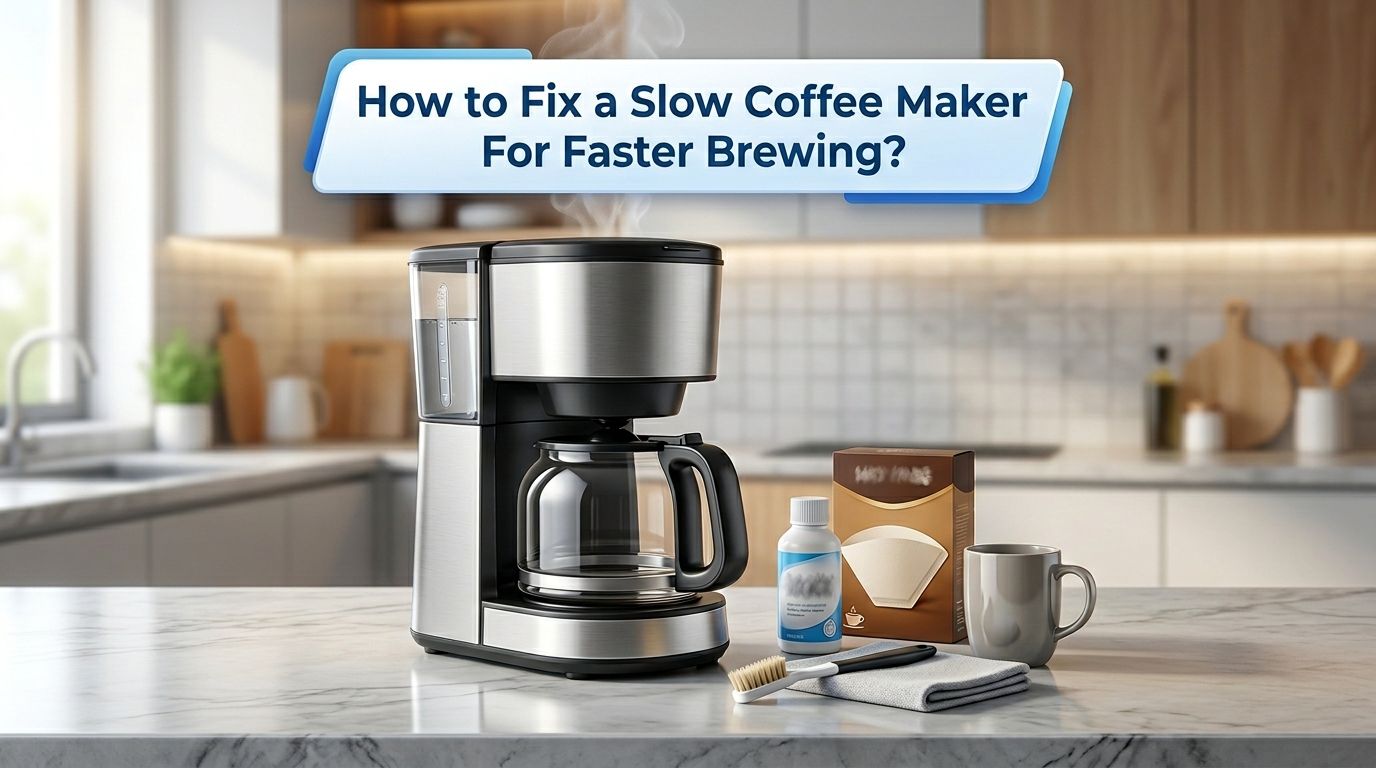
How to Fix a Slow Coffee Maker For Faster Brewing?
You press the brew button, sit down, and wait. Then you wait some more. Your coffee maker drips at a painful pace, and your morning routine falls apart. A slow coffee maker is one of the most common kitchen frustrations, and it affects millions of households every day.
The good news? Most slow brewing problems have simple fixes you can do at home in under 30 minutes. The causes range from mineral buildup inside the machine to using the wrong grind size. Some issues need a quick cleaning. Others may point to a worn part that needs replacement.
This post walks you through every reason your coffee maker brews too slowly. You will also get clear, step by step solutions for each cause. Whether you own a drip machine, a single serve brewer, or an espresso maker, these fixes apply across the board. Let’s get your morning cup back on track.
In a Nutshell
- Mineral buildup is the top cause of slow brewing. Hard water leaves calcium and magnesium deposits inside your coffee maker’s water lines and heating element. These deposits narrow the flow path and force water through at a reduced rate. Regular descaling with white vinegar or citric acid can restore full brewing speed.
- A clogged or dirty filter slows water flow dramatically. Paper filters can collapse under water pressure, and reusable mesh filters collect oil residue over time. Rinsing or replacing filters before each brew cycle keeps water moving freely through the coffee grounds.
- Using too fine a grind creates a dense bed that blocks water. Fine coffee particles pack tightly together and act like a wall. Switching to a medium or medium coarse grind gives water enough space to pass through at the correct rate.
- A faulty or aging heating element reduces water temperature. Water needs to reach 195 to 205 degrees Fahrenheit for proper brewing. A weak heating element heats water too slowly, and the entire brew cycle takes longer as a result.
- The check valve or water inlet may be partially blocked. Small debris, coffee grounds, or scale can lodge in the valve mechanism. Cleaning or replacing this small part often solves persistent slow brewing that descaling alone does not fix.
- Preventive monthly maintenance keeps your machine fast and efficient. A simple cleaning schedule that includes descaling, filter checks, and valve inspections will stop slow brewing before it starts. Most fixes cost nothing and take just a few minutes.
What Causes a Coffee Maker to Brew Slowly
Several factors contribute to slow coffee brewing. The most frequent cause is mineral buildup from tap water. Calcium and magnesium deposits collect inside the water lines, heating chamber, and spray head over weeks and months of use.
A second common cause is a clogged filter basket or filter paper. Coffee oils, fine grounds, and residue accumulate and restrict water flow. The machine works harder to push water through, and the brew cycle slows down.
Grind size also plays a major role. Coffee ground too fine creates a compact layer that resists water penetration. The heating element condition matters too. If it cannot reach the right temperature, water moves through the system at a reduced pace. Understanding these root causes helps you pick the right fix fast.
How Mineral Buildup Slows Your Coffee Maker
Hard water contains dissolved minerals like calcium carbonate and magnesium. Every time you brew, these minerals deposit thin layers inside the machine’s internal tubes, heating element, and valves. Over time, those layers thicken and narrow the water pathway.
A coffee maker with heavy scale buildup can take twice as long to complete a brew cycle. The heating element also works less efficiently because the mineral layer acts as insulation between the element and the water.
Regions with hard water see this problem much faster. If you notice white, chalky residue around your faucets or showerheads, your coffee maker likely has the same buildup inside. This is the single most important issue to address if your machine brews slowly.
How to Descale Your Coffee Maker Step by Step
Descaling removes mineral deposits and restores water flow. Here is a clear process you can follow with items already in your kitchen.
Step 1: Fill the water reservoir with a 1:1 mixture of white vinegar and water. For a 12 cup machine, use about 6 cups of each. Step 2: Place an empty filter in the basket and start a brew cycle. Step 3: Stop the machine halfway through and let the vinegar solution sit for 30 minutes. This soak time helps dissolve stubborn deposits.
Step 4: Resume and finish the cycle. Step 5: Discard the vinegar solution and run two to three full cycles with plain, fresh water to flush out any remaining vinegar taste.
Pros of vinegar descaling: Cheap, available everywhere, effective on light to moderate scale. Cons: Can leave a lingering taste if not rinsed well, and may not remove severe mineral buildup. For heavy scale, citric acid powder dissolved in water or a commercial descaling solution works more aggressively and rinses out more cleanly.
Check and Replace Your Coffee Filter
A dirty or collapsed filter is an overlooked cause of slow brewing. Paper filters can become saturated and sag into the drain hole, blocking water from exiting the basket. Reusable metal or mesh filters collect coffee oils and fine particles that build up over time.
For paper filters, always use the correct size for your machine. A filter that is too large will fold and block flow. Never reuse paper filters, as they weaken and tear after one cycle.
For reusable filters, scrub them with warm soapy water after every use. Once a week, soak the filter in a mixture of warm water and baking soda for 15 minutes to dissolve oil residue. Pros of reusable filters: Cost effective, less waste. Cons: Require regular deep cleaning or they become a flow restriction. Inspect your filter before every brew to catch problems early.
Adjust Your Coffee Grind Size
Grind size has a direct impact on how fast water passes through the coffee bed. A grind that is too fine creates a dense, compact layer that traps water and slows the entire brew. This is one of the easiest problems to fix.
For standard drip coffee makers, use a medium grind. The texture should resemble coarse sand. If you grind your own beans, adjust your grinder one or two steps coarser and test the brew time. A full pot should brew in 5 to 8 minutes for most 12 cup machines.
Pros of adjusting grind size: Free, immediate improvement, no tools needed. Cons: Going too coarse can make your coffee taste weak or watery. Find the balance between brew speed and flavor strength by testing small adjustments. Pre ground coffee labeled “drip” or “auto drip” is usually the right size for standard machines.
Clean the Check Valve and Water Lines
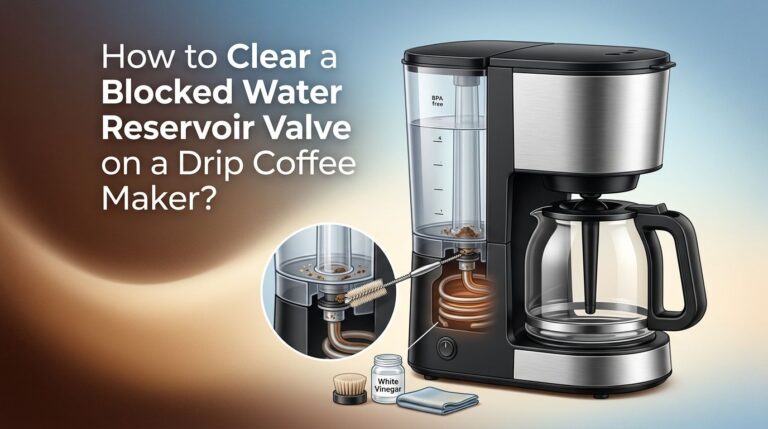
Most drip coffee makers have a small check valve (also called a one way valve) at the base of the water reservoir or near the heating element. This valve controls water flow direction. When it gets clogged with mineral deposits or coffee ground debris, water flow slows or stops.
To clean it, unplug the machine and turn it upside down. Locate the valve, which is usually a small rubber or silicone disc. Gently remove it and soak it in vinegar for 20 minutes. Use a toothpick or soft brush to clear any debris. Rinse it and reassemble.
Pros of valve cleaning: Often fixes slow brewing that descaling alone misses. Cons: Requires some disassembly, and the valve is easy to lose or damage if handled roughly. Check your machine’s manual for the valve location before you start. If the valve is cracked or worn, a replacement part is usually inexpensive and easy to install.
Inspect the Heating Element
The heating element in your coffee maker boils water and sends it up through the tube to the spray head. When this element weakens or develops heavy scale coating, it heats water more slowly. The result is a longer brew cycle and lukewarm coffee.
You can test the heating element with a multimeter if you have one. Unplug the machine, access the base plate, and check for continuity across the element terminals. A reading of zero or extremely high resistance means the element has failed.
Pros of element inspection: Confirms if the machine needs repair or replacement. Cons: Requires basic electrical knowledge and a multimeter. If the element has failed, replacement parts may cost more than a new budget coffee maker. For mid range and premium machines, replacing the element is usually worth it.
Use Filtered or Softened Water
The quality of water you put into your coffee maker directly affects how fast mineral buildup occurs. Tap water in many areas contains high levels of calcium and magnesium. Using filtered water reduces these minerals and slows scale formation inside the machine.
A simple pitcher filter or a faucet mounted filter removes most of the minerals that cause buildup. Softened water from a home water softener also works, though some coffee experts note that completely mineral free water can produce flat tasting coffee.
Pros of using filtered water: Less frequent descaling, better tasting coffee, longer machine life. Cons: Added cost of filter replacements, and very soft water may reduce flavor complexity. The ideal range for coffee brewing water is 50 to 175 parts per million of total dissolved solids. This gives you good flavor without excessive scale.
Pre Heat Your Water Before Brewing
A lesser known trick to speed up your coffee maker is to fill the reservoir with warm or hot water instead of cold tap water. The heating element does not need to work as hard, and the water reaches brewing temperature faster.
This method works especially well with older machines that have weaker heating elements. Use water from your tap’s hot side, but avoid boiling water, which can damage plastic reservoirs.
Pros of pre heating: Faster brew time, better extraction, no cost. Cons: Slight inconvenience, and not all machines are designed for hot water input. Check your machine’s user manual first. Some manufacturers recommend cold water only. For machines that allow it, this simple step can shave minutes off your brew cycle.
Set a Monthly Maintenance Schedule
Prevention is the best fix. A regular cleaning schedule stops slow brewing before it starts. Most coffee maker manufacturers recommend descaling every 30 to 90 days, depending on your water hardness.
Here is a simple monthly plan. Week 1: Run a full descaling cycle with vinegar or citric acid, followed by two rinse cycles. Week 2: Deep clean the filter basket, carafe, and spray head with warm soapy water. Week 3: Inspect and clean the check valve. Week 4: Wipe down the exterior and check for any unusual buildup around the water reservoir.
This routine takes less than 10 minutes per week. Pros of scheduled maintenance: Consistent brewing speed, longer machine lifespan, better coffee flavor. Cons: Requires discipline and consistency. Write the schedule on a calendar or set a phone reminder so you never skip a cleaning session.
When to Replace Your Coffee Maker
Sometimes a slow coffee maker is simply reaching the end of its useful life. Most drip coffee makers last 5 to 10 years with proper care. If you have descaled, cleaned the valve, checked the heating element, and adjusted your grind size but the machine still brews slowly, replacement may be the best option.
Signs that your machine needs replacing include persistent slow brewing after thorough cleaning, visible cracks or leaks, inconsistent water temperature, and unusual noises during the brew cycle. A coffee maker that takes more than 12 minutes to brew a full pot after all maintenance steps is likely beyond simple repair.
Pros of replacing: Guaranteed fast brewing, improved features, fresh warranty. Cons: Cost of a new machine, environmental waste. Consider donating or recycling your old machine instead of throwing it away. Many recycling centers accept small kitchen appliances.
Quick Troubleshooting Checklist
Use this checklist the next time your coffee maker runs slow. Start with the simplest fixes first and work your way down.
First, check the filter. Is it collapsed, clogged, or the wrong size? Replace it. Second, check the grind size. Switch to a medium grind if you are using something finer. Third, descale the machine. Run a vinegar or citric acid cycle and rinse well.
Fourth, clean the check valve. Remove, soak, and scrub it clean. Fifth, test the heating element. Use a multimeter to confirm it works. Sixth, try pre heated water to reduce the element’s workload.
If none of these steps solve the problem, your machine may need professional service or replacement. This checklist covers over 90% of slow brewing causes and saves you time by following a logical order from easiest to most involved fixes.
Frequently Asked Questions
How often should I descale my coffee maker?
Descale every 30 days if you have hard water and every 60 to 90 days if you use filtered or soft water. Frequent descaling prevents mineral buildup from reaching levels that restrict water flow. If you notice your brew slowing down between scheduled cleanings, run an extra descaling cycle right away.
Can I use lemon juice instead of vinegar to descale?
Yes, lemon juice works as a natural descaling agent because it contains citric acid. However, pure citric acid powder dissolved in water is more effective and less expensive than squeezing fresh lemons. Use one to two tablespoons of citric acid per full reservoir of water for the best results.
Why does my coffee maker start fast then slow down mid brew?
This usually means fine coffee grounds are clogging the filter during the brew cycle. As water saturates the coffee bed, fine particles settle and create a blockage. Switch to a coarser grind or use a thicker paper filter to prevent this mid brew slowdown.
Is it safe to put hot water in my coffee maker reservoir?
Most modern drip coffee makers can handle warm water from the tap. Avoid using boiling water, as it can warp plastic components or damage seals. Check your owner’s manual for the manufacturer’s recommendation before using anything warmer than lukewarm water.
How long should a full pot of coffee take to brew?
A standard 12 cup drip coffee maker should brew a full pot in 5 to 10 minutes. If your machine consistently takes longer than 10 minutes, something is restricting water flow. Start with descaling and filter checks to bring the time back into the normal range.
Does the type of coffee filter affect brew speed?
Yes. Thicker, heavier paper filters slow the brew slightly compared to thinner ones. Reusable metal mesh filters allow faster flow but let more fine particles and oils through. Choose a filter type that balances your preferred brew speed with the coffee flavor and clarity you enjoy most.

Hi, I’m Emma Lee — the coffee-obsessed creator behind Morning Drip Vault. I spend my days testing coffee machines, exploring brewing techniques, and reviewing the latest coffee gear. My mission is simple: helping you find the perfect machine to brew your best cup, every single morning.