
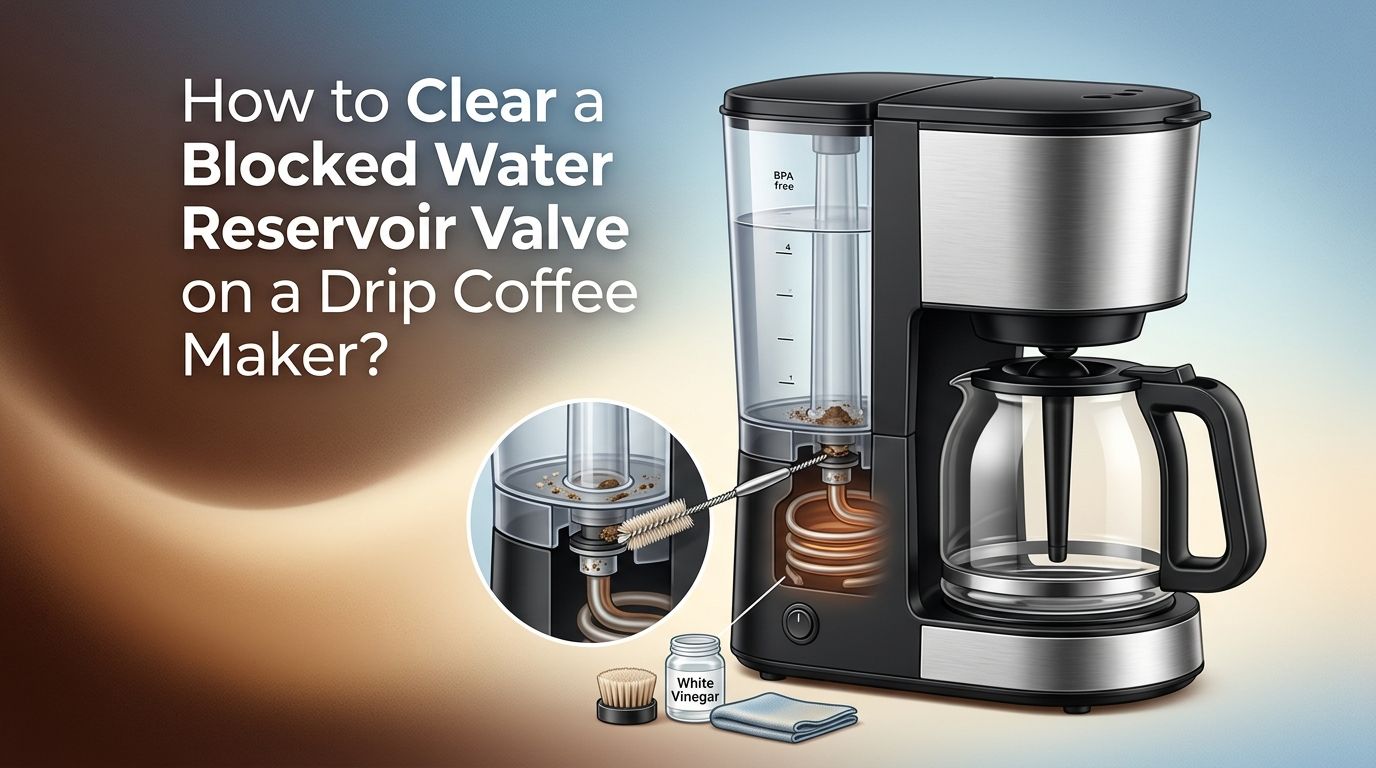
How to Clear a Blocked Water Reservoir Valve on a Drip Coffee Maker?
You press the brew button on your drip coffee maker, hear the familiar hum, and then… nothing. The water just sits in the reservoir. No flow, no coffee, no good morning.
This is one of the most common and frustrating problems coffee maker owners face, and the culprit is often a blocked water reservoir valve.
The good news? You probably do not need to replace your machine. In most cases, a blocked reservoir valve is a fixable problem you can solve at home in under an hour.
In a Nutshell
- Mineral buildup is the number one cause of a blocked water reservoir valve. Hard water leaves calcium and lime deposits inside the valve over time, and these deposits slowly choke off water flow. Regular descaling every 30 to 90 days is the single most effective way to prevent this problem from happening in the first place.
- A vinegar or citric acid flush is the easiest first fix you should try. A 50/50 solution of white distilled vinegar and water, run through a brew cycle, dissolves most light to moderate mineral blockages. Citric acid is a stronger alternative that is also gentler on rubber seals and leaves less odor behind.
- Physical debris can block the valve too. Small bits of paper towel, coffee grounds, or even mold can get lodged in the spring mechanism or rubber seat of the reservoir valve. These require manual removal with a soft brush, pipe cleaner, or toothpick.
- You can manually clean the valve on many drip coffee maker models by removing the water reservoir and accessing the valve at the bottom. A gentle push on the spring mechanism and a rinse with warm water can dislodge stubborn clogs. Always unplug the machine before doing this.
- Using filtered water from the start prevents most valve blockages. Tap water in hard water areas contains high levels of dissolved minerals that accumulate fast. A simple water pitcher filter or faucet filter removes most of these minerals before they ever reach your coffee maker.
- Know when to call it done. If descaling, manual cleaning, and flushing all fail to restore water flow, the valve itself may be cracked, warped, or permanently sealed by heavy scale. At that point, a replacement valve or a new machine may be the only option.
What Is the Water Reservoir Valve and What Does It Do
The water reservoir valve is a small but critical component at the bottom of your coffee maker’s water tank. Its job is simple: control the release of water from the reservoir into the machine’s heating system and brew line.
Most drip coffee makers use a spring loaded check valve or a rubber mushroom valve at the base of the reservoir. When the reservoir is seated on the machine, a pin or post pushes the valve open and allows water to flow. When you remove the reservoir, the valve closes and prevents water from leaking out.
This valve sees constant contact with water, which means it is directly exposed to mineral deposits, mold, algae, and debris. Over months and years of use, these substances coat and clog the valve mechanism. A partially blocked valve leads to slow brewing. A fully blocked valve stops water flow entirely.
Understanding this part helps you fix the problem faster. You are not dealing with a complex electronic failure. You are dealing with a small mechanical gate that needs to be cleared.
Common Signs Your Reservoir Valve Is Blocked
Recognizing the symptoms early saves you time and frustration. A blocked reservoir valve does not always mean zero water flow. Sometimes the signs are subtle.
Slow or incomplete brewing is the first warning. If your coffee maker used to finish a pot in five minutes and now takes fifteen, mineral buildup is likely restricting the valve. You may also notice that the machine leaves water behind in the reservoir after a full brew cycle.
Another clear sign is the machine heating up but producing no water output. You hear the heating element working, and steam may even appear, but no water reaches the brew basket. This points to a complete valve blockage.
Gurgling, sputtering, or unusual noises during brewing also suggest restricted water flow through the valve. Finally, if you notice white or greenish buildup around the valve opening or inside the reservoir, you are looking at mineral scale or mold that has likely spread into the valve itself.
Why Reservoir Valves Get Blocked
Several factors cause a reservoir valve to clog. The most common one is hard water mineral deposits. Tap water contains dissolved calcium, magnesium, and lime. Every time you brew, these minerals pass through the valve. Over time, they crystallize and stick to the valve surfaces, the spring mechanism, and the rubber seal.
The second common cause is mold and algae growth. A warm, moist reservoir that sits with standing water for days creates an ideal environment for biological growth. This slimy buildup can coat the valve and prevent it from opening or closing properly.
Physical debris is another factor. Tiny bits of paper filter, loose coffee grounds, or dust can drift into the reservoir and settle at the valve opening. Even a single small piece of paper towel lodged in the spring can stop water flow completely, as many repair guides have confirmed.
Wear and tear also plays a role. Rubber seals degrade over time, losing flexibility and creating gaps where buildup accumulates faster.
Method 1: The Vinegar Flush
This is the most popular and accessible fix for a blocked reservoir valve. White distilled vinegar is a mild acid (acetic acid) that dissolves calcium and lime deposits effectively.
Step 1: Empty the water reservoir completely and remove any water filter your machine uses. Step 2: Fill the reservoir with a 50/50 mixture of white distilled vinegar and water. Step 3: Run a full brew cycle without coffee grounds or a filter in the basket. Step 4: Let the vinegar solution sit in the carafe for 15 to 30 minutes, then pour it out. Step 5: Run two to three full brew cycles with fresh, clean water only to flush out all vinegar residue.
For stubborn blockages, fill the reservoir with the vinegar solution, start the brew cycle halfway, then turn the machine off and let the solution soak for 30 to 60 minutes before finishing the cycle.
Pros: Cheap, widely available, no special tools needed, effective against light to moderate mineral buildup.
Cons: Strong smell during and after cleaning, may require multiple cycles, can degrade rubber seals with frequent use, does not remove physical debris lodged in the valve.
Method 2: Citric Acid Descaling
Citric acid is a stronger and more targeted descaling agent than vinegar. It is derived from citrus fruits and is safe for food contact surfaces. Many commercial descaling products use citric acid as their active ingredient.
Step 1: Dissolve one to two tablespoons of food grade citric acid powder in a full reservoir of warm water. Step 2: Run a complete brew cycle with this solution. Step 3: Let the solution soak for 15 minutes if the clog is severe. Step 4: Run three rinse cycles with plain water to remove all citric acid residue.
Citric acid is considered three to ten times more effective than vinegar at dissolving mineral scale, according to cleaning chemistry comparisons. It also produces no strong odor and is gentler on rubber gaskets and silicone seals than acetic acid.
Pros: More effective than vinegar, odorless, gentler on rubber and silicone parts, inexpensive in powder form.
Cons: Slightly less convenient (requires measuring and dissolving), not always available in every kitchen pantry, still may not clear physical obstructions.
Method 3: Manual Valve Cleaning
When chemical descaling fails, you need to go hands on. Manual valve cleaning targets physical debris and heavy scale deposits that a liquid flush cannot dissolve or dislodge.
Step 1: Unplug the coffee maker and let it cool completely. Step 2: Remove the water reservoir from the machine. On many models, the reservoir lifts straight out. On others, you may need to remove a few screws from the base. Step 3: Locate the valve at the bottom of the reservoir. It is usually a small rubber disc or mushroom shaped piece held by a spring.
Step 4: Gently press the valve open with a toothpick, wooden skewer, or the eraser end of a pencil. Step 5: Use a soft bristle brush, pipe cleaner, or cotton swab to clean around and inside the valve opening. Remove any visible scale, mold, or debris. Step 6: Rinse the valve area thoroughly under warm running water while pressing the valve open repeatedly.
Step 7: Reassemble the reservoir and test the machine with a plain water brew cycle.
Pros: Directly removes physical blockages, allows visual inspection of valve condition, no chemicals needed.
Cons: Requires disassembly (risk of damaging parts), may void warranty on some machines, not suitable for all models with sealed reservoirs.
Method 4: Pressurized Water Flushing
This method uses water pressure to force out stubborn debris from the valve without full disassembly. It works well for blockages caused by loose mineral flakes or soft buildup like mold.
Step 1: Remove the water reservoir from the machine. Step 2: Hold the reservoir upside down over a sink. Step 3: Use a strong stream of water from the faucet, a turkey baster, or even a water flosser device to force water through the valve opening in reverse. This pushes debris back out the way it came in.
Step 4: Press the valve open while flushing to allow water to pass through freely. Step 5: Repeat several times, then flip the reservoir right side up, fill it with clean water, and check that water flows through the valve smoothly.
Some coffee maker owners have reported success using a water flosser or oral irrigator to deliver a focused, pressurized stream directly into the valve opening. This is especially effective for spring loaded valves where debris gets trapped behind the spring.
Pros: No chemicals required, effective for soft or loose blockages, low risk of damaging parts.
Cons: May not dissolve hard mineral scale, requires access to the valve opening, can be messy.
How to Clean Mold and Algae From the Valve
Mold and algae in the reservoir valve are more than a clog issue. They are a health concern. Green, black, or slimy residue inside the valve indicates biological growth that should be cleaned thoroughly.
Step 1: Remove the reservoir and empty it completely. Step 2: Prepare a cleaning solution of one tablespoon of baking soda mixed with warm water, or use a diluted bleach solution (one teaspoon of unscented bleach per gallon of water). Step 3: Soak the reservoir and valve area in this solution for 15 to 20 minutes.
Step 4: Scrub the valve opening and surrounding area with a small bottle brush or pipe cleaner. Pay special attention to crevices around the rubber seal where mold hides. Step 5: Rinse everything thoroughly under running water at least three times. Step 6: Run two full brew cycles with clean water before making coffee.
To prevent mold from returning, always empty the reservoir after your last brew of the day and leave the lid open so the inside can dry. Standing water left in the tank overnight is the primary cause of mold growth.
Tools You Will Need for the Job
You do not need expensive or specialized equipment to clear a blocked reservoir valve. Most of what you need is already in your home.
A bottle of white distilled vinegar or a small bag of food grade citric acid powder covers your descaling needs. For manual cleaning, gather a few pipe cleaners, cotton swabs, a soft bristle toothbrush, and wooden toothpicks. A turkey baster is useful for pressurized flushing.
You may also want a small Phillips head screwdriver if your coffee maker model requires base panel removal to access the valve. A clean, lint free cloth helps with wiping components dry after cleaning. Keep a bowl or tray nearby to catch water during disassembly.
If you want to inspect the valve closely, a small flashlight or your phone’s flashlight helps you spot hidden debris or cracks in the rubber seal. Having all tools ready before you start makes the process smoother and faster.
Step by Step: Full Reservoir Valve Clearing Process
Here is the complete workflow from start to finish, combining chemical and manual methods for the best results.
First, try the chemical approach. Fill the reservoir with a 50/50 vinegar and water solution or a citric acid solution. Run a full brew cycle, let it soak for 30 minutes, then run two rinse cycles with clean water. Test the machine with a normal water fill. If water flows normally, you are done.
If the chemical flush did not work, unplug the machine and remove the reservoir. Inspect the valve visually for debris, heavy scale, or mold. Use a pipe cleaner or toothpick to clear any visible blockage. Flush the valve with pressurized water from the tap or a turkey baster.
Reassemble and test again. Run a full brew cycle with plain water. If water flows smoothly and the machine completes the cycle, the problem is solved. If the machine still fails to move water, the valve itself may be damaged and need replacement. Check the manufacturer’s website for replacement parts specific to your model.
How to Prevent Future Valve Blockages
Prevention is always easier than repair. A few simple habits keep your reservoir valve clear and your coffee maker running well for years.
Use filtered water every time you brew. A basic pitcher filter or faucet mounted filter removes most of the calcium and magnesium that cause mineral scale. This single change dramatically reduces buildup inside the valve and the entire water line.
Descale your coffee maker every 30 to 90 days, depending on your water hardness. If you live in a hard water area, monthly descaling with vinegar or citric acid is a smart routine. Soft water areas can stretch this to every two or three months.
Empty the reservoir daily. Do not leave water sitting in the tank overnight or for days between uses. Standing water promotes mold growth and accelerates mineral deposits on the valve. Wipe the inside of the reservoir dry with a clean cloth after emptying.
Run a plain water cycle once a week without coffee grounds. This simple flush pushes out loose particles before they settle on the valve.
When to Replace the Valve or the Machine
Sometimes cleaning is not enough. There are clear indicators that tell you a replacement is necessary.
If you have descaled multiple times, manually cleaned the valve, and flushed the system with pressurized water, but water still will not flow, the valve may be permanently damaged. Cracked rubber seals, warped springs, and heavily corroded valve seats cannot be restored by cleaning alone.
Check your coffee maker’s manufacturer website or a parts supplier for a replacement valve. Many popular brands sell individual valve components for a few dollars. Models from brands like Mr. Coffee, Cuisinart, Hamilton Beach, and Bunn often have documented valve replacement guides available online.
If your machine is more than five to seven years old and experiencing multiple issues beyond just the valve, investing in a new coffee maker may be more practical than repairing an aging unit. Weigh the cost of the replacement part plus your time against the price of a new machine to make a smart decision.
Safety Tips to Keep in Mind
Working on any electrical appliance requires basic safety awareness. Always unplug the coffee maker before cleaning or disassembling any part. Even if you are only removing the reservoir, having the machine disconnected prevents accidental activation.
Let the machine cool down fully if it was recently used. Internal components and residual water can be extremely hot and cause burns. Wait at least 20 to 30 minutes after the last brew cycle before starting any hands on work.
When using vinegar or citric acid solutions, avoid skin contact with your eyes. These are mild acids but can cause irritation. If you use a diluted bleach solution for mold removal, never mix bleach with vinegar or any other acid, as this creates harmful chlorine gas.
Handle small valve springs and rubber seals gently during disassembly. These parts are delicate and easy to lose. Work over a clean towel to catch any small pieces that may fall during the process.
Frequently Asked Questions
How often should I descale my drip coffee maker to prevent valve blockages?
Descale your machine every 30 to 90 days. If you use hard tap water, aim for monthly descaling with vinegar or citric acid. Filtered or soft water users can wait up to three months. Regular descaling prevents mineral buildup from reaching the valve and causing blockages. Many newer coffee makers have a built in descale indicator light that tells you when it is time.
Can I use baking soda instead of vinegar to clear a blocked valve?
Baking soda is a mild base, not an acid, so it does not dissolve mineral scale effectively. However, it is useful for cleaning mold and removing odors from the reservoir. For actual mineral blockages in the valve, vinegar or citric acid is the correct choice because these acids react with calcium and lime deposits and break them down chemically.
Why does my coffee maker leave water in the reservoir after brewing?
This almost always points to a partially blocked reservoir valve. Mineral scale, debris, or mold is restricting the valve opening enough to slow water flow but not stop it completely. Run a descaling cycle first. If the problem persists, remove the reservoir and manually clean the valve. A partially blocked valve is easier to fix than a fully blocked one, so address this early.
Is it safe to use commercial descaling products on my coffee maker?
Yes, commercial descalers are safe for most drip coffee makers. Most of them contain citric acid or lactic acid as the active ingredient. Follow the instructions on the product label for the correct dilution ratio. Always rinse the machine with at least two to three clean water cycles after using any descaling product to remove all chemical residue before brewing coffee.
What if my coffee maker still does not work after clearing the valve?
If the valve is clean and water still does not flow, the problem may be elsewhere. Check the water pump, heating element, or internal tubing for blockages or failures. An air lock in the line can also prevent water from moving. Try unplugging the machine for 10 minutes, then filling the reservoir and running a brew cycle. If nothing works, contact the manufacturer’s customer support or take the machine to an appliance repair professional.

Hi, I’m Emma Lee — the coffee-obsessed creator behind Morning Drip Vault. I spend my days testing coffee machines, exploring brewing techniques, and reviewing the latest coffee gear. My mission is simple: helping you find the perfect machine to brew your best cup, every single morning.