Why Is My Coffee Machine Overflowing From The Basket?
Waking up to coffee grounds all over your counter is not fun. You expect a fresh brew, but instead you get a messy overflow from the basket.
This problem is more common than you think. Many coffee drinkers face this exact issue at least once.
The good news? It’s usually an easy fix. Most overflow problems come from simple things like grind size or a clogged part.
Your coffee machine relies on smooth water flow. When something blocks that flow, water backs up and spills over the basket.
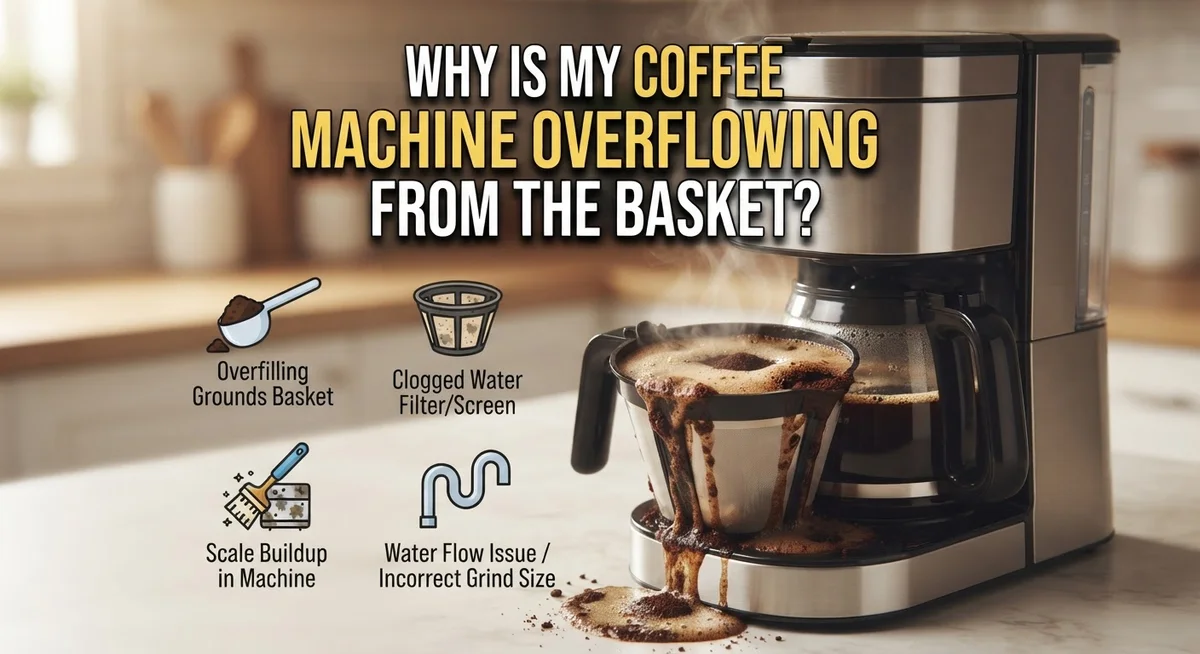
This can happen because of too much coffee, grounds that are too fine, or a dirty valve. Sometimes the filter itself sits wrong in the basket.
In a Nutshell
- Grind size matters most. A grind that’s too fine blocks water from draining properly. This causes it to build up and spill over the basket edge.
- Don’t overfill the basket. Too many grounds leave no room for water to flow. Always measure your coffee before brewing.
- Check the bottom valve. Scale and old coffee debris can clog this small part. A blocked valve stops water from moving through the machine correctly.
- Look at the spray head. If this gets clogged, water pours out unevenly. This pressure often pushes grounds up and over the basket.
- Position your filter correctly. A folded or crooked filter creates gaps. Water escapes through these gaps instead of brewing normally.
- Clean your machine often. Regular descaling keeps every part working smoothly. This simple habit prevents most future overflow problems.
How Your Coffee Machine’s Filter Basket Is Supposed to Work
Your coffee machine’s filter basket works like a simple funnel system. Water flows down from the top, passes through the coffee grounds, and drains out the bottom into your pot.
The spray head sits at the top and distributes hot water evenly across your grounds. This even distribution is essential for proper brewing. Water then soaks through the grounds slowly, extracting flavor as it goes.
The bottom valve is the key player here. This small opening lets water pass through once it has filtered through the grounds. When everything works right, water flows steadily and your coffee brews perfectly.
Your filter basket has specific design features that matter. The sides hold the filter paper or mesh in place. The bottom slopes slightly to guide water toward that drain valve. The basket sits inside the machine at a precise angle so water can flow downward naturally.
The filter itself acts as a barrier. It catches ground particles while letting liquid pass through. This is why filter placement matters so much. A wrinkled or misaligned filter creates channels where water rushes through without proper contact with your grounds.
Water needs resistance to brew properly. The grounds create this resistance, slowing water just enough for extraction. But too much resistance stops the flow completely. That’s when overflow happens.
Your machine expects a specific amount of grounds with a specific grind size. Medium grounds allow water to flow at the right speed. Too many grounds or too fine a grind blocks drainage. The spray head also plays a role by controlling how fast water enters the basket.
Understanding this system helps you see why overflow occurs and how to fix it.
Top Causes of Basket Overflow
Your coffee machine overflows when water cannot drain properly through the grounds. Several specific issues cause this problem, and understanding them helps you fix it quickly.
Too much coffee grounds is the most common culprit. When you pack the basket too full, water has nowhere to go except back up and over the sides. The grounds act as a filter, but excess grounds create a dam that blocks water flow completely.
Grind size matters significantly. Grounds that are too fine stick together and trap water between them. Think of it like sand versus powder. Fine grounds compact too tightly, preventing water from passing through at the right speed. Medium grind size allows water to flow naturally while still extracting flavor.
Scale and debris in the bottom valve restrict water movement. Over time, mineral deposits and old coffee particles build up inside this small opening. When the valve gets clogged, water backs up into your basket instead of flowing down into the pot below.
A clogged spray head distributes water unevenly across your grounds. Some areas get saturated while others stay dry. This uneven distribution causes water to pool and overflow from certain spots in the basket.
Misaligned filters create gaps where water escapes. If your filter folds over or sits crooked in the basket, water finds the path of least resistance and flows around the sides instead of through the grounds.
Each of these issues has a simple solution. Identifying which one affects your machine helps you restore normal brewing quickly. Start by checking your grind size and the amount of grounds you use, then move to cleaning internal parts if needed.
Step-by-Step: Diagnosing the Source of the Overflow
Start by examining your machine from the top down. Look at the spray head first. This component sits directly above your grounds and releases hot water. If you see mineral buildup or brown residue, the spray head is likely clogged. Water cannot distribute evenly, so it pools and overflows.
Next, check your filter basket itself. Remove it carefully and inspect the bottom. Look for the small valve opening. This is where water drains through. If you see white, chalky deposits or old coffee debris, scale has built up. Scale blocks water flow and causes backup.
Now examine your filter placement. Take out the filter and look at how it sits in the basket. Is it folded or wrinkled? Does it line up with the basket edges? A misaligned filter creates gaps where water escapes sideways instead of flowing down.
Pull out your grounds and measure them. Too many grounds prevent water from flowing through. Your machine has a maximum capacity. Exceeding it leaves no room for proper drainage. Also check your grind size. Grounds that feel powdery or dusty are too fine. Fine grounds compact together and trap water.
Finally, run water through an empty machine. Watch how it flows from the spray head. Does it come out evenly across the basket, or does it spray in one spot? Uneven spray indicates a clogged spray head or misaligned basket.
These checks pinpoint exactly where your overflow problem starts. Most issues involve one or two of these factors working together. Identifying the source makes the fix straightforward and prevents future overflow problems.
Getting the Grind Size and Coffee Amount Right
Getting the right grind size and coffee amount is fundamental to preventing overflow. Your machine has specific requirements for both, and small mistakes create big problems.
Grind size directly affects how water moves through your grounds. Medium grind works best for most drip machines. When grounds are too fine, they pack together tightly and block water drainage. This trapped water has nowhere to go except back up and out of the basket.
Think of it this way: fine grounds act like a barrier that stops water flow. Medium grounds allow water to pass through at the right speed. Coarse grounds let water pass too quickly, which means weak coffee. You need the middle ground, literally.
Coffee amount matters just as much as grind size. Overfilling your basket is tempting when you want stronger coffee, but it backfires. Excess grounds create too much resistance. Water cannot push through the pile, so it backs up and overflows.
Most machines have a fill line inside the basket. This line exists for a reason. Respect it. If you want stronger coffee, use a finer medium grind instead of adding more grounds.
Here’s what to do: measure your grounds using the scoop that came with your machine. If you don’t have one, use a standard tablespoon. One scoop per cup of water is the typical ratio. Adjust slightly based on your taste preference, but stay within the basket’s limits.
Check your grind consistency too. Grounds should look like sand, not powder. If they look dusty, your grinder setting is too fine. Make this adjustment before your next brew. These two simple fixes solve overflow problems for most people.
Cleaning the Valve, Spray Head, and Filter Basket
The valve at the bottom of your machine needs regular attention to prevent overflow. This small opening can trap scale deposits and ground particles that block water flow completely. When water cannot pass through, it backs up into your basket and spills over the sides.
Start by turning off and unplugging your machine. Let it cool for at least 30 minutes before touching any internal parts. Remove the filter basket and empty any remaining grounds into the trash.
Look underneath where the basket sits. You’ll see a small valve opening. Use a soft brush or old toothbrush to gently scrub around this area. Debris often builds up here without you realizing it. If you see white crusty deposits, your machine needs descaling with a proper solution made for coffee equipment.
The spray head sits at the top and distributes water across your grounds. Check if water flows evenly from all holes when you run the machine empty. Uneven flow means some areas are clogged. Soak the spray head in hot water for 15 minutes to loosen buildup.
Your filter basket itself can cause overflow if it’s misaligned or damaged. Make sure it sits flat and centered in your machine. Look for cracks or warping that might let water escape sideways.
Clean these three components every two weeks if you use your machine daily. This simple routine stops most overflow problems before they start. If overflow continues after cleaning, the valve may need professional replacement. Your machine will work much better with regular maintenance.
Common Mistakes That Lead to Overflow
Many people make simple mistakes that cause their coffee machines to overflow. Understanding these errors helps you fix the problem quickly.
Overfilling the basket is the first major mistake. You might think more coffee means stronger brew, but excess grounds block water flow. Water cannot drain through the packed grounds, so it backs up and spills over. Always check the fill line marked inside your basket.
Using grounds that are too fine or dusty creates another common issue. Fine grounds clump together and form a dense barrier. Water gets trapped above this barrier instead of flowing through. Dusty grounds from old bags work the same way. Fresh grounds with proper consistency prevent this problem.
Neglecting regular maintenance leads to overflow over time. Scale and mineral deposits build up inside your machine’s valve and spray head. This buildup restricts water flow gradually. You might not notice the problem until your machine starts overflowing. Cleaning these parts every two weeks keeps water moving freely.
Misaligning your filter during setup causes water to escape in wrong directions. A folded or twisted filter creates gaps. Water finds these gaps and leaks out instead of flowing down through the grounds. Take a moment to center your filter properly before brewing.
Ignoring a damaged filter basket also causes overflow. Cracks or warping in the basket let water bypass the grounds entirely. Water rushes through these openings instead of filtering through your coffee.
These mistakes are easy to fix once you recognize them. Most overflow problems stem from one of these five errors. Check each one systematically to identify your specific issue.
Troubleshooting Persistent Overflow Issues
When your coffee machine keeps overflowing despite your best efforts, you need a systematic approach to find the real problem. Start by checking if water pools around the bottom valve even when the basket is empty. This tells you the valve itself has an issue rather than your coffee setup.
Disassemble the valve mechanism carefully. Most machines have a small valve at the bottom where the basket connects. Scale buildup and old coffee residue accumulate there over time. Use a small brush or pipe cleaner to remove any debris blocking water flow. Rinse all parts thoroughly under running water.
Next, inspect the spray head at the top of your machine. This component distributes water evenly across your grounds. If it has mineral deposits or dried coffee, water won’t spread properly and pressure builds up. Soak the spray head in hot water for 15 minutes, then use a thin tool to clear any small holes.
Check your filter basket for physical damage. Cracks or warping prevent proper seating in the machine. A basket that doesn’t sit flush allows water to escape sideways instead of flowing through your grounds.
If these components look clean and intact, your overflow likely stems from your coffee preparation rather than machine damage. Run a test brew with just water and no grounds. If water flows smoothly without pooling, your machine’s internal systems work fine.
Persistent overflow after cleaning these three areas suggests a deeper mechanical issue. Your machine may need professional inspection at this point. Most overflow problems resolve once you address the valve, spray head, and basket condition.
Maintenance Habits to Prevent Future Overflow
Good maintenance habits stop overflow before it happens. You need a routine that keeps your machine running smoothly and prevents water from backing up into your basket.
Rinse your filter basket before each brew. This removes old coffee residue and dust that can block water flow. A quick rinse under warm water takes seconds but makes a real difference. Make sure the basket sits centered in your machine every single time. Misalignment causes water to pool and overflow.
Descale your machine regularly. Hard water deposits build up inside the valve and spray components over weeks of use. These deposits slow water drainage significantly. Descaling removes mineral buildup that restricts flow. Most machines need descaling every month, depending on your water hardness.
Check your coffee grounds quality. Store grounds in a cool, dry place. Stale or damp grounds clump together and block water passage. Fresh grounds with proper consistency drain better and reduce overflow risk.
Measure your coffee correctly every time. Use the scoop provided with your machine or a standard measuring tool. Consistency matters more than eyeballing amounts. The same measurement prevents guessing games that lead to overfilling.
Inspect your machine weekly for visible damage. Look at the filter basket for cracks or warping. Check the valve area underneath for leaks or corrosion. Catch small problems early before they cause overflow during brewing.
Replace worn components as needed. Filter baskets wear out over time. Valves can become stuck or damaged. Replacing these parts costs far less than repairing water damage to your kitchen.
These simple habits keep your machine healthy and your mornings dry.
Final Thoughts
Coffee machine overflow feels frustrating, but it’s rarely a mystery. Most problems trace back to grind size, coffee amount, or a dirty valve.
Your machine gives you clues every time it overflows. Pay attention to when it happens and how much water escapes.
Start with the basics first. Check your grind size and coffee measurement before assuming something is broken.
If basic checks don’t solve the problem, move to cleaning. A dirty valve or clogged spray head causes most persistent overflow issues.
Think of your coffee machine like a car. It needs regular attention to work properly.
Small habits make a big difference here. A quick rinse of your filter basket takes seconds but saves you a mess later.
Set a reminder to clean your machine every two weeks. This simple step prevents most overflow problems before they start.
Don’t ignore small changes in how your machine behaves. A slight increase in brew time often signals a clog forming.
Fixing overflow issues doesn’t require expert skills. Anyone can learn to spot the signs and take action quickly.
Your coffee machine will last longer with proper care. Clean parts and correct grind size keep water flowing the way it should.
Remember that patience helps too. Rushing through setup often causes the exact mistakes that lead to overflow.
Take a few extra seconds each morning to check your filter and measure your grounds. This small effort protects your counter and your morning routine.
With the right habits, overflow becomes rare instead of routine. Your machine works best when you understand what it needs and give it that care consistently.
Frequently Asked Questions
Why does my coffee machine overflow when I use fine grounds?
Fine coffee grounds pack tightly together. Water cannot flow through them quickly. This causes water to back up and overflow from the basket. Use medium grind coffee instead. Medium grounds allow water to drain properly while still extracting good flavor. Check your grinder settings and test a small batch before making a full pot.
What happens if I put too much coffee in the basket?
Overfilling the basket reduces water flow. The grounds have no room to expand during brewing. Water pools on top and spills over the sides. Measure your coffee using the machine’s recommended amount. Most machines work best when the basket is filled to the line marked inside.
Can a clogged spray head cause overflow?
Yes. The spray head sits at the top of your machine. It distributes water evenly over the grounds. When mineral deposits or debris block the spray head, water cannot spread out. Water then concentrates in one spot and overflows. Remove the spray head and rinse it under warm water. Use a small brush to clear any blocked holes.
How does scale buildup cause overflow?
Scale forms inside your machine over time. It collects in the bottom valve where the basket connects. This valve controls water flow into the basket. Scale blocks this valve and stops water from draining. Water backs up and overflows. Descale your machine every month using the descaling method recommended in your manual.
Is a folded filter the reason for overflow?
Yes. Filters sometimes fold or bunch up inside the basket. This creates a seal that blocks water drainage. Check that your filter sits flat and smooth against the basket walls. Center the filter before adding grounds.

Hi, I’m Emma Lee — the coffee-obsessed creator behind Morning Drip Vault. I spend my days testing coffee machines, exploring brewing techniques, and reviewing the latest coffee gear. My mission is simple: helping you find the perfect machine to brew your best cup, every single morning.