
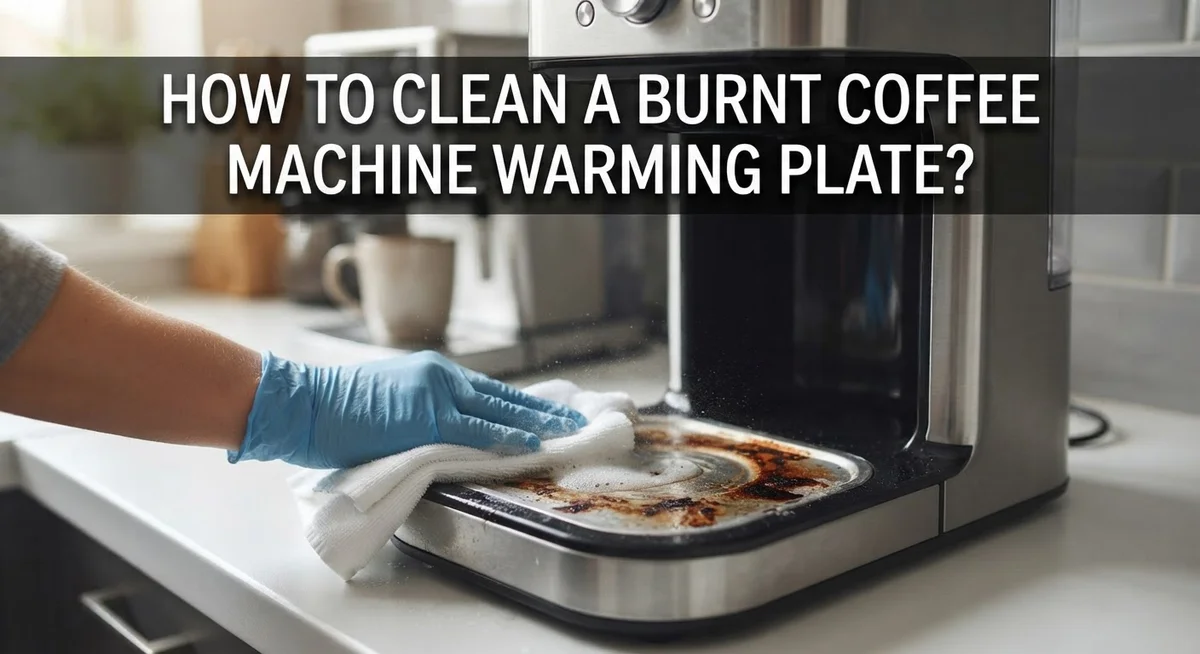
How To Clean A Burnt Coffee Machine Warming Plate?
Coffee stains build up fast on a warming plate. That black, crusty layer does not look nice. It can also affect how your machine heats your coffee.
Burnt residue forms when spilled coffee sits on a hot surface. Over time, this turns into a sticky, stubborn mess. Many people ignore it until it becomes hard to remove.
The good news is that cleaning this plate is simple. You do not need fancy tools or harsh chemicals. Everyday items in your kitchen can do the job well.
In a Nutshell
- Mix vinegar and water in equal parts. Run this solution through your machine. Let it steam, then cool before wiping.
- Make a baking soda paste for tough spots. Apply it with a damp sponge. Scrub gently until stains lift.
- Try Bar Keepers Friend for heavy burnt residue. Mix it with water to form a paste. This tackles stubborn buildup fast.
- Clean the plate while it’s still warm. Residue comes off much easier this way. Cold, hardened stains take more effort.
- Always run a fresh water cycle after using any cleaning solution. This removes leftover residue and taste.
- Empty your drip tray often. This simple habit stops buildup before it starts. A little maintenance goes a long way.
Why Warming Plates Get Burnt and Stained
Coffee warming plates burn and stain for specific reasons. Understanding these causes helps you prevent future buildup and clean more effectively.
Spilled coffee is the main culprit. When you pour coffee or it overflows from the carafe, liquid lands directly on the hot plate. The heat instantly burns the coffee, creating dark brown or black spots. This happens fast because warming plates stay hot all day long.
The plate’s surface temperature matters too. Most warming plates reach 140 to 180 degrees Fahrenheit. At these temperatures, even small amounts of coffee burn within seconds. The longer the liquid sits, the harder it bonds to the plate surface.
Mineral deposits add another layer of trouble. If your machine uses hard water, minerals like calcium and magnesium accumulate over time. These minerals mix with burnt coffee residue. The combination creates stubborn, crusty buildup that simple wiping won’t remove.
Neglecting the drip tray speeds up the problem. When you don’t empty the drip tray regularly, excess water and coffee grounds pool underneath. This moisture creates humidity around the plate. The warm, wet environment encourages more staining and burnt marks.
Frequency of use matters as well. Machines that brew many cups daily experience faster buildup. Each brew cycle adds potential for spills. Heavy users see noticeable stains within weeks.
The plate’s material also affects staining. Most warming plates use glass or ceramic surfaces. These materials are porous at a microscopic level. Burnt coffee soaks into tiny pits and cracks, making removal harder.
Regular maintenance stops these problems early. Wiping spills immediately prevents burning. Emptying the drip tray reduces moisture and buildup. Running cleaning cycles periodically keeps mineral deposits from hardening. Understanding these causes helps you develop better habits and keep your warming plate looking new.
What You’ll Need Before You Start Cleaning
Before you start cleaning your burnt coffee machine warming plate, gather the right supplies. Having everything ready makes the job faster and more effective.
Cleaning solutions are your first priority. You’ll need white vinegar or citric acid mixed with water in equal parts. This combination breaks down burnt residue naturally. Baking soda works well too, especially when mixed with a small amount of water to create a paste. These items are common household staples you likely already own.
You’ll also need basic cleaning tools. A soft microfiber cloth works best for gentle surfaces. A damp sponge helps you apply cleaning solutions evenly across the plate. For stubborn buildup, a metal scouring pad provides light abrasive action without damaging most warming plates. Keep several cloths on hand so you can switch between them as they get dirty.
Water is essential for rinsing. Have fresh, clean water available to run through your machine multiple times. This removes all traces of cleaning solutions and prevents residue from building up again. A spray bottle filled with water makes rinsing easier and more controlled.
Don’t forget dish detergent. A small amount mixed with water on a cloth handles light cleaning jobs. This gentle option works well for maintenance cleaning between deep cleanings.
Safety items matter too. Have a dry towel nearby to handle the warm plate safely. The plate will be hot during and shortly after brewing, so protect your hands. A small brush can help you reach tight corners and edges around the plate’s perimeter.
Finally, empty your drip tray before starting. This prevents spilled cleaning solution from mixing with old coffee residue. Check that your machine is unplugged if you’re doing extensive scrubbing work. Taking these preparation steps ensures your cleaning session runs smoothly and safely.
Step-by-Step: Cleaning the Warming Plate with Vinegar
Start by unplugging your coffee machine and letting the warming plate cool slightly. You want it warm to the touch, not hot. A warm plate releases burnt residue much more easily than a cold one.
Mix equal parts white vinegar and water in a container. This solution cuts through burnt coffee and mineral deposits effectively. Pour the mixture into your coffee machine’s water reservoir as if you were making a regular pot of coffee.
Turn on the machine and let it brew the vinegar solution through the warming plate. Watch as steam forms on the plate surface. This heat helps loosen stubborn burnt spots. Let the machine run until the reservoir empties completely.
Turn off the machine and let it cool for about 15 minutes. The vinegar solution needs time to work on the burnt areas. You’ll notice the plate looks cleaner already.
Use a damp microfiber cloth or soft sponge to wipe the plate gently. For light burnt spots, this usually works perfectly. Wipe in circular motions to lift away the loosened residue.
For tough, stubborn burnt areas, make a paste using baking soda and a small amount of water. Apply this paste directly to the problem spots. Let it sit for 5 minutes, then scrub gently with a soft brush or cloth. Avoid metal scouring pads on non stick surfaces, but they work fine on stainless steel plates.
Rinse the plate thoroughly by running fresh water through your machine twice. This removes all vinegar and baking soda residue completely. Any leftover cleaning solution affects your next pot of coffee’s taste.
Wipe the plate dry with a clean cloth. Your warming plate should now look significantly better. Empty your drip tray before your next brew to prevent future buildup from starting.
Tackling Stubborn Burnt Residue with Baking Soda or Bar Keepers Friend
When burnt residue clings to your warming plate, baking soda and Bar Keepers Friend work as powerful allies. These two options tackle stubborn stains that vinegar alone cannot remove.
Baking soda paste is your first choice for gentle yet effective scrubbing. Mix baking soda with a small amount of water until you reach a thick, spreadable consistency. Apply this paste directly onto the burnt areas of your warming plate. Let it sit for five to ten minutes so the paste can break down the burnt coffee oils.
Use a damp sponge or soft cloth to scrub in circular motions. Work slowly and avoid pressing too hard, which could scratch the plate surface. The mild abrasive nature of baking soda removes buildup without damaging the metal underneath.
Bar Keepers Friend offers stronger cleaning power for extra stubborn stains. Create a paste by mixing the powder with just enough water to form a thick consistency. Apply it to the burnt spots and let it work for about five minutes. Scrub gently with a damp cloth or sponge using circular motions.
Both options require thorough rinsing afterward. Run at least two cycles of fresh water through your machine to eliminate all cleaning residue. This step prevents any powder particles from mixing with your next brew.
Timing matters significantly when using these methods. Clean your warming plate while it’s still warm but cool enough to touch safely. Warm plates release burnt residue more easily than cold ones.
For best results, combine these pastes with a metal scouring pad if the plate allows it. The pad provides light abrasive action that enhances cleaning power. Always check your machine’s manual first, as some plates have special coatings that require gentler care.
Rinsing and Finishing Touches for a Spotless Plate
After you’ve scrubbed away the burnt residue, proper rinsing ensures your warming plate stays clean and your coffee tastes fresh. This final stage prevents cleaning solution residue from affecting future brews.
Run fresh water through your machine at least twice. Start by filling your water reservoir with clean, cold water. Turn on the machine and let water flow through the warming plate completely. This first cycle removes loose particles and dissolved debris. Empty the reservoir and refill it again with fresh water. Run a second cycle to ensure all cleaning solution traces are gone.
Pay special attention to the drip tray during this process. Empty it completely between each water cycle. Debris often collects here, and stagnant liquid can create odors or mold. Rinse the drip tray separately under running water and dry it thoroughly before replacing it.
For extra assurance, run a third water cycle if your machine allows it. This step matters most when you used vinegar or citric acid solutions. These acidic cleaners can leave subtle tastes behind if not fully removed.
Wipe the warming plate dry with a clean, lint free cloth. Moisture left on the surface can cause new staining or mineral buildup. Use gentle circular motions to avoid scratching the plate’s surface.
Let your machine sit for 10 minutes after the final rinse. This allows any remaining moisture inside the system to evaporate naturally. Before brewing your first cup of coffee, run one more quick water cycle if you prefer extra caution.
Your warming plate is now spotless and ready for use. Regular maintenance prevents heavy buildup, so aim to clean your plate every two weeks. This simple habit keeps your coffee machine performing well and your beverages tasting their best.
Preventing Future Burn Marks and Buildup
Regular maintenance stops burnt marks before they start. The key is catching problems early and staying consistent with your cleaning routine.
Empty your drip tray daily. Coffee and water collect in this tray over time. When liquid sits there, it evaporates and leaves mineral deposits. These deposits eventually reach your warming plate and create stubborn buildup. A quick daily empty takes 30 seconds and prevents major issues.
Clean your carafe right after each brew. Overflowing coffee is one of the biggest culprits behind warming plate stains. When your pot overflows, liquid spills onto the heating surface and burns on. Simply rinsing your carafe and checking the water level before brewing stops this problem completely.
Run a fresh water cycle once per week through your entire machine. This simple step flushes out mineral deposits that collect inside. Hard water leaves calcium and magnesium behind, and these minerals stick to your warming plate over time. A weekly water cycle keeps everything flowing smoothly and prevents buildup from forming.
Wipe your warming plate with a damp cloth every few days. You don’t need any cleaning solution for this step. Just use a soft microfiber cloth or sponge with plain water. This removes dust and light residue before they have a chance to burn on.
Check your water quality at home. If you have hard water, consider using filtered water in your machine. Hard water minerals are the main reason warming plates develop heavy buildup. Filtered water reduces mineral deposits significantly and extends the time between deep cleanings.
Store your machine in a dry location. Humidity and moisture in the air can cause oxidation on metal surfaces. Keep your coffee machine away from windows and damp areas.
These prevention habits take minimal effort but deliver major results. You’ll spend less time scrubbing and more time enjoying fresh coffee.
Common Mistakes to Avoid When Cleaning
People often make cleaning mistakes that actually make burnt residue worse instead of better. Understanding what NOT to do saves you time and keeps your machine working properly.
Neglecting your drip tray is the biggest mistake most people make. When you skip emptying it regularly, old coffee and water sit underneath your warming plate. This buildup hardens over time and becomes much harder to remove later. Empty your drip tray daily to stop this problem before it starts.
Using only dry cleaning methods on heavy burnt spots doesn’t work well. Dry scrubbing alone won’t lift stubborn, baked on residue. You need moisture and a cleaning solution to break down the burnt material. Always combine a wet cloth or paste with your scrubbing efforts.
Skipping final rinse cycles leaves cleaning solution residue on your plate. This leftover solution can affect your coffee’s taste and create new stains. Run at least two full water cycles through your machine after any cleaning treatment. Your taste buds will thank you.
Waiting too long to clean also causes problems. Burnt spots are easier to remove when your plate is still warm right after brewing. The heat softens the residue and makes scrubbing more effective. Don’t let burnt marks sit for days before cleaning.
Another common error is using too much force with harsh scouring pads. Aggressive scrubbing can scratch or damage your warming plate surface. Use gentle circular motions with soft cloths or sponges instead.
Finally, people often forget to clean their carafe regularly. Overflow from a dirty carafe drips onto your warming plate and creates new burnt spots. Wash your carafe immediately after each brew to prevent this.
These simple mistakes are easy to fix once you know about them. Small changes to your cleaning routine prevent big problems down the road.
Final Thoughts
Cleaning a burnt coffee machine warming plate does not need to feel like a big chore. With the right approach, you can restore your plate to a spotless state in minutes.
Vinegar solutions and baking soda pastes work well for most burnt spots. These simple household items tackle tough stains without harsh chemicals.
Remember to clean your plate while it is still warm. This small step makes a huge difference in how easily the residue comes off.
Rinsing thoroughly matters just as much as scrubbing. Skipping this step leaves behind cleaning solution that can cause new stains later.
Consistency is your best friend when it comes to keeping your warming plate clean. Daily wipe downs and regular drip tray checks prevent buildup from forming in the first place.
Think about your cleaning routine as part of your morning coffee ritual. A few extra minutes each day saves you from tackling stubborn burnt marks down the road.
Your coffee machine works hard every single day. Giving it a little care in return keeps it running smoothly and looking good for years.
Avoid the common mistakes we covered, like using dry methods alone or forgetting your carafe. These small oversights add up over time and make cleaning harder than it needs to be.
At the end of the day, a clean warming plate means better tasting coffee and a machine that lasts longer. You do not need fancy tools or expensive products.
Basic household items and a bit of regular attention go a long way. Your coffee machine will thank you with fresh, great tasting brews every single morning.
Frequently Asked Questions
Can I clean my warming plate while the machine is still hot?
Yes, you should clean your warming plate while it is still warm. Heat makes burnt residue softer and easier to remove. Always unplug your machine first for safety. Let the plate cool just enough so you can touch it without burning yourself. A warm plate responds better to gentle scrubbing than a cold one does.
What solution works best for really stubborn burnt spots?
Baking soda paste and Bar Keepers Friend paste both tackle tough buildup effectively. Mix baking soda with a small amount of water to create a thick paste. Apply it directly to burnt areas and let it sit for a few minutes. Then scrub gently with a damp sponge or cloth. These pastes work without scratching your plate’s surface.
How many rinse cycles do I need after cleaning?
Run at least two to three fresh water cycles through your machine after using any cleaning solution. This removes all leftover cleaning residue from your warming plate. Residue left behind can affect your coffee’s taste. Fill your water reservoir with fresh water and run it through completely each time.
Why does my drip tray affect my warming plate’s cleanliness?
Your drip tray collects coffee overflow and water splashes every single day. When it gets full, liquid backs up onto your warming plate and burns on. This creates that stubborn burnt buildup. Empty your drip tray regularly to prevent this problem from starting. Check it every few days and clean it with hot soapy water.
Should I remove my warming plate to clean it?
Check your machine’s manual first. Some warming plates are removable, while others are built in. If your plate comes off, wash it separately with hot soapy water. This gives you better access to all burnt spots. If it is permanently attached, clean it in place using the methods we discussed.

Hi, I’m Emma Lee — the coffee-obsessed creator behind Morning Drip Vault. I spend my days testing coffee machines, exploring brewing techniques, and reviewing the latest coffee gear. My mission is simple: helping you find the perfect machine to brew your best cup, every single morning.