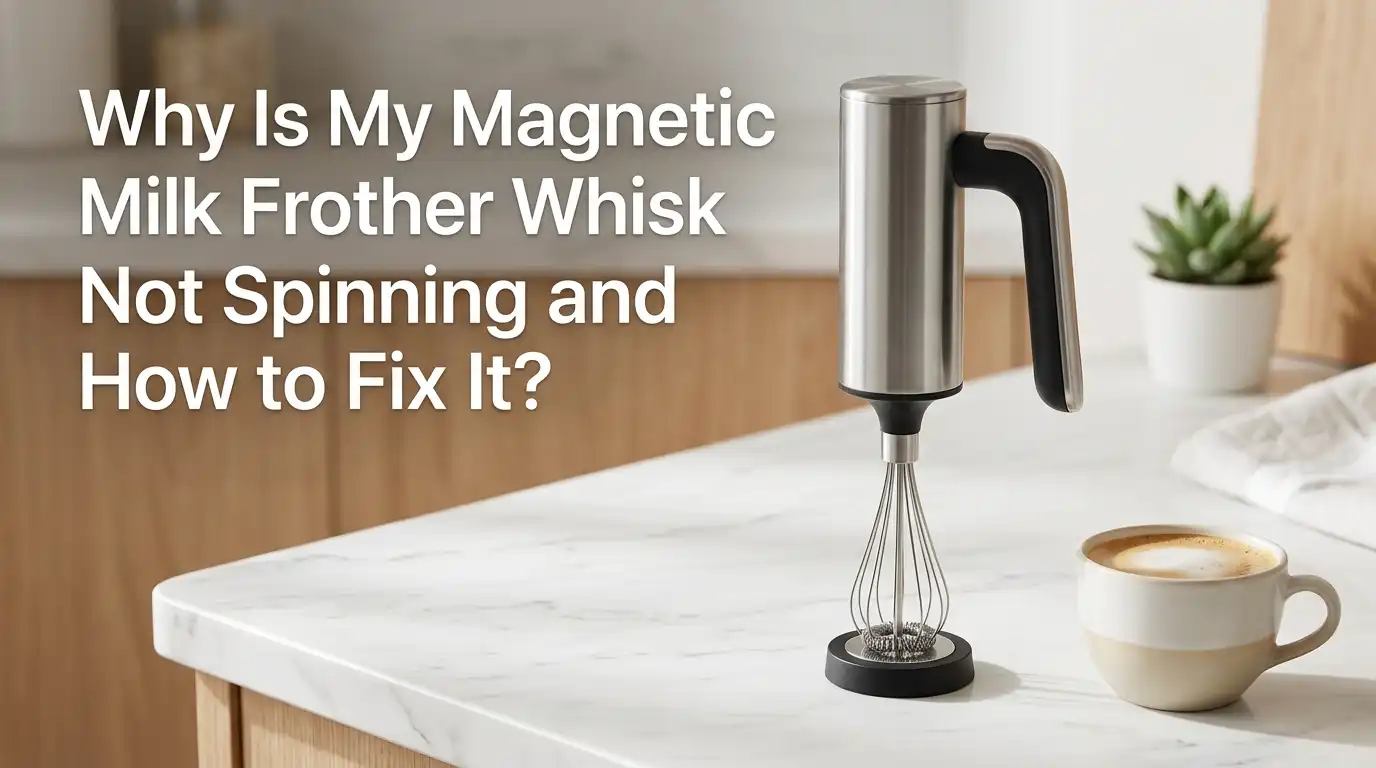
Why Is My Magnetic Milk Frother Whisk Not Spinning and How to Fix It?
There is nothing quite as frustrating as craving a creamy cappuccino and watching your milk frother sit silent. The button lights up. The motor hums.
But the whisk just stays still. If this sounds familiar, you are not alone. Thousands of coffee lovers face this exact issue every single day.
This guide walks you through every possible reason your whisk has stopped spinning. You will learn quick checks, deeper repairs, and smart habits to keep the issue from coming back. Let us get your frother working again.
In a Nutshell:
- Clean the magnetic base and whisk thoroughly. Dried milk residue is the number one reason whisks stop spinning. A quick soak in warm soapy water often brings the frother back to life.
- Check the power source carefully. For battery models, swap in fresh alkaline batteries. For plug in units like the Aeroccino, test the outlet and reseat the base on the charging plate.
- Inspect the whisk for damage. A bent coil, missing magnet ring, or warped shaft means the whisk cannot align with the motor. Replacement whisks are cheap and easy to install.
- Look at the motor coupling and spindle. Dirt, grease, or worn parts under the whisk can stop rotation. Wipe the spindle clean with a dry cloth.
- Reset the device. Unplug it for one full minute or remove the batteries. This clears small electronic glitches that block normal function.
- Avoid overfilling and overheating. Too much milk strains the motor. Let the frother cool between uses to protect the internal components.
Understanding How a Magnetic Milk Frother Actually Works
A magnetic milk frother uses a clever, simple design. The base holds a small electric motor with a magnet on top. The whisk sits in the jug or attached shaft and has its own magnet at the bottom.
When you press the button, the motor spins the magnet in the base. That moving magnet pulls the whisk magnet along with it. No direct contact is needed. This is why the jug stays sealed and easy to clean.
Knowing this helps you troubleshoot faster. If the motor hums but the whisk stays still, the magnetic link has broken. If the motor makes no sound at all, the issue lies in the power supply or the motor itself. Once you understand which part has failed, the fix becomes clear and direct.
Reason 1: Milk Residue Is Blocking the Magnetic Connection
Milk residue is the top cause of a dead whisk. Even a thin film of dried milk can weaken the magnetic pull enough to stop rotation. This builds up fast if you skip cleaning after each use.
To fix this, fill the jug with warm water and a drop of dish soap. Let it soak for ten minutes. Then use a soft sponge to wipe the inside bottom of the jug and the base of the whisk. Pay close attention to the small circle where the magnet sits.
Pros of this method: Free, fast, and solves most cases instantly.
Cons: Will not help if the magnet itself is damaged or the motor has failed. Heavy buildup may need repeated cleaning sessions. Avoid abrasive scrubbers since they can scratch the nonstick coating inside many frother jugs.
Reason 2: Dead or Weak Batteries in Handheld Frothers
If you own a handheld frother, weak batteries are the most common culprit. The motor may sound slow or refuse to start at all. Sometimes the whisk wiggles weakly instead of spinning.
Open the battery compartment by twisting the bottom cap. Remove the old batteries and check for corrosion or white powder. Wipe the contacts clean with a dry cloth or cotton swab dipped in vinegar. Install fresh alkaline AA batteries in the correct direction.
Pros of fresh batteries: Cheap, instant fix, restores full motor speed.
Cons: Rechargeable batteries often give lower voltage and may not spin the whisk as fast. Some frothers need specific battery orientation, and getting it wrong stops the motor completely. Always check the small diagram inside the compartment to place the batteries the right way.
Reason 3: The Whisk Is Bent, Damaged, or Worn Out
A whisk is a small part, but it takes a beating. Repeated use, drops, or washing in a dishwasher can bend the wire coil or weaken the magnet. A bent whisk cannot sit flat in the jug, which breaks the magnetic alignment.
Pull out the whisk and roll it on a flat surface. If it wobbles, it is bent. Try gently straightening the shaft with your fingers. If the coil is twisted, replacement is the better choice.
Pros of replacing the whisk: Restores like new performance. Whisks are sold in cheap two pack sets that fit most popular models.
Cons: You need to match the size and shape to your specific frother. A wrong fit will not connect with the magnet. Keep a spare whisk on hand so you never miss your morning coffee.
Reason 4: The Motor or Spindle Is Jammed
Sometimes the motor shaft itself gets stuck. Tiny bits of milk, sugar, or dust slip into the gap around the spindle. Over time, this turns into a sticky paste that locks the motor in place.
Unplug the device. Use a cotton swab dipped in warm water to clean around the spindle. Never submerge the base in water. Spin the shaft gently by hand to free it. If you feel resistance, repeat the cleaning until it turns smoothly.
Pros of cleaning the spindle: Solves stiff or noisy motors. Extends the life of your frother by years.
Cons: This requires patience and care. If you push too hard, you can damage the motor seal. Some models are sealed so tightly that you cannot reach the spindle at all without opening the housing.
Reason 5: The Magnet Inside the Whisk Has Lost Strength
Magnets can weaken over time, especially with heat. If you froth very hot milk often, the magnet inside the whisk slowly loses its pull. The motor spins, but the whisk barely moves or stalls in thick milk.
Test the strength by holding the whisk near a steel paperclip. A healthy whisk lifts the clip easily. A weak whisk barely holds it. There is no way to recharge a household magnet, so replacement is the only fix.
Pros of swapping the whisk: Quick, simple, and gives full frothing power back. Most replacement whisks cost just a few dollars.
Cons: You must buy the exact model that fits your frother. Universal whisks rarely work well because magnet sizes vary. Check your user manual for the right part number before ordering.
Reason 6: Power Issues With Plug In Frothers
For models like the Aeroccino, the issue may sit in the power supply. Check that the base plate is fully seated. The jug needs to click into place for the contacts to connect.
Inspect the cord for kinks, cuts, or burn marks. Try a different outlet to rule out a tripped circuit. Some frothers have a small fuse that blows after a power surge. If the indicator light does not glow, power is the problem.
Pros of testing the power path: Often fixes the issue without any repair work. Costs nothing to try.
Cons: A damaged cord or internal fuse is hard to repair safely at home. Electrical repairs on small appliances often cost more than buying a new frother. If the base is dead, replacement is usually the smart choice.
Reason 7: Overheating Has Triggered a Safety Cutoff
Many modern frothers have a built in thermal cutoff. This safety switch stops the motor if the device gets too hot. It protects the internal parts from burning out.
If you used the frother several times in a row, let it cool for at least fifteen minutes. Place it on a cool counter away from sunlight. Try again once the base feels room temperature.
Pros of waiting it out: No repair needed. The frother will work normally once cool.
Cons: Repeated overheating shortens the motor lifespan. If the cutoff triggers often, you may be overfilling the jug or running back to back batches too quickly. Always respect the max fill line inside the jug to avoid stressing the motor.
Reason 8: Incorrect Assembly After Cleaning
After washing, parts can go back in the wrong way. The whisk might sit upside down, or the jug might not lock onto the base. This stops the motor from engaging.
Look at the whisk closely. The magnet side faces down toward the bottom of the jug. The wire coil points up into the milk. Make sure it snaps onto the small post at the base of the jug.
Pros of careful reassembly: Free fix that takes seconds. Prevents future confusion.
Cons: None really, except the learning curve for new users. Take a photo of your frother when you first unbox it. This gives you a reference for correct assembly every time you take it apart for deep cleaning.
Reason 9: Hard Water Mineral Buildup
If you live in an area with hard water, mineral deposits can coat the inside of the jug and the base of the whisk. These deposits create a rough surface that grabs the whisk and stops smooth rotation.
Mix one part white vinegar with two parts water. Pour into the jug and let it sit for thirty minutes. Wipe the inside with a soft cloth. Rinse well with clean water before frothing milk again.
Pros of descaling: Restores smooth spinning and improves heating in models that warm milk. Cheap and uses common household items.
Cons: Vinegar leaves a strong smell that needs careful rinsing. Frequent descaling may slowly wear down nonstick coatings. Try to descale only once a month or when you notice spotting inside the jug.
How to Test Your Frother Step by Step
A structured test helps you find the problem fast. Start with an empty, clean jug. Press the power button and watch the whisk closely. Listen for the motor sound.
If the motor hums but the whisk stays still, the issue is magnetic or mechanical. If the motor makes no sound, power or electronics are the cause. If the whisk spins in empty mode but stalls with milk, the magnet is weak or the milk is too thick.
Pros of this approach: Saves time and avoids unneeded part replacements. Helps you describe the problem clearly if you call customer service.
Cons: Some issues only show up under load with real milk, so you may need to test with a small amount of water or milk to confirm the fix.
When to Repair Versus Replace Your Frother
Not every frother is worth fixing. Cheap handheld models often cost less than a single replacement part. If the motor has burned out or the cord is damaged, buying new makes more sense.
For premium frothers like the Aeroccino or Breville models, repair is usually worth it. Replacement whisks, seals, and even motor coupling parts are available from the maker or third party sellers.
Pros of repairing: Saves money, reduces waste, and keeps a favorite appliance running.
Cons: Repairs take time and sometimes need tools you do not own. Opening the base may void any warranty. Check your warranty status before you start any deep repair. If the unit is less than two years old, contact the maker first for free service or a replacement.
Tips to Prevent the Problem From Happening Again
Prevention beats repair every time. Rinse the jug and whisk right after each use. Wipe the base with a dry cloth to remove any splashes.
Never put the base or motor unit in water. Only the jug and whisk should touch water, and only if the manual says they are washable. Store the frother with the whisk removed so the magnet does not stick to other metal items.
Use the right amount of milk and avoid overheating. Replace the whisk every six to twelve months if you use the frother daily. Following these habits keeps your frother spinning happily for years.
Frequently Asked Questions
Why does my frother light turn on but the whisk does not spin?
The light shows the unit has power, but the motor or magnetic link has failed. Clean the whisk and base first. If that does not work, the motor coupling or magnet inside the whisk is likely worn out.
Can I wash my magnetic milk frother whisk in the dishwasher?
Most whisks are not dishwasher safe. The heat and detergent can weaken the magnet and warp the coil. Hand wash with warm soapy water and dry it right away to keep it working well.
How long should a magnetic milk frother last?
A quality frother lasts three to five years with daily use. Cheaper handheld models may last one to two years. Regular cleaning and gentle handling extend the lifespan well past the average.
Why does my whisk spin slowly even with new batteries?
Slow spinning often means the spindle is sticky with old milk or the whisk magnet is weak. Clean both parts thoroughly. If the speed does not improve, replace the whisk with a fresh one.
Is it safe to open my milk frother to clean inside?
Opening the motor housing is risky and voids most warranties. Stick to surface cleaning unless you have repair experience. For deeper issues, contact the maker or take it to a small appliance repair shop.

Hi, I’m Emma Lee — the coffee-obsessed creator behind Morning Drip Vault. I spend my days testing coffee machines, exploring brewing techniques, and reviewing the latest coffee gear. My mission is simple: helping you find the perfect machine to brew your best cup, every single morning.