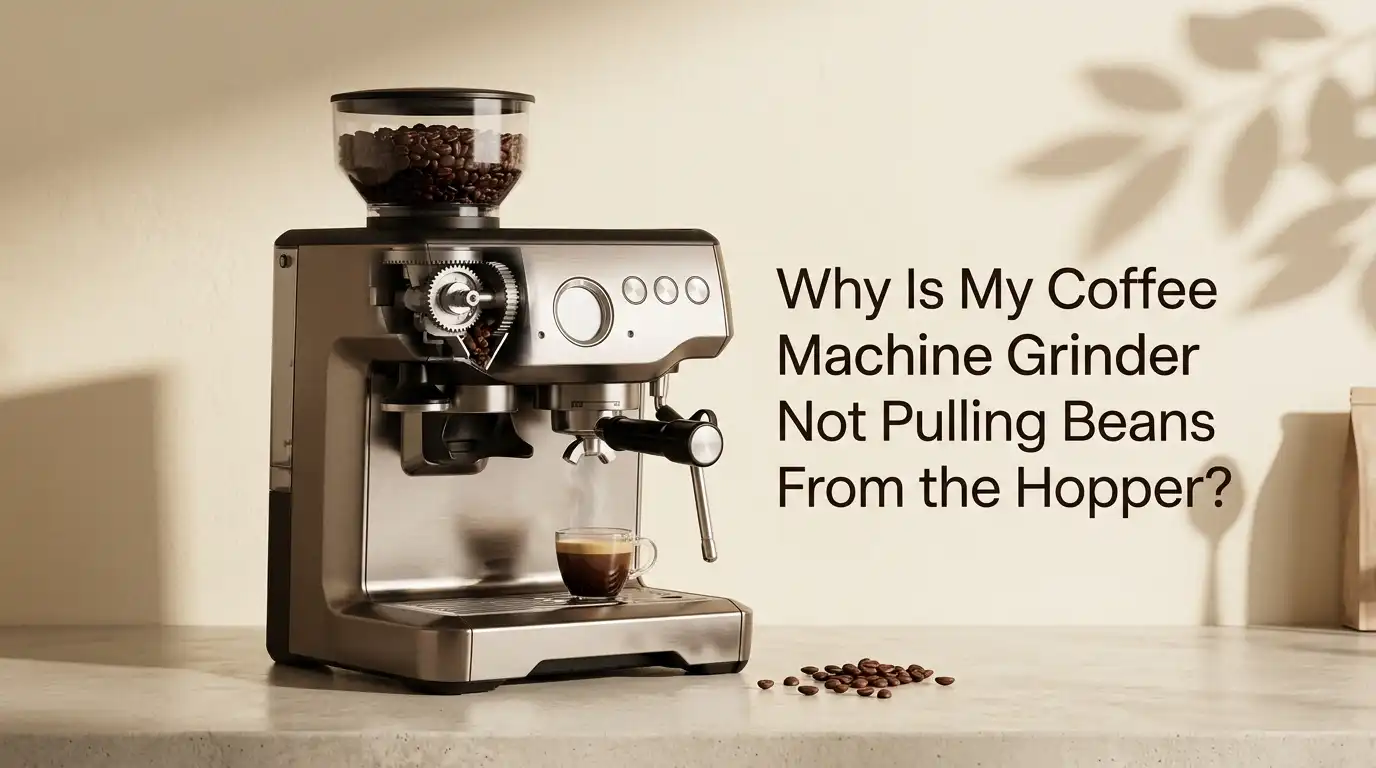
Why Is My Coffee Machine Grinder Not Pulling Beans From the Hopper?
Your morning routine just hit a wall. You pressed the button, the grinder buzzed, but no coffee came out. The beans sit in the hopper like stubborn passengers refusing to board a train.
This problem frustrates thousands of home baristas every single day, and the causes range from sticky oily beans to static charge to a clogged burr chamber.
The good news is that you can fix most of these issues yourself in under thirty minutes. You do not need a technician for the majority of these problems. You just need the right steps in the right order.
In a Nutshell:
- Oily or dark roasted beans stick to the hopper walls and burr entrance, blocking the bean path. Switch to medium roast or wipe the hopper with a dry cloth to fix it.
- Static electricity keeps light beans floating in place instead of dropping. A tiny spritz of water on the beans (the Ross Droplet Technique) breaks the static instantly.
- A jammed burr chamber from grounds, stones, or stale oils stops the auger from pulling new beans down. Cleaning tablets or rice can clear soft clogs in minutes.
- A closed hopper gate or misaligned hopper is the silent culprit. Many users forget to twist the hopper into its locked grind position.
- Worn burrs or a failing motor show up as weak grinding sounds and slow feeding. These need part replacement, not cleaning.
- High humidity in your kitchen makes beans clump together. Storing beans in a sealed container outside the hopper solves this long term.
Check the Hopper Gate First Because It Hides in Plain Sight
Most coffee grinders have a small slide gate at the bottom of the hopper. This gate lets you remove the hopper without spilling beans everywhere. If the gate sits even halfway closed, beans will not drop into the burrs. This sounds obvious, but it traps even experienced users.
Look at the base of your hopper where it meets the grinder body. You should see a small lever, knob, or sliding tab. Push it fully into the open position. On many machines, the hopper itself must be twisted clockwise into a locked spot before the gate aligns with the grinder opening.
Pros of this check: It takes ten seconds, costs nothing, and fixes a huge percentage of cases.
Cons: None really, though some hopper designs hide the gate under the lid which makes spotting it harder.
If your beans flow normally after opening the gate, you are done. If not, move to the next step.
Inspect Your Beans for Oil and Freshness
Dark roasted beans look shiny because oils have migrated to the surface. These oils are delicious in your cup, but they wreak havoc inside a grinder. Oily beans stick to plastic hopper walls and clog the throat above the burrs. Very fresh beans (less than five days off roast) also release more CO2 and oils, making them slippery and sticky at the same time.
Pour your beans onto a white plate. If you see visible oil patches or a greasy sheen on the plate after, your beans are the problem. Try a medium roast for a week and watch the issue disappear.
Pros of switching beans: Solves the root cause permanently. Cleaner grinder. Better grind consistency.
Cons: You may love the dark roast flavor and not want to change. Lighter roasts taste different.
If you must use oily beans, only put a small handful in the hopper at a time and clean the hopper weekly with a dry microfiber cloth.
Break Static With the Ross Droplet Technique
Static electricity is the silent enemy of every burr grinder. When beans tumble against plastic walls, they pick up a charge. Charged beans cling to the hopper sides instead of falling into the burrs. You will see beans stuck to the wall above the chute while the grinder runs empty.
The fix is shockingly simple. Dip a clean spoon or chopstick in water, shake off excess drops, then stir it through your beans for two seconds. This is called the Ross Droplet Technique, or RDT. The trace moisture neutralizes the charge without making the beans wet.
Pros of RDT: Free, instant, works every time, and reduces grind retention too.
Cons: You must do it every batch. Adding too much water can damage your burrs over time, so use only a tiny amount.
This trick alone solves bean feeding problems for thousands of espresso fans worldwide.
Clean the Burrs and Burr Chamber Thoroughly
Old coffee oils harden into a sticky brown residue inside the burr chamber. Over months, this residue builds up around the auger and the burr edges. The grinder motor still spins, but the auger cannot pull beans down through the gummed up channel.
Unplug your grinder. Remove the hopper, then unlock and lift out the top burr (most grinders use a twist lock or two screws). Use a stiff brush or a vacuum to clear out every visible ground and oil chunk. Wipe the chamber walls with a slightly damp cloth, then dry it completely before reassembly.
Pros of manual cleaning: Free, deep, and lets you spot worn burrs.
Cons: Takes twenty to thirty minutes. Some grinders need careful realignment of the burr to keep grind size correct, so mark the position before you start.
Do this every two to three months if you grind daily.
Use Grinder Cleaning Tablets or Plain Rice
If you do not want to take your grinder apart, cleaning tablets handle the job from the inside. These food safe tablets look like small pellets. You pour them into the hopper, run the grinder, and they scrub the burrs as they pass through. Plain uncooked white rice works as a cheaper alternative for many home grinders.
Run a handful through your grinder on a medium setting. Then grind a few normal beans afterward to flush any residue. The improvement in bean flow after one cleaning often shocks first time users.
Pros of tablets and rice: Fast, no disassembly, removes oils and stale grounds in one cycle.
Cons: Some grinder makers, especially those with ceramic burrs or super automatic machines, warn against rice because it is harder than coffee and can chip burrs. Always check your manual first. Tablets cost money but are burr safe.
For super automatics, stick with manufacturer approved cleaning products only.
Fix a Stuck Bean Lodged Between the Burrs
Sometimes a single hard bean fragment, a stone, or a piece of packaging gets jammed between the upper and lower burr. The motor may hum weakly or refuse to turn at all. A jammed burr means zero beans can move through, no matter how full your hopper is.
Empty the hopper completely. Remove the upper burr and look for the obstruction. Use tweezers or a small screwdriver to lift the object out. Never force the burrs to turn with a tool while the motor is engaged because this damages the motor windings.
Pros of clearing jams manually: Fast and free if you spot the object.
Cons: Requires opening the grinder. If the jam already burned out the motor, you will need a repair.
Once cleared, run a small batch of beans through to confirm normal operation before making espresso.
Adjust the Grind Setting if It Is Too Fine
A grind setting that is too fine can choke the burrs. The grounds pack tightly between the burr plates and create back pressure. This back pressure stops fresh beans from dropping in from above. It feels like a feeding problem, but it is actually an outflow problem.
Set your grinder to the coarsest setting, then run it empty for a few seconds. Add beans and grind again. If the flow returns, step the grind back down one notch at a time until you find the finest setting that still feeds smoothly.
Pros of grind adjustment: Instant fix, no tools needed.
Cons: You may need to recalibrate your espresso recipe afterward. Some grinders should only be adjusted while running to avoid burr damage, so check your manual.
This is especially common after switching bean types or after a deep clean that reset the grind reference point.
Address Humidity and Bean Storage Issues
If you live in a humid climate, your beans absorb moisture from the air. Damp beans stick together in clumps and bridge across the hopper opening like an arch over a doorway. No beans fall, even though the hopper looks full.
Tap the side of the hopper gently to break the bridge. Long term, store your beans in a sealed airtight container and only fill the hopper with what you will use in two or three days. Keep your machine away from steamy areas like next to a kettle or dishwasher.
Pros of better storage: Fresher coffee flavor, no clumping, longer bean life.
Cons: You must refill the hopper more often, which is mildly inconvenient.
A small silica gel packet near (not inside) your bean container also helps in tropical kitchens.
Check the Motor, Capacitor, and Drive Belt
If the grinder is silent or makes a weak buzzing sound, the issue is electrical or mechanical, not bean related. A failing capacitor stops the motor from starting under load, even though it spins freely when empty. A worn drive belt on belt driven grinders slips and fails to turn the burrs.
Listen carefully when you press the grind button. A loud hum with no spinning points to a capacitor. A whining motor with slow burrs points to a belt or worn bearings. These repairs need a qualified technician unless you have electrical experience.
Pros of professional repair: Safe, warranty preserved, proper diagnosis.
Cons: Costs money. For older grinders, repair may cost more than a new unit.
Always unplug before opening any electrical component.
Look at the Auger and Bean Path Components
Some grinders, especially super automatic espresso machines, use a small auger or paddle to push beans into the burrs. If this auger gets stuck or breaks, beans pile up above it and never reach the grinding chamber.
Remove the hopper and shine a flashlight down the bean chute. You should see the top of the auger or the entrance to the burrs. Look for cracks, missing teeth, or stuck grounds. Clean the area with a soft brush and compressed air.
Pros of inspecting the auger: Catches problems early before they damage the motor.
Cons: Replacement parts can be expensive and brand specific. Some machines require full service center visits to access this part.
Keep a record of your model number so you can order the right replacement if needed.
Reset Your Machine and Check for Error Codes
Modern coffee machines have sensors that detect bean levels, hopper position, and grinder load. A faulty sensor can stop the grinder from running even when beans are present. The machine may show an error code or simply do nothing.
Unplug your machine for two minutes, then plug it back in. This soft reset clears most temporary glitches. Check your display for any warning messages and look them up in your manual.
Pros of a reset: Fixes software glitches in seconds.
Cons: Does not solve hardware issues. Repeated errors mean a real problem you must address.
If a sensor keeps triggering false alerts, contact the manufacturer. Many sensors have a known fault rate and may be replaced under warranty.
Know When to Replace Your Burrs
Burrs are not forever. Steel burrs typically last for 500 to 1,000 pounds of coffee, and ceramic burrs last longer but chip more easily. Worn burrs grind slowly, generate more heat, and struggle to pull beans down because their cutting edges are dull.
Pull out a burr and look at the cutting edges under bright light. Sharp burrs reflect light as a thin line. Worn burrs look rounded or shiny across the whole edge. If you see chips or flat spots, replacement time has arrived.
Pros of new burrs: Faster grinding, better flavor, smoother feeding.
Cons: Cost varies by brand. Installing them can be tricky and may require recalibration.
A fresh set of burrs often makes an old grinder feel brand new.
Frequently Asked Questions
Why does my grinder run but no coffee comes out?
The grinder motor works, but beans are not reaching the burrs. The most likely causes are a closed hopper gate, static holding beans against the wall, oily beans stuck in the throat, or a jammed burr. Check each in that order.
How often should I clean my coffee grinder?
For daily users, a quick brush out every week and a deep clean every two to three months keeps things flowing. Use cleaning tablets monthly if you grind dark roasts.
Can I use water to remove static from my beans?
Yes, but only one or two drops stirred into the beans before grinding. This is the Ross Droplet Technique. Never pour water into the hopper or onto the burrs directly because it can rust metal parts and clog grounds.
Will rice damage my coffee grinder?
Plain uncooked white rice is fine for most steel burr grinders in small amounts. Avoid it with ceramic burrs, super automatic machines, or hand grinders unless the manufacturer specifically approves it.
Why do my beans clump together in the hopper?
High humidity, oily roasts, and old beans all cause clumping. Store beans in a sealed container away from heat and steam, and only fill the hopper with a few days of beans at a time.
Is it worth repairing an old grinder?
If the fix is a capacitor, belt, or burr set, repair usually costs less than half the price of a new grinder of the same quality. For motor failures or major parts, replacement often makes more sense.

Hi, I’m Emma Lee — the coffee-obsessed creator behind Morning Drip Vault. I spend my days testing coffee machines, exploring brewing techniques, and reviewing the latest coffee gear. My mission is simple: helping you find the perfect machine to brew your best cup, every single morning.