Kismile Automatic Espresso Machine with Grinder Review 2026
Home espresso used to feel like a hobby for people with deep pockets and free weekends. That has changed fast. Brands like Kismile now sell bean to cup machines with a grinder built inside for a fraction of what a café level setup once cost.
The Kismile Automatic Espresso Machine with Grinder sits right in that sweet spot. It promises 20 bar pressure, fresh grinding, and milk foam from one compact body. It also promises simplicity, which is the part most budget machines get wrong.
So does it actually deliver a decent shot? Or does it just look the part on your counter? I spent weeks pulling shots, steaming milk, cleaning drip trays, and reading hundreds of owner reports. This review covers the good, the frustrating, and the parts nobody mentions in the product listing.
In a Nutshell:
- The grinder is the main selling point. A conical burr grinder sits inside the machine and grinds beans straight into the portafilter or brew chamber. Fresh grounds taste better than preground coffee, and you save counter space plus the cost of a separate grinder.
- Pressure is real, but pressure is not everything. Kismile advertises 20 bar. Espresso actually extracts around 9 bar. The extra headroom helps the pump stay steady, yet it does not automatically mean better coffee. Grind size and dose matter far more.
- It suits beginners best. Preset buttons, adjustable dose, and automatic rinsing make the learning curve gentle. Anyone moving from pods will feel comfortable within a week.
- Build quality is good for the price, not premium. Stainless steel panels look sharp. Plastic appears in places you touch daily, like the drip tray and bean hopper lid.
- Cleaning takes real effort. The self cleaning cycle only rinses internal channels. You still wash the milk parts, empty the tray, and brush the grinder chute by hand.
- Expect quirks. Grounds spill, the manual is thin in places, and customer service runs mostly through text or email.
Kismile Espresso Machine with Grinder: Quick Overview


Last update on 2026-11-19 / Affiliate links / Images from Amazon Product Advertising API
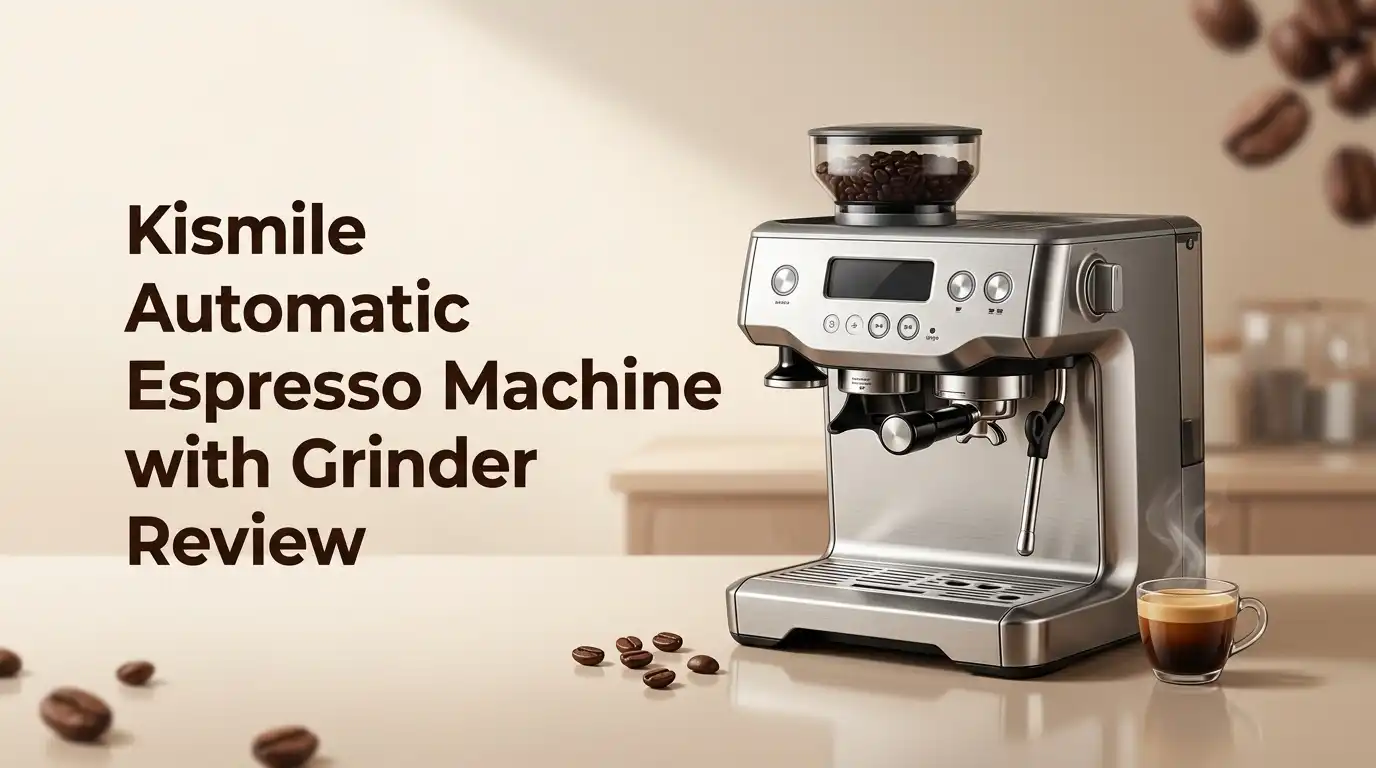
The Kismile automatic espresso machine is a bean to cup unit built for home kitchens. It combines a 20 bar pump, a stainless steel conical burr grinder, a thermoblock heating system, and a milk frothing setup in one body.
Depending on the model you pick, you get either a manual steam wand or an automatic milk system with a removable milk reservoir. Power sits around 1350 watts. Water tanks range from roughly 1.5 liters on compact versions up to 2.8 liters on larger ones.
Grind settings vary by model too. Some offer 15 steps, others go up to 30. That range matters more than the headline pressure number. More steps mean finer control over extraction speed.
Kismile positions this as a machine for people who want café drinks without barista training. It makes espresso, double espresso, Americano, latte, and cappuccino.
Unboxing Experience and First Impressions
The box arrives heavier than expected. Mine weighed close to 20 pounds, packed in dense foam with cardboard dividers that held everything tight. Nothing rattled, and no part arrived scratched.
Inside the box you get the machine, a portafilter with single and double baskets, a plastic tamper, a measuring scoop, a cleaning brush, a water filter in some versions, and a stainless steel milk pitcher. The included pitcher is a genuinely nice touch at this price.
Peeling the protective film off the stainless panels takes about two minutes. The machine feels solid when you lift it onto the counter. It does not slide around thanks to grippy rubber feet.
The manual is clear on setup but thin on troubleshooting. Read page one through ten before you plug anything in. Several owners report confusion during the first power up simply because they skipped the priming step.
Design, Build Quality and Countertop Space
The Kismile looks more expensive than it costs. Brushed stainless steel covers the front and sides. Controls sit on a clean panel, either physical buttons or a touch display depending on the model.
Measure your counter first. Depth runs between 11 and 17 inches depending on version, and height reaches roughly 16 inches with the hopper attached. If you have overhead cabinets, check clearance before ordering. You need room above the hopper to pour beans.
Material quality is mixed in an honest way. The chassis feels sturdy. The drip tray, hopper lid, and tamper are plastic. The tamper in particular feels flimsy, and many owners replace it with a metal one within a month.
The water tank slides out from the back or side. Rear tanks are harder to refill if your machine sits against a wall. Plan placement accordingly.
Built In Conical Burr Grinder Performance
This is the heart of the machine. Conical steel burrs crush beans rather than chopping them, which produces more even particles than blade grinders. Even grounds extract evenly, and even extraction tastes sweeter.
Grinding takes roughly 10 to 20 seconds per dose. The noise level sits around normal kitchen appliance volume. It is loud, but not painful, and it stops quickly.
Here is the honest part. The grinder is good, not great. Compared to a dedicated grinder in the 200 dollar range, the Kismile produces slightly less consistency at very fine settings. You will notice this if you chase perfect shots. You will not notice it in a latte.
Kismile recommends starting above setting 8 and adjusting one step at a time. Changing more than one step at once makes diagnosis impossible. Give the machine two shots to settle after each change.
Top 3 Alternative for Kismile Automatic Espresso Machine with Grinder

Last update on 2026-11-18 / Affiliate links / Images from Amazon Product Advertising API
Breville Barista Express Espresso Machine

Last update on 2026-11-19 / Affiliate links / Images from Amazon Product Advertising API
De’Longhi La Specialista Arte Espresso Machine

Last update on 2026-11-18 / Affiliate links / Images from Amazon Product Advertising API
Gevi 20 Bar Espresso Machine with Grinder and Steam Wand
Espresso Quality: Pressure, Temperature and Taste
Pull a shot and the first thing you check is crema. The Kismile produces a solid layer of hazelnut colored crema when you dial in the grind correctly. It thins out fast, within a minute, which is normal for machines in this class.
Heat up takes about 30 to 45 seconds thanks to the thermoblock. That beats older boiler machines by a wide margin. Temperature stability during a single shot is fine. Temperature stability across four back to back shots drifts slightly.
Taste is where expectations need calibrating. You get rich, strong, satisfying espresso. You do not get the clarity and sweetness a 1000 dollar dual boiler delivers. That is a fair trade for the price.
Fresh beans matter more than the machine here. Use beans roasted within three weeks and the Kismile punches well above its price. Use supermarket beans roasted eight months ago and no machine saves you.
Milk Frothing and Steam Wand Test
Two versions exist, and they behave differently. The manual steam wand model gives you control. You hold the pitcher, position the tip, and stretch the milk yourself. Steam power is moderate, so texturing 8 ounces takes around 45 seconds.
Microfoam quality is achievable with practice. The wand produces a single hole or panarello style tip depending on model. Single hole tips make better latte art. Panarello tips make foam easier for beginners but coarser.
The automatic model connects to a milk reservoir and pours foam straight into your cup. This is far easier and far less controllable. It works well for cappuccino, less well for silky flat whites.
Kismile recommends cold milk at roughly 41 to 50 degrees Fahrenheit with at least 3 percent protein. Whole dairy milk performs best. Oat milk works, almond milk struggles.
Daily Use and Learning Curve
Day one feels fiddly. Day seven feels routine. That is the pattern most owners describe, and it matched my experience.
The controls are straightforward. Select single or double, adjust dose volume, press start. Programming your preferred shot length takes one press and hold. The machine remembers it.
The portafilter locks in with a firm twist. You must hold it level under the grinder chute on some models, which is the single most common complaint. Grounds spill onto the drip tray even when you hold it straight.
Tamping is manual. The included tamper does not match the basket diameter perfectly, which leaves an uneven puck edge. A 51mm or 58mm metal tamper, depending on your model, fixes this for under 20 dollars.
Daily workflow takes about three minutes from power on to finished latte.
Cleaning and Maintenance Routine
Kismile markets a self cleaning function. Read that carefully. The cycle rinses internal water channels at startup and shutdown. It does not clean the group head, the baskets, or anything that touches milk.
Your real routine looks like this. Knock out the puck, rinse the basket, wipe the steam wand immediately after frothing, and empty the drip tray daily. The milk reservoir on automatic models needs washing after every session.
Removable parts are not dishwasher safe. Hand wash everything with warm water and mild soap. The hopper lifts off on most models, which makes bean swapping and grinder cleaning easier.
Descale every two to three months with hard water, every four to six months with soft water. Skipping descaling is the fastest way to kill a thermoblock machine. Use a proper descaler, not vinegar, since vinegar can damage seals.
Noise, Speed and Energy Use
Grinding is the loudest moment. It registers roughly as loud as a blender on low, for 15 seconds. The pump hums at a moderate level during extraction, quieter than most people expect.
Steam produces a hiss rather than a roar. Early morning use will not wake a sleeping household behind a closed door, though it will be audible in an open plan apartment.
Speed is a real strength. From cold start to finished espresso takes under 90 seconds. That includes heat up, grinding, and extraction. Back to back drinks come faster since the thermoblock stays warm.
Power draw sits around 1350 watts during heating, which is standard. The machine idles at very low draw and auto shuts off after a set idle period, usually 20 to 30 minutes.
Energy cost over a year is negligible compared to daily café visits.
What the Kismile Does Not Do Well
Honest reviews name the weak spots. Here they are without softening.
Grounds retention and spillage top the list. The chute leaves grounds behind, and dosing into the portafilter creates mess. You will wipe the drip tray far more often than you expect.
Grinder consistency at espresso fineness is adequate rather than excellent. Chasing a perfectly balanced light roast shot is frustrating. Medium and dark roasts behave much better.
Customer service runs through text and email, and responses often miss the point. Several owners describe slow, scripted replies. Keep your order receipt, because support asks for it first.
Build longevity is an open question. Kismile is a newer brand without the twenty year track record of Breville or De’Longhi. Reports of grinder clogging after heavy use do appear.
Portafilter baskets are pressurized on some versions, which fakes crema. Experienced users will want unpressurized baskets, which are not always included.
Pros and Cons of the Kismile Automatic Espresso Machine
Pros
- Built in conical burr grinder removes the need for a separate 150 dollar appliance and saves counter space.
- Fast heat up through the thermoblock system, with espresso ready in roughly 90 seconds from cold.
- Strong value compared to Breville and De’Longhi machines that cost two to three times more.
- Multiple grind settings, ranging from 15 to 30 steps depending on model, giving real control over extraction.
- Attractive stainless steel design that looks more premium than the price suggests.
- Accessories included, such as a milk pitcher, cleaning brush, tamper, and dual baskets.
- Simple controls that suit beginners moving over from pod machines.
Cons
- Messy grinding, with grounds spilling onto the tray and chute retention between doses.
- Plastic tamper and drip tray that feel cheap next to the steel body.
- Limited brand track record, with less proven long term reliability than established names.
- Customer support handled through text or email with slow, often unhelpful replies.
- Self cleaning is partial, so daily hand cleaning remains necessary.
- Grinder struggles with light roasts at very fine settings.
- Large footprint that needs cabinet clearance checked before purchase.
Who Should Buy It and Who Should Skip It
Buy this machine if you are moving from pods or drip coffee and want real espresso without a steep investment. It suits households drinking two to four milk based drinks a day. Latte and cappuccino drinkers get the most value here, since milk forgives small extraction flaws.
It also suits small offices, dorm kitchens with space, and anyone who wants a grinder and brewer in one body.
Skip it if you drink straight espresso and judge shots critically. Skip it if you brew light roast single origin beans. Those needs demand a better grinder and more temperature stability than this price allows.
Skip it as well if you want a fully automatic machine where you press one button and walk away. The Kismile still needs you to tamp, lock, and clean.
Price and Value in 2026
Pricing moves a lot, with coupons appearing frequently. Expect to pay somewhere in the 250 to 400 dollar range depending on model and current promotion. Larger tank versions with automatic milk systems sit at the top of that range.
Compare that against the alternatives. A Breville Barista Express runs roughly 500 to 700 dollars. A De’Longhi La Specialista Arte sits around 700 dollars. Both offer better grinders and longer warranties.
The Kismile wins on price per feature, not on refinement. You get 80 percent of the capability for around half the money.
Against café spending, the math is simple. Four lattes a week at 6 dollars costs roughly 1250 dollars a year. The machine pays for itself within four months of normal use.
Check the warranty terms before buying, since coverage varies by seller.
Tips to Get Better Shots From Your Kismile
Small changes produce large improvements. Start with beans. Buy whole beans roasted within the last three weeks and store them in an airtight container away from light.
Dial in slowly. Target a double shot of roughly 36 grams of liquid in 25 to 30 seconds. Too fast means grind finer. Too slow means grind coarser. Change one setting at a time.
Run a blank shot through the group head before brewing to stabilize temperature. Warm your cup with the same water.
Replace the plastic tamper with a weighted metal one sized to your basket. Tamp level with firm, steady pressure rather than brute force.
Purge the steam wand for two seconds before and after frothing. Wipe it immediately while milk is still wet. Dried milk inside the tip is the hardest thing to remove.
Descale on schedule and the machine stays consistent for years.
Final Verdict: Is the Kismile Worth It?
Last update on 2026-11-19 / Affiliate links / Images from Amazon Product Advertising API
The Kismile Automatic Espresso Machine with Grinder earns a solid recommendation with clear boundaries around it. It delivers fresh ground espresso, workable milk foam, and attractive design for a price that undercuts the big names significantly.
It is not a precision instrument. The grinder has limits, the plastic parts feel cheap, and support is weak. Owners who expect specialty café results will feel let down.
Owners who expect better coffee than pods, made faster than a manual setup, at a reasonable cost, will feel delighted. That is the right expectation to bring.
I rate it 4 out of 5 for beginners and 3 out of 5 for enthusiasts. If your morning drink involves milk, buy it with confidence. If you drink straight shots and care about origin notes, save longer and buy a Breville instead.
Frequently Asked Questions
Does the Kismile espresso machine need a separate grinder?
No. A conical burr grinder is built into the machine with 15 to 30 adjustable settings depending on model. It grinds beans on demand directly into the portafilter or brew chamber, so you do not need a standalone grinder.
Can I use preground coffee in the Kismile?
Yes, most models accept preground coffee through a bypass or by filling the portafilter manually. Taste quality drops noticeably compared to fresh grinding. Use a medium fine grind sized for espresso if you go this route.
How often should I descale the machine?
Every two to three months with hard water and every four to six months with soft water. Use a commercial descaling solution rather than vinegar, since acid can damage internal seals and gaskets over time.
Why is my espresso coming out too fast and watery?
Your grind is too coarse or your dose is too low. Adjust the grinder one step finer and pull another shot. Also check that you tamped firmly and evenly across the puck surface.
Is the Kismile machine dishwasher safe?
No. All removable parts including the drip tray, water tank, portafilter, and milk reservoir require hand washing with warm water and mild soap. Dishwasher heat damages plastic components and seals.
Does it make regular drip coffee?
Not directly. It makes espresso based drinks including Americano, which uses espresso diluted with hot water. Americano tastes close to drip coffee and most owners use it as their everyday long drink.
How long does the Kismile machine last?
Owner reports suggest two to five years with regular descaling and cleaning. Longevity depends heavily on water hardness and maintenance habits. Neglecting descaling shortens thermoblock life significantly.

Hi, I’m Emma Lee — the coffee-obsessed creator behind Morning Drip Vault. I spend my days testing coffee machines, exploring brewing techniques, and reviewing the latest coffee gear. My mission is simple: helping you find the perfect machine to brew your best cup, every single morning.