Breville Touch Espresso Machine Review 2026: Worth It?
The Breville Touch espresso machine promises something bold. It claims you can pull café quality shots without years of barista practice. That sounds like marketing noise, so I spent weeks testing the current model to find out what actually happens in a real kitchen.
I ground beans. I steamed milk. I made mistakes. I also made some of the best flat whites I have ever pulled at home. But this machine is not perfect, and a few flaws genuinely annoyed me.
This review covers the unboxing, the touchscreen, the grinder, the milk system, the taste, and the problems nobody mentions in the ads. By the end, you will know if the Breville Touch deserves your counter space in 2026.
In a Nutshell:
- The Impress Puck System works. The machine doses, tamps with 22 pounds of pressure, and tells you to add more coffee when the puck looks thin. My dose weights stayed within a gram of each other across dozens of shots.
- The touchscreen removes guesswork. You swipe, pick a drink, and follow prompts. The screen also grades your shot and suggests a grind change. Beginners get real feedback instead of silence.
- ThermoJet heats in about 3 seconds. No waiting. The tradeoff is a cold portafilter, so you must flush the group head first for hot espresso.
- Auto MilQ makes excellent microfoam hands free. Dairy foam came out silky and pourable. The non dairy presets felt like a gimmick, and I got better oat milk results using the dairy setting.
- Expert users will feel boxed in. You cannot adjust pre infusion time. Advanced control is limited by design.
- Reliability is the real risk. Several owners report pumps and solenoids failing within a year or two. The two year warranty matters here.
Breville Barista Touch Impress

Last update on 2026-10-22 / Affiliate links / Images from Amazon Product Advertising API
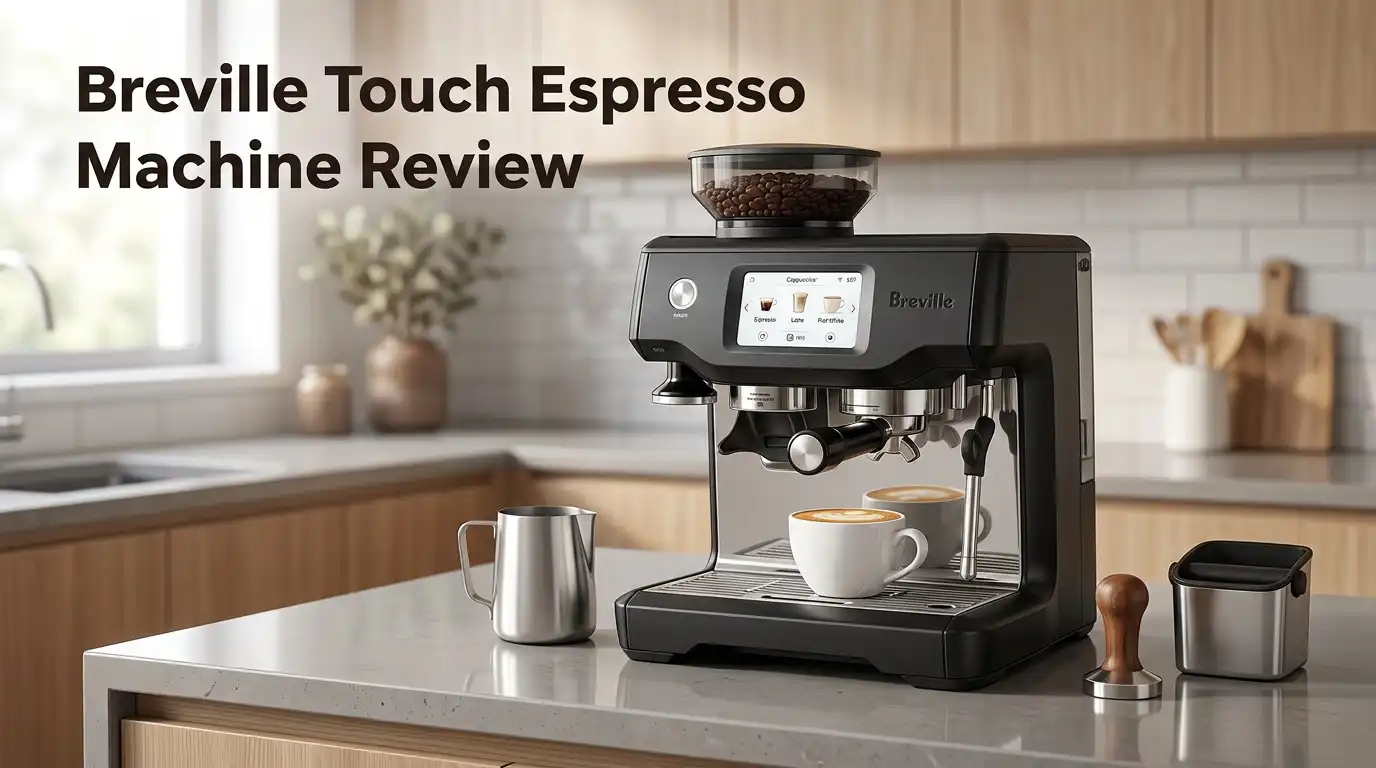
The Barista Touch Impress is the flagship Touch model in 2026. It sits above the older Barista Touch and below the Oracle Jet in Breville’s lineup. The price hovers around $1,199.95.
You get a 54mm stainless steel portafilter, a Baratza designed conical burr grinder with 30 settings, a 2 liter water tank, and a 340 gram bean hopper. A 4 inch color touchscreen runs the show.
The headline feature is automation that still feels hands on. You hold the portafilter. You pull the tamping lever. You pour your own latte art. The machine handles dosing, pressure, temperature, and milk texture.
This is a hybrid machine, not a super automatic. That distinction shapes everything about the experience.
The Unboxing Experience
The box is heavy. The machine weighs just over 30 pounds, so plan on lifting it with both hands and clearing counter space first.
Breville packs everything in molded cardboard trays. Lift the top layer and you find the accessory kit: a 480ml stainless milk jug, four filter baskets, the Razor trimming tool, a water filter and holder, a water hardness strip, cleaning tablets, descale powder, a steam wand tool, a cleaning disc, and a brush.
It genuinely feels like a complete starter kit. Nothing else to buy on day one except beans and a knock box.
One warning from my first use. The water tank and bean hopper carried a strong plastic smell out of the box. Rinse both thoroughly and let them dry before you brew anything.
Design and Build Quality
The housing is brushed stainless steel and it feels solid. Knock on the side panel and you hear density, not hollow plastic.
Measure before you buy. The machine runs roughly 16.3 inches wide, 13.8 inches deep, and 13.3 inches tall. Add clearance above that for lifting the hopper lid and the water tank. Low kitchen cabinets will be a problem.
The tamping lever is my favorite physical detail. It moves with a mechanical, geared resistance that feels satisfying every single time.
The drip tray slides out easily and has a fill indicator. Cup clearance under the group head is about 3.9 inches, which fits mugs but not tall travel tumblers.
My one build complaint is the plastic insert inside the portafilter. It looks cheap and you cannot remove it.
Top 3 Alternative for Breville Barista Touch Impress


Last update on 2026-10-21 / Affiliate links / Images from Amazon Product Advertising API
Breville Barista Express Impress

Last update on 2026-10-21 / Affiliate links / Images from Amazon Product Advertising API
Breville Barista Pro

Last update on 2026-10-22 / Affiliate links / Images from Amazon Product Advertising API
Breville Bambino Plus
The Touchscreen Interface
The 4 inch screen is the reason this machine exists. You swipe through 13 café presets and tap your drink. The screen then walks you through each step in order.
Pick your basket size. Check your grind number. Grind. Tamp. Lock in. Brew. Steam. The prompts appear exactly when you need them.
The shot feedback is the best part. After extraction, the screen shows your time and either gives you a green check or tells you to grind finer or coarser. That single feature shortens the learning curve dramatically.
You can save up to six custom drinks with your own names. The Intelligent Brew function recalibrates the machine when you switch beans, and it worked smoothly when I moved from a blend to a single origin Ethiopia.
Response to touch is quick and lag free.
Impress Puck System and Grinder
This is where the Touch Impress separates itself from older Breville machines. The grinder doses directly into the portafilter sitting in the cradle. Then you pull the lever.
The lever applies 22 pounds of tamping pressure and finishes with a small barista twist. The machine weighs the result, shows you a puck graphic, and asks for more coffee if the dose came up short. It then corrects the next dose automatically.
My dose consistency was genuinely impressive. Weighing every shot showed variation of about one gram at most.
The Baratza European precision burrs offer 30 settings, and you can adjust the upper burr for a wider range. Grind retention is low and the grinder sounds less rattly than previous Breville units.
One tip: after tamping, tap the portafilter, settle loose grounds, then tamp again.
ThermoJet Heating and Extraction
ThermoJet heats water to extraction temperature in about 3 seconds. You walk up, press a button, and brew. No warmup ritual.
Breville also claims up to 32 percent lower annual energy use compared with a thermoblock system. That number comes from internal testing, so treat it as a direction rather than a promise.
A digital PID controller holds brew water near 200 degrees Fahrenheit. The pump is rated at 15 bar and the machine extracts at roughly 9 bar after pre infusion.
Pre infusion lasts about five seconds, which is a real improvement over the older Barista Touch and its long soak. You cannot change that timing.
The catch with instant heating is cold metal. The portafilter and group head stay cool, so flush hot water through before brewing.
Auto MilQ Milk Frothing
Auto MilQ is hands free steaming. You pour milk into the jug, set it on the sensor pad, submerge the wand, and press start. The machine stops on its own.
You choose from eight texture levels and temperatures from 104 to 167 degrees Fahrenheit. There are presets for dairy, soy, almond, and oat.
Dairy results were excellent. The foam came out glossy and tight, with no large bubbles, and it poured well enough for basic latte art.
The alternative milk presets underwhelmed me. Oat and soy both turned out better on the dairy setting with manual texture tweaks. Breville’s claim about a million micro bubbles per milliliter is unverifiable marketing.
You can also use the wand manually if you prefer full control.
Cold Brew and Cold Espresso
The newest Touch Impress generation added cold extraction, and it is more useful than I expected. Cold Brew finishes in under 3 minutes. Cold Espresso takes under 2 minutes and still carries crema.
Lower extraction temperature cuts acidic notes. The result tastes smoother and rounder than a hot shot poured over ice.
The practical win is dilution. An iced latte built from cold espresso does not get watered down by melting ice, so the coffee flavor stays present to the last sip.
The screen includes cold recipes like iced shakeratos and espresso martinis, with step prompts for shaking and finishing. This feature alone justifies choosing the newer model over older Touch units if you drink iced coffee through summer.
How the Espresso Actually Tastes
Taste is the only test that matters, and the Touch Impress delivered.
With a fresh espresso blend from a local roaster, shots came out syrupy with a thick, lasting crema. Dialing in took three attempts instead of three days. The shot feedback pushed me to the right grind quickly.
Switching to a washed single origin produced clean, bright cups with clear fruit notes. The machine did not flatten the coffee’s character, which is a common failing of automated systems.
Use the single wall baskets. The pressurized double wall baskets create artificial crema and mute flavor, though they help with pre ground or older beans.
One workflow flaw hurts the final drink. The screen puts espresso before milk in the sequence, so your shot sits and degrades while milk steams. Steam the milk first.
Barista Touch vs Barista Touch Impress
These two names confuse buyers constantly, so here is the difference.
The older Barista Touch, model BES880, costs around $799.95 and often drops lower. It has the same touchscreen concept, a 30 setting grinder, and automatic milk frothing. You tamp by hand and get no dose feedback.
The Barista Touch Impress adds assisted tamping, dose correction, upgraded Baratza burrs, ThermoJet instant heating, a larger 340 gram hopper, shorter pre infusion, and cold extraction.
Here is the strange tradeoff. The older Barista Touch actually exposes more adjustable settings for people who like tinkering. The Impress automates more and limits more.
Pick the Impress for consistency and speed. Pick the Barista Touch to save roughly $400.
Cleaning and Maintenance
Daily upkeep is simple. Rinse the portafilter, flush the group head, wipe the steam wand with a damp cloth, and empty the drip tray.
The steam wand has an auto rinse cycle, but it still needs a physical wipe. Dried milk inside a wand turns foul fast. The screen reminds you every time.
Deep cleaning means backflushing with a cleaning tablet and the included disc, plus descaling with the supplied powder. The machine tracks shot counts and prompts you on schedule, then walks you through each stage.
Install the water filter and test your water hardness with the strip. Hard water is the number one killer of these machines.
Total hands on cleaning time runs under two minutes a day.
What This Machine Does Not Do Well
Honest reviews list the failures, so here they are.
Reliability is the biggest concern. Multiple owners report machines that stop producing coffee within one to two years, with pumps, solenoid valves, and electrical components named as culprits. One reviewer had a unit die mid test. Breville support is generally responsive, but the two year warranty exists for a reason.
Control is limited. No pre infusion adjustment. No flow profiling. No pressure gauge. Espresso nerds will feel restricted.
The machine is bulky and tall. It will dominate a small kitchen.
Sour shots happen if your beans are stale or your grind is off, and no amount of automation fixes bad coffee. The plastic portafilter insert feels wrong on a $1,200 product.
Pros and Cons
Pros
- Dose and tamp consistency from the Impress Puck System is genuinely excellent
- Touchscreen shot feedback teaches beginners fast
- ThermoJet heats in roughly 3 seconds with lower energy use
- Baratza burrs with 30 settings grind evenly and dial in quickly
- Auto MilQ produces silky dairy microfoam with no skill required
- Cold Brew and Cold Espresso modes work in under 3 minutes
- Accessory kit is complete and worth real money
- Two year warranty covers more than most competitors
Cons
- Reliability reports include pump and solenoid failures inside two years
- No pre infusion adjustment and limited advanced control
- Non dairy milk presets perform worse than the dairy setting
- Tall and heavy, so cabinet clearance is a real issue
- Portafilter contains a cheap plastic insert
- Drink sequence steams milk after brewing, which degrades the shot
- Cold portafilter requires a flush before every brew
- Price sits near $1,200
Who Should Buy the Breville Touch
Buy this machine if you want café drinks without becoming a hobbyist. The automation genuinely works and the guidance is real.
It suits households where several people make coffee with different skill levels. The presets and prompts mean your partner can pull a decent shot without a tutorial.
It also fits anyone upgrading from a pod machine who wants fresh ground espresso but fears the learning curve.
Skip it if you want to profile shots, chase pressure curves, or build a modular setup. A separate grinder plus a manual machine gives you more control for similar money.
Skip it also if counter space is tight or if you drink one black coffee a day. A simpler machine serves you better.
Price and Value in 2026
The Barista Touch Impress lists around $1,199.95 and rarely discounts deeply. The older Barista Touch has dropped to roughly $799.95 on Amazon, sometimes lower during sales events.
Price the components separately and the math makes sense. A quality 30 setting burr grinder alone runs $300 or more. A capable espresso machine with PID control adds $600 plus. The all in one package is fair value.
Factor in running costs too. Beans, filters, cleaning tablets, and descaler add maybe $15 a month beyond coffee.
Compare that against a daily $6 café latte. The machine pays for itself in roughly seven months if you drink one a day, assuming it keeps working.
Final Verdict
The Breville Touch espresso machine earns a recommendation with conditions.
It does the hard parts well. Dosing is consistent. Tamping is consistent. Temperature is stable. Milk foam is excellent. The screen teaches you instead of hiding information. I pulled better shots faster on this machine than on any home setup I have used.
The flaws are real though. Control is limited. The non dairy milk feature is marketing. Build reliability has question marks that no single review can settle.
My take: buy it if convenience and consistency matter more to you than tinkering. Register the warranty immediately, use filtered water, and stay on top of descaling.
For beginners and busy households, this is one of the strongest home espresso machines available in 2026.
FAQs
Is the Breville Barista Touch Impress worth the extra money over the Barista Touch?
Yes if consistency matters to you. Assisted tamping, dose correction, upgraded burrs, instant heating, and cold brew justify the gap. Choose the cheaper Barista Touch if you enjoy manual tamping and want more adjustable settings.
How long does the Breville Touch take to heat up?
Roughly 3 seconds. ThermoJet heats water on demand. The portafilter and group head stay cool, so flush hot water through before brewing for proper shot temperature.
Can it make iced coffee?
Yes. The current model includes Cold Brew in under 3 minutes and Cold Espresso in under 2 minutes. Both extract at lower temperatures for smoother, less acidic flavor.
Does it work with oat milk?
Yes. There are presets for soy, almond, and oat. In my testing the dairy setting with manual texture adjustment produced better oat and soy foam than the dedicated presets.
How often do I need to descale it?
The machine tracks usage and prompts you. Typical intervals land around every two to three months depending on water hardness. Use the included filter and test strip to extend that.
Can I use pre ground coffee?
Yes, with the double wall pressurized baskets. Flavor suffers compared with fresh grinding, and you lose the automatic dosing benefit entirely.
What is the warranty?
Breville offers a two year warranty on the Barista Touch Impress. Register your machine after purchase and keep the receipt, since reliability complaints do exist.

Hi, I’m Emma Lee — the coffee-obsessed creator behind Morning Drip Vault. I spend my days testing coffee machines, exploring brewing techniques, and reviewing the latest coffee gear. My mission is simple: helping you find the perfect machine to brew your best cup, every single morning.