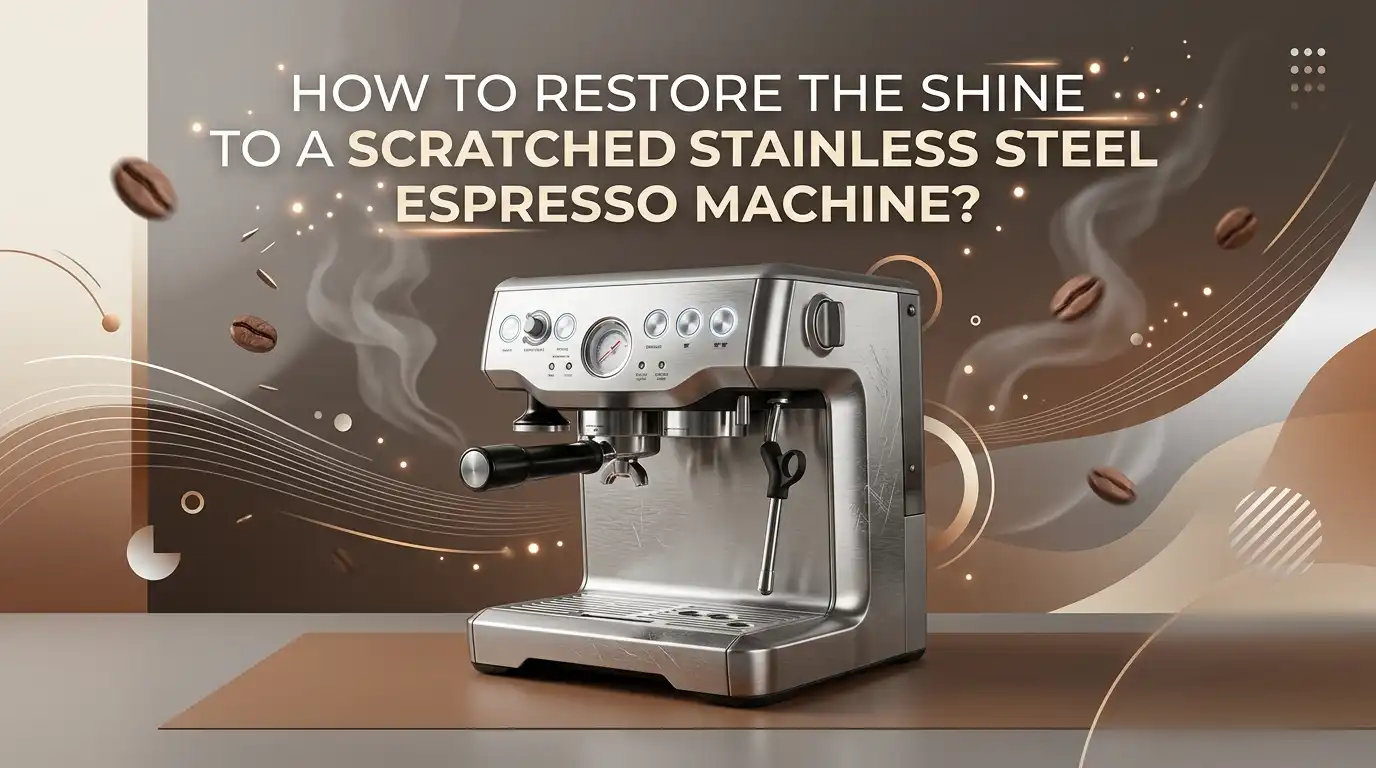
How to Restore the Shine to a Scratched Stainless Steel Espresso Machine?
Your espresso machine sits on the counter like a little trophy. It pulls great shots, it smells amazing in the morning, and it makes your kitchen feel special.
Then one day you notice them. Scratches. Tiny scuffs from a rough sponge, swirl marks from wiping, or a deeper line from a bracelet or a pan. Suddenly that shiny body looks tired and dull.
Here is the good news. Most scratches on stainless steel are surface level, and you can fix them at home. You do not need a workshop or expensive gear.
In a Nutshell:
- Always work with the grain. Stainless steel has tiny lines that run in one direction. Rub along those lines, never across them. Going across the grain creates ugly swirl marks that are hard to fix.
- Start gentle, then go stronger. Try mild methods first, like baking soda paste or a non abrasive cleaner. Move to sandpaper or a repair kit only when soft methods fail. You can always do more, but you cannot undo too much.
- Test a hidden spot first. Pick a small area on the side or back. Try your method there before touching the front. This protects you from a big mistake on a visible panel.
- Know your finish. Brushed steel hides repairs well. Mirror finish steel is much harder to fix and shows every flaw. Coated or fingerprint resistant steel should never be sanded.
- Unplug and protect water parts. Switch off the machine, unplug it, and keep moisture away from electrical openings, the boiler vents, and the buttons.
- Finish with polish or oil. A light coat of food safe mineral oil or stainless polish hides fine lines and adds a clean glow.
Why Your Stainless Steel Machine Gets Scratched
Stainless steel looks tough, but its surface is softer than people think. The shine comes from a thin, smooth top layer. Everyday cleaning is the most common cause of scratches.
A stiff sponge, steel wool, or a gritty cloth drags across the metal and leaves fine lines. Over time these lines build up and the surface goes dull.
Other causes include hard water spots, dried coffee splatter that you scrub too hard, and contact with rings, watches, or metal tools. Heat and steam near the group head can also stress the finish over time. Knowing the cause helps you prevent future damage.
Once you understand how easily the surface marks, you will treat it with more care. That care keeps your machine looking new for far longer.
Understand the Grain Before You Touch Anything
This step matters more than any product you buy. Stainless steel has a grain, which is a set of tiny brushed lines running in one direction. Look closely under good light. You will see faint streaks. On most espresso machine panels, the grain runs left to right or top to bottom.
You must always rub, sand, and polish along these lines. Working with the grain hides your repair. Working against it ruins the look. If you scrub in circles, you create a cloudy swirl pattern that stands out badly.
Run your finger and a cloth in the grain direction first to confirm. Take a photo on your phone if it helps you remember. This one habit separates a clean fix from a worse mess. Respect the grain and the rest gets easy.
Gather Your Tools and Clean the Surface First
Good results start with a clean, dry surface. Dirt and grease hide scratches and clog your cloth, which makes the job harder. First, switch off and unplug the machine. Let it cool fully. Cover or avoid water lines, vents, and electrical parts.
Gather your basic kit: warm water, dish soap, several microfiber cloths, baking soda, white vinegar, and food safe mineral oil. For deeper work, add wet dry sandpaper in fine grits and a non abrasive cleaner.
Mix a little dish soap with warm water. Wipe the whole body along the grain. Rinse with a damp cloth and dry completely with a fresh microfiber towel.
Now the scratches are easy to see. Mark the worst ones lightly with a piece of tape nearby. A clean start gives you a clear view and a better outcome.
Method One: Baking Soda Paste for Light Scratches
Baking soda is the friendliest fix for shallow marks. It works as a mild abrasive that smooths fine lines without harming the metal. Mix baking soda with a little water until you get a thick paste, about the texture of toothpaste. Apply it right onto the scratched area with your finger or a soft cloth.
Rub gently along the grain. Use light, even strokes. Do not press hard and do not rub in circles. After several passes, wipe the paste off with a clean damp cloth. Check the scratch under light. Repeat if needed. Finish by drying the area and adding a drop of oil for shine.
Pros: cheap, safe, found in any kitchen, and gentle on the finish. Cons: it only handles light scratches, and it takes repeated effort for stubborn marks.
Method Two: Whitening Toothpaste as a Quick Fix
Whitening toothpaste is a clever little trick. It contains a mild abrasive that buffs out light to medium scratches. Use a plain white paste, not a gel, and not one with large scrubbing beads. Make sure the surface is clean and dry first.
Squeeze a small amount onto the scratch. Rub it in with your finger, a soft toothbrush, or a microfiber cloth. Move only in the direction of the grain, with slow and steady strokes. Wipe away the toothpaste with a damp cloth, then dry the spot. Look at the result and repeat if the line is still visible.
Pros: almost everyone has it at home, it is gentle, and it works fast on small marks. Cons: it is messy, it struggles with deep scratches, and you must rinse well so no paste dries in seams or corners.
Method Three: Non Abrasive Cleaners and Polishes
When kitchen tricks fall short, a dedicated stainless steel cleaner steps up. These cleaners fill and smooth fine lines while lifting grime and water spots. They come as powders or liquids. Powder types mix with water into a paste. Liquid types are ready to use.
Apply a small amount to a damp microfiber cloth. Rub along the grain with gentle pressure. Cover the whole panel, not just the scratch, so the finish blends evenly. Wipe off the excess with a clean damp cloth and buff dry. Many of these products leave a light protective shine.
Pros: made for the job, blends scratches well, and improves overall brightness. Cons: it costs more than home items, some powders are slightly abrasive so test first, and strong cleaners need good rinsing near food and water parts.
Method Four: The Vinegar and Oil Shine Treatment
This combo does not erase deep scratches, but it brings back glow and hides fine swirls. Vinegar removes water spots and residue, while oil fills tiny lines and adds depth. Spray or dab white vinegar onto a cloth, then wipe the body along the grain. This strips grease and old polish.
Wipe the vinegar away and let the surface dry. Next, put a few drops of food safe mineral oil, or even olive oil, onto a fresh microfiber cloth. Buff it across the panel following the grain until the steel looks rich and even. A little oil goes a long way, so do not overdo it.
Pros: cheap, fast, and great as a finishing step after any repair. Cons: it masks rather than removes scratches, oil can attract dust if applied heavily, and it needs reapplying over time.
Method Five: Stainless Steel Scratch Repair Kits
A repair kit is the middle ground between home tricks and full sanding. These kits include graded pads and a finishing formula that rebuild the brushed look. You pick a pad based on scratch depth, coarse for deep marks and fine for light ones. The kit instructions guide your choice.
Apply the included liquid, then move the pad along the grain in steady strokes. Start with the gentlest pad that works, then step up only if needed. Blend outward so the repaired area matches the rest. Finish with the fine pad and wipe clean with a microfiber cloth.
Pros: designed for stainless steel, handles deeper scratches, and gives consistent results. Cons: it costs more, it only suits brushed uncoated steel, and used wrong it can leave a patch that looks different from the surrounding finish.
Method Six: Sandpaper for Deep and Stubborn Scratches
This is the strongest home method, so save it for last. Wet dry sandpaper can remove deep scratches, but it also removes finish, so caution is key. Use it only on uncoated brushed steel, never on coated or mirror surfaces. Start with a fine grit such as 400 or 600, and have higher grits ready.
Wet the sandpaper and the surface. Add a little non abrasive cleaner or rubbing compound as a lubricant. Sand softly along the grain in one direction only, checking often. As the scratch fades, switch to a higher grit to refine the surface. Blend the area into the surrounding panel. Finish with polish.
Pros: it tackles scratches nothing else can reach. Cons: it is risky for beginners, it can dull a shiny finish, and a wrong move makes things worse. Test on a hidden spot first.
Blending the Repaired Area So It Disappears
A fixed scratch that looks like a patch is still a problem. The goal is to blend the repair so the whole panel matches.
After you smooth a scratch, your repaired spot may look brighter or duller than the area around it. To fix this, lightly work the surrounding surface with the same method.
Feather your strokes outward from the scratch. Treat the entire panel, not just the damaged line, so the brushed pattern flows evenly. Use long, light passes that follow the grain from edge to edge.
Step back and check under different lights, including a side angle. If one spot still stands out, blend a little more. Patience here is what makes the repair invisible. A well blended panel looks like the scratch was never there.
Special Care for Mirror and Coated Finishes
Not every machine has plain brushed steel, and that changes your plan. Mirror finish steel shows every flaw, so sanding it almost always makes things worse.
Reaching a true mirror shine again usually needs buffing wheels and polishing compounds, which is advanced work. For light marks, stick to gentle polish and a soft cloth only.
Coated or fingerprint resistant steel is different again. These have a thin protective layer, so never sand or use harsh abrasives, because you will strip the coating and create a permanent mark.
Use only mild soap, water, and a soft cloth on coated surfaces. If you are unsure which finish you have, treat it as delicate. When in doubt with a high gloss or coated machine, choose the softest method and accept that some faint marks may remain.
How to Protect Your Machine and Prevent Future Scratches
Once your machine shines again, keep it that way. Most scratches come from cleaning, so change how you clean. Use only soft microfiber cloths and gentle sponges. Throw out steel wool and gritty scrub pads. Always wipe along the grain, never in circles.
Clean spills quickly so you do not have to scrub dried coffee hard later. Remove rings and watches before wiping the body. Keep metal tools and tamps from resting against the panels.
A monthly wipe with a stainless polish or a drop of mineral oil adds a protective layer that resists smudges and minor marks. Dry the surface after every clean to stop water spots. These small habits cost almost nothing. Together they keep your machine looking new for years and save you from repeating repairs.
When to Accept the Scratch or Call a Pro
Sometimes the smart move is to stop. Very deep gouges, dents, or damage on mirror finishes may be beyond a safe home fix.
Pushing too hard can dull large areas or strip coatings, which looks worse than the original scratch. If a flaw was there when you bought a used machine, ask yourself how much it really bothers you.
A working machine with a faint mark is still a great machine. If cosmetics matter a lot, a professional with buffing wheels and proper compounds can restore a near flawless shine.
This costs money and the machine may need partial disassembly. Weigh the cost against the value. For most people, gentle home methods get the surface looking good enough to enjoy every morning. Know your limit and protect the machine you love.
Frequently Asked Questions
Can I use steel wool to remove scratches from my espresso machine?
No, avoid regular steel wool, because it is too rough and adds new scratches. Some people use ultra fine 0000 grade steel wool with great care along the grain, but it is risky. Safer choices are microfiber cloths, baking soda paste, or a proper repair kit.
Will toothpaste really fix scratches on stainless steel?
Yes, whitening toothpaste works on light and medium scratches. It contains a mild abrasive that buffs the surface smooth. Rub it along the grain, wipe clean, and repeat as needed. It will not remove deep gouges, so use a repair kit or fine sandpaper for those.
How do I know which way the grain runs?
Look at the surface under bright light. You will see faint lines or streaks running in one direction. Run a dry finger across it to feel the pattern. On most machine panels the grain runs side to side or top to bottom. Always rub and sand along these lines.
Is it safe to sand my espresso machine body?
Sanding is safe only on uncoated brushed steel, and only when done gently along the grain with fine wet sandpaper. Never sand coated, fingerprint resistant, or mirror finish steel, because you will strip the surface. Test a hidden spot first and start with the finest grit.
Can I remove scratches from a mirror finish at home?
It is very hard. Mirror finishes show every flaw, and sanding usually makes them worse. For light marks, use only gentle polish and a soft cloth. To restore a true mirror shine, you often need buffing wheels and compounds, which is best left to a professional.
How often should I polish my machine to keep it shiny?
A light polish once a month is plenty for most users. Wipe the body with a stainless cleaner or a few drops of mineral oil along the grain. Dry it well after each daily clean too. This routine prevents water spots, hides fine lines, and keeps the finish bright.
What is the easiest method for a beginner?
Start with baking soda paste or a non abrasive stainless cleaner. Both are gentle, cheap, and forgiving. Rub along the grain, wipe clean, and check your progress. Finish with a drop of oil for shine. These low risk methods handle most everyday scratches without any special tools.

Hi, I’m Emma Lee — the coffee-obsessed creator behind Morning Drip Vault. I spend my days testing coffee machines, exploring brewing techniques, and reviewing the latest coffee gear. My mission is simple: helping you find the perfect machine to brew your best cup, every single morning.