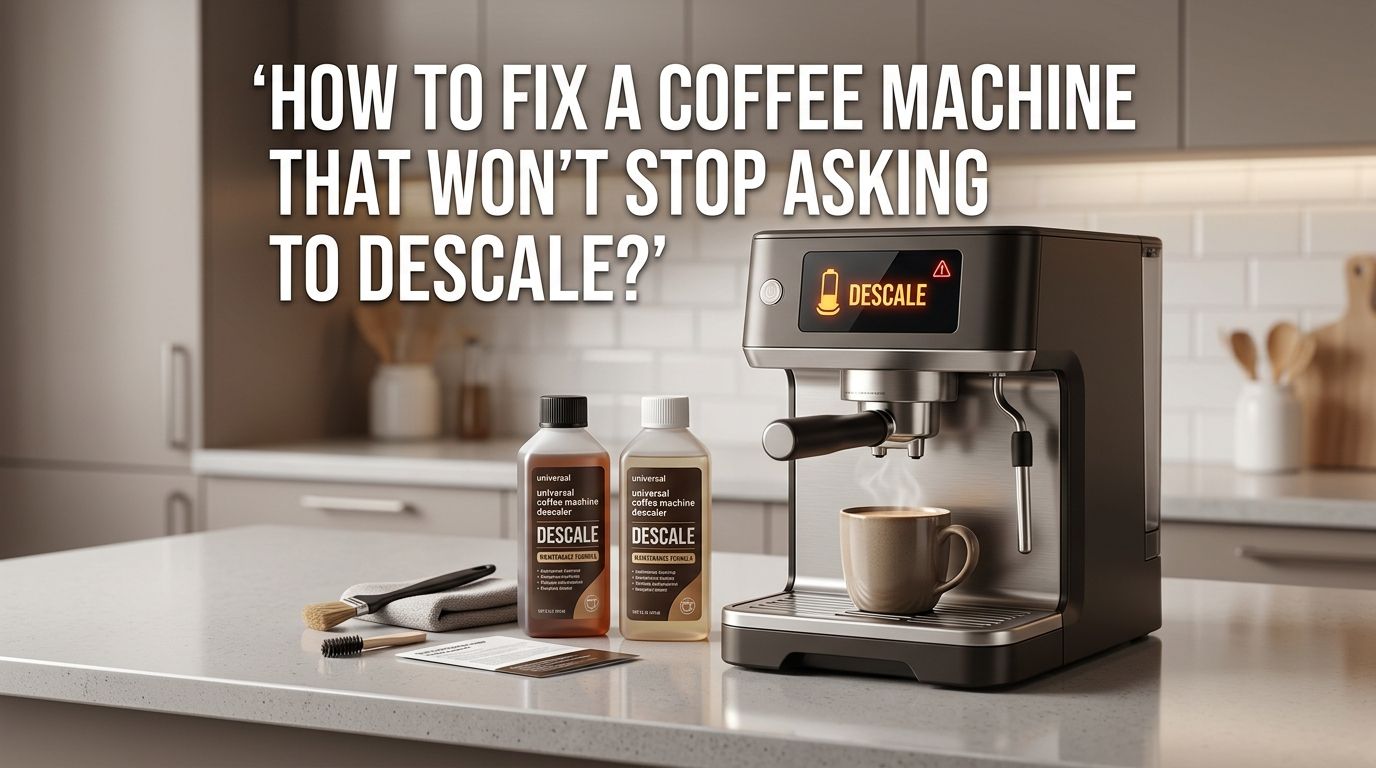
How to Fix a Coffee Machine That Won’t Stop Asking to Descale?
You just finished a full descaling cycle. You followed every step in the manual. But the moment you power your coffee machine back on, that stubborn descale warning lights up again. Sound familiar? You are not alone. Thousands of coffee lovers deal with this exact frustration every single day.
A coffee machine stuck in a descale loop can make your morning routine feel like a battle. The good news is that this problem almost always has a simple fix.
The issue could be an incomplete cycle, a sensor glitch, mineral buildup, or even the wrong type of descaling solution. Whatever the cause, you can solve it at home in most cases.
In a Nutshell
- An incomplete descaling cycle is the most common cause. Many machines require you to run the entire process from start to finish without interruption. Skipping the rinse phase or turning the machine off mid cycle will keep the descale warning active. Always let the full cycle complete, including multiple fresh water rinses.
- Your machine likely needs a manual reset after descaling. Most coffee makers do not automatically clear the descale indicator. You need to press a specific button combination or follow a reset sequence. Each brand has its own method, and missing this step is the number one reason the light stays on.
- Hard water causes faster mineral buildup and more frequent alerts. If you live in an area with hard water, your machine will trigger the descale warning more often. Using filtered or softened water can reduce how frequently you see this alert.
- A faulty flow sensor can send false descale signals. Some machines use an internal flow meter to detect scale buildup. When this sensor gets clogged or damaged, it can keep the warning active even after a thorough cleaning.
- The type of descaling solution matters. Vinegar, citric acid, and commercial descalers all work differently. Using the wrong one or a weak concentration may fail to remove enough mineral deposits, leaving the sensor unsatisfied.
- A factory reset is your last resort before calling for professional repair. If nothing else works, most machines have a factory reset option that clears all stored data, including the descale counter. Check your owner’s manual for the exact steps.
How to Tell If the Descale Warning Is a Real Alert or a Glitch?
Your coffee machine uses one of two methods to trigger a descale warning. Some models use a timer that counts brew cycles or tracks elapsed time since the last descale. Others rely on a flow sensor that measures how fast water moves through the system.
A timer based alert will go off at a set interval regardless of actual scale buildup. This means the warning could appear even if your machine is perfectly clean. A sensor based alert responds to real flow changes caused by mineral deposits inside the water lines.
You can tell the difference by checking your coffee output. If your machine brews at normal speed with full volume, the alert is likely timer based and just needs a reset. If the brew is slow, weak, or sputtering, actual scale buildup is restricting water flow. Understanding this difference helps you choose the right fix and avoid unnecessary descaling cycles.
How to Complete a Proper Descaling Cycle Without Mistakes?
The most common reason a descale warning persists is an incomplete or interrupted cycle. Many people start the process but skip steps or cut it short. This leaves the machine stuck in descale mode.
Start by emptying the water reservoir completely. Fill it with fresh descaling solution mixed at the correct ratio. Place a large container under the coffee outlet and the hot water spout if your machine has one. Press the descale button or enter descale mode according to your model’s instructions.
Let the machine run the entire solution through the system. Do not pause, turn off, or unplug the machine during this process. Once the solution tank is empty, refill the reservoir with plain fresh water. Run at least two to three full tanks of clean water through the machine to rinse all residue.
Pros: This fixes the problem in the majority of cases. It also removes actual mineral deposits.
Cons: The full process takes 20 to 45 minutes depending on the machine model.
How to Reset the Descale Light on a Keurig Coffee Maker?
Keurig machines are among the most common offenders for a persistent descale light. The light does not turn off automatically after descaling. You must perform a manual reset.
For most Keurig models like the K Slim, K Supreme, and K Elite, the reset process is simple. Turn the machine off first. Then press and hold the 8 oz and 10 oz buttons together for about 3 to 5 seconds. The descale light should turn off. For K Supreme models, you may need to hold the 8 oz and 12 oz buttons instead while the machine is powered off.
If that does not work, unplug the machine for at least 5 minutes. Plug it back in and immediately press the button combination before doing anything else. Some users report success by running one more full water brew cycle after the reset. Check your specific model’s manual because button combinations vary slightly across the Keurig lineup.
How to Exit Descale Mode on Nespresso Machines?
Nespresso machines, especially the Vertuo line, can get stuck in descale mode if the exit sequence is not performed correctly. The machine will keep blinking orange or flash a specific light pattern to indicate it is still in descaling mode.
To exit descale mode on most Nespresso Vertuo models, press and hold the button and the lever together for 3 seconds after completing the rinse cycle. The light should change from orange to steady green. If it does not, turn the machine off and let it sit for at least 10 minutes before trying again.
For Nespresso Original line machines, the process involves pressing specific button combinations that vary by model. A helpful trick is to place just one cup of plain water in the tank and run a single cycle through the machine before attempting the exit sequence. This clears any remaining solution from the internal lines and helps the sensor register that descaling is complete.
Pros: Nespresso exit sequences are usually quick once you know the right combination.
Cons: The button patterns differ across models, which causes confusion for many users.
How to Clear the Descale Alert on DeLonghi and Breville Machines?
DeLonghi machines like the Magnifica series use an orange warning light to signal a descale request. After completing the full descaling and rinse cycle, you must press and hold the descale button until the light turns off. Some models require you to rotate the steam knob during the process.
If the light stays on, the machine may not have detected enough water flowing through the steam wand. Run the descaling solution through both the coffee spout and the steam wand during the cycle. DeLonghi machines often split the descaling between these two outlets.
Breville machines typically require you to hold the single cup and double cup buttons together after completing the descale. The specific combination depends on your model. The Barista Express and Barista Pro may also need a cleaning disc cycle before the descale indicator clears. Always run the clean cycle first, then descale, then reset for the best results.
How to Fix a Flow Sensor That Triggers False Descale Warnings?
Some advanced coffee machines use a flow meter or flow sensor to measure water speed through internal tubing. When scale partially blocks this sensor, it sends a signal that mimics heavy buildup even if the rest of the machine is clean.
To fix this, you need to descale the machine multiple times in a row with a strong solution. This helps dissolve deposits directly on the sensor. Use a commercial descaler at full concentration rather than diluted vinegar for this purpose.
If repeated descaling does not help, the sensor itself may be faulty. You can access the flow meter on some machines by removing the side panel or the brewing unit. Clean the sensor area gently with warm water and a soft brush. Avoid using metal tools that could damage the sensor. If the sensor is cracked or corroded, it will need a replacement part. Contact the manufacturer or a certified repair technician for this step.
Pros: Cleaning the sensor can solve persistent false alerts that nothing else fixes.
Cons: Accessing internal components can void your warranty if done incorrectly.
How to Choose the Right Descaling Solution for Your Machine?
The type of descaling agent you use directly affects how well mineral deposits dissolve. Three main options exist: white vinegar, citric acid powder, and commercial descaling solutions.
White vinegar is cheap and easy to find. However, it is a weak acid that struggles with heavy scale buildup. It can also leave a lingering taste and smell that takes many rinse cycles to remove. Some manufacturers, including Keurig and Nespresso, advise against using vinegar because it may not fully dissolve deposits and can damage certain seals over time.
Citric acid offers a stronger cleaning power at a low cost. Mix about one to two tablespoons per liter of water. It dissolves calcium and limescale effectively and rinses away cleanly with no aftertaste. Many repair technicians consider citric acid the best balance of safety, cost, and effectiveness.
Commercial descalers are formulated specifically for coffee machines. They use lactic acid, sulfamic acid, or similar compounds. These products work fast and are safe for all internal parts.
Pros of citric acid: Affordable, effective, no aftertaste, widely available.
Cons of citric acid: Requires correct mixing ratio; too strong a mix can be aggressive on seals.
How to Prevent Your Coffee Machine from Asking to Descale Too Often?
Prevention is always better than a frustrating repair session. The number one factor that determines how often your machine demands a descale is your water quality.
Hard water contains high levels of calcium and magnesium. These minerals deposit on heating elements, tubes, and sensors inside your machine. If your tap water is hard, use a water filter pitcher or an in machine water filter to reduce mineral content before it enters the system.
You can also use bottled water with a total dissolved solids (TDS) reading between 50 and 100 ppm. This range provides enough minerals for good coffee flavor without causing rapid scale buildup. Avoid distilled or reverse osmosis water because zero mineral content can corrode internal metal parts over time.
Another helpful habit is to empty the water reservoir daily and refill it with fresh water. Standing water promotes mineral deposition on reservoir walls and internal tubing. Running a plain water cycle once a week without coffee also helps flush minor deposits before they accumulate.
How to Perform a Factory Reset on Your Coffee Machine?
When all other fixes fail, a factory reset can clear the descale counter and return your machine to its original settings. This step erases all stored data including brew size preferences, temperature settings, and maintenance timers.
For Keurig machines, unplug the unit and wait 30 seconds. Hold down the power button while plugging the cord back in. Release the button once the lights flash. For Nespresso Vertuo, press and hold the button for 7 seconds while the machine is off to trigger a factory reset.
DeLonghi machines often have a reset option in their service menu. Access the menu by holding specific buttons during startup. Check your owner’s manual for the exact combination. Breville machines may require you to hold the program button for 10 seconds.
Pros: A factory reset solves software glitches and clears stuck counters permanently.
Cons: You will lose all your custom settings and will need to reprogram them.
How to Know When Your Coffee Machine Needs Professional Repair?
Sometimes the problem goes beyond what you can fix at home. Certain signs indicate that your machine has a hardware issue that requires professional attention.
If you have completed multiple descaling cycles, reset the machine, and even performed a factory reset but the warning still appears, the flow sensor may be damaged. A cracked or corroded sensor will continue sending false alerts no matter how many times you descale.
Another sign is if your machine brews very slowly or produces unusually hot or cold coffee despite a clean system. This could mean the thermoblock or heating element has heavy internal scale that household descaling solutions cannot remove. A professional technician can disassemble the machine and clean or replace damaged components.
Check your warranty status before paying for repairs. Many manufacturers offer a one to two year warranty that covers sensor and electronic failures. Keep your purchase receipt and descaling records as some warranties require proof of regular maintenance.
How to Set Up a Regular Descaling Schedule That Actually Works?
A consistent maintenance schedule prevents most descale warning problems before they start. The right frequency depends on two factors: your water hardness and how often you use the machine.
For soft water areas (under 60 ppm TDS), descale once every three to four months. For moderate water (60 to 120 ppm), descale every six to eight weeks. For hard water areas (above 120 ppm), plan to descale every three to four weeks or as soon as the machine alerts you.
Keep a simple log on your phone or a sticky note on the machine. Write down the date of each descaling session. This helps you spot patterns and adjust your schedule over time. Some smart coffee machines also connect to mobile apps that track maintenance automatically.
A quick monthly rinse with plain water between full descaling sessions helps keep internal lines clear. Run two full reservoirs of water through the machine on your chosen maintenance day. This simple habit can cut your descaling frequency in half.
How to Handle a Machine Stuck in an Endless Descale Loop?
An endless descale loop happens when your machine enters descale mode and refuses to exit. The machine will only run descaling cycles and will not brew coffee. This is different from a persistent warning light.
First, make sure you are completing the entire descale process including the rinse phase. Some machines have a two stage process: solution phase and rinse phase. Both must finish before the machine will return to normal mode.
If the machine truly will not exit, try the hard reset method. Unplug the machine for at least 15 minutes. This is longer than a standard reset and allows internal capacitors to fully discharge. Plug it back in and attempt to brew normally without entering descale mode.
For DeLonghi ECAM models, a known fix involves pressing the steam button and the small coffee button together for 5 seconds while the machine is stuck. This forces the unit out of its descale program. Other brands may have similar hidden exit combinations that are shared in user forums and troubleshooting communities online.
How to Test Your Water Hardness at Home?
Knowing your water hardness level helps you choose the right prevention strategy and set an accurate descaling schedule. You do not need expensive equipment to test this.
Water hardness test strips are available at most hardware stores and online retailers. Dip a strip in your tap water, wait the recommended time, and compare the color to the chart on the package. Results are measured in parts per million (ppm) or grains per gallon (gpg).
Water under 60 ppm is considered soft. Between 60 and 120 ppm is moderately hard. Above 120 ppm is hard, and above 180 ppm is very hard. If your water falls in the hard or very hard range, you will benefit greatly from using a water filter or switching to a lower mineral content water source for your coffee machine.
Pros of testing: Inexpensive, fast, and gives you actionable data for better machine care.
Cons of testing: Strip accuracy can vary between brands; digital TDS meters give more precise readings.
Frequently Asked Questions
How Often Should I Descale My Coffee Machine?
Most manufacturers recommend descaling every two to three months for average use with normal water. If you have hard water or use your machine heavily, you may need to descale as often as every three to four weeks. Always follow your specific model’s recommendations and monitor your water hardness to adjust the schedule.
Can I Use Vinegar Instead of a Commercial Descaler?
You can use white vinegar in many machines, but it is not the best option. Vinegar is a weak acid that may not dissolve heavy scale deposits. It also leaves a strong aftertaste that requires many rinse cycles. Citric acid or a commercial descaler delivers better results with less residue and faster rinsing.
Why Does My Descale Light Stay On After I Descale?
The most likely reason is that you did not complete the full cycle or missed the reset step. Most machines require a manual reset using a specific button combination after descaling. If the cycle was interrupted or the rinse phase was skipped, the machine stays in descale mode. Review your model’s instructions and repeat the full process.
Will Descaling Fix Slow Brewing?
Yes, in most cases. Scale buildup restricts water flow through internal tubes and the heating element. A thorough descaling cycle removes these deposits and restores normal brewing speed. If the machine still brews slowly after descaling, the pump or a clogged filter may be the cause.
Is It Safe to Descale My Machine More Often Than Recommended?
Descaling slightly more often than the manufacturer suggests is generally safe. However, excessive descaling with strong acids can wear down internal seals and gaskets over time. Stick to the recommended schedule and use properly diluted solutions. Using filtered water is a better long term strategy than over descaling.
Can Hard Water Permanently Damage My Coffee Machine?
Yes, it can. Prolonged exposure to hard water without regular descaling leads to thick calcium deposits that block water lines, damage heating elements, and corrode internal sensors. In severe cases, the damage is irreversible and requires full component replacement. Regular maintenance and proper water quality prevent this from happening.

Hi, I’m Emma Lee — the coffee-obsessed creator behind Morning Drip Vault. I spend my days testing coffee machines, exploring brewing techniques, and reviewing the latest coffee gear. My mission is simple: helping you find the perfect machine to brew your best cup, every single morning.