How to Bypass the RFID Scanner on DRM-Locked Coffee Pod Machines?
Your coffee machine should brew coffee. That sounds obvious, right? But many modern pod machines now act like tiny security guards.
They scan each pod, check for a digital tag, and refuse to brew if the pod is not “approved.” This system is called DRM, and it locks you into buying only the brand’s expensive pods.
If you have hit this wall, you are not alone. Thousands of coffee lovers feel stuck after buying a machine that rejects cheaper pods. The good news is simple. You can get around these locks.
In a Nutshell:
- RFID and DRM scanners read a tag or special ink on each pod. The machine checks this signal before it lets you brew. No valid tag means no coffee.
- The label swap trick is the easiest fix. You move the scannable label or foil from an approved pod onto your off brand pod. This fools the scanner instantly.
- The permanent tape method works long term. You cut out the readable part of one official label and tape it over the scanner. After that, every pod brews without checks.
- Refillable pods give you the most freedom. You fill them with your own coffee and reuse them daily. Some refillable pods even come with built in tags that pass the scan.
- Bypassing DRM is usually legal for personal use, but it can void your warranty. Always weigh the risk before you start.
- Some methods carry small downsides like messy labels or odd brew sizes. We cover the pros and cons of each one so you choose wisely.
What Is an RFID Scanner on a Coffee Pod Machine?
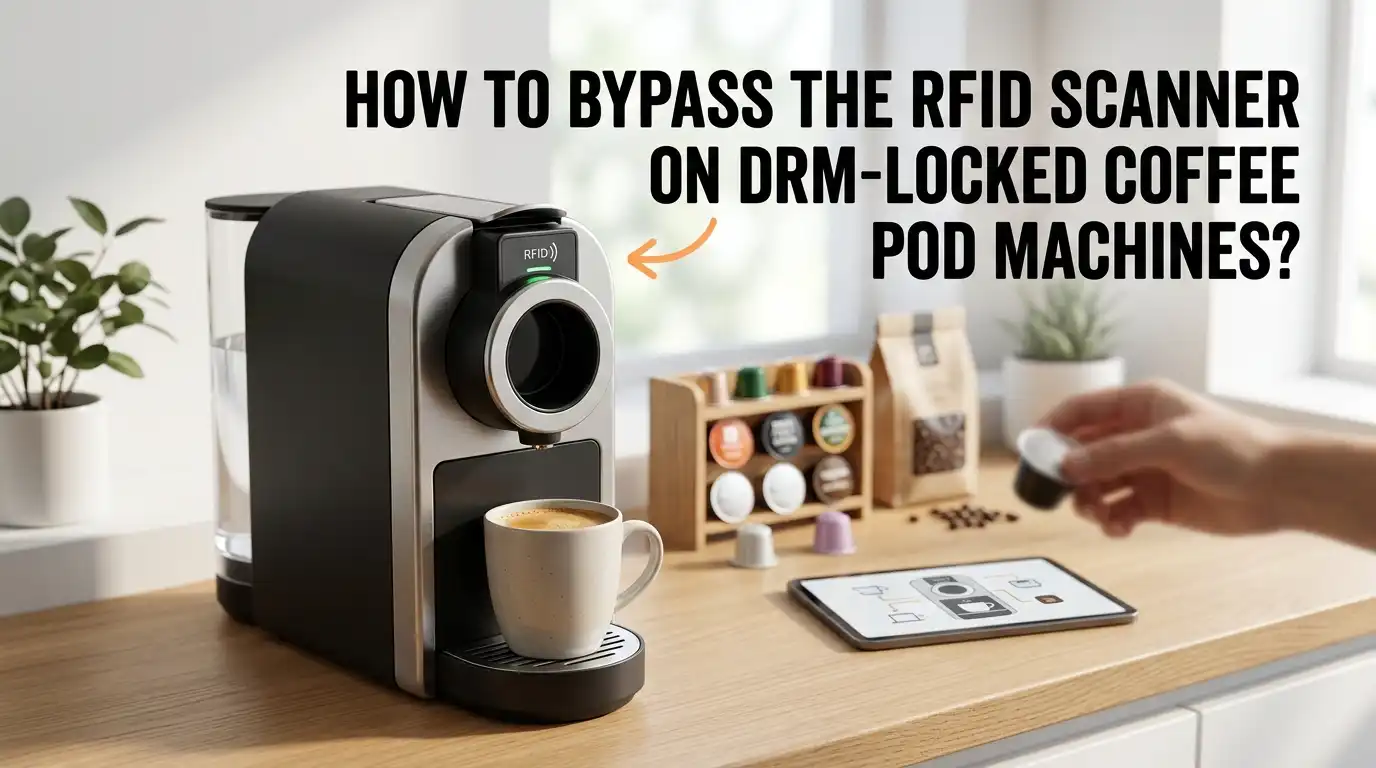
An RFID scanner is a small reader inside your machine. RFID stands for Radio Frequency Identification. The scanner sends out a signal and looks for a matching tag on your pod. Some machines use this. Others use a special ink that reflects infrared light instead.
Either way, the goal is the same. The machine wants to confirm the pod is brand approved. If the tag or ink does not match, the machine shows an error and stops.
Popular models like the Keurig 2.0 made this system famous. The lock is not about coffee quality. It is about money. The maker earns a fee every time you brew their pod. Knowing this helps you understand why the bypass works so well.
Why Do Coffee Machines Use DRM Locks?
DRM means Digital Rights Management. You may know it from movies or music. Coffee brands borrowed the same idea for pods.
The reason is pure business. When a patent on pod technology expires, cheaper third party pods flood the market. Brands lose money fast.
To fight back, they added scanners that reject those cheaper pods. Keurig did this exactly after its patent ran out in 2013. By the next year, off brand pods made up a large chunk of all brews.
So the company locked its new machines tight. The official reason given was “quality control.” Most people saw it differently. The lock protects profit, not your cup. This is why so many users feel justified working around it.
Is It Legal to Bypass the RFID Scanner?
This is a fair question, and you deserve a clear answer. For personal home use, bypassing your own coffee machine is generally legal in most places. You own the machine. You can use it how you like. No law forces you to buy only branded pods.
However, there are two things to keep in mind. First, the bypass almost always voids your warranty. If the machine breaks later, the maker may refuse to help. Second, selling fake branded pods or label kits for profit can cross legal lines.
That is different from a personal fix. I am not a lawyer, so treat this as general information. For peace of mind, stick to private, at home methods and you stay on safe ground.
Method 1: The Label Swap Trick (Easiest Start)
This is the most popular bypass, and for good reason. It takes seconds. You need one used pod that the machine already accepts. Keep its lid with the readable foil or ink intact.
Here are the steps. Brew one official pod first. Then peel the foil lid off the empty pod gently. Now take your off brand pod and place that official lid on top of it. Pop it into the machine. The scanner reads the old lid and gives you the green light. The brew starts like normal.
Pros: Fast, free, and needs no tools. Cons: The lid wears out over time, and balancing it can feel fiddly. You also repeat the swap for each new pod. Still, it is the perfect first test to prove the bypass works.
Method 2: The Permanent Tape Hack (Set and Forget)
If you hate repeating steps, this method is for you. It is a one time fix that lasts for years. You only need one official pod label and a small piece of clear tape.
First, find the exact spot where the scanner sits. It is usually a small rectangle or window near the pod holder. Next, cut out only the printed part of an official label, the section with the special ink or tag. Now tape that piece directly over the scanner window. Keep it flat and secure.
That is it. The machine now reads the same label every single time. It thinks every pod is approved. Pros: You never repeat the trick, and any pod works. Cons: Opening or moving the label can break the seal, and a sloppy job may misalign the reader. Done right, it is the cleanest long term solution.
Method 3: Use Refillable Pods With Built In Tags
Some smart companies make refillable pods designed to pass the scanner on their own. These pods come with a permanent tag or a reusable foil section. You fill them with your own ground coffee and brew freely.
The process is simple. Open the refillable pod, add your favorite grounds, and close the lid. Place it in the machine. The built in tag triggers the scanner, and the brew begins. You wash the pod and refill it again the next day.
Pros: You control the coffee, the strength, and the cost. It also cuts plastic waste a lot. Cons: The first brews may need grind tweaks, since coffee that is too fine or too coarse changes the taste. Use a medium grind and adjust slowly. Over time, this becomes the most satisfying and green choice.
Method 4: The Magnet Trick for Certain Models
A few machine models respond to a small magnet hack. This works on units where the scanner or sensor reacts to a magnetic pull rather than only ink. It is less common but worth knowing.
Here is the idea. You place a small magnet near the sensor area to unlock extra brew options or trick the detection. Some users report this opens larger cup settings or bypasses pod checks on specific machines.
Be careful with this one. Not every machine works this way, and the wrong magnet placement does nothing useful. Pros: Cheap and reversible, since you just remove the magnet. Cons: It only fits a narrow set of models, and results vary widely. Test gently and never force a magnet inside moving parts. If it does not work in a minute, move on to another method.
Method 5: Reuse and Refill Original Pods
You do not always need new gear. You can refill the original branded pods you already bought. Since they keep their factory tag, the scanner never complains. This is a clever middle path.
Start by peeling back the foil lid of an empty official pod carefully. Rinse out the old grounds and let it dry. Fill it with fresh coffee of your choice. Then seal the top again using a fresh foil circle and a dab of food safe glue, or a snap on reusable lid.
Pros: The factory tag passes the scan every time, and you reuse paid for parts. Cons: Resealing takes practice, and a weak seal can leak during brewing. The lid also holds up for only a handful of refills. It works best as a backup when you run low on other options.
Tools and Materials You Will Need
You do not need a workshop for these fixes. Most items live in your kitchen drawer already. Gathering them first makes the whole job smooth and quick.
For the label and tape methods, grab clear tape, small scissors, and one used official pod. Keep the foil lid clean and undamaged. For refillable pods, you need the reusable pod cup, your ground coffee, and a small scoop. A grinder helps if you buy whole beans.
For the magnet trick, find a small flat magnet, the kind from a craft store. Avoid strong industrial magnets, since they can harm electronics. A soft cloth is handy for cleaning the scanner window before you tape anything. Having everything ready cuts your setup time in half and prevents messy mid project stops.
Step by Step: The Fastest Bypass in Five Minutes
Let me tie it all together into one quick routine. This combines the easiest methods so you brew right away. Follow these in order and you will be sipping coffee fast.
First, brew one approved pod and save its foil lid. Second, clean the scanner window with a dry cloth. Third, cut the readable ink section from that lid. Fourth, tape that piece flat over the scanner window. Fifth, drop in any pod you like and press brew.
The machine reads the taped label and starts brewing. That is the whole process. If the brew fails, shift the tape slightly until the reader catches it. Most people get it on the first or second try. This five minute fix turns a locked machine into a fully open one for good.
Common Mistakes to Avoid During the Bypass
A few small errors trip people up, so let me help you skip them. The most common slip is covering the wrong spot. The scanner window is tiny, and taping the wrong area does nothing. Look closely before you stick anything.
Another mistake is using a damaged or scratched label. The ink or tag must stay intact for the reader to catch it. Throwing out used foil lids too soon also hurts, since those lids are your bypass tools. Save a few.
With refillable pods, packing the coffee too tight blocks water flow. Fill it loosely and use a medium grind. Finally, never force parts or use heat near the electronics. Gentle and patient always wins. Avoid these slips and your bypass holds strong.
How to Keep Your Machine Working After the Bypass
A bypass is great, but care keeps it lasting. Your machine still needs basic upkeep to brew well. Clean habits protect both the bypass and the machine itself.
Wipe the scanner window now and then, but do not peel off your taped label by accident. Descale the machine every month or two using a vinegar and water mix or a descaling solution. This clears mineral buildup that can clog the needle and ruin taste.
Rinse refillable pods right after each use so old grounds do not harden. Check the foil tape every few weeks to confirm it stays flat. A loose label is the top reason a working bypass suddenly fails. With these simple steps, your unlocked machine keeps pouring great coffee for years.
Frequently Asked Questions
Will bypassing the RFID scanner damage my coffee machine?
No, the common methods do not harm your machine. Taping a label or swapping foil only fools the scanner. You change nothing inside the machine itself. Just avoid forcing parts or using strong magnets near the electronics, and your machine stays safe.
Does the bypass work on every pod machine brand?
Most label and tape tricks work on machines that scan ink or foil, like Keurig 2.0 models. Machines that use deeper tag systems may need refillable pods with built in tags instead. Check how your scanner reads pods, then pick the matching method from this guide.
Can I still use official pods after I bypass the scanner?
Yes, absolutely. The bypass does not block branded pods at all. You simply add the freedom to use other pods too. Official pods keep brewing as normal. You now just have more choices and lower costs, which is the whole point.
Will this void my warranty?
It can, yes. Most makers consider any DRM workaround a reason to drop warranty support. If your machine is new and still covered, think twice before you start. For older machines past their warranty, the risk is much smaller and the bypass makes great sense.
Are refillable pods better than the tape trick?
Each one suits a different need. The tape trick is fastest and free. Refillable pods cost a little upfront but save money long term and cut plastic waste. Many people use both, the tape for quick brews and refillable pods for daily use.
How long does the taped label bypass last?
It often lasts for years if the tape stays flat and clean. The ink does not fade quickly under normal use. Just check it every few weeks and re flatten the tape if it lifts. A well placed label gives you a near permanent fix with no fuss.

Hi, I’m Emma Lee — the coffee-obsessed creator behind Morning Drip Vault. I spend my days testing coffee machines, exploring brewing techniques, and reviewing the latest coffee gear. My mission is simple: helping you find the perfect machine to brew your best cup, every single morning.