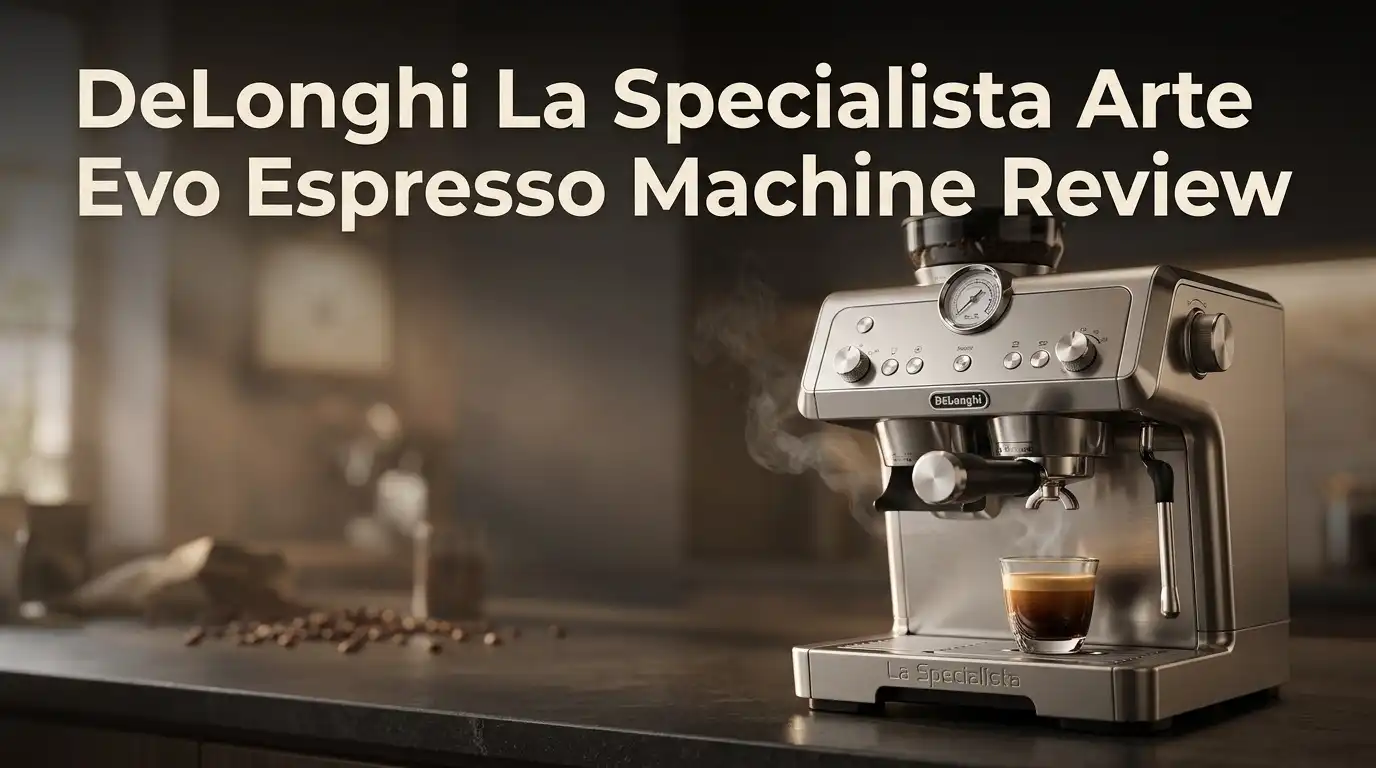
DeLonghi La Specialista Arte Evo Espresso Machine Review 2026
Home espresso has never been more tempting. Machines keep getting smarter, prices keep shifting, and every brand promises cafe results on your counter.
The DeLonghi La Specialista Arte Evo sits right in that busy middle ground. It costs around $550 to $600, it grinds your beans, it steams your milk, and it even claims to make cold brew in minutes.
I spent real time with the Arte Evo, pulled a lot of shots, wasted a fair amount of coffee, and found both strong points and clear weak spots. Keep reading for an honest breakdown before you spend your money.
In A Nutshell:
- The Arte Evo is a semi automatic hybrid machine. It combines a stainless steel conical burr grinder, a 51mm portafilter, a 15 bar pump, and a manual steam wand in one compact stainless steel body. The model number is EC9255M, and it replaces nothing. It simply adds cold extraction to the older Arte.
- Espresso quality is genuinely good once you dial it in. With fresh beans, grind setting 4 or 5, and about 15 grams of coffee, you can pull a sweet, thick shot with caramel colored crema. The machine does not hold you back. Your technique does.
- The steam wand is the standout feature. It sits on a ball joint, delivers strong steam pressure, and produces silky microfoam that pours into latte art. Many rivals at this price cannot match it.
- The grinder is the biggest limitation. Only eight grind settings exist, and you cannot sit between two of them. Serious espresso fans will hit that wall fast.
- The cold brew function underwhelms. DeLonghi calls it Cold Extraction Technology. The drink comes out thin and slightly bitter with medium roasts. Fruity light roasts help, but nothing here beats real overnight cold brew.
- The accessory kit is generous. You get two single wall baskets, a metal tamper, a tamping mat, a dosing funnel, a milk pitcher, a cup tray, a cleaning brush, a steam tip needle, and descaler.
DeLonghi La Specialista Arte Evo Espresso Machine

Last update on 2026-11-19 / Affiliate links / Images from Amazon Product Advertising API
The La Specialista Arte Evo is DeLonghi’s answer to the entry level prosumer crowd. It targets people who want to learn espresso properly without buying a separate grinder. The body measures roughly 16 inches tall and weighs about 21.5 pounds, so it feels planted and solid.
Inside sits a thermoblock heater, a 15 bar pump, and a 1.7 liter removable water tank. The bean hopper holds 8.8 ounces. Four programs appear on the main dial: espresso, Americano, cold brew, and hot water. Milk is always your job, which is exactly the point.
This is not a one touch machine. You grind, you tamp, you lock, you steam, you pour. That hands on routine is the main reason buyers love it or return it.
Unboxing The Arte Evo: What Shows Up At Your Door
The box is heavy, and that first lift tells you something. DeLonghi packs the machine in molded foam with the accessories tucked in a separate cardboard tray. Nothing rattles. Nothing arrives scratched.
Peeling the protective film off the stainless steel panels is oddly satisfying. The portafilter feels substantial in your palm, far heavier than the plastic handles on cheaper machines. The chrome pressure gauge on the front is the piece that makes people say wow.
Setup takes about fifteen minutes. You rinse the tank, wash the baskets and pitcher, fill with filtered water, then run the priming cycle the manual asks for. My one gripe is the quick start guide, which skips over dosing in a way that leaves beginners guessing.
By cup number two, the layout already feels familiar.
Design, Size And Build Quality
The Arte Evo wears a retro Italian look with rounded edges and brushed metal. It suits a modern kitchen without shouting. The footprint stays compact, which matters because you are replacing a machine plus a grinder with one unit.
The water tank sits at the rear and lifts out, but you can also refill it through a flip top lid on the machine’s roof. That small touch saves you from pulling the whole unit forward under low cabinets every morning.
A dedicated hot water spout sits separate from the steam wand, so you never wait for one to switch roles. Nice thinking.
One flaw shows up quickly. The machine slides on the counter when you twist the portafilter out. You learn to steady it with your free hand. Not a dealbreaker, but it feels cheap on a $599 machine.
Top 3 Alternative for DeLonghi La Specialista Arte Evo

Last update on 2026-11-18 / Affiliate links / Images from Amazon Product Advertising API
Breville Barista Express Espresso Machine


Last update on 2026-11-19 / Affiliate links / Images from Amazon Product Advertising API
Ninja Luxe Cafe Premier 3 in 1 Espresso Machine

Last update on 2026-11-19 / Affiliate links / Images from Amazon Product Advertising API
De’Longhi La Specialista Arte Espresso Machine
The Built In Conical Burr Grinder
A stainless steel conical burr grinder lives under the hopper. You change grind size by twisting a numbered dial at the hopper base, and you must do it while the burrs are turning. Forcing the dial on a stopped grinder risks damage.
Here is the honest problem: there are only eight settings. Factory default is 5, and most coffees land between 3 and 6. That gives you roughly four usable steps for espresso. Real espresso grinders offer dozens.
The result is predictable. You can reach a good shot, but you cannot fine tune the last ten percent. Fresh beans, oily dark roasts, and decaf all push you toward the edges of that range.
Owner reports also mention grinder clogs and failures. Brush the chute and funnel regularly. It genuinely helps.
Dosing: The Part Nobody Explains Well
The Arte Evo uses a timed dosing dial on the front. You pick a position, slide the portafilter into the grinding cradle, push back, and the grinder runs for a set time.
Those dial numbers are not grams and not seconds. They are reference positions only. Many new owners misread them and end up with wildly inconsistent doses.
The manual’s dosing chart is close to useless in practice. I ignored it within an hour. A better method is to grind, tamp, then check the puck against the fill line etched inside the basket.
Here is the catch. Every grind size change also changes your dose, so you adjust twice. A cheap kitchen scale solves this permanently and costs less than a bag of specialty beans.
Portafilter And Filter Baskets
The 51mm portafilter is well made, heavy, and comfortable. DeLonghi includes two single wall baskets, one for single shots and one for doubles. Single wall baskets mean no pressurized crema trick, which is the right call for people who want real espresso.
Still, 51mm is small. Most quality machines use 54mm or 58mm. A wider, shallower puck extracts more evenly and handles bigger doses. You feel that limit with a double shot.
There is also a plastic insert sitting inside the portafilter. Its purpose is unclear, and shots improve once you pop it out. That is an odd design choice for a machine aimed at learners.
Replacement baskets in 51mm are harder to find than 58mm options too.
Steam Wand And Milk Foam Performance
This is where the Arte Evo earns real praise. The manual steam wand mounts on a ball joint, so it swings freely and reaches any angle you need. Steam pressure arrives fast and stays strong.
Microfoam comes out glossy, dense, and paint like. I poured hearts and tulips without fighting the machine. That is rare at this price point, and it beats the wand on several popular competitors.
Switching between brewing and steaming takes only a short wait. The thermoblock reheats quickly, so your espresso is still warm when the milk is ready.
Keep the supplied pitcher cold, fill it only one third full, and purge the wand before and after. Milk can triple in volume, and the tip blocks fast if you let residue dry on it.
Cold Extraction Technology: Does The Cold Brew Work?
DeLonghi developed this feature with the Specialty Coffee Association. The machine uses low pressure and a slow flow rate to pull a cold coffee concentrate in a few minutes rather than overnight.
The idea is clever. The result is not. With a medium roast, my cold brew tasted watery and sharp, with a dry bitterness that no amount of ice or milk fixed. Switching to a fruity Ethiopian single origin improved things noticeably, but the drink still read as cold espresso rather than true cold brew.
Remember to cool the brew circuit first by running the cold program with an empty cup. Skipping that step makes everything worse.
If cold brew is your main reason for buying, buy a $25 immersion pitcher instead. This feature feels like marketing more than innovation.
Heating Speed And Active Temperature Control
The thermoblock heats in under a minute. That speed is the headline benefit of this design, and it suits busy mornings perfectly.
The tradeoff is thermal mass. A thermoblock heats water fast but leaves the group head and portafilter cold. Run two blank water cycles through the locked portafilter before your first shot. Your espresso will taste noticeably rounder.
Active Temperature Control keeps brew temperature stable during extraction, and you choose from three levels marked MIN, MED, and MAX. DeLonghi suggests lower for dark roasts and higher for light roasts.
In my testing, even medium roasts tasted better on the lowest setting. The higher levels pushed shots toward ashy and harsh. DeLonghi never publishes the actual temperatures, which is frustrating for anyone keeping notes.
How Does The Espresso Actually Taste?
Good. Better than good once you stop guessing. My best results came from grind setting 4, roughly 15 grams in the double basket, and about 30 grams of liquid espresso in 30 seconds.
That shot was sweet, thick, and layered, with a caramel crema that held for a minute. The machine handled a small batch roaster blend and let its chocolate and berry notes come through clearly.
Getting there took effort. I burned through nearly a pound of beans before the recipe locked in. The pressure gauge helps as a rough guide, but it only shows an Optimal Zone band rather than real numbers.
Treat the gauge as feedback, not a grade. Taste decides, not the needle.
Cleaning And Maintenance Routine
Daily care is light. Knock out the puck, rinse the basket, flush the group head for two seconds, and wipe the steam wand immediately after every milk drink.
Weekly, pull the drip tray, empty it, and wash the pitcher and tamping mat. Every few weeks, brush the burrs and the grind chute. Grinder blockages are the most common owner complaint, and brushing prevents most of them.
Set the water hardness using the included test strip during setup. Dip it for one second, read it after a minute, and enter the level in the settings. That makes the descale reminder match your actual water.
Descaling uses the supplied EcoDecalk solution and takes about thirty minutes. Do not stop after the solution tank. The rinse cycle matters just as much.
What The Arte Evo Does Not Do Well
Honest reviews list the misses, so here they are.
The eight step grinder is the headline flaw. It limits precision, and you cannot upgrade it without buying a separate grinder, which defeats the purpose of an all in one machine.
The cold brew program disappoints. The timed dosing system frustrates beginners. The 51mm portafilter limits basket options. The machine slides on the counter. The manual gives dosing advice that does not match reality.
Service experiences also draw criticism. Several owners report slow replacements and difficult repair claims after grinder failures. Warranty coverage runs only one year.
There is no app, no milk automation, and no shot timer on the display. If you want a machine that does the work for you, this is the wrong purchase.
Arte Evo Versus Breville Barista Express
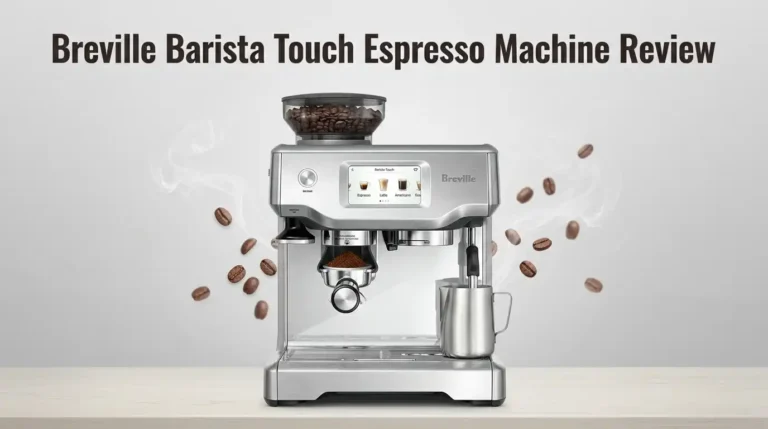
These two machines compete directly. The Barista Express costs around $499, so it undercuts the Arte Evo slightly.
Breville wins on grinder flexibility with 16 settings instead of 8, and on portafilter size with a 54mm basket. It also offers finer control over pre infusion and temperature, plus a slightly larger 2 liter tank.
DeLonghi wins on steam power and milk texture by a clear margin. The Arte Evo also offers taller cup clearance, a dedicated hot water spout, and the cold extraction program.
Build quality feels close between them. Both are strong beginner machines, and both frustrate advanced users eventually.
Choose Breville for dialing in precision. Choose DeLonghi for milk drinks and a faster warmup.
Pros And Cons Of The DeLonghi La Specialista Arte Evo
Pros
- Excellent manual steam wand produces silky microfoam and real latte art.
- Compact stainless steel body replaces both a machine and a grinder.
- Heats in under a minute thanks to thermoblock technology.
- Generous accessory kit including tamper, mat, funnel, pitcher, and descaler.
- Single wall baskets encourage proper espresso technique from day one.
- Three brew temperature settings suit different roast levels.
- Top fill lid means no pulling the machine out to refill water.
- Dedicated hot water spout keeps Americanos simple.
- Pulls genuinely sweet, thick espresso once dialed in.
Cons
- Only eight grind settings restrict fine adjustment.
- Cold brew program tastes thin and bitter with most beans.
- Timed dosing is imprecise and needs a scale for consistency.
- 51mm portafilter limits basket upgrades and dose size.
- Machine shifts on the counter during portafilter removal.
- Dosing guidance in the manual is inaccurate.
- Grinder clogs appear in multiple owner reports.
- Warranty lasts only one year.
Who Should Buy The Arte Evo?
Buy this machine if you want to learn espresso properly and enjoy the ritual. It rewards people who like grinding, tamping, and steaming with their own hands. Milk drink lovers get the most value because the wand is genuinely excellent.
Skip it if you want one touch lattes, app control, or a machine that queues several drinks unattended. Skip it too if you already own a good burr grinder, because you would be paying for hardware you do not need.
Light roast chasers and espresso perfectionists will outgrow the eight step grinder within months. Casual drinkers who buy medium roast supermarket beans will never notice the limit.
Budget an extra $25 for a scale. It transforms the experience.
Final Verdict
The DeLonghi La Specialista Arte Evo is a strong semi automatic machine wrapped around one weak gimmick. Espresso quality, steam performance, and build feel all justify the price. The cold brew function does not.
If you can find the original La Specialista Arte for meaningfully less money, buy that instead. You lose only the cold extraction program, and you are not losing much.
For everyone else, this remains an easy recommendation at the $550 to $600 range. It looks great, heats fast, steams beautifully, and makes espresso that will embarrass most coffee shops in your neighborhood.
Just go in knowing what it is. A learning machine, not a lifetime machine.
Frequently Asked Questions
Is the DeLonghi La Specialista Arte Evo good for beginners?
Yes, with patience. The controls are clear and the accessory kit covers everything you need. Expect a week of trial and error before your shots taste consistently good.
What is the difference between the Arte and the Arte Evo?
The Evo adds the Cold Extraction Technology program for cold brew. Almost everything else, including the grinder, portafilter, and steam wand, stays the same.
Do I need a separate grinder with this machine?
No, but many users eventually add one. The built in grinder handles everyday beans well and only frustrates people chasing precise espresso adjustments.
Can it make a latte automatically?
No. The machine brews the coffee, but you steam and pour the milk yourself using the manual wand.
What grind setting should I start with?
Start at 5, which is the factory default. Move to 4 if your shot runs too fast and 6 if it drips too slowly.
How long does the Arte Evo take to heat up?
Under one minute. Run two blank shots through the portafilter first so the metal reaches temperature.
Does it use pressurized baskets?
No. Both included baskets are single wall, which gives better flavor but demands correct grind and dose.
What size portafilter does it use?
It uses a 51mm portafilter, which is smaller than the 54mm and 58mm standards found on many competing machines.

Hi, I’m Emma Lee — the coffee-obsessed creator behind Morning Drip Vault. I spend my days testing coffee machines, exploring brewing techniques, and reviewing the latest coffee gear. My mission is simple: helping you find the perfect machine to brew your best cup, every single morning.