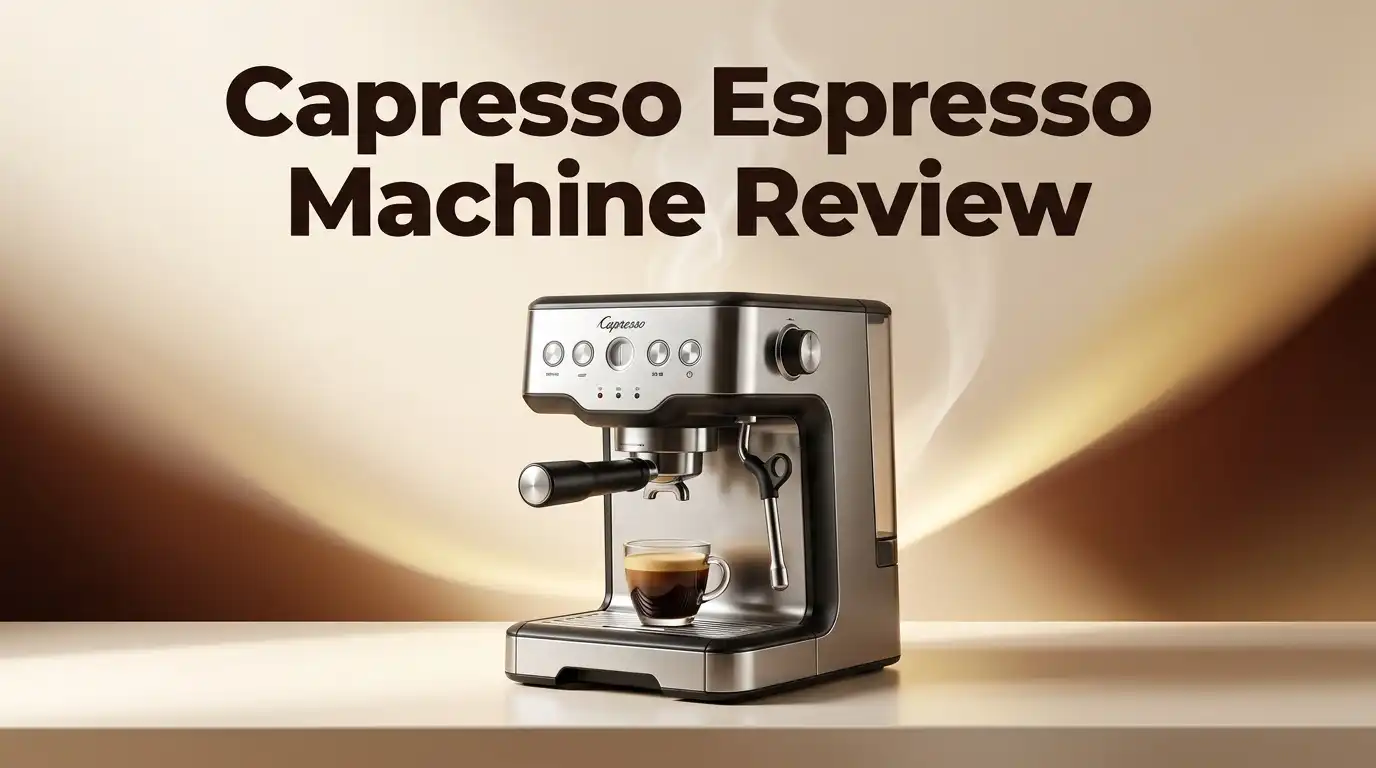
Capresso Espresso Machine Review 2026: Still Worth It?
Home espresso keeps getting more expensive. Machines with touchscreens, scales, and app control now cost more than a used car payment.
So where does a quiet, older brand like Capresso fit in 2026? That is the question I wanted to answer after living with these machines on my counter, pulling shots every morning, and cleaning up the mess afterward.
This review covers the machines people actually buy, the unboxing experience, shot quality, milk texture, and the flaws nobody mentions in the product listing. No fluff. No recycled marketing copy. Just what these machines do well and where they fall short.
In A Nutshell:
- The Capresso EC100 is the value pick. It costs around $130 to $160, heats in about 60 to 90 seconds, and makes solid cappuccinos with almost no skill required. It is the machine I recommend to people buying their first espresso maker.
- The Café TS is the convenience pick, not the quality pick. A touchscreen, built in grinder, and one touch drinks make it easy. Owner ratings sit near 3.4 to 3.6 stars though, which is a warning sign for reliability.
- Every Capresso model uses pressurized baskets. You get thick crema on every shot, even with stale supermarket coffee. That crema is fake pressure foam, not a sign of great extraction.
- Shot consistency drops fast during busy mornings. The first espresso is almost always the best one. By the third or fourth drink, temperature and pressure wander.
- Build quality is fair, not premium. Stainless steel panels cover a lot of plastic underneath. Light daily use is fine. Family sized volume is not.
- Skip Capresso if you want café level espresso. A Breville Bambino Plus costs more and beats every Capresso machine on taste and steam power.
Who Makes Capresso Espresso Machines

Last update on 2026-10-22 / Affiliate links / Images from Amazon Product Advertising API
Capresso launched in 1994 and became part of JURA Inc. shortly after. JURA is the Swiss company behind $3,000 superautomatic machines found in offices and hotels. Capresso serves as the affordable branch of that family.
That background shows up in small ways. The thermoblock heating system inside the EC100 is genuinely quick, and the internal plumbing is more thoughtful than what you find in generic imports. Capresso also sells refurbished units directly with a warranty, which is rare in this price bracket.
But the brand has coasted. Most current models are lightly updated versions of designs from a decade ago. The controls, the frother sleeves, and the pressurized baskets all feel like 2014 technology sold at 2026 prices. That is not automatically bad. It just means you are buying proven simplicity rather than innovation.
Capresso EC100 Pump Espresso And Cappuccino Machine
The EC100 is the model most people mean when they search for a Capresso espresso machine. It runs a 15 bar vibration pump, a stainless lined thermoblock, and a 46 ounce removable water tank. Heat up takes roughly 60 to 90 seconds from cold, which is genuinely fast for this price.
Controls are almost insultingly simple. One knob. One button. Two indicator lights. Turn the knob left for coffee, right for steam, center to stop. There is no programming, no volumetric dosing, and no pressure gauge. You decide when the shot stops by watching the cup.
That manual control is the best and worst part of this machine. Beginners get to learn real timing. People who want a walk away button will find it annoying. At 11.75 inches tall and 8.25 inches wide, it also fits under most cabinets without a fight.
Unboxing The Capresso EC100
The box arrives smaller than expected. Inside you get the machine, a plastic portafilter handle with a chrome finish, two pressurized filter baskets for single and double shots, a combined plastic scoop and tamper, and a thin instruction booklet.
The first thing you notice is the weight, or the lack of it. At under 9 pounds, the EC100 feels light. The stainless front panel looks sharp, but the sides and top frame are plastic with a metal look. The included tamper is the weakest item in the box. It is hollow, flimsy, and barely wide enough to level the grounds.
Setup takes about ten minutes. Rinse the tank, fill it, run two cycles of plain water through the group head and the steam wand, and you are ready. Do not skip that rinse. New machines taste like warm plastic for the first two shots.
Capresso Café TS Touchscreen Espresso Machine


Last update on 2026-10-22 / Affiliate links / Images from Amazon Product Advertising API
The Café TS sits at the top of the current lineup. It packs a color touchscreen, a built in conical burr grinder, a 50 ounce tank, and one touch buttons for espresso, coffee, and hot water. It also stores user profiles so two people can save their own drink sizes.
On paper this is the dream machine for lazy mornings. In practice it is the most divisive Capresso product. Owner ratings hover in the low to mid 3 star range, and the common complaints repeat: grinder jams with oily beans, error messages after a few months, and a steam wand that produces bubbly foam rather than silky microfoam.
When it works, it is lovely. Press a button, get a decent drink, walk away. The risk is that “when it works” is doing heavy lifting in that sentence.
Top 3 Alternative for Capresso EC100

Last update on 2026-10-22 / Affiliate links / Images from Amazon Product Advertising API
Breville Bambino Plus Espresso Machine

Last update on 2026-10-22 / Affiliate links / Images from Amazon Product Advertising API
De’Longhi Stilosa Manual Espresso Machine

Last update on 2026-10-22 / Affiliate links / Images from Amazon Product Advertising API
CASABREWS 3700 Essential Stainless Steel Espresso Machine
Build Quality And Daily Durability
Here is the honest assessment. Capresso machines are built well enough for one or two drinks a day and no more. The stainless steel drip tray and front panel give the EC100 a more solid feel than the all plastic competition, and the removable warming plate on top is a genuinely nice touch for preheating cups.
Underneath, the story changes. The portafilter handle is plastic instead of metal. The group head is small. The steam wand joint develops play over time. Long term owners report that shot quality slowly declines after two or three years of daily use, usually because scale builds inside the thermoblock.
Regular descaling is not optional with these machines. Every three months minimum, more often with hard water. Owners who descale consistently report five plus years of service. Owners who ignore it report dead machines in eighteen months.
Espresso Quality And Taste Test
I tested the EC100 with freshly ground medium roast Ethiopian beans, 14 grams in, roughly 28 grams out, timed at 25 to 30 seconds. The result was pleasant. Medium body, sweet chocolate notes, decent balance, and a thick layer of crema on top.
What was missing? Depth. Compared to the same beans in a Bambino Plus, the Capresso shot tasted flatter and simpler. Light roasts came out sour and thin because the 15 bar pump plus pressurized basket combination cannot extract them properly. Stick to medium and dark roasts here.
The crema deserves a warning. Pressurized baskets create crema artificially by forcing brewed coffee through a tiny hole. It looks like café espresso. It is not the same thing. Swapping in an unpressurized basket improves flavor noticeably if you own a decent grinder.
Milk Frothing And Steam Wand Performance
This is where the EC100 earns its keep. The dual frother uses a removable black plastic sleeve. Leave the sleeve on for cappuccino foam. Take it off for smoother latte milk. Either way, the wand pulls in air automatically, so you do not need practiced technique to get usable foam.
Foam quality is good, not great. Bubbles run slightly larger than ideal, so you can pour a heart if you are patient but forget about rosettas. Tapping the pitcher on the counter and swirling helps a lot.
Steam power is modest. Frothing 6 ounces of milk takes around 45 to 60 seconds, which feels slow if you are used to a proper machine. The wand also cannot brew and steam at the same time, so you wait through a heating cycle between the two steps.
Ease Of Use For Complete Beginners
Capresso built these machines for people who have never touched a portafilter. There is no menu to learn on the EC100 and no settings to dial. Fill, tamp, lock, turn, stop. Most first timers pull a drinkable shot within three attempts.
The single hardest skill is knowing when to stop the water. Nobody tells you this. Put your cup on a small kitchen scale and stop at roughly double the weight of the dry coffee. That one habit transforms results.
One quirk catches people out. After brewing, wait at least 15 seconds before switching the machine off. The EC100 runs an auto rinse that vents pressure, and skipping it can cause splutter on the next shot. The Café TS removes almost all of this learning curve, which is its main selling point.
What Capresso Machines Do Not Do Well
Real reviews name the flaws, so here they are without softening.
Consistency collapses under load. Pull one espresso and it is good. Pull four in a row and temperature drops, pressure sags, and the last cup tastes weak. These machines have no recovery time built in.
The included accessories are poor. The plastic tamper is nearly useless, and the scoop measures inconsistently. Budget an extra $25 for a real tamper and a WDT tool.
No pressure gauge and no temperature control. You are flying blind on extraction.
Steam is slow and bubbly compared with any Breville. Latte art is a struggle.
Customer service is hit or miss. Warranty claims work, but replacement parts for older models are increasingly hard to find. And the Café TS reliability record is genuinely concerning for a machine at its price point.
Pros And Cons Of Capresso Espresso Machines
Pros
- Fast heat up, usually 60 to 90 seconds from cold on the EC100
- Very easy controls with almost no learning curve for new users
- Forgiving dual frother makes cappuccino and latte milk without practice
- Large removable water tanks, 46 to 50 ounces depending on model
- Compact footprint that suits small kitchens and apartments
- Heated cup tray on top, which is rare under $200
- Backed by JURA, with refurbished units and parts available direct
Cons
- Shot consistency drops when making several drinks in a row
- Pressurized baskets produce fake crema and limit real flavor
- Plastic portafilter, tamper, and internal parts at every price level
- Steam wand is slow and makes bubbly foam rather than microfoam
- No built in grinder on the affordable models
- Café TS has weak owner ratings and grinder reliability complaints
- Performance fades after a few years without strict descaling
- Priced close to better performing rivals in 2026
Cleaning And Maintenance Routine
Daily cleaning takes two minutes. Knock the puck out, rinse the portafilter, wipe the group head once it cools, empty the drip tray, and clean the steam wand. Always remove the black frothing sleeve when you wipe the wand, because milk hides behind it and turns sour fast.
Weekly, pull the warming plate off the top and wash it. The drip tray and tank both come out for a proper scrub.
Descaling is the big one. Plan on every three months, using a proper descaling solution or citric acid. The process takes about twenty minutes of mostly waiting. Skipping this is the single most common reason these machines die early. Hard water areas should descale every six to eight weeks instead.
Capresso vs Breville vs De’Longhi In 2026
Three names dominate the under $500 espresso market. Here is how they stack up honestly.
De’Longhi Stilosa costs about the same as the EC100. It makes slightly better espresso once you dial it in, and removing the Panarello sleeve gives you a more traditional steam wand. It is the better choice if you want to learn and improve.
CASABREWS 3700 runs a 20 bar pump, looks more modern, and holds shot consistency better across multiple drinks. It also has a stronger steam wand.
Breville Bambino Plus costs roughly three times more, and it is worth it if the budget stretches. Automatic microfoam, 3 second heat up, and real extraction control. Nothing Capresso sells competes with it on quality.
Price And Value In 2026
The EC100 typically sells between $130 and $170 depending on sales. At that price it makes sense. You get a metal faced machine with fast heating and an easy frother for less than two weeks of café visits.
The Café TS lands near $450 to $550. That is where the value argument breaks down. For similar money you can buy a Bambino Plus plus a decent burr grinder, and get far better drinks with better reliability.
Capresso also sells factory refurbished units through its own site, often 25 to 35 percent below retail with a warranty attached. Those are genuinely good deals and the smartest way to buy this brand. Value here is strongest at the bottom of the range and weakest at the top.
Who Should Buy A Capresso Espresso Machine
Buy one if you make one or two milk drinks a day, want spending under $200, and value simplicity over control. Apartment dwellers, students, office break rooms, and people replacing a pod machine all fit this profile perfectly.
Buy one if you like cappuccinos and lattes more than straight espresso. Milk covers the small weaknesses in these shots beautifully.
Skip it if you drink espresso straight and care about origin flavors. Skip it if your household makes four or more drinks every morning. Skip it if you want latte art, because the frother will frustrate you within a week. And skip the Café TS entirely unless you find it heavily discounted and understand the reliability risk.
Final Verdict
The Capresso EC100 remains a sensible first espresso machine in 2026. It is fast, simple, compact, and it makes genuinely enjoyable cappuccinos for around $150. I would happily recommend it to someone who wants to stop buying $6 lattes and does not want a hobby.
The rest of the lineup is harder to defend. The Café TS asks premium money and delivers mid tier results with questionable reliability. The Ultima Pro and Café Select sit in an awkward middle ground where rivals simply perform better.
My honest rating: 7.5 out of 10 for the EC100, and closer to 5.5 for the touchscreen models. Capresso earns its place at the entry level. Above $300, look elsewhere.
Frequently Asked Questions
Is Capresso a good espresso machine brand?
Capresso is a decent brand at the entry level. It is owned by JURA, which brings real engineering to affordable machines. The EC100 in particular offers strong value. Higher priced Capresso models face tough competition and weaker owner reviews.
Does the Capresso EC100 make real espresso?
Yes. It uses a 15 bar pump and genuine pressure extraction, unlike steam driven machines with glass carafes. However, the pressurized filter baskets limit flavor complexity, so shots taste simpler than those from higher end machines.
Do Capresso machines have a built in grinder?
Only the Café TS and a few discontinued models include a grinder. The EC100, Ultima Pro, and Café Select all require pre ground coffee, ESE pods, or a separate grinder. A good burr grinder improves results dramatically.
How long do Capresso espresso machines last?
With light daily use and regular descaling, expect three to six years. Heavy use shortens that considerably. Descaling every three months is the single biggest factor in longevity.
Can you use pods in a Capresso machine?
Yes, most pump models accept ESE paper pods. Convenience is excellent, but flavor never matches freshly ground beans. Nespresso capsules are not compatible.
Is the Capresso EC100 better than the De’Longhi Stilosa?
The EC100 is easier for complete beginners and has a more forgiving frother. The Stilosa offers better espresso potential once you learn to dial it in. Both cost about the same.

Hi, I’m Emma Lee — the coffee-obsessed creator behind Morning Drip Vault. I spend my days testing coffee machines, exploring brewing techniques, and reviewing the latest coffee gear. My mission is simple: helping you find the perfect machine to brew your best cup, every single morning.