
Philips 4300 LatteGo Espresso Machine Review 2026: Worth Buying?
Coffee lovers want café drinks without café prices. The Philips 4300 LatteGo promises exactly that. You press one button, and the machine grinds, brews, and froths on its own. No portafilter. No tamping. No milk pitcher to scrub.
But does this machine deserve space on your counter in 2026? That question matters, because super automatic espresso machines cost real money. You deserve honest answers before you spend them.
This review covers the unboxing, the daily routine, the espresso quality, the milk foam, and the cleaning. It also covers the parts that frustrate owners. Some flaws are small. One or two might change your mind completely.
In A Nutshell:
- The ceramic grinder is the standout feature. Most machines at this price use steel burrs. Ceramic burrs run cooler, last longer, and stay quieter. You get twelve grind settings to fine tune your shot.
- The LatteGo milk system is genuinely easy to clean. It has no tubes and no hidden channels. The carafe snaps into two pieces and rinses in about fifteen seconds under the tap.
- You get eight drinks and three profiles. Espresso, ristretto, coffee, café crema, americano, cappuccino, latte macchiato, and café au lait. Two user profiles plus a guest profile keep your settings safe.
- The espresso tastes good but not spectacular. It pulls a clean, sweet, chocolatey shot with real crema. Serious espresso fans may still find the body a little thin compared to a manual setup.
- Real weaknesses exist. There is no app, no hot milk only option, no flat white preset, and milk drink volumes run small. The plastic housing also rattles during grinding.
- Value stays strong in 2026. Around the five hundred dollar mark, few machines match this feature list.
Philips 4300 LatteGo Espresso Machine

Last update on 2026-11-17 / Affiliate links / Images from Amazon Product Advertising API
The Philips 4300 LatteGo sits in the middle of the Philips lineup. The model number is EP4347/94. It carries a 1.8 litre water tank, a 270 gram bean hopper, a 15 bar pump, and a 1500 watt heating system.
The machine stands about 17 inches tall and weighs roughly 17.7 pounds. That size fits under most kitchen cabinets without drama.
What makes this model interesting is the feature mix. Philips borrowed parts from its premium machines and dropped them into a mid range body. The ceramic flat burr grinder is the clearest example.
You also get a removable brew group. That single detail separates easy to maintain machines from sealed units that need service visits. Being able to rinse the brew group yourself saves money for years.
The Unboxing Experience
The box arrives heavier than expected. Philips packs the machine in moulded foam with the carafe and drip tray seated separately. Nothing rattles during shipping.
Lift the machine out and you notice the weight feels solid in your hands. The plastic does not flex much. The mirrored silver trim across the front looks sharper in person than in product photos.
Inside the box you find a measuring scoop, a water hardness test strip, an AquaClean filter, a small tube of lubricant, and a storage lid for the LatteGo carafe. The included filter is a nice touch, since many brands charge extra for it.
First setup takes about ten minutes. You soak the filter, fill the tank, run a rinse cycle, and dial in your water hardness. Your first espresso lands in your cup within fifteen minutes of opening the box.
Design And Build Quality
The 4300 uses plastic for the entire housing. That choice keeps the price down. It also keeps the weight manageable when you slide the machine across the counter.
The finish is black with a brushed silver panel. The look is clean and modern rather than flashy. It blends into most kitchens without shouting.
The water tank pulls out from the right side. The drip tray slides out from the front. The bean hopper sits on top with an aroma seal lid that keeps beans fresh.
Build quality feels good for the money, but it does not feel premium. The panels resonate slightly during grinding. A heavier chassis would have muted that noise.
Owners report gasket and O ring wear after roughly two years of heavy use. Replacement parts are cheap and easy to fit yourself.
Top 3 Alternative for Philips 4300 LatteGo

Last update on 2026-11-19 / Affiliate links / Images from Amazon Product Advertising API
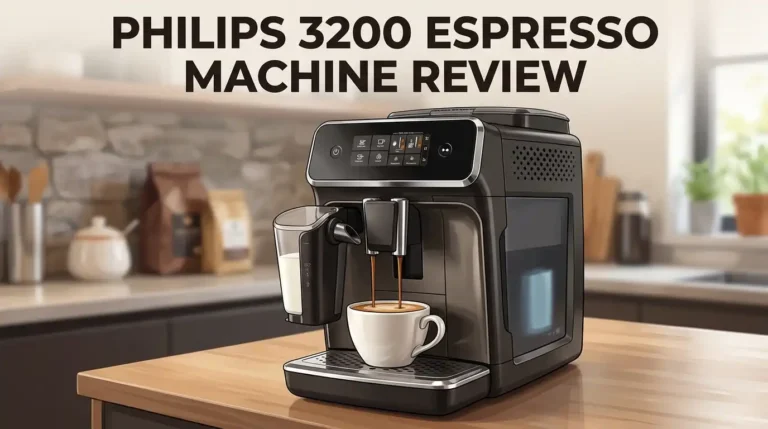
Philips 3200 Series LatteGo Fully Automatic Espresso Machine

Last update on 2026-11-19 / Affiliate links / Images from Amazon Product Advertising API
Philips 3300 Series LatteGo Fully Automatic Espresso Machine


Last update on 2026-11-19 / Affiliate links / Images from Amazon Product Advertising API
De’Longhi Magnifica Evo Automatic Espresso Machine
The Ceramic Burr Grinder
This grinder is the heart of the machine. Ceramic burrs do not transfer heat into the coffee the way steel burrs do. Cooler grinding protects the delicate oils in your beans.
Ceramic also resists wear. These burrs should outlast the rest of the machine in a normal household.
You get twelve grind settings. You adjust them with a key shaped tool inserted into the hopper while the grinder runs. Never adjust the setting with the grinder switched off, because you risk damaging the burrs.
Philips suggests waiting until you have brewed roughly one hundred cups before you start experimenting. The machine needs to settle.
One warning: oily dark roast beans can clog the hopper chute. Stick with medium roasts for the smoothest experience. Very oily beans cause stalls that need a cleaning brush to clear.
The LatteGo Milk System Explained
LatteGo is the reason many people choose this machine. The system uses two plastic parts that clip together. Milk flows through an open channel where high speed air mixes it into foam.
There are no tubes. There is no silicone pipe hiding sour milk. That design solves the single biggest annoyance of automatic milk frothers.
Cleaning takes seconds. You pull the carafe off, split it in two, and rinse both halves under running water. The whole job finishes faster than wiping down a steam wand.
The foam itself is thick and airy. It works beautifully for a latte macchiato with clear layers.
For cappuccino purists, the foam sits on the dry side. It lacks the glossy microfoam texture you get from a skilled hand with a steam wand. Latte art is not happening here.
Espresso Taste And Shot Quality
Let us talk honestly about flavour. The 4300 pulls a clean shot with a decent layer of crema on top. Pre infusion wets the puck before full pressure arrives, which helps extraction.
With a medium roast, you taste chocolate, mild sweetness, and a pleasant bitter edge. The shot is balanced and very drinkable.
The weakness is body. The espresso can taste slightly thin compared to a shot from a quality manual machine. That is a common trait across super automatics in this price bracket.
You can push back against it. Raise the aroma strength to the highest setting. Reduce the shot volume. Move the grind one or two steps finer.
A simple trick works well: brew a short, strong shot and stretch it with hot water. You get a fuller flavour without over extracting your beans.
Display, Buttons And Daily Use
The 4300 uses a colour TFT screen surrounded by physical buttons. This is not a touchscreen. Honestly, that is fine.
Your main drinks sit on the front screen. Arrow buttons scroll through strength, volume, and milk settings. A More Drinks button hides the ristretto, café crema, milk foam only, and hot water options.
The layout makes sense within a day. Guests figure it out without instruction.
Daily use is genuinely fast. Press the power button, wait for a short rinse cycle, then press your drink. An espresso lands in your cup in under a minute.
The machine runs a rinse at startup and shutdown. That water goes into the drip tray, so you empty it more often than you might expect.
Drinks Menu And Customisation Options
Eight drinks come preprogrammed. You get espresso, ristretto, coffee, café crema, americano, cappuccino, latte macchiato, and café au lait.
Each drink accepts changes. You adjust coffee strength across five aroma levels. You adjust volume. You adjust milk quantity for the milk drinks. You adjust brew temperature across three steps.
Once you like a recipe, the machine saves it. Two user profiles plus a guest profile mean your partner cannot wreck your settings.
There is also a bypass chute for pre ground coffee. Drop in a scoop of decaf when you want an evening cup without emptying the hopper.
The missing drinks sting a little. There is no flat white preset and no standard caffè latte. You build those manually using the milk foam only function.
Water Tank, Filter And Descaling
The tank holds 1.8 litres and lifts out from the side. Refilling is simple. You can also pour water in through the top without removing it.
The AquaClean filter sits inside the tank. It reduces scale buildup in the boiler. Philips claims up to five thousand cups before descaling if you replace the filter on schedule.
That claim depends on real discipline. You must install the filter from day one and swap it roughly every three months. Miss a replacement and the counter resets.
Descaling itself is a guided program on screen. The machine walks you through each step.
Philips insists you use its own descaling solution. Using a cheaper alternative may void your warranty, so weigh that risk carefully.
Cleaning And Maintenance Routine
Daily cleaning is light. Rinse the LatteGo carafe after milk drinks. Empty the drip tray when the red float rises.
The grounds container holds about twelve spent pucks. The machine tells you when to empty it.
Weekly cleaning means removing the brew group. It pops out from the side door. Rinse it under warm water, let it dry, and apply a dab of lubricant to the rails every month or two.
That lubricant step matters more than people think. A dry brew group grinds against itself and fails early.
Most parts tolerate the dishwasher, but hand washing protects them better. Dishwasher detergent dulls the plastic and can leave a chemical taste in your milk foam.
Noise Levels During Operation
Ceramic burrs are quieter than steel burrs. That is a genuine advantage. Still, this machine is not silent.
The grinder produces a sharp whirring sound for roughly eight seconds. The plastic housing amplifies it slightly. Early morning brewing will be heard in the next room.
The pump adds a rhythmic buzz during extraction. The milk frother makes a sucking sound as it pulls milk through the channel.
Overall, the noise sits in the normal range for a super automatic. It is quieter than most budget rivals and louder than premium models with insulated cases.
A silicone mat under the machine reduces the rattle noticeably. It is a cheap fix that takes thirty seconds.
What The Philips 4300 Does Not Do Well
Honest reviews list the problems. Here are the real ones.
There is no app and no connectivity. Every setting lives on the machine itself.
There is no hot milk only option. The system always adds texture, so hot chocolate and warm milk for children need a separate pot.
Milk drink volumes run small by American standards. A cappuccino fills a modest cup, not a large mug. You often press the button twice.
The foam quality varies with milk temperature and fat content. Cold whole milk performs best. Some owners report large bubbles with plant milks.
Shot volume consistency also wanders slightly between pulls. The difference is minor, but perfectionists will notice it.
The housing rattles. The espresso lacks deep body. Those are the honest trade offs at this price.
Pros And Cons
Pros
- Ceramic flat burr grinder with twelve settings, rare at this price
- LatteGo milk system cleans in about fifteen seconds with no tubes
- Removable brew group keeps long term maintenance cheap and simple
- Eight drinks plus five aroma levels and three temperature steps
- Two user profiles and a guest profile protect your saved recipes
- AquaClean filter included, reducing descaling frequency significantly
- Compact footprint fits under standard kitchen cabinets
- Clear colour display with logical button layout
Cons
- No app or smart connectivity of any kind
- No hot milk only function for non coffee drinks
- No flat white or standard caffè latte preset
- Milk drink serving sizes feel small for larger mugs
- Plastic housing rattles audibly during grinding
- Espresso body can taste thin without tweaking settings
- Oily dark roast beans may clog the hopper chute
- Gaskets and O rings can wear after about two years
Philips 4300 Versus Philips 3200
These two models look almost identical from across the room. The internals share most components, including the same ceramic grinder and the same 1.8 litre tank.
The differences live in the software and the screen. The 3200 uses a basic text display. The 4300 uses a colour TFT screen that is far easier to read.
The 3200 offers five drinks. The 4300 offers eight, adding ristretto, café crema, and café au lait.
The 3200 has no user profiles. It only remembers your last settings. The 4300 stores recipes for two people plus a guest.
Aroma levels also differ: three on the 3200 against five on the 4300.
If the price gap is small, the 4300 is the smarter buy. The extra drinks and profiles earn their keep daily.
Who Should Buy The Philips 4300 LatteGo
This machine suits households that drink two to six coffees a day. It suits people who want milk drinks without learning to steam milk.
It suits anyone who hates cleaning. The LatteGo system genuinely removes the worst chore in automatic coffee.
It suits busy mornings. One press delivers a finished cappuccino while you pack a bag.
It does not suit espresso obsessives. If you weigh your dose and chase extraction yields, a manual machine with a separate grinder will satisfy you more.
It also does not suit large households that need four milk drinks back to back. The carafe holds a limited amount, and milk drinks brew one at a time.
For everyone in between, this machine hits a sweet spot that few rivals reach.
Final Verdict
Last update on 2026-11-17 / Affiliate links / Images from Amazon Product Advertising API
The Philips 4300 LatteGo earns a confident recommendation in 2026. It delivers premium hardware inside a mid range package.
The ceramic grinder, the removable brew group, and the tube free milk system solve real problems. Those three features alone justify the price.
The espresso is good. It is not world class, but it is clean, sweet, and consistent enough to replace your daily café visit within a few months of ownership.
The flaws are honest and manageable. Small milk volumes, no app, and a rattly case will annoy you occasionally. None of them ruin the experience.
Buy this machine if convenience and easy cleaning rank above absolute shot quality. Skip it if you want full manual control.
For most home kitchens, the 4300 LatteGo is a genuinely smart purchase.
Frequently Asked Questions
Is the Philips 4300 LatteGo loud?
It makes noise, but less than most rivals. The ceramic burrs grind more quietly than steel burrs. The plastic housing adds a slight rattle. A silicone mat underneath reduces it well.
Does the Philips 4300 have an app?
No. The 4300 has no app and no Bluetooth or WiFi. Every setting is adjusted on the colour display using the physical buttons around it.
Can the Philips 4300 make a flat white?
Not as a preset. Brew an espresso first, then use the milk foam only function and add your milk. The result comes close, though the foam is airier than traditional microfoam.
How often do you descale the Philips 4300?
With the AquaClean filter installed and replaced every three months, Philips claims up to five thousand cups between descaling cycles. Without the filter, expect to descale far more often.
Can you use pre ground coffee in the Philips 4300?
Yes. A bypass chute sits beside the bean hopper. Add one scoop of pre ground coffee for a single cup. This works well for decaf in the evening.
Is the LatteGo carafe dishwasher safe?
Yes, both halves tolerate the dishwasher. Hand washing is still better. Detergent can dull the plastic and leave a faint taste in your milk foam over time.
How long does the Philips 4300 last?
With regular cleaning, brew group lubrication, and timely descaling, owners commonly report five to eight years of service. Gaskets and O rings are the usual first parts to need replacing.

Hi, I’m Emma Lee — the coffee-obsessed creator behind Morning Drip Vault. I spend my days testing coffee machines, exploring brewing techniques, and reviewing the latest coffee gear. My mission is simple: helping you find the perfect machine to brew your best cup, every single morning.