Philips 5400 LatteGo Espresso Machine Review 2026: Worth Buying?
Coffee lovers want one thing from a bean to cup machine. They want a great cup without the mess. The Philips 5400 LatteGo promises exactly that, and it has stayed popular for years because of a milk carafe you can rinse in seconds.
But this machine sits in a crowded price bracket. Newer Philips models arrived. De’Longhi keeps pushing hard. So the real question in 2026 is simple. Does the 5400 still earn a spot on your counter?
This review covers the unboxing, the daily use, the espresso quality, the milk foam, the noise, and the weak spots nobody mentions in the marketing copy. You will get honest answers, including the parts that disappointed me.
In a Nutshell:
- The LatteGo milk system is the headline feature. It uses only two parts, no tubes, and both parts rinse clean under the tap in roughly fifteen seconds. This alone saves you several minutes every single day.
- The ceramic flat burr grinder punches above its price. You get 12 grind settings, quiet operation, and no heat transfer into the beans. Most rivals at this price use steel burrs with fewer steps.
- Espresso quality is genuinely good. It arrives full bodied, hot, and aromatic. The plain “coffee” setting is the weak link because it tastes thin and watery.
- Milk foam is acceptable, not excellent. The bubbles are large and the texture leans airy. Latte art fans will feel let down, and you cannot adjust foam consistency.
- Cleaning and maintenance are the strongest selling points. The brew group pops out, the water tank loads from the front, and the AquaClean filter stretches the time between descaling cycles.
- Value depends heavily on the current price. At around $500 to $700 it makes sense. Closer to $900 you should look at the 5500 series or a De’Longhi instead.
Philips 5400 LatteGo Espresso Machine Overview
No products found.
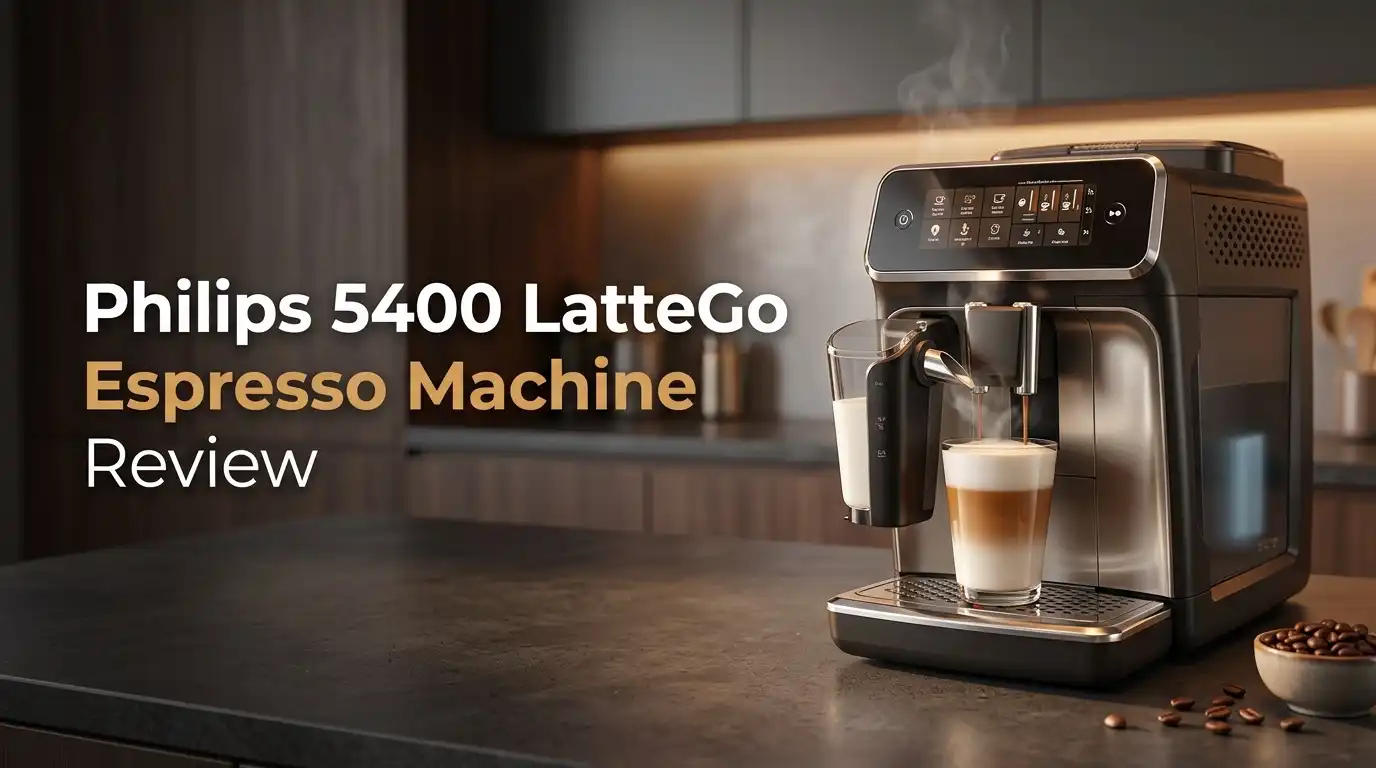
The Philips 5400 LatteGo, model EP5447/94, is a super automatic espresso machine. It grinds, tamps, brews, froths, and rinses itself. You press one button and walk away.
It offers 12 drink options, including espresso, coffee, americano, cappuccino, latte macchiato, flat white, cafe au lait, and ristretto. Six of those sit on the front panel as direct buttons.
Inside you get a 15 bar pump, a single thermoblock boiler, a 1.8 liter water tank, and a 270 gram bean hopper. The machine weighs about 18 pounds and measures roughly 10 inches wide.
Philips positions this as the sweet spot of the EP range. It costs more than the 3200 and the 4300, but it adds a color display, user profiles, and extra recipes. That upgrade path matters, and I will come back to it later.
Unboxing Experience: What You Actually Get
The box is big but sensible. Philips packs the machine between two molded foam blocks, and nothing shifted during shipping on my unit. You lift it out from the top with two hands.
Pulling off the plastic sleeve feels satisfying. The glossy black panel arrives covered in protective film, and peeling that strip is the first small ritual of ownership.
Inside the accessory tray you find a measuring scoop for pre ground coffee, a water hardness test strip, one AquaClean filter, a small tube of lubricant for the brew group, and a storage lid for the LatteGo carafe.
There is no coffee sample included, which feels stingy at this price. Have beans ready before delivery day. The quick start guide is clear, with pictures instead of walls of text, and setup took me under ten minutes.
Design and Build Quality on the Counter
The 5400 looks tidy rather than luxurious. The body is plastic throughout, finished in black with chrome accents on the front panel. It does not wobble, and the panels fit together without creaking.
Footprint is the real win. At about 10 inches wide, it slides into tight kitchen corners where wider Italian machines will not fit. Height clearance is your only concern because you must lift the bean hopper lid.
The front loading water tank deserves praise. You pull it straight out from the front, so overhead cabinets never get in the way. Earlier Philips models loaded from the top and that was a daily annoyance.
The drip tray feels light, and the grounds bin holds about 12 pucks. Neither part feels premium, but both work reliably. This is practical design, not showroom design.
Top 3 Alternatives for Philips 5400 LatteGo

Last update on 2026-11-17 / Affiliate links / Images from Amazon Product Advertising API
Philips 4300 Series Fully Automatic Espresso Machine with LatteGo

Last update on 2026-11-17 / Affiliate links / Images from Amazon Product Advertising API
Philips 5500 Series Fully Automatic Espresso Machine with LatteGo


Last update on 2026-11-19 / Affiliate links / Images from Amazon Product Advertising API
De’Longhi Magnifica Evo Automatic Espresso Machine with Milk Frother
Setup, First Rinse, and First Shot
Setup follows a guided sequence on the display. You dip the test strip in your tap water, enter the hardness number, insert the AquaClean filter, and let the machine prime itself.
That priming cycle pushes water through the system twice and takes a few minutes. Do not skip it. The first espresso tastes flat if you rush ahead.
Philips tells you to brew and discard five cups before judging the taste. That advice is real, not marketing. My first two shots were sour and thin, and cup six tasted completely different.
Grind adjustment comes next. You turn the dial inside the bean hopper only while the grinder is running, otherwise you risk damaging the burrs. Move one step at a time and brew a shot between changes. Patience here pays off for years.
The Ceramic Grinder and 12 Grind Settings
The ceramic flat burr grinder is the quiet hero of this machine. Ceramic burrs stay sharp longer than steel, run cooler, and protect delicate bean aromas during grinding.
You get 12 grind levels, which is unusually generous in this price range. Philips normally gives five steps on cheaper models, so this is a real upgrade and not a spec sheet trick.
Grinding noise measured around the mid seventies in decibels during my testing. That sounds like a loud conversation, not a power tool. It is noticeably calmer than most steel burr rivals.
One warning matters. Avoid oily dark roast beans. They clog the chute and gum up the brew group over time. Medium roasts with a dry surface work best and keep maintenance simple.
LatteGo Milk System Explained
LatteGo is the reason most people choose this machine. The carafe consists of just two plastic parts with no tubes, no valves, and no hidden channels.
Milk gets pulled up through a narrow gap, mixed with air inside a small chamber, and pushed out of a wide spout. Because there are no tubes, old milk has nowhere to hide.
Cleaning takes seconds. You snap the two parts apart, rinse them under the tap, and click them back together. Both pieces are also dishwasher safe, which other carafe systems rarely manage.
The tradeoff is control. You cannot adjust foam density, only the milk volume. The spout also sits off to one side, so you cannot brew two milk drinks at once. Those limits annoy daily cappuccino drinkers more than casual users.
Espresso and Coffee Taste Test
Espresso is where this machine shines. With a fine grind, strength level four, and a quality medium roast, the shots come out thick, chocolatey, and properly hot.
Crema sits deep and holds for a minute. Temperature lands high enough that the shot still feels hot after you add milk, which is a common failure point elsewhere.
The plain coffee setting is a different story. Larger volumes taste thin and watery because the machine simply pushes more water through one small puck of grounds.
My workaround is simple. Set the machine to brew two small servings of about 3.4 ounces each into the same cup. You get two fresh pucks and far more body. This single trick transforms the long coffee quality and costs you nothing but a few extra seconds.
Milk Drinks: Cappuccino, Latte, and Flat White
Press cappuccino and the machine froths first, then brews coffee on top. The whole cycle finishes in under a minute, which is fast for a carafe system.
Taste is good. Temperature is good. Texture is the problem. The foam carries large visible bubbles and looks slightly cratered on the surface.
Tapping the cup firmly on the counter pops most of the big bubbles. It will never give you the glossy microfoam a steam wand produces, so forget about pouring rosettas.
Fill levels also fall short in tall glasses. A standard latte glass ends up about two thirds full unless you increase the milk volume manually and save that setting.
Plant milk results vary. Barista style oat milk works well. Regular oat milk and almond milk produce a thin, quickly collapsing layer.
Display, Buttons, and User Profiles
The front panel uses a color TFT display with touch sensitive buttons around it. It is not a full touchscreen, and that confuses some buyers who expect swiping.
In practice the layout works well. Six icons cover the popular drinks, and the menu holds the rest. Each drink shows adjustable sliders for strength, volume, and milk amount.
You can store settings in four user profiles, which keeps households peaceful. My partner likes a weak long coffee. I like a short intense espresso. Nobody resets anybody else’s settings.
The icons look a little like a fast food menu board, which some people find cheap. I find it fast and obvious. You will never need the manual after week one.
Noise Levels in Everyday Use
Older LatteGo machines were genuinely loud. Frothing on earlier models hit roughly 90 decibels, which sits near power tool territory.
Philips redesigned the frothing chamber for this generation. Measured frothing noise dropped to around 72 decibels, which is closer to a busy street than a workshop.
That is a big improvement, but honesty matters here. It is still louder than tube based carafe systems from De’Longhi and Jura. The sound is a sharp hiss rather than a gentle whir.
Grinding sits around 74 decibels and lasts only a few seconds. The pump adds a modest hum.
If you brew early while others sleep, factor this in. The machine will be heard through a thin wall.
Cleaning, Descaling, and the AquaClean Filter
This section is where the 5400 earns its money. Daily cleaning takes under two minutes, which is remarkable for a super automatic.
The brew group slides out through a side door. Rinse it under warm water once a week, let it dry, add a dab of the included lubricant monthly, and slide it back in.
The machine rinses its own coffee circuit at startup and shutdown automatically. The LatteGo carafe goes in the dishwasher. The drip tray shows a red float when it needs emptying.
AquaClean filters reduce scale buildup. Philips claims up to 5000 cups before descaling with regular filter changes. Treat that number as optimistic if you live in a hard water area, and run a descaling cycle when the machine asks.
What the Philips 5400 LatteGo Does Not Do Well
Honest reviews list the failures. Here are mine after extended use.
Milk foam texture is mediocre. Large bubbles, limited creaminess, and no density control. Latte art is off the table.
Long coffee tastes thin. The default coffee setting dilutes rather than extracts.
No cold brew or iced presets. Newer Philips models added these. The 5400 did not.
One milk drink at a time. The side mounted spout blocks dual cappuccinos, which frustrates couples.
No app or connectivity. Everything happens at the panel.
Plastic housing. It works, but it does not feel like a $700 appliance next to stainless steel rivals.
Sour tasting shots are also a common complaint online. That usually comes from a coarse grind or old beans, not a faulty machine, but new owners should expect a learning curve.
Pros and Cons
Pros
- LatteGo carafe cleans in under twenty seconds with only two dishwasher safe parts and zero tubes
- Ceramic flat burr grinder with 12 adjustment levels, rare at this price
- Excellent espresso quality that is hot, thick, and full bodied
- Front loading 1.8 liter water tank fits under kitchen cabinets
- Four user profiles plus adjustable strength, volume, and temperature
- Removable brew group makes deep cleaning easy and cheap
- Compact 10 inch width suits small counters
- Frothing noise cut sharply versus older LatteGo models
Cons
- Milk foam is bubbly and lacks creamy microfoam texture
- Plain coffee setting tastes watery without the double brew workaround
- No iced coffee, cold brew, or extra shot presets
- Cannot make two milk drinks at the same time
- Plastic build feels basic for the price
- Still louder than tube based rivals during frothing
- No app control or connectivity features
Philips 5400 vs 4300 vs 5500
The 4300 saves you real money. You get the same ceramic grinder and the same LatteGo carafe, but 8 drinks instead of 12, a simpler display, and fewer profiles.
If you only drink espresso, cappuccino, and latte, the 4300 is the smarter buy. The coffee in your cup tastes nearly identical.
The 5500 sits above the 5400. It adds 20 hot and iced recipes, SilentBrew technology, and a sharper touch display. It also costs considerably more.
Choose the 5400 when you want the color display, user profiles, and extra recipes without paying flagship money. Choose the 5500 if iced drinks matter to you. The middle model only makes sense when the price gap stays under about $150.
Price, Value, and Final Verdict
The Philips 5400 LatteGo has drifted downward in price as newer models arrived, which actually improves its case. Discounts appear often around major sale events.
No products found.
My verdict is straightforward. Buy it for the espresso and the cleaning, not for the milk foam. If you want cafe quality microfoam, buy a machine with a steam wand instead.
For busy households that want a hot, strong, reliable cup every morning with almost no cleanup, this machine delivers. The LatteGo system genuinely changed how often I make milk drinks at home, because the cleanup stopped being a chore.
Rated honestly, it earns about 4.2 out of 5. Great engineering, modest materials, and one clear weakness.
Frequently Asked Questions
Is the Philips 5400 LatteGo still worth buying in 2026?
Yes, if you find it discounted. The grinder, espresso quality, and cleaning system remain competitive. At full retail price, the newer 5500 series offers better value because it adds iced drink presets.
Why does my Philips 5400 make sour coffee?
Sour shots almost always mean underextraction. Set a finer grind while the grinder runs, raise the strength to level four or five, and increase the temperature setting. Fresh beans roasted within the last month also make a large difference.
Can the Philips 5400 LatteGo make iced coffee?
No. This model has no dedicated iced or cold brew preset. You can brew a strong short espresso over ice manually, but the machine will not do it automatically.
How often should I descale the machine?
Follow the display prompt. With the AquaClean filter replaced on schedule, descaling happens rarely. In hard water areas, plan on descaling every few months regardless of what the prompt says.
Does the LatteGo carafe work with oat milk?
Barista style oat milk froths well and holds its texture. Standard oat, almond, and soy milks produce thinner foam that collapses quickly.
Can I use pre ground coffee?
Yes. The machine includes a bypass doser and a measuring scoop. Add one scoop, select your drink, and the grinder stays off for that single serving.

Hi, I’m Emma Lee — the coffee-obsessed creator behind Morning Drip Vault. I spend my days testing coffee machines, exploring brewing techniques, and reviewing the latest coffee gear. My mission is simple: helping you find the perfect machine to brew your best cup, every single morning.