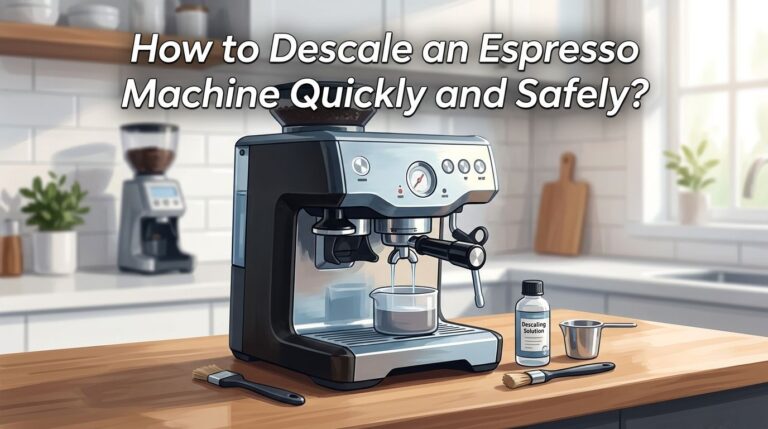
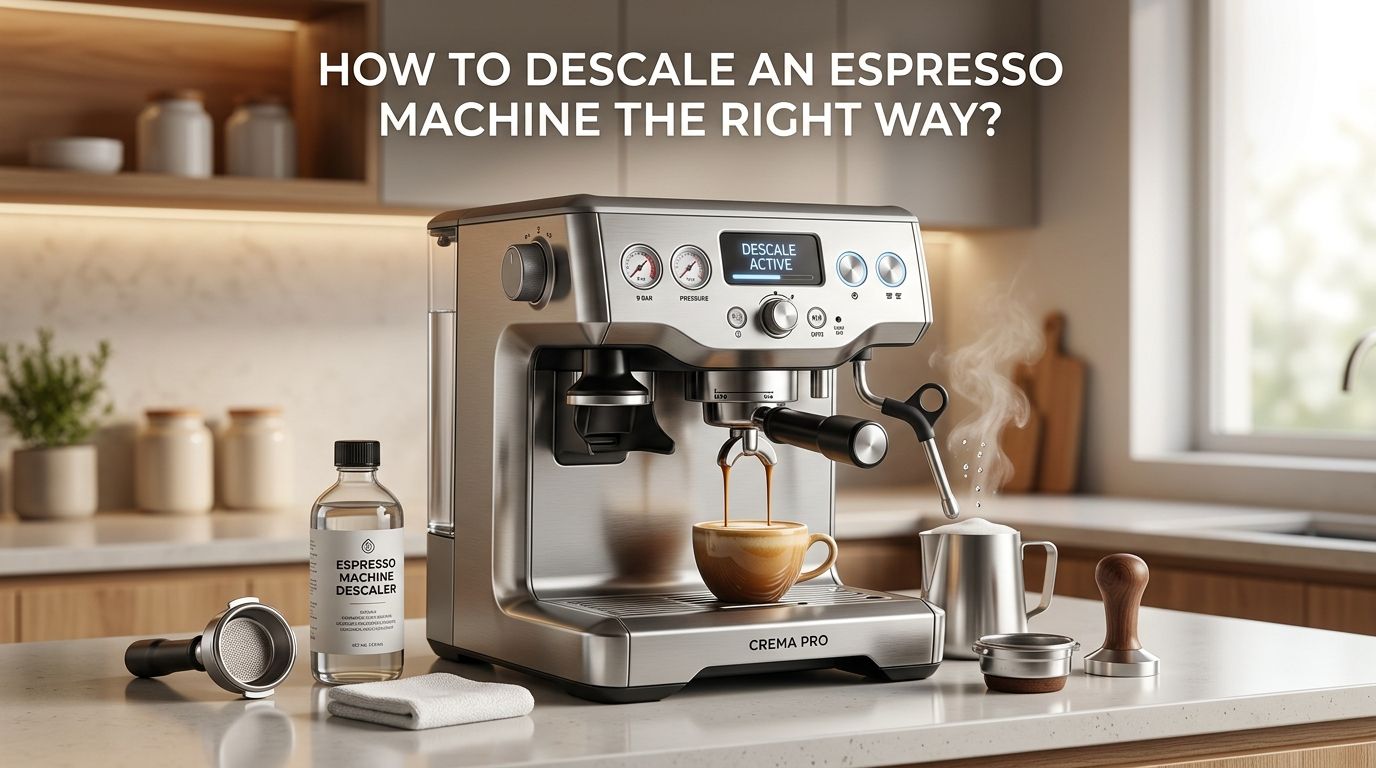
How to Descale an Espresso Machine the Right Way?
Your espresso should taste bold, rich, and smooth every single time. But if your shots have started tasting flat, bitter, or just plain wrong, the problem might not be your beans. It might be limescale hiding inside your machine.
Mineral deposits from water build up inside your espresso machine over time. They coat heating elements, clog water lines, and reduce pressure.
Left unchecked, this buildup can slow your brew time, raise your energy bill, and even break your machine for good. The fix? Descaling. It is one of the simplest maintenance tasks you can do at home, and it takes less than 30 minutes.
In a Nutshell
- Limescale is your espresso machine’s biggest enemy. Hard water leaves behind calcium and magnesium deposits that coat internal parts. These deposits restrict water flow, reduce heating efficiency, and change the flavor of your coffee. Regular descaling removes this buildup and keeps your machine running at full capacity.
- You should descale every one to three months. The exact timing depends on your water hardness and how often you brew. Homes with hard water need to descale monthly. If you use filtered or soft water, every two to three months is usually enough. Watch for warning signs like slower flow, odd tastes, or a descale alert on your machine.
- Commercial descalers work best for most users. They are formulated to dissolve limescale without damaging seals, gaskets, or internal metal parts. Citric acid is a strong, affordable alternative. Vinegar is cheap but can leave a lasting odor and may not dissolve heavy buildup well.
- The descaling process is straightforward. You mix the solution, run it through your machine, let it soak, and then flush with clean water multiple times. Most machines take about 20 to 30 minutes to descale from start to finish.
- Skipping descaling costs you money. Scale buildup forces your machine to work harder, which increases energy use and shortens the lifespan of expensive parts. A $5 descaler every few months is far cheaper than a $200 repair or a full machine replacement.
- Prevention is just as important as treatment. Using filtered water, emptying your water tank daily, and wiping down parts regularly will slow scale buildup and reduce how often you need to descale.
How to Tell If Your Espresso Machine Needs Descaling
Several clear signs point to scale buildup inside your machine. The most common is slower brew time. If your espresso takes noticeably longer to pull a shot, mineral deposits are likely restricting water flow through the internal pipes.
Pay attention to your coffee’s taste. Scale changes the water temperature and flow rate, which leads to under-extracted or bitter shots. If your espresso tastes off and you have not changed your beans or grind size, descaling should be your first step.
Many modern machines have a built-in descale indicator light or an alert on the display. Do not ignore this notification. Some machines will even lock you out of brewing until you complete a descale cycle. Also check your steam wand. Weak or inconsistent steam pressure often signals mineral buildup inside the boiler.
How to Understand What Limescale Does to Your Machine
Limescale is a hard, chalky deposit made of calcium carbonate. It forms when minerals in your water are heated and left behind on metal surfaces. Inside your espresso machine, scale coats the boiler, heating element, water lines, and valves.
This coating acts like insulation on your heating element. Your machine must use more energy to heat water to the correct brewing temperature. Over time, this extra strain can burn out the element entirely.
Scale also narrows the internal pipes. This reduces water pressure and flow rate, which directly affects your extraction quality. In severe cases, scale chunks can break free and clog solenoid valves or the group head. Repairs for these issues are expensive and often avoidable with regular descaling.
How to Choose the Right Descaling Solution
You have three main options for descaling: commercial descalers, citric acid, and white vinegar. Each has trade-offs you should understand before choosing.
Commercial descalers are purpose-built for espresso machines. They contain acids like lactic acid or sulfamic acid at the right concentration. They dissolve scale fast, rinse clean, and are safe for rubber seals and metal parts. The downside is cost, as they run a few dollars per use.
Citric acid is a popular DIY choice. Mix about 10 grams of citric acid per liter of water for an effective solution. It dissolves limescale well, rinses out cleanly, and is very affordable. However, using too much can be aggressive on certain metals over time.
White vinegar is the cheapest option but the least recommended. It is a weak acid that struggles with heavy buildup. It also leaves a strong odor that can take many rinse cycles to remove. Some manufacturers explicitly warn against using vinegar because it can damage gaskets and seals.
Pros of commercial descalers: safe for all parts, effective, easy to dose.
Cons of commercial descalers: higher cost per use.
Pros of citric acid: cheap, effective, low odor.
Cons of citric acid: requires careful measuring, can be harsh if over-concentrated.
Pros of vinegar: extremely cheap, widely available.
Cons of vinegar: weak performance, strong lingering smell, potential damage to seals.
How to Descale an Espresso Machine Step by Step
Start by reading your machine’s manual. Some models have a specific descale mode that controls the process automatically. If yours does, follow those instructions and use the steps below as general guidance.
Step 1: Empty the water tank and remove any water filter. Fill the tank with your descaling solution mixed with fresh water according to the product’s directions. For citric acid, use 10 grams per liter of water.
Step 2: Turn the machine on and let it heat up. Place a large container under the group head and the steam wand. Run about half the solution through the group head by pulling blank shots without a portafilter.
Step 3: Open the steam wand and let some solution flow through it. This cleans the steam circuit and boiler. Then turn the machine off and let the remaining solution sit inside for 15 to 20 minutes. This soak time lets the acid dissolve stubborn deposits.
Step 4: Turn the machine back on and run the rest of the solution through both the group head and steam wand. Discard the used solution.
Step 5: Fill the tank with fresh, clean water and run the entire tank through the machine. Repeat this rinse step at least two more times. This ensures no descaling solution remains inside.
How to Descale a Super Automatic Espresso Machine
Super automatic machines often have a dedicated descaling program built into their menu system. These programs guide you through the process with on-screen prompts. The machine controls water flow and timing automatically.
To begin, remove any water filter from the tank. Fill the tank with your descaling solution and water. Navigate to the cleaning or maintenance menu on the display and select the descaling option. Place a large bowl under the coffee spout and drip tray.
The machine will run the solution through its internal circuits in stages. It may pause to allow the solution to soak. Do not turn off the machine during this process. Once the program completes, it will ask you to fill the tank with fresh water for the rinse cycle. Some machines require two full rinse cycles before they unlock for regular brewing.
Pros of built-in descale programs: foolproof, consistent results, protects internal parts.
Cons of built-in descale programs: the cycle can take 30 to 45 minutes, and you cannot skip steps.
How to Descale a Manual or Semi Automatic Espresso Machine
Manual and semi-automatic machines like the Gaggia Classic or Rancilio Silvia do not have automated descale programs. You control the process yourself, which gives you more flexibility but also more responsibility.
Remove the portafilter and any shower screen baskets. Fill the water tank with your descaling solution. Turn the machine on and let it heat up fully. Run about a third of the solution through the group head into a container.
Next, run some solution through the hot water or steam wand outlet. This cleans the steam boiler and the connected tubing. Now turn the machine off and let it sit for 15 to 20 minutes with the solution inside.
After the soak, turn the machine back on and run the remaining solution through all outlets. Fill the tank with clean water and flush thoroughly. Repeat the clean water flush at least three times. Taste a small amount of the rinse water to make sure no chemical flavor remains before brewing coffee again.
How to Use Citric Acid to Descale Your Espresso Machine Safely
Citric acid is a food-safe organic acid found in citrus fruits. It is one of the most effective and affordable descaling agents available. You can buy it as a powder from grocery stores or online.
The correct ratio is roughly 1 tablespoon (about 10 grams) per liter of water. Dissolve the powder completely in warm water before adding it to your tank. Using too much citric acid can be aggressive on aluminum boilers, so do not double the concentration thinking it will work faster.
Follow the standard descaling steps. Run the solution through the group head and steam wand, let it soak for 15 to 20 minutes, then flush with clean water at least three times. Citric acid rinses out more easily than vinegar and leaves almost no aftertaste when flushed properly.
One important note: if your machine has not been descaled in over a year, a strong citric acid solution could loosen large chunks of scale. These chunks may clog valves. In this case, consider using a weaker solution first and running multiple shorter cycles instead of one aggressive treatment.
How to Prevent Scale Buildup Between Descaling Sessions
Prevention reduces how often you need to descale and extends your machine’s life. The single most effective step is using filtered water. A simple carbon filter pitcher or an inline water filter removes much of the calcium and magnesium that cause scale.
Do not use distilled or reverse osmosis water, though. Espresso machines need some mineral content for proper boiler function and to bring out flavor in your coffee. Water with a total dissolved solids (TDS) level between 50 and 150 ppm works best for espresso.
Empty your water tank at the end of each day. Standing water encourages mineral deposits even without heating. Wipe down the drip tray, water tank, and exterior regularly. If your machine has a removable brew group, rinse it under warm water weekly.
These small habits make a big difference over months and years. They keep your internal parts cleaner and your descaling sessions quicker and easier.
How to Know How Often You Should Descale Your Espresso Machine
The right frequency depends on two things: your water hardness and your daily usage. Water hardness varies by location and has a direct impact on scale formation speed.
If you live in a hard water area and brew multiple drinks daily, descale every four to six weeks. With filtered or moderately soft water and regular home use, every two to three months is usually enough. Light users with soft water may only need to descale every four to six months.
You can test your water hardness at home with inexpensive test strips from a hardware store. Most strips give a reading in parts per million (ppm) or grains per gallon. Water above 120 ppm is considered hard and will build scale quickly.
Your machine’s descale indicator, if it has one, uses a programmed timer or a water volume counter. These alerts are helpful reminders, but they do not measure actual scale levels. Use them as a starting point and adjust based on your water test results.
How to Flush Your Machine Properly After Descaling
Flushing is the most important final step, and many people rush through it. Any descaling solution left inside your machine will end up in your next cup of coffee. This can taste terrible and may cause stomach discomfort.
After the descale cycle, fill your tank with fresh, cold water. Run the full tank through the group head and steam wand. Empty the drip tray and the collection container. Repeat this process at least two more times for a total of three full rinse cycles.
After flushing, pull a test shot of espresso without coffee grounds. Smell and taste the water that comes out. If you detect any chemical or sour flavor, run another rinse cycle. Only start brewing coffee once the water tastes completely clean and neutral.
For vinegar users, expect to flush four to five full tanks before the smell disappears. This is one of the main reasons coffee professionals recommend commercial descalers or citric acid instead.
How to Avoid Common Descaling Mistakes That Damage Your Machine
The most common mistake is waiting too long between descaling sessions. Heavy scale buildup is harder to remove and poses a risk of clogging valves when large chunks break loose during treatment.
Another frequent error is using the wrong concentration of descaling solution. Too weak and it will not dissolve the scale. Too strong and it can corrode metal parts or damage rubber seals and gaskets. Always follow the directions on the product or use tested ratios for DIY solutions.
Never run a descaling solution through your machine and then leave it sitting for hours or overnight. Extended contact with acid can pit and corrode boiler surfaces, especially aluminum ones. Stick to the recommended 15 to 20 minute soak time.
Finally, do not forget to remove your water filter before descaling. The descaling solution will saturate the filter and ruin it. You will need to replace the filter after descaling anyway, so remove it first and install a fresh one after you finish the rinse cycles.
How to Descale Your Espresso Machine If You Have Extremely Hard Water
If your tap water is above 200 ppm, you face faster and heavier scale buildup than average. Standard descaling every three months will not be enough. You should descale every three to four weeks or invest in a water softening system.
Consider using a dedicated water treatment solution for your espresso machine. Inline water softeners attach directly to your water line and reduce calcium levels before water reaches the tank. Water filter pitchers designed for coffee use also help.
For each descaling session, use the full recommended concentration of your chosen descaler. After the main cycle and soak, run a second descaling cycle with a fresh batch of solution before flushing with clean water. This double treatment ensures all deposits are fully dissolved.
Testing your water regularly with hardness strips helps you track seasonal changes. Municipal water hardness can shift throughout the year, especially in spring and summer. Adjusting your descaling schedule based on current water conditions protects your machine year-round.
Frequently Asked Questions
How often should I descale my espresso machine?
Most home users should descale every one to three months. The exact timing depends on water hardness and usage frequency. If you use hard water and brew daily, descale monthly. With soft or filtered water, every two to three months works well. Always check for signs like slow flow or off-tasting coffee.
Can I use vinegar to descale my espresso machine?
You can, but it is not the best option. Vinegar is a weak acid that struggles with heavy scale. It also leaves a strong smell that requires many rinse cycles to remove. Some manufacturers warn that vinegar can damage internal seals and gaskets. Citric acid or a commercial descaler will give better results with fewer drawbacks.
Is it safe to use citric acid in my espresso machine?
Yes, citric acid is food safe and effective for descaling. Use about 10 grams per liter of water. Do not use a stronger concentration than recommended, as it could be harsh on aluminum parts. Rinse your machine thoroughly with at least three full tanks of clean water after the descale cycle.
What happens if I never descale my espresso machine?
Scale will coat your boiler and heating element, reducing efficiency and increasing energy use. Water flow will slow down, and your coffee will taste flat or bitter. Over time, the buildup can clog valves and damage components permanently. Neglecting descaling often leads to expensive repairs or the need to replace the machine entirely.
Can I use filtered water to avoid descaling altogether?
Filtered water slows scale buildup significantly, but it does not eliminate it completely. Most filters reduce but do not remove all minerals from water. You will still need to descale, just less often. With good filtration, you can often extend your descaling interval to every three to four months instead of monthly.
How long does the descaling process take?
A full descaling session takes about 20 to 30 minutes for most machines. This includes mixing the solution, running it through, allowing a 15 to 20 minute soak, and completing three rinse cycles. Super automatic machines with built-in descale programs may take 30 to 45 minutes since the process is controlled by the machine.

Hi, I’m Emma Lee — the coffee-obsessed creator behind Morning Drip Vault. I spend my days testing coffee machines, exploring brewing techniques, and reviewing the latest coffee gear. My mission is simple: helping you find the perfect machine to brew your best cup, every single morning.