Ratio Six Series 2 Coffee Maker Review 2026: Worth Buying?
Your morning coffee sets the tone for everything that follows. A weak, bitter pot can sour the whole day. A clean, sweet cup can make a rough Monday feel manageable. That gap is exactly why people spend real money on a brewer like the Ratio Six Series 2.
This machine promises café quality drip coffee with one button. No apps. No settings menus. No fiddly timers. You pour water, add grounds, press a button, and walk away.
Ratio built it in Portland and priced it near the top of the home brewer market, so the obvious question follows: does the coffee justify the cost?
In A Nutshell:
- The coffee tastes excellent. Independent taste panels rated the Series 2 near the top of all drip brewers, pulling out chocolate, caramel, nut, and fruit notes with low acidity and a smooth finish.
- It is SCA Certified, meaning it meets Specialty Coffee Association standards for brew temperature and extraction. Measured average brew temperature sat around 192.5F, which is slightly under the ideal 195F to 205F window but still produces balanced results.
- Brew speed is consistent. Six cups finish in about 6 minutes flat, with almost zero variance between batches. Many cheaper machines take 8 minutes or longer.
- There is no auto brew timer. You cannot schedule coffee for 6am. You must press the button yourself every single morning. This is the single biggest complaint from owners.
- The Series 2 upgrade fixed real problems. Ratio redesigned the thermal carafe with no moving parts, a better pour spout, a wider opening for cleaning, and corrected water tank fill lines.
- The price is steep at roughly $360 to $379. You pay for build quality, a 5 year warranty, and flavor, not for features or capacity. The 40 ounce limit is small for large households.
Ratio Six Series 2 Coffee Machine Review

Last update on 2026-10-21 / Affiliate links / Images from Amazon Product Advertising API
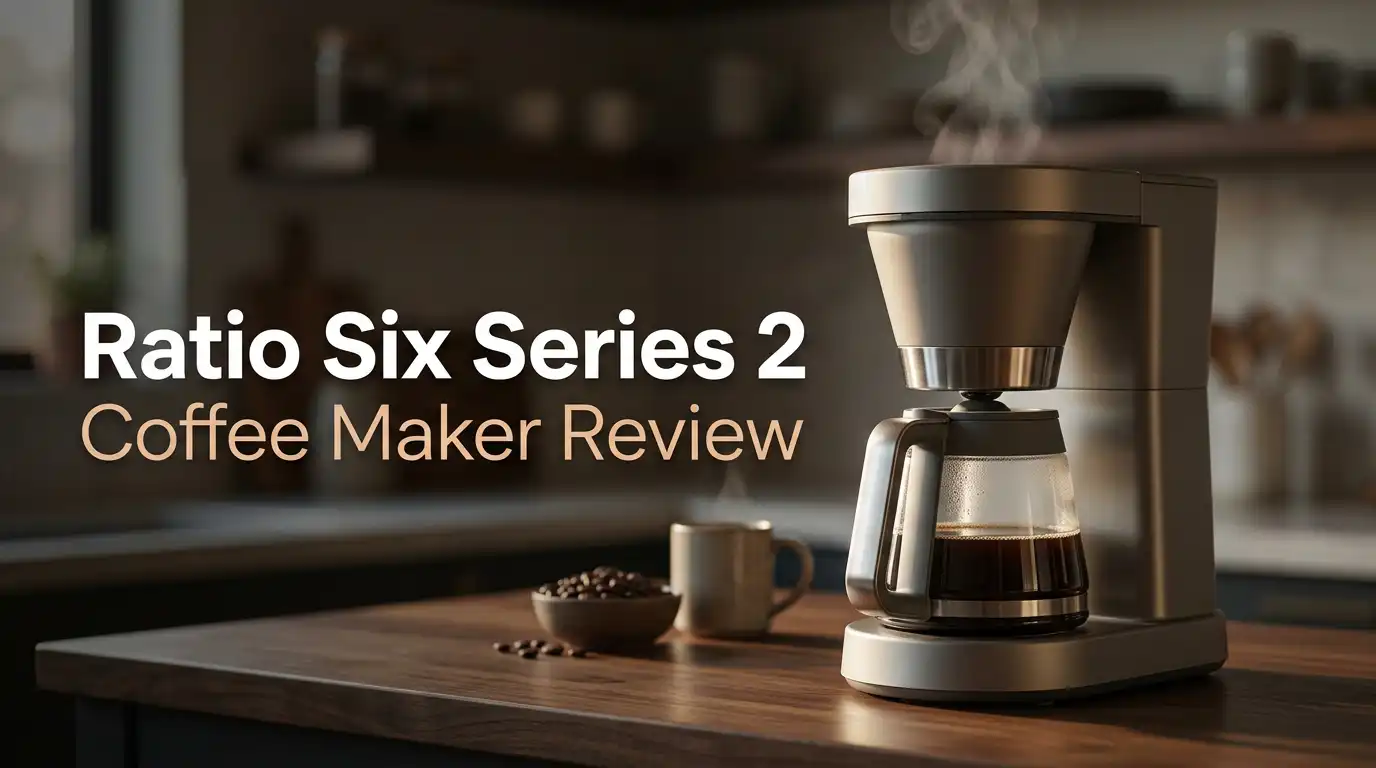
The Ratio Six Series 2 is an automatic drip coffee maker that copies the pour over method. It holds 1.25 liters, or 40 ounces, and brews 2 to 8 cups per batch. A 1400 watt die cast aluminum heating element warms the water, then a stainless steel shower head spreads it evenly over the grounds.
The machine runs three phases automatically: Bloom, Brew, and Ready. The bloom stage wets the grounds first so trapped carbon dioxide escapes. That step matters, because degassed coffee extracts far more evenly.
Ratio uses precision stamped stainless steel, handblown borosilicate glass water lines, and BPA free copolymer for the tank. The warranty runs 5 years. This is a machine built around one idea: flavor first, features never. It comes in matte black, white, and a few seasonal colors.
Unboxing The Ratio Six Series 2
The box arrives heavier than you expect. The unit weighs roughly 17 pounds shipped, so lift with both hands. Ratio packs everything in molded protective inserts with minimal plastic, and the presentation feels closer to a premium appliance than a kitchen gadget.
Inside you find the main body, the thermal carafe, the filter basket, the silicone heat shield, a small quick start guide, and a sample of paper filters. That is it. There is no scoop, no cleaning solution, and no reusable metal filter. The metal brew basket sells separately, which stings a little at this price.
The first impression is the finish. The stamped steel feels cool and dense, and the borosilicate glass water tube looks like lab equipment. Setup takes under five minutes. Ratio recommends running one water only cycle before your first real brew to rinse the system.
Design And Build Quality
The Series 2 stands about 14.2 inches tall, 7 inches wide, and 13.1 inches deep. Measure your cabinet clearance first, because the lid needs headroom to open. The footprint stays slimmer than a Moccamaster, which helps on crowded counters.
What stands out is material honesty. The steel is real steel. The glass water line is real glass. Nothing feels like painted plastic pretending to be metal. The visible borosilicate tube is the signature detail, and it lets you watch the water climb as the machine heats.
One practical note on color. The white model hides fingerprints well, but coffee splashes leave obvious marks that you should wipe fast. Matte black forgives spills better but shows dust. The silicone heat shield wraps the shower head during brewing, trapping heat and lifting extraction. You can pull it off if you prefer an open brew.
How The Brewing Process Works
The routine is simple. Pour water into the tank using the marked fill lines, drop a flat bottom paper filter into the basket, add your ground coffee, stack the basket and heat shield over the carafe, close the lid, and press the single button.
Ratio recommends the Specialty Coffee Association golden ratio of roughly 55 grams of coffee per liter of water. For a full 8 cup batch that lands near 60 grams. A medium grind, similar to table salt, works best in the flat bottom basket.
The machine then handles the rest. It blooms the bed for about 30 seconds, then meters water through in pulses rather than one continuous flood. That pulsing is the whole point of the machine. It mimics how a barista pours in stages. The light switches to Ready when the cycle ends, though a little water still drips through for another minute.
Top 3 Alternative For Ratio Six Series 2


Last update on 2026-10-21 / Affiliate links / Images from Amazon Product Advertising API
Technivorm Moccamaster KBT

Last update on 2026-10-21 / Affiliate links / Images from Amazon Product Advertising API
Breville Precision Brewer Thermal

Last update on 2026-10-22 / Affiliate links / Images from Amazon Product Advertising API
OXO Brew 9 Cup Coffee Maker
Coffee Taste And Flavor Performance
This is where the Ratio earns its price. In blind taste panel testing, the Series 2 scored 8.9 out of 10 for taste, placing it among the very best drip machines available and nearly level with the Technivorm Moccamaster.
Testers described a well balanced cup with correct mouthfeel. The machine pulled out chocolate, caramel, fruit, and nut notes that cheaper brewers flatten or miss entirely. Those flavors lingered rather than disappearing after one sip.
The most interesting finding involved acidity. One taster noted the Ratio brew tasted significantly less acidic than a manual pour over made with the same beans. That comes down to even saturation. After brewing, the grounds sit flat with no craters or dry spots, which proves the shower head wet every particle.
If you drink single origin light roasts, you will notice the difference immediately. Dark roast drinkers will notice it too, just less dramatically.
Brew Temperature And SCA Certification
The Specialty Coffee Association sets 195F to 205F as the correct brewing window. The Ratio Six holds SCA Certified Home Brewer status, so it passed that body’s testing protocol.
Independent lab measurement adds nuance. The average measured brew temperature came in at 192.5F, a touch below ideal. The water took about 3 minutes to climb into range, roughly midway through the cycle, then kept rising and peaked at 206.7F near the end.
So about half the brew happens in the perfect zone. The rising temperature curve actually mirrors a manual pour over, where the first pour cools slightly and later pours run hotter. Consistency across five batches showed a standard deviation of 3.46F, which is good but not perfect.
Coffee in the carafe measures around 180F to 190F at the end of the cycle. That is hot enough for a straight black cup and ideal if you add cold milk.
Brew Time And Daily Speed
Speed matters more on this machine than on most, because you cannot schedule it the night before. You press the button while standing in the kitchen, so every minute counts.
The Series 2 delivers. Six cups finish in about 6 minutes flat, measured from button press to a mostly drained basket. Across five timed brews, variance was almost nonexistent. A full 8 cup batch takes a little longer.
For context, the Technivorm Moccamaster finishes the same volume in roughly 4.3 minutes, which is genuinely faster. Budget machines often crawl past 7 or 8 minutes. The Ratio lands comfortably in the upper tier.
One quirk to know: the Ready light triggers while water still sits in the basket. Give it another 60 seconds before lifting the basket off, or you will drip coffee across your counter.
The Redesigned Thermal Carafe
The carafe is the headline change in Series 2. The original version used a press and pour lever, which owners disliked and which eventually leaked on some units. Ratio removed it completely.
The new carafe has no moving parts at all. The spout now protrudes further for a cleaner pour, and the opening is wide enough to fit your hand inside for proper washing. It holds temperature for hours with no hot plate, so your coffee never cooks or turns bitter.
Measured carafe temperature held around 177F, which is a pleasant drinking temperature straight into a mug. The good news for existing owners: the Series 2 carafe fits Series 1 filter baskets, so you can upgrade without replacing the machine.
It is still not flawless. Pour too fast and the spout splashes. An internal ridge where the lid twists in makes that final cup awkward to extract.
Ratio Six Series 2 vs Series 1
If you already own the original, here is what actually changed. Ratio made two documented updates, and both came from customer complaints rather than marketing ambition.
First, the thermal carafe redesign described above. Second, the water tank fill lines now measure water going in rather than coffee coming out. The old lines confused buyers constantly, since the grounds absorb roughly 10 percent of the water. Pouring to the 8 cup line on a Series 1 produced less than expected.
Reviewers also note a reshaped heat guard that makes sliding the carafe and basket in and out easier. The brewing engine, heating element, shower head, and 40 ounce capacity stayed identical.
So the coffee itself tastes the same. If you own a Series 1 and like it, buy the replacement carafe for far less than a whole new machine rather than upgrading the entire unit.
Ease Of Use In Daily Life
On paper this is a one button brewer. In practice there are a few extra steps compared to a standard drip machine, and honesty matters here.
The stacking design means you assemble three pieces each morning: carafe, filter basket, heat shield. Then you lift the whole stack back out after brewing. It is not complicated, but it is more handling than dropping a basket into a slot.
The good parts outweigh that. The tank has a funnel opening, so pouring water never splashes. Fill markings appear on both sides of the tank, which helps whichever side you stand on. Grounds live in a separate compartment away from the water, so nothing contaminates.
Lab testing scored ease of use at 6.9 out of 10, the weakest category for this machine. People who want to set it and forget it will feel that score.
Cleaning And Descaling
Daily cleanup is easy. Lift out the paper filter, toss the grounds, rinse the basket, and wipe the exterior with a damp cloth. The mostly metal body cleans in seconds.
The wide carafe opening makes handwashing simple, which matters because no parts of this machine are dishwasher safe. Plan on hand washing the carafe, basket, and lid every day or two.
Descaling needs to happen roughly monthly, more often with hard water. The full cycle takes about 27 minutes, but you must change the water four separate times during the process. You cannot start it and leave the room. That is mildly annoying compared to machines with a one touch clean cycle.
There is also no cleaning indicator light. You track descaling yourself with a calendar reminder or a note on the fridge.
What The Ratio Six Series 2 Does Not Do Well
Every honest review needs this section, so here is the unvarnished list of weaknesses.
No auto brew timer. This is the dealbreaker for many buyers. You cannot wake up to finished coffee. For a $360 machine in 2026, plenty of people find that indefensible.
No brew strength or temperature settings. You get one program. If you want adjustable bloom time, variable flow rate, or a small batch mode, this machine refuses.
Capacity caps at 8 cups. Families and offices will brew twice. The Breville and OXO both hold more.
Average brew temperature runs slightly cool at 192.5F, just under the SCA ideal range, with half the cycle spent below target.
The metal filter basket costs extra, which feels stingy at this price point. The carafe still splashes if you pour quickly, and the internal lid ridge traps the last ounce of coffee. There is no cleaning indicator and no dishwasher safe parts.
Pros And Cons
Pros
- Outstanding coffee flavor that scored near the top of blind taste panel testing, with clear chocolate, caramel, and fruit notes
- SCA Certified Home Brewer status confirms it meets professional extraction standards
- Consistent 6 minute brew time with virtually no variance between batches
- Excellent build materials including stamped stainless steel, borosilicate glass, and die cast aluminum
- Redesigned thermal carafe with no moving parts holds heat for hours and cleans easily
- Automatic bloom phase improves extraction without any user input
- Wide shower head saturates grounds evenly with no dry spots
- 5 year warranty backs the purchase
- Slim footprint fits tight counters better than most premium rivals
- Genuinely attractive on a kitchen counter
Cons
- No auto brew timer or scheduling of any kind
- No adjustable brew strength, temperature, or flow settings
- 40 ounce capacity is small for larger households
- Average brew temperature measured slightly below the ideal window
- Metal filter basket sold separately
- No parts are dishwasher safe
- Descaling needs four water changes and active supervision
- Carafe spout splashes when poured fast
- Premium price with fewer features than cheaper competitors
Price And Value In 2026
The Series 2 lists around $360 to $379 depending on color and retailer. Sales occasionally pull it closer to $320. That puts it directly against the Technivorm Moccamaster KBT at about $339 and the Breville Precision Brewer at roughly $330.
Here is the honest value math. You are paying for flavor and materials, not features. Against the Breville, you lose auto brew, adjustable temperature, flow control, and capacity. Against the Moccamaster, you lose speed and drip stop control.
What you gain is a genuinely excellent cup, a 5 year warranty, a quieter machine, and better looks than either rival. For some buyers that trade is obviously worth it. For others it clearly is not.
If a $100 machine currently makes you unhappy, this fixes that. If your current machine already tastes fine, the upgrade will feel smaller than the price suggests.
Who Should Buy The Ratio Six Series 2
Buy this machine if you enjoy the ritual of making coffee. If standing in the kitchen, weighing beans, and pressing the button feels like a pleasant start to your day rather than a chore, the Ratio rewards you with a genuinely superior cup.
It suits specialty coffee drinkers who buy single origin beans and want to taste what they paid for. It suits households of one to three people. It suits anyone who values a beautiful, durable appliance over a feature list.
Skip it if you need coffee waiting when you wake up. Skip it if you brew for four or more people daily. Skip it if you want to tinker with temperature and flow settings.
Those buyers should look at the Breville Precision Brewer instead, which trades a little flavor for a great deal of control and convenience.
Frequently Asked Questions
Is the Ratio Six Series 2 SCA certified?
Yes. The Ratio Six holds Specialty Coffee Association Certified Home Brewer status. That certification tests brew temperature, contact time, and extraction yield, including the golden cup ratio of 55 grams of coffee per liter of water within a 10 percent margin.
Does the Ratio Six Series 2 have a timer?
No. The machine has no auto brew or scheduling function. You press the single button manually each time you want coffee. This remains the most common owner complaint, so consider it carefully before buying.
How much coffee does it make?
The tank holds 44 ounces at the full mark and yields about 40 ounces, or 1.25 liters, of brewed coffee. Ratio counts that as 8 cups. The minimum recommended batch is 2 cups.
What grind size works best?
Use a medium grind similar to table salt. The flat bottom basket drains too fast with coarse grinds and clogs with fine espresso grinds. Start at medium and adjust slightly finer if your coffee tastes thin.
Can I use the Series 2 carafe on an older Ratio Six?
Yes. The redesigned Series 2 carafe mates with the original Series 1 filter basket. Ratio sells the carafe separately, so existing owners can get the main upgrade without replacing the whole machine.
How often should I descale it?
Plan on descaling roughly once a month, or more frequently with hard water. The cycle runs about 27 minutes and requires four water changes. There is no reminder light, so set your own calendar alert.
Is it better than the Moccamaster?
Taste panels rate the Moccamaster slightly higher for flavor and clearly faster for brew time. The Ratio wins on carafe design, looks, and quiet operation. Both are excellent, and the choice comes down to whether you value speed or styling more.
Does it come with a reusable filter?
No. The machine ships with paper filters only. The metal brew basket is an optional accessory sold separately, which is a fair criticism at this price.

Hi, I’m Emma Lee — the coffee-obsessed creator behind Morning Drip Vault. I spend my days testing coffee machines, exploring brewing techniques, and reviewing the latest coffee gear. My mission is simple: helping you find the perfect machine to brew your best cup, every single morning.