
Bambino Espresso Machine Review 2026: Still Worth It?
The Breville Bambino looks like a toy next to a café machine. Then it pulls a shot that makes you stop mid sip. This tiny stainless steel box has quietly become the most recommended starter espresso machine in home coffee circles, and the recommendation has held up for years now.
But 2026 brings cheaper competitors, flashier screens, and a lot of marketing noise about 20 bar pumps. So the real question is simple.
Does a machine this small and this basic still earn a spot on your counter? I spent weeks pulling shots, steaming milk, wiping up water, and getting mildly annoyed at the tamper. Here is everything I found, including the parts Breville would rather you skip.
In A Nutshell:
- It heats in about three seconds. The ThermoJet system replaces a traditional boiler. You press a button, it blinks, and it is ready. No fifteen minute warm up ritual. This single feature changes how often you actually make coffee at home.
- The espresso fundamentals are correct. You get true PID temperature control at roughly 200F, a 9 bar over pressure valve, and soft preinfusion controlled by the mainboard. Most machines under $300 skip at least two of these.
- It is genuinely tiny. The Bambino measures about 6.3 inches wide, 12 inches tall, and 13.8 inches deep. It fits beside a toaster. The Bambino Plus is wider at 7.7 inches.
- Milk steaming is strong but manual. The single hole steam tip builds good microfoam in roughly 50 seconds. The Bambino Plus adds automatic frothing, three texture levels, and three temperature settings.
- The weak spots are real. The stock tamper is undersized, the 54mm portafilter splits shots unevenly, the drip tray is small, and the brew temperature cannot be adjusted. Light roast fans will feel limited.
- You still need a grinder. The included dual wall baskets work with supermarket grounds, but the machine only shows its true quality with fresh beans and the single wall baskets.
Breville Bambino Espresso Machine


Last update on 2026-10-22 / Affiliate links / Images from Amazon Product Advertising API
The Bambino, model BES450BSS, is Breville’s entry point into real espresso. It carries a 1560W ThermoJet heater, a 47 fluid ounce water tank, a 54mm portafilter, and a ball jointed steam wand. Breville sells it around $299 at list price, and Amazon has run it closer to $249.
What makes it interesting is what Breville chose to keep. The expensive internal parts stayed. The decorative parts went away. There is no pressure gauge, no built in grinder, no screen, and no hot water spout separate from the wand. You get two shot buttons and two small side buttons for steam and hot water.
That restraint is the whole point. The money sits inside the machine instead of on the front panel. For a first espresso machine, that trade works beautifully.
The Unboxing Experience
The box is surprisingly small and surprisingly heavy for its size. Breville packs everything in molded cardboard rather than foam, so the whole thing unpacks in under two minutes with almost no mess.
Inside you find the machine, the 54mm portafilter, a single wall single basket, a single wall double basket, a dual wall double basket, a 480ml stainless steel milk jug, a plastic tamper, a cleaning tool pin, and the water filter with its holder.
The first thing you notice is the finish. The brushed stainless steel feels cool and solid, not thin. The second thing you notice is the tamper. It is small, light, and plastic. It does not match the basket diameter well, which means tamping takes more care than it should.
Setup takes about ten minutes. You soak the water filter, slot it into the tank, run a flush cycle, and start pulling shots.
Design And Build Quality
At 6.3 inches wide, the Bambino fits where no other espresso machine fits. I put it between a kettle and a knife block with room to spare. The body is wrapped in brushed stainless steel, and the top plate stays cool enough to rest a cup on.
The buttons are backlit and respond with a soft click. They dim when the water tank runs low, which is a quiet and clever warning system. Breville clearly thought about small details here.
Weight is the one design compromise. The machine is light, around 11 pounds, and it uses a vibration pump. During a shot it shakes slightly, and your cup can slowly walk across the drip tray. A thin rubber mat on the tray solves this in seconds.
Cup clearance measures about 3.15 inches on the Bambino. Tall travel mugs will not fit under the spouts.
ThermoJet Heating And Speed
This is the feature that sells the machine. The ThermoJet is a thermocoil style heater with very little mass, so it reaches brew temperature in roughly three seconds. Steam is ready about four seconds after that.
Compare that to a traditional boiler machine at fifteen to twenty five minutes. The difference is not just convenience. It changes behavior. You make espresso on a Tuesday morning when you are already late, because there is no waiting involved.
There is one honest drawback. A three second heat up means the portafilter and group head are still cold. Cold metal pulls heat out of your shot. The fix is a flush. Lock in the empty portafilter, run a short shot, dump the water, then load your coffee. That one habit noticeably improves the first cup of the day.
PID control keeps brew temperature steady at about 200F, shot after shot. You cannot change that number, which matters later.
Top 3 Alternative For Breville Bambino

Last update on 2026-10-22 / Affiliate links / Images from Amazon Product Advertising API
Breville Bambino Plus Espresso Machine

Last update on 2026-10-22 / Affiliate links / Images from Amazon Product Advertising API
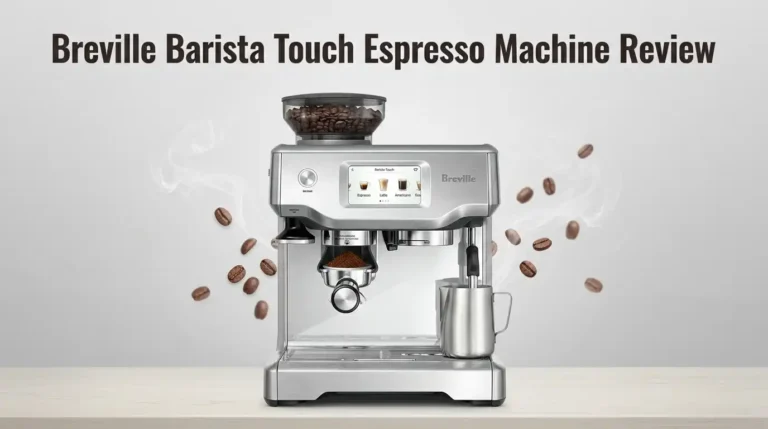
Breville Barista Express Espresso Machine

Last update on 2026-10-22 / Affiliate links / Images from Amazon Product Advertising API
Gaggia Classic Evo Pro Espresso Machine
Espresso Quality In The Cup
The shots are good. Not “good for the price” good. Actually good.
With fresh medium dark beans, a decent grinder, and the single wall double basket, the Bambino produces thick crema, a syrupy body, and clean sweetness. I pulled 18 grams into 36 grams in roughly 28 seconds repeatedly without surprises.
Three things drive that result. The 9 bar over pressure valve caps pressure where espresso actually tastes best. The soft preinfusion wets the puck gently before full pressure arrives, which reduces channeling. The PID holds temperature instead of letting it swing.
This is where cheap machines fall apart. Brands advertising 15 or 20 bar pressure are describing pressure at zero flow, which is a blocked machine, not better coffee. The Bambino ignores that marketing game entirely.
With pre ground supermarket coffee in the dual wall basket, shots are drinkable and foamy but flat. The machine is better than that coffee.
Milk Frothing And Steam Wand Performance
The Bambino uses a ball jointed steam wand with a single hole tip, and it is manual only. You control the position, the depth, and the timing.
Steam power is strong for the class. Steaming 170ml of milk to 140F took me around 52 seconds. The microfoam came out glossy and paint like, good enough for basic latte art once technique improved.
Manual steaming has a learning curve. The first week produced bubbly foam and loud screeching. That screech usually means too much air, and lowering the jug slightly fixes it. By day five the results were consistent.
The single hole tip is slower than the four hole tip on the Plus, which finishes the same jug in about 40 seconds. For one or two drinks a morning, twelve seconds is nothing. For a household making six drinks, it adds up.
Breville Bambino Plus: The Bigger Sibling
Last update on 2026-10-22 / Affiliate links / Images from Amazon Product Advertising API
The Bambino Plus, model BES500BSS, sits at roughly $499 and adds four real upgrades. It brings automatic milk frothing with a temperature sensor, a four hole steam tip, a 64 fluid ounce water tank, and a 3 way solenoid valve for drier pucks.
The auto frothing works well. You choose one of three textures and one of three temperatures, press steam, and walk away. The machine stops on its own at the target temperature. For anyone who drinks lattes daily and does not want to learn steaming, this alone justifies the price gap.
The Plus has two annoyances though. It loses the dedicated hot water button, so Americanos require a two button press and hold combination. And the solenoid dumps water into the same tiny drip tray, so you empty it constantly.
Choose the Plus for milk drinks. Choose the standard Bambino for black coffee.
What The Bambino Does Not Do Well
Honest reviews list the failures, so here they are.
The stock tamper is poor. It is plastic, undersized, and hard to level. A $20 aftermarket 53.3mm tamper fixes this and is almost mandatory.
The stubby dual spout portafilter splits shots unevenly. Pour into two cups and the volumes differ. Upgrading to a Normcore or bottomless portafilter helps.
Brew temperature is locked. At 200F, light roasts taste sour and thin no matter what you do. This machine is built for medium dark and dark roasts.
The drip tray is small. The standard Bambino handles it fine, but the Plus fills it fast.
Reliability reports are mixed. Amazon reviews include failures inside the first year, usually pump or heater related. Breville honors its warranty, but that is a hassle you should know about.
No pressure gauge and no shot timer. You are judging by eye and ear.
Pros And Cons
Pros
- Heats to brew temperature in about three seconds, which removes all waiting
- True PID control, 9 bar over pressure valve, and soft preinfusion at a low price
- Compact 6.3 inch width fits almost any kitchen counter
- Strong steam power that produces real microfoam, not just bubbles
- Simple two button operation that new users learn in one morning
- Includes both single wall and dual wall baskets for beans or pre ground coffee
- Easy to clean with few parts and no complicated routine
- Quiet during extraction at roughly 50 to 55 decibels
Cons
- Plastic tamper is undersized and feels cheap
- Stock portafilter splits shots unevenly between the two spouts
- Fixed 200F brew temperature limits light roast performance
- Small drip tray needs frequent emptying
- Light body causes cup walk from pump vibration
- No pressure gauge, shot timer, or built in grinder
- Short cup clearance blocks tall mugs
- Some owners report hardware failures within the first year
Cleaning And Daily Maintenance
Maintenance is refreshingly light. After each shot you knock out the puck, wipe the basket, and run a two second flush through the group head. After steaming you purge the wand and wipe it immediately, because dried milk is the enemy.
The water tank lifts out from the rear, and the included filter reduces scale buildup. Breville recommends replacing it every three months or 40 tank refills.
The standard Bambino does not need backflushing because it has no 3 way solenoid valve, which is one fewer chore than the Plus. It does need descaling, and the machine signals when it is time.
Total daily cleaning time is under two minutes. That matters more than it sounds. Machines that feel like work get used less, and this one never feels like work.
Grinder Pairing And Bean Choice
The Bambino will only ever be as good as what you put in it. Budget for a grinder. A Baratza Encore ESP, a DF54, or a 1Zpresso hand grinder transforms the results.
Pair it with medium dark to dark roasts. Those beans extract well at 200F and deliver the thick, rich, chocolatey espresso most people picture. Blends work slightly easier than single origins.
If your shots taste sour, that is under extraction. Grind finer, or switch to a darker roast. Sour espresso on this machine is almost never the machine’s fault.
Moving from pods to whole beans also saves serious money. Pod coffee works out near $100 per kilogram. Quality whole beans cost a fraction of that, which means the Bambino can pay for itself within a year for a two cup a day household.
Who Should Buy The Bambino
Buy the Bambino if you have limited counter space, if you want espresso quickly without a warm up wait, and if you are willing to learn manual milk steaming.
It suits first time espresso owners who want real quality rather than a pod machine. It suits black coffee drinkers especially well, thanks to the dedicated hot water button for Americanos and long blacks.
Skip it if you want automation. Skip it if you chase light roast single origins. Skip it if you want a grinder included, because the Barista Express handles that job in one unit.
Also skip it if you hate learning. The Bambino rewards technique. It does not hide your mistakes behind software. For some people that is the appeal, and for others it is a frustration.
Price And Value In 2026
At around $249 to $299, the standard Bambino remains the best value in home espresso. Cheaper machines exist, and some are decent, but very few include PID, 9 bar pressure limiting, and real preinfusion together.
The Bambino Plus at roughly $449 to $499 competes with the Barista Express at a similar price. That comparison comes down to the grinder. Barista Express includes one but takes far more counter space. Bambino Plus stays small and lets you choose a better external grinder later.
My value verdict is straightforward. Buy the standard Bambino and spend the saved money on a grinder. That combination beats a Bambino Plus with no grinder in actual cup quality every single time.
Final Verdict
The Breville Bambino still deserves its reputation in 2026. It is small, fast, simple, and it gets the espresso basics right where most budget machines do not.
It is also imperfect. The tamper disappoints, the portafilter underdelivers, the drip tray fills early, and the fixed temperature draws a hard line around what beans suit it.
But the three second heat up is genuinely addictive, and the shots reward practice. For most home kitchens, this is the machine that turns “someday I will learn espresso” into a daily habit. Rating: 4.4 out of 5.
Frequently Asked Questions
Is the Breville Bambino worth buying in 2026?
Yes, for most home users. It delivers PID control, 9 bar pressure limiting, and soft preinfusion at a price where competitors usually skip those features. Just budget for a grinder and a better tamper.
What is the difference between Bambino and Bambino Plus?
The Plus adds automatic milk frothing, a four hole steam tip, a larger 64 ounce tank, and a 3 way solenoid valve. The standard Bambino is narrower, cheaper, and keeps a dedicated hot water button.
Can the Bambino use pre ground coffee?
Yes. The included dual wall baskets are built for pre ground coffee. Results are acceptable but noticeably flatter than fresh beans in the single wall baskets.
Does the Bambino need a separate grinder?
Not strictly, but it should have one. A grinder is the single biggest upgrade to shot quality on this machine.
How long does the Bambino take to heat up?
About three seconds for brewing and roughly four more for steam. Run a flush through the empty portafilter first to warm the cold metal.
Can you make latte art with the Bambino?
Yes. The single hole steam tip produces proper microfoam. Expect about a week of practice before pours look clean.
Is the Bambino good for light roast coffee?
No. The brew temperature is locked near 200F, which under extracts most light roasts. Stick with medium dark and dark.
How long does a Bambino last?
Many owners report five years or more with regular descaling. Some units fail within the first year, so register the warranty immediately after purchase.

Hi, I’m Emma Lee — the coffee-obsessed creator behind Morning Drip Vault. I spend my days testing coffee machines, exploring brewing techniques, and reviewing the latest coffee gear. My mission is simple: helping you find the perfect machine to brew your best cup, every single morning.