Frieling French Press Review 2026: Worth It?
Coffee lovers argue about grinders, beans, and water temperature. Very few argue about the Frieling French press.
This stainless steel brewer has sat on kitchen counters for decades, and owners keep posting reviews saying theirs still works after nine years of daily use. That kind of track record is rare in a market full of cheap plastic gear.
But the Frieling costs three to four times more than a basic glass press. So the real question in 2026 is simple. Does the heavy price tag buy you better coffee, or just a prettier pot?
In a Nutshell:
- Heat retention is the headline feature. The double wall vacuum body holds coffee near drinking temperature for hours. Independent testing showed water starting at 200 F took close to four hours to fall below 120 F. One reviewer forgot a brew for four hours and still measured 132 F.
- Zero plastic inside or out. The carafe, lid, plunger, and filter use 18/10 stainless steel. There is no glass to shatter and no plastic parts touching hot coffee, which matters to buyers who care about materials.
- The two stage filter really does cut sediment. You still get a thin layer of fine silt at the bottom of the mug. You do not get grit. The “zero sediment” claim on the box is marketing, not reality, but the cup is cleaner than most presses.
- Build quality earns the reputation. Owners report five, seven, and nine years of daily use with only a filter screen replacement. Frieling backs it with a five year warranty, longer than most rivals.
- Price is the weak spot. Expect roughly $70 to $150 depending on size. Similar double wall steel presses now cost half as much, so you are partly paying for the finish and the badge.
- Known annoyances exist. The plunger fits tight, the lid can splash if you seat it wrong, and a few buyers report a metallic smell on brushed units.
Frieling Double Wall Stainless Steel French Press 36 oz

Last update on 2026-11-20 / Affiliate links / Images from Amazon Product Advertising API
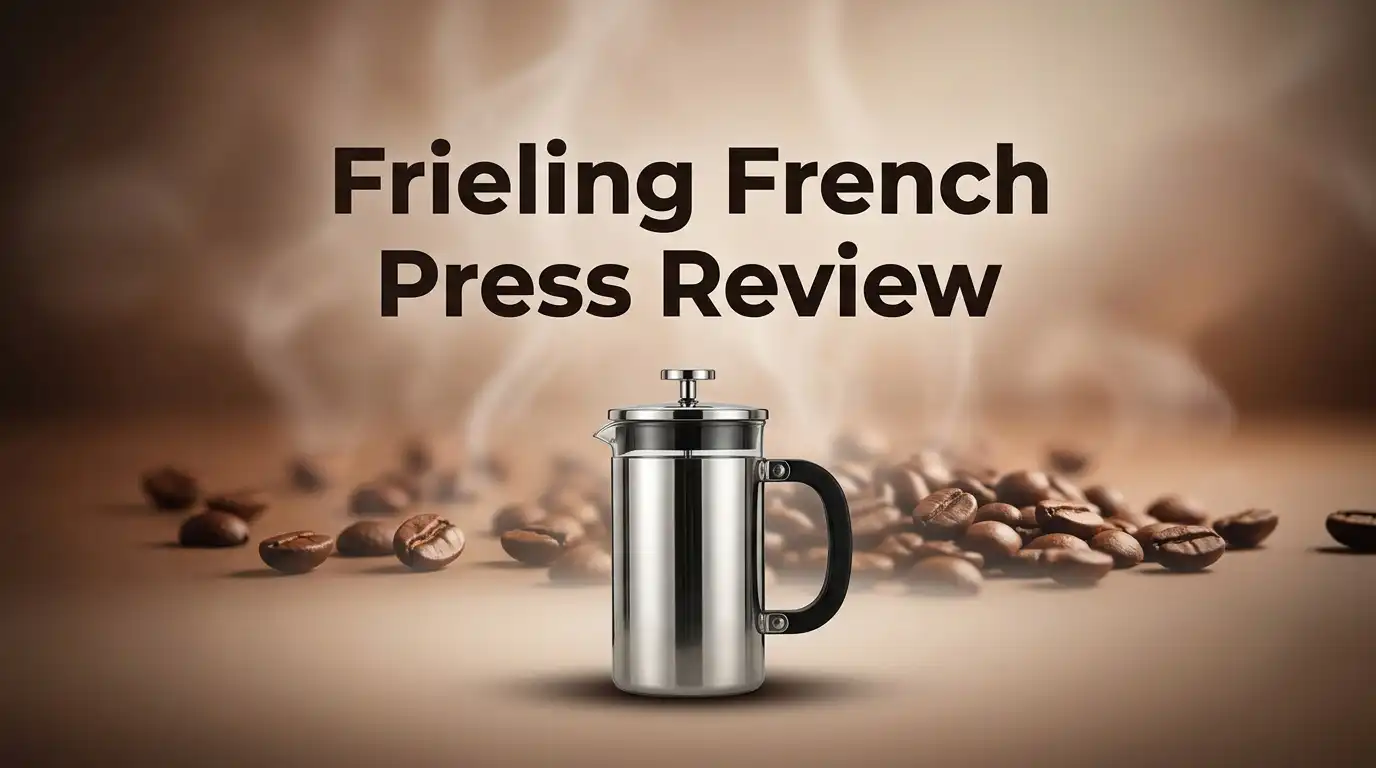
The 36 oz brushed model is the one most people buy, and it is Amazon’s overall pick in this category. It brews about 34 oz of finished coffee, which works out to four or five normal mugs.
The body stands roughly nine inches tall and stays cool on the outside while the inside holds near boiling water. Everything is 18/10 stainless steel, the top tier of food grade steel at 18 percent chromium and 10 percent nickel, so corrosion resistance is excellent.
Frieling is an American company based in North Carolina, though the presses themselves are manufactured in China. The design won a Housewares Design Award in the tableware category, and honestly, you can see why. The domed lid, small knob, and long handle look like something from a hotel breakfast service.
The Unboxing Experience
Opening the box feels closer to receiving a piece of cookware than a coffee gadget. The press arrives wrapped in a plain cardboard sleeve with foam collars at the top and bottom.
Frieling also sells a frustration free packaging version, which skips the retail sleeve entirely. Inside you get the carafe, the lid, the plunger assembly with both screens already attached, and a short instruction card. There is no cheap plastic scoop, no fake gift box, and no sticker residue.
The weight surprises most people. An empty 36 oz Frieling feels dense in the hand because two full walls of steel surround the brew chamber. Slide your thumb along the rim and you will not find a rough edge. The brushed finish hides fingerprints well. Owners repeatedly describe the fit and finish as the first thing that impressed them.
Build Quality and Materials
The all steel interior is what separates this press from its competitors. Most stainless steel presses use a plastic collar or a rubber gasket to seal the screen against the wall.
The Frieling does not. The filter seals by pressing metal directly against metal, the same way a classic glass press works. Fewer materials means fewer parts that swell, crack, or hold old coffee oils.
That said, build quality is not flawless. One owner reported that the screw connection between the plunger rod and the filter plate feels weak, and the plunger wobbles slightly when you thread it on.
Another buyer in Japan found a lasting metallic smell in a brushed 36 oz unit that never washed out, while his older mirror finish press had no such issue. These reports are uncommon, but they are real.
Top 3 Alternative for Frieling French Press

Last update on 2026-11-19 / Affiliate links / Images from Amazon Product Advertising API
Espro P7 French Press 32 oz Stainless Steel


Last update on 2026-10-23 / Affiliate links / Images from Amazon Product Advertising API
Bodum Chambord French Press 34 oz

Last update on 2026-11-19 / Affiliate links / Images from Amazon Product Advertising API
Secura French Press 34 oz Stainless Steel
Heat Retention Test Results
This is where the Frieling wins outright. I filled the carafe with water at 200 F and checked the temperature at set intervals. The drop was slow and steady. After one hour the water sat comfortably in drinking range. After nearly four hours it finally slipped below 120 F. A glass press loses that much heat in about twenty minutes.
The lid does not seal like a thermos, so some heat escapes through the top. Even so, the practical benefit is large. You can brew a full pot at 7 a.m., pour a cup, take a shower, and pour a second cup that still tastes hot rather than lukewarm.
Steady temperature during the steep also improves extraction, which matters most with dense light roasts that under extract easily. Cold brew fans get the same benefit in reverse.
The Two Stage Filter and Sediment
Frieling uses a patented two stage filter. One fine mesh screen sits above a second screen, and the pairing traps more fines than a single layer. The mesh itself is noticeably finer than what ships with a standard glass press.
Does it deliver the promised zero sediment cup? No. A thin dusting of silt still settles at the bottom of the mug. But the difference in texture is obvious.
You never get the gritty last sip that ruins a cheap press. Because the mesh is so fine, you can also grind a touch finer than usual without punishing yourself, which helps pull more sweetness from light roasts.
One practical tip: the screens are removable and replaceable. Frieling sells spares, and many owners report replacing them only after three or four years of daily brewing.
How to Brew in the Frieling
Brewing is standard, but the ratios matter. Heat water to about 200 F. Add coarsely ground coffee to the carafe. Pour just enough water to soak the grounds, wait thirty seconds for the bloom, then add the rest and stir once. Steep for four minutes, press slowly, and serve.
Use roughly 55 grams of coffee with 34 oz of water in the 36 oz model, which lands near a 1:18 ratio. Scale down to 35 grams for the 23 oz press and 25 grams for the 17 oz. The big 44 oz takes about 68 grams.
Press slowly. Because the screen seals tightly against the steel wall, fast pressing creates back pressure and pushes coffee up around the rim. Gentle and steady wins here.
Taste, Aroma, and Body
The cup is classic French press. Oils pass straight through the metal mesh instead of getting trapped by paper, so the coffee arrives with heavy body, thick mouthfeel, and a loud aroma. Chocolate and nut notes in dark roasts come through rich and syrupy.
The insulated walls make the biggest difference with lighter roasts. Because the brew water does not cool during the four minute steep, extraction stays even from start to finish. Light roasts that taste sour and thin in a glass press turn sweeter and more vibrant here. I also brewed loose leaf tea in it with no issue, and the steel body holds tea temperature just as well.
One honest caveat. The flavor difference between the Frieling and a well used glass press is small. Heat and cleanliness improve, not magic.
Size Options and Which One Fits You
Frieling offers 8, 17, 23, 36, and 44 oz presses. The 36 oz is the default and suits couples or small families. Two person households often prefer the 23 oz, which brews a solid two mugs without leftovers. The 44 oz is aimed at hosts, offices, and holiday mornings, and reviewers praise how the balanced handle makes a full pot feel light to pour.
The 8 oz single serve version is the odd one out. After filtering, it yields under seven ounces of coffee, which is smaller than a standard mug.
Most single serve presses hold twelve ounces for a reason. Skip the 8 oz unless you drink espresso sized portions. Color options like navy and sandstone exist through Frieling directly if plain steel feels boring.
Frieling Polished Stainless Steel French Press 36 oz

Last update on 2026-11-19 / Affiliate links / Images from Amazon Product Advertising API
The polished version holds the same interior, same filter, and same insulation. The only difference is the mirror exterior finish. It looks striking on a table and matches chrome kitchen fittings. It also shows every fingerprint and water spot, so plan to wipe it often.
Interestingly, the one persistent smell complaint I found came from a brushed unit, while that same owner’s seven year old mirror finish press stayed odor free.
That is a single data point, not a pattern, but polished buyers seem slightly happier with the finish over time. Choose brushed if you hate cleaning smudges. Choose polished if you want it to look formal on a dinner table.
Cleaning and Care
Every component is dishwasher safe, including the filter assembly. Scrape spent grounds into the compost, rinse the carafe, and put the parts on the top rack. The filter unscrews for a deep clean, though most of the time a rinse handles it.
Steel resists staining far better than glass or plastic, so you will not fight brown rings. Coffee oils still build up on the mesh, and an occasional soak in hot water with a splash of dish soap keeps the flavor clean. Avoid steel wool on polished finishes because it leaves fine scratches.
One small annoyance: the narrow spout traps a few grounds, so give it a shake or a bottle brush pass now and then. Store the press with the lid off to let the interior dry fully.
What the Frieling Does Not Do Well
Authentic reviews cover failures, so here they are. The plunger is stiff. The tight metal on metal seal means pressing takes more force than you expect, and rushing splashes coffee. Seat the lid by pressing the cap, never by shoving the screen in first.
The lid does not lock or seal, so this is not a travel thermos. Tip it and it leaks. You cannot see the brew, which frustrates people who like watching the bloom and judging steep by eye. The plunger rod connection feels slightly wobbly on some units.
It also does not fix the fundamentals. Stale beans, a blade grinder, or bad water still make bad coffee. And at this price, the value gap against cheaper steel presses is hard to ignore.
Pros and Cons
Pros
- Holds coffee hot for around four hours thanks to true double wall vacuum insulation
- Fully 18/10 stainless steel construction with no plastic or glass touching your coffee
- Two stage fine mesh filter that cuts sediment to a thin, non gritty layer
- Five year warranty and owner reports of seven to nine years of daily service
- Every part is dishwasher safe and the steel resists staining
- Excellent drip free spout and a balanced handle even on the 44 oz size
- Five capacity options plus brushed, polished, and color finishes
Cons
- Expensive at roughly $70 to $150 depending on size
- Plunger needs firm, slow pressure and can splash if pressed quickly
- No view of the brew because the body is opaque
- The 8 oz model is impractically small
- Isolated reports of a metallic odor and a slightly wobbly plunger rod
- Lid does not seal, so it is not leak proof for travel
- Made in China despite the premium positioning
Frieling vs Espro P7 vs Bodum Chambord
The Espro P7 is the closest rival at a similar price. It uses a micro filter basket that seals the grounds completely and stops extraction the moment you press, producing the cleanest cup of the three. The Frieling gives slightly brighter, bolder coffee, while the Espro tastes smoother and more polished. The Espro basket also has more parts to clean.
The Bodum Chambord is the honest budget answer. It costs a fraction as much, lets you watch the brew, and makes genuinely good coffee. It also loses heat fast and breaks if you knock it off the counter.
Pick the Frieling for heat plus durability. Pick the Espro for the cleanest cup. Pick the Bodum if you want classic looks and low cost.
Price, Warranty, and Real Value
Pricing sits between about $70 for the smallest sizes and roughly $140 for the 36 oz and 44 oz models. Frieling lists the 36 oz polished near $139.95 directly, and Amazon pricing usually runs a little lower. Check current listings because promotions move often.
Five years ago this price made sense because few insulated steel presses existed. In 2026 the market is crowded. The Secura and similar brands deliver double wall steel and fine filters for under half the money. What you actually pay extra for is the all metal internal design, the finish quality, and the five year warranty.
My honest view: buy the Frieling if you want one press that lasts a decade and looks good on a table. Buy something cheaper if you only want hot coffee.
Frequently Asked Questions
Is the Frieling French press worth the money?
It is worth it if durability and heat retention rank high for you. Owners report nine years of daily use, and the five year warranty is longer than most rivals offer. If you mainly want hot, clean coffee on a budget, cheaper double wall steel presses reach 90 percent of the performance.
Does the Frieling French press leave sediment?
It leaves a thin layer of fine silt at the bottom of the mug, not grit. The two stage filter cuts sediment well below what a standard glass press produces, but the “zero sediment” claim is optimistic. A coarser grind reduces it further.
Is Frieling made in the USA?
No. Frieling is an American company headquartered in North Carolina, but the French presses are manufactured in China. Quality control appears consistent based on long term owner feedback.
How long does coffee stay hot in a Frieling?
Water starting at 200 F stayed above 120 F for close to four hours in testing. Expect genuinely hot coffee for the first one to two hours and pleasantly warm coffee after that. The lid does not seal, so it will not match a sealed thermos.
Can you use the Frieling for cold brew?
Yes. Add coarse grounds and cold water, steep in the fridge for twelve to eighteen hours, then press. The insulation also keeps the finished cold brew chilled for hours on the counter.
What size Frieling should I buy?
Buy the 23 oz for one or two drinkers, the 36 oz for a family of three or four, and the 44 oz for entertaining or an office. Avoid the 8 oz because it yields under seven ounces after filtering.
Are Frieling parts replaceable?
Yes. Frieling sells replacement screens, filter plates, and lids for every size. Most owners replace only the mesh screens, typically after three or more years of daily brewing.

Hi, I’m Emma Lee — the coffee-obsessed creator behind Morning Drip Vault. I spend my days testing coffee machines, exploring brewing techniques, and reviewing the latest coffee gear. My mission is simple: helping you find the perfect machine to brew your best cup, every single morning.