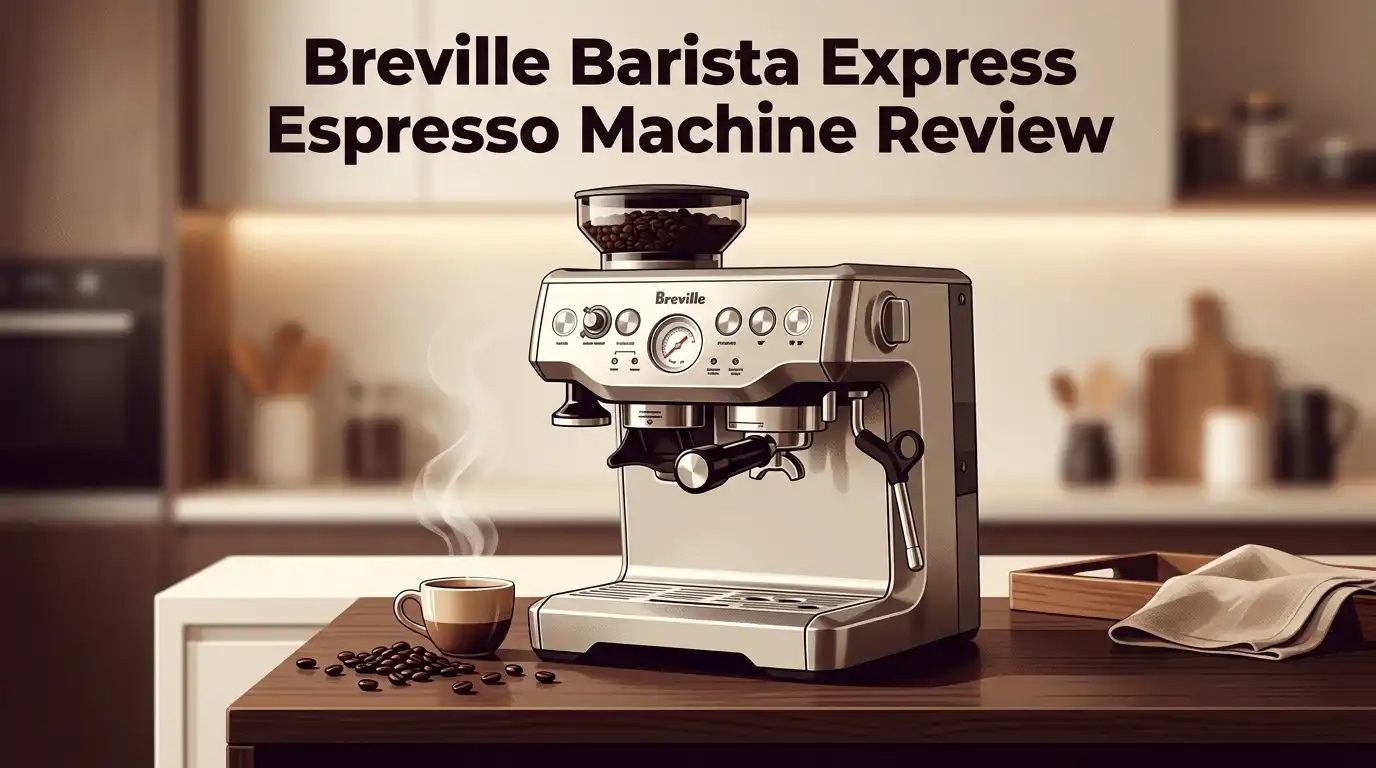
Breville Barista Express Espresso Machine Review 2026: Still Worth It?
Espresso at home used to mean a choice between weak pod coffee and a thousand dollar setup. The Breville Barista Express changed that math back in 2013, and the machine is still on shelves in 2026. That is unusual. Most kitchen appliances get replaced every three years.
So the real question is simple. Does a machine designed over a decade ago still deserve your counter space and your money?
I have pulled hundreds of shots on this unit, cleaned it more times than I care to admit, and watched it fight with oily dark roast beans. This review covers the good, the frustrating, and the parts nobody mentions in the product listing.
In a Nutshell:
- The grinder is the main selling point. You get a conical burr grinder built into the body with 16 grind settings and a dose dial. Buying a separate grinder of similar quality costs roughly $200 on its own, so the bundled value is real.
- It rewards practice, not impatience. This is a semi automatic machine. You tamp by hand, you dial in grind size, and your first week of shots will probably taste sour or bitter. That learning curve is the price of control.
- Milk steaming is capable but slow. The single boiler needs time to switch from brewing to steaming. Expect a wait of around 20 to 30 seconds between the two, which feels long when guests are waiting.
- Weak spots exist and they matter. The plastic grind chute clogs with oily beans, the drip tray fills fast, and the 54mm portafilter limits your accessory options compared to standard 58mm machines.
- Price sits near $699 in 2026, with frequent sale drops closer to $500. At full price it faces stiff competition. On sale it is still one of the best beginner espresso deals available.
- Best for: curious beginners who want to learn real espresso. Worst for: anyone who wants a button, a cup, and zero involvement.
What Is the Breville Barista Express?

Last update on 2026-10-22 / Affiliate links / Images from Amazon Product Advertising API
The Barista Express, model BES870XL, is an all in one espresso machine. Breville packed a conical burr grinder, a 15 bar Italian pump, a single boiler, and a steam wand into one stainless steel box. In Europe and Australia the same machine sells under the Sage brand name.
Think of it as a starter kit rather than a single appliance. You grind fresh beans, dose them into a portafilter, tamp with the built in tamper, and lock the handle into the group head. The machine handles water temperature through a PID controller that holds brew water near 200°F.
This is not a bean to cup machine. Nothing happens automatically between the grinder and your cup. You do the work. That difference disappoints some buyers who expected a push button experience, so it is worth stating plainly up front.
The footprint measures roughly 13.25 inches wide, 12.5 inches deep, and 15.5 inches tall. Measure your cabinet clearance before ordering, because the bean hopper needs vertical room.
The Unboxing Experience
The box is heavier than you expect. The machine weighs about 23 pounds, and the accessory kit adds more. Breville uses molded cardboard inserts instead of foam, which feels sturdy and recycles easily.
Lift the machine out and the first thing you notice is weight in the right places. The brushed stainless steel wraps a plastic core, but the front panel and drip tray feel solid. The portafilter has real heft at around 1.3 pounds.
Inside the accessory box you find a stainless steel milk jug, a razor dose trimming tool, a cleaning brush, a cleaning disc, cleaning tablets, an Allen key, a water filter with holder, and four filter baskets. Two are single wall for fresh beans. Two are dual wall for supermarket ground coffee.
One small annoyance appears immediately. The magnetic tamp sits under the group head and feels slightly undersized at 54mm. Many owners replace it within a month. The included tamper works, but it is the weakest item in the box.
Setup takes about 20 minutes including the first rinse cycle.
Key Specifications Worth Knowing
Numbers tell part of the story, so here are the ones that actually affect your daily cup.
The water tank holds 67 ounces and lifts out from the top, so you refill without moving the machine. The bean hopper holds half a pound of beans and seals with a locking lid, though it leaks stale air slowly like every hopper does.
Grind settings number 16 externally. An internal adjustment inside the hopper adds a second layer of fine tuning, which most owners never touch. The pump reaches 15 bars, though the machine regulates actual brew pressure closer to 9 bars where espresso belongs.
The thermocoil heating system matters more than the bar rating. It heats water on demand rather than storing it, which keeps temperature stable during a shot. Heat up time from cold runs about 45 seconds to a minute.
Power draw sits at 1600 watts. The warranty covers one year, which feels short for the price and is a fair criticism.
Top 3 Alternative for Breville Barista Express


Last update on 2026-10-21 / Affiliate links / Images from Amazon Product Advertising API
Breville Barista Express Impress

Last update on 2026-10-21 / Affiliate links / Images from Amazon Product Advertising API
Breville Barista Pro

Last update on 2026-10-22 / Affiliate links / Images from Amazon Product Advertising API
Breville Bambino Plus
Build Quality and Design After Years of Use
The Barista Express looks better than it is built, and that is not entirely an insult. The brushed steel exterior resists fingerprints reasonably well and wipes clean with a damp cloth. Black Truffle, Sea Salt, and Olive Tapenade colour options arrived in recent years for people tired of silver.
Underneath the steel, plastic does most of the structural work. The grind chute, the hopper, the drip tray runners, and several internal fittings are all plastic. This is where long term failures tend to show up.
Owner reports suggest a realistic lifespan of three to seven years with regular descaling. Machines that never get descaled fail much sooner, often through a blocked solenoid valve or a dead pump. Hard water areas suffer most.
The good news is parts availability. Breville sells replacement gaskets, showers screens, water filters, and hoppers directly. A confident owner with a torx screwdriver can replace a group head seal in an afternoon. Repair shops that service Breville exist in most large cities.
The Built In Grinder: Strengths and Limits
The conical burr grinder is the reason this machine sells. Grinding fresh beans seconds before extraction improves flavour more than almost any other upgrade, and here it happens automatically into your portafilter.
The dose dial controls grind time rather than weight. You set a duration, press the portafilter against the cradle, and the grinder runs. Single and double shot buttons remember separate settings. It works well with medium roasts and behaves consistently day to day.
Now the honest part. This grinder is entry level. Grind consistency falls behind dedicated grinders in the $250 range, and the difference shows most with light roasts. Fine grounds and coarse grounds mix together, which causes uneven extraction.
Oily dark roast beans cause the biggest headache. Oil coats the burrs and the plastic chute, then grounds stick and clog the path. You will find yourself brushing the chute weekly. Retention of stale grounds inside the chute also runs around one to two grams.
Medium roasts solve most of these problems.
Pulling Your First Shot
Expect failure. That sounds harsh, but it sets the right expectation and saves frustration.
Your first shots will run too fast and taste sour, or run too slow and taste bitter and ashy. This is normal. Dialling in means adjusting grind size until 18 grams of coffee produces roughly 36 grams of liquid in 25 to 30 seconds. Nothing else changes until that timing lands.
The pressure gauge on the front helps enormously here. The needle should settle in the espresso zone during extraction. Too low means your grind is coarse. Pinned to the right means your grind is fine or your tamp is uneven.
The razor trimming tool is genuinely useful. Level your dose with it and you remove one variable from the puzzle. Many owners ignore it and then wonder why shots vary.
Low pressure pre infusion runs automatically before full pressure hits. This gentle wetting reduces channeling. After about a week of practice, most people pull drinkable espresso consistently.
Steam Wand and Milk Texturing Performance
The steam wand swivels, has four holes, and produces enough power to texture milk for a proper flat white. That is more than most machines under $700 manage.
Steaming 8 ounces of milk takes roughly 40 to 50 seconds. The wand purges with a quick blast before and after use, which keeps the tip clear. Silky microfoam is achievable, though the technique takes practice. Angle the pitcher, keep the tip just below the surface, and listen for a gentle hissing sound.
The single boiler creates the main limitation. You cannot brew and steam at the same time. After pulling a shot, the machine needs to heat up before steaming, and after steaming it needs a cooling flush before brewing again. Making four cappuccinos in a row becomes a waiting game.
The wand is manual, with no automatic temperature shutoff. Some people love that control. Others would rather have the automatic wand found on the Bambino Plus.
Espresso Taste Quality: The Honest Verdict
Good beans plus good technique produce genuinely good espresso here. Crema forms thick and holds for a minute. Body feels full. A well dialled shot of medium roast Brazilian or Colombian coffee tastes sweet with chocolate and nut notes.
Where the machine struggles is with delicate light roasts. Modern light roasted single origin coffee demands grind precision and temperature flexibility that the Barista Express cannot fully deliver. Those shots often taste thin or sour no matter how carefully you work.
Temperature control deserves credit. The PID system holds water steady, which is something cheap machines fail at badly. Shot to shot consistency is one of this machine’s real strengths.
Compared against a specialty coffee shop, the Barista Express lands at maybe 75 to 80 percent of the quality. Compared against pod machines and drip coffee, it is a completely different category. For most home drinkers making milk based drinks, that gap disappears entirely under steamed milk.
What the Barista Express Does Not Do Well
Every review should have this section, so here is the unflattering list in plain language.
The drip tray fills quickly and has no external indicator you can see without pulling it out, other than a small red float. Expect to empty it every few days.
The 54mm portafilter limits your upgrade path. Most aftermarket baskets, bottomless portafilters, and puck screens are built for 58mm machines. Options exist for 54mm, but the selection is smaller and pricing is worse.
The grinder cannot handle oily beans without regular cleaning. The single boiler slows down milk drinks. The one year warranty is short. The plastic grind chute is a known weak point. Heat up plus steam recovery makes back to back drinks slow.
Noise is another factor. The grinder is loud, around 80 decibels, and the pump vibrates audibly. Nobody in a small apartment sleeps through morning espresso.
None of these are dealbreakers alone. Together they explain why some owners upgrade after two years.
Pros and Cons
Here is the balance sheet in bullet form.
Pros
- Built in conical burr grinder saves counter space and roughly $200 compared to buying separately.
- PID temperature control keeps brew water stable, which improves shot consistency noticeably.
- Pressure gauge gives beginners real feedback instead of guesswork.
- Powerful manual steam wand produces true microfoam for latte art.
- Complete accessory kit means you can brew on day one with nothing extra to buy.
- Widely available parts and service network, plus a huge online community for troubleshooting.
- Frequent discounts bring the price down to genuinely excellent value territory.
Cons
- Grinder consistency lags behind dedicated grinders, especially with light roasts.
- Plastic grind chute clogs with oily dark roast beans and needs weekly brushing.
- Single boiler prevents brewing and steaming at the same time, slowing multiple drinks.
- 54mm portafilter size restricts aftermarket accessory choices.
- One year warranty feels short for the price point.
- Loud grinder and audible pump vibration during operation.
- Steep learning curve that frustrates buyers expecting push button coffee.
Cleaning and Maintenance Reality
Espresso machines punish neglect, and this one is no exception. Daily maintenance takes about two minutes. Wipe the steam wand immediately after each use, knock out the puck, rinse the portafilter, and run a blank shot through the group head.
Weekly, brush the grinder chute and wash the drip tray and water tank. Monthly, run a backflush with the supplied cleaning disc and a cleaning tablet. The machine prompts you when this is due.
Descaling is the step that decides how long your machine lives. Hard water builds scale inside the thermocoil, which eventually kills the heating system. Descale every two to three months in hard water areas, every six months in soft water areas.
The included water filter reduces scale buildup and should be swapped every two months. Many owners skip this and pay for it later.
Deeper cleaning of the burrs requires removing the hopper and upper burr. Breville includes the tool. It takes ten minutes and should happen every few months.
Who Should Buy It and Who Should Skip It
Buy the Barista Express if you enjoy process. The people happiest with this machine are the ones who find grinding, tamping, and dialling in genuinely fun. It suits beginners who want to learn real espresso without spending $1,500 on separate components.
It also suits households making one to three milk drinks per morning. That volume fits comfortably within the single boiler’s pace.
Skip it if you want speed and simplicity. Anyone who wants coffee in 30 seconds with no cleanup should buy a super automatic machine or a good pod system instead. You will resent this machine by week two.
Skip it as well if you already own a quality grinder. In that case, buy the Bambino Plus and put the savings toward better beans. Paying for a built in grinder you do not need makes no sense.
Light roast enthusiasts chasing floral single origins should look at machines with flow control and a better grinder.
Price and Value in 2026
List price sits around $699 in 2026, though Breville and Amazon both discount regularly. Sale prices between $500 and $550 appear during Prime Day, Black Friday, and spring promotions. Patience pays here.
At $699, the value argument gets harder. The Barista Express Impress costs a little more and adds an assisted tamping system that removes the hardest beginner skill. The Barista Pro heats in three seconds and has a faster grinder. Both are compelling at that price band.
At $500, the Barista Express is one of the best deals in home espresso. Nothing else bundles a burr grinder, PID control, and a real steam wand for that money with this level of support.
Set a price alert and wait for a sale. Buying at full list price is the single most common regret owners mention.
Final Verdict
Last update on 2026-10-22 / Affiliate links / Images from Amazon Product Advertising API
The Breville Barista Express remains a strong recommendation in 2026 with clear conditions attached. It is a teaching machine. It hands you control, feedback, and a fair grinder, then asks you to supply the skill.
The espresso it produces is genuinely good once you learn it. The flaws are real but manageable, and the enormous owner community means every problem you hit has already been solved by someone on a forum.
Score: 4.2 out of 5. Points lost for the clog prone chute, the short warranty, and the slow single boiler.
If you want to learn espresso properly and you catch it on sale, buy it without hesitation. If you want coffee without involvement, this machine will make you unhappy, and honesty on that point matters more than a sale.
Frequently Asked Questions
Is the Breville Barista Express worth it in 2026?
Yes, especially on sale near $500. The bundled grinder, PID temperature control, and steam wand still compete well. At full price of $699, compare it against the Barista Express Impress first.
How long does a Breville Barista Express last?
Most owners report three to seven years. Regular descaling makes the biggest difference. Machines in hard water areas that never get descaled often fail within two years.
Can beginners use the Barista Express?
Yes, but expect a learning curve of one to two weeks. The pressure gauge and razor tool help. Watching a few dialling in tutorials shortens the process considerably.
What is the difference between the Barista Express and the Barista Pro?
The Pro heats in three seconds, has a faster grinder, and uses a digital display. The Express heats in about 45 seconds and uses an analogue pressure gauge. The Pro costs more.
Why does my Barista Express grinder clog?
Oily dark roast beans coat the burrs and the plastic chute. Switch to medium roast beans and brush the chute weekly. This solves the problem for most owners.
Do I need to buy a separate tamper?
Not strictly, but many owners upgrade. The included 54mm tamper works, though a heavier flat base tamper makes even tamping easier and improves shot consistency.
Can it make regular drip coffee?
No. It brews espresso and dispenses hot water only. You can make an americano by adding hot water to espresso, which is the closest option available.

Hi, I’m Emma Lee — the coffee-obsessed creator behind Morning Drip Vault. I spend my days testing coffee machines, exploring brewing techniques, and reviewing the latest coffee gear. My mission is simple: helping you find the perfect machine to brew your best cup, every single morning.