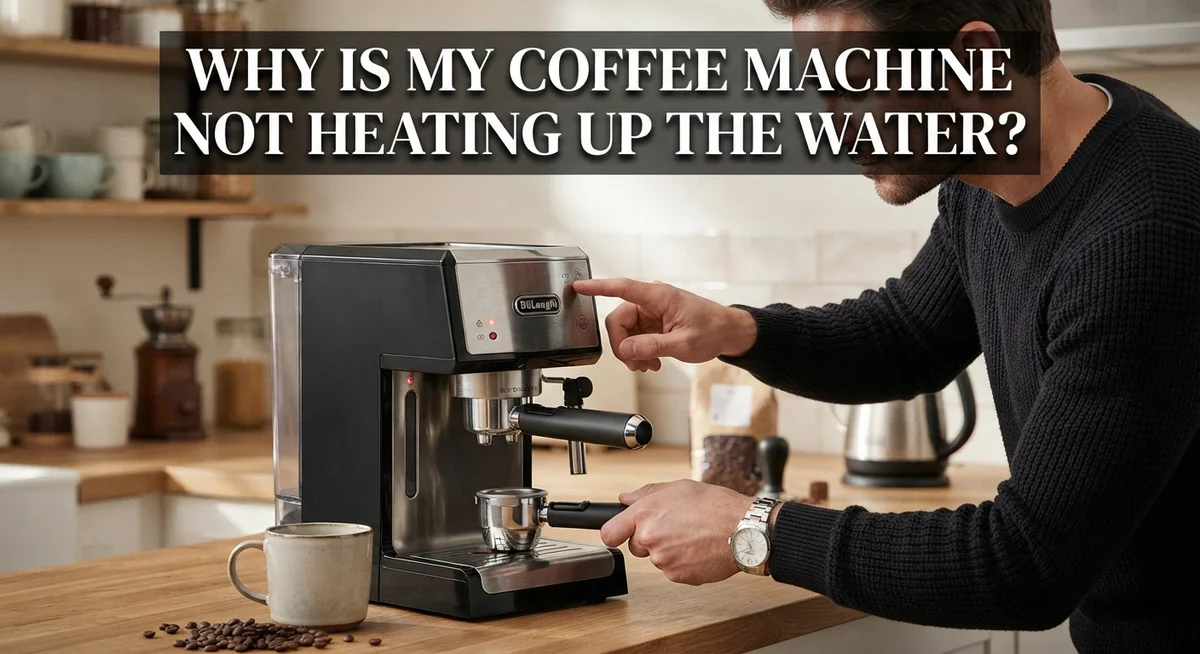
Why Is My Coffee Machine Not Heating Up The Water?
You wake up and want a hot cup of coffee. But your coffee machine gives you cold or lukewarm water instead. This problem feels frustrating, especially when you need that morning boost.
Many coffee lovers face this same issue. Your machine turns on. The lights work fine. But the water inside stays cold or barely warm.
This problem usually points to a few common culprits. A faulty heating element often causes this issue. Mineral buildup can clog your water lines too. Sometimes power supply problems or a broken thermostat are to blame.
In a Nutshell
- Mineral buildup is the top reason for cold water. It clogs your water lines and spray head over time.
- A faulty heating element often stops the water from warming up. This part may need a full inspection.
- Check your power supply first. A loose connection can trick you into thinking the heater is broken.
- A broken thermostat can also block proper heating. It fails to signal the machine to warm the water.
- Regular descaling is your best defense. It stops mineral deposits before they cause bigger problems.
- Different brands show different symptoms. Some models leak unheated water even when the power light is on.
- Most fixes are simple. You can solve this at home with basic tools and a little patience.
How Your Coffee Machine Heats Water: The Basics
Your coffee machine heats water through a simple but important process. Understanding this process helps you spot problems faster.
Most coffee machines use an electric heating element to warm the water. This element sits inside the machine’s water tank or heating chamber. When you turn on your machine, electricity flows through this element. The element then gets hot and transfers heat to the water around it.
The thermostat acts as your machine’s temperature controller. It tells the heating element when to turn on and off. This keeps your water at the right temperature. When the thermostat works properly, your coffee stays hot and consistent.
Water flows through internal tubes and passages inside your machine. These tubes carry cold water from the tank to the heating chamber. The heated water then travels to your coffee grounds or cup. If these tubes get blocked, water cannot heat up properly.
Your machine also has a boiler or heating chamber. This is where the actual heating happens. Water sits in this chamber while the heating element warms it. The boiler maintains pressure to push hot water through the system.
The spray head distributes hot water evenly over your coffee grounds. Small holes in the spray head let water flow out in a fine mist. If mineral deposits clog these holes, water cannot pass through correctly.
All these parts work together as a team. When one part fails, the whole heating process breaks down. Mineral buildup is the most common culprit because it slowly clogs tubes and blocks the spray head. Regular maintenance keeps all these parts working smoothly and your water heating properly.
Top Causes of a Coffee Machine Not Heating Water
A faulty heating element is one of the most common reasons your coffee machine fails to heat water. This component does the actual work of warming your water to the right temperature. When it breaks, your machine simply cannot produce hot water, no matter how long you wait.
Mineral buildup is another major culprit. Over time, minerals from tap water collect inside your machine’s water lines and spray head. These deposits create blockages that prevent water from flowing properly through the heating system. Your water may bypass the heating element entirely, reaching your cup cold or barely warm.
Clogged water tubes cause similar problems. Debris and mineral deposits accumulate in the internal passages where water travels. This blockage stops water from reaching the heating chamber or slows its flow so much that it cannot heat properly.
Power supply issues are simpler but easy to overlook. Check that your machine is plugged in securely and the outlet works. A loose connection or faulty power cord means your heating element never receives electricity to function.
A broken thermostat creates another heating problem. This component tells your machine when to turn the heating element on and off. If it malfunctions, the heating element may not activate at all, leaving you with cold water.
The good news is that most of these issues are fixable. Regular descaling removes mineral deposits before they cause serious blockages. Inspecting your heating element and power connections takes just a few minutes. Understanding these causes helps you troubleshoot faster and get back to enjoying your morning coffee.
Step-by-Step Troubleshooting Guide
Start by checking your power connection. Make sure the machine is plugged in firmly and the outlet works properly. Test the outlet with another device to confirm it has power.
Next, listen to your machine when you turn it on. A healthy boiler should make a stable pressure sound. If you hear nothing, the heating element may have failed.
Inspect the water reservoir and fill it completely. An empty or low reservoir can prevent heating. Check that water flows freely from the tank into the machine.
Look at the spray head where water comes out. Remove it carefully and examine the small holes. Mineral deposits often block these openings and stop hot water from spraying. Use a fine cleaning tool to clear any visible buildup in each hole.
Press the power button and wait several minutes. Some machines need time to heat up. If nothing happens after five minutes, move to the next step.
Descaling your machine removes mineral buildup inside the heating system. This is one of the most effective fixes. Run a descaling cycle according to your machine’s instructions. Mineral accumulation in heating tubes is a common reason water stays cold.
Check the internal water tubes if you can access them safely. Look for blockages or white crusty deposits. These deposits prevent water from reaching the heating element.
Listen again for boiler pressure sounds after descaling. A proper sound means your machine is heating correctly.
If your machine still doesn’t heat water after these steps, the heating element or thermostat likely needs replacement. These are internal components that usually require professional service.
How to Descale Your Machine to Restore Heating
Mineral deposits are the silent enemy of your coffee machine’s heating system. When water sits inside your machine, minerals like calcium and magnesium stick to internal surfaces. This buildup clogs the heating element and water passages, making it harder for heat to work properly.
Descaling is the process of removing these mineral deposits. This simple maintenance task can restore your machine’s heating power. You’ll need a descaling solution made from citric acid or white vinegar mixed with water. Most machines require a 1 to 1 ratio, but check your manual first.
Here’s how to descale your machine. Fill the water reservoir with your descaling solution. Run the solution through your machine slowly, just like you’re making coffee. Let it sit inside for 15 to 20 minutes. This gives the solution time to break down mineral buildup.
Next, run the remaining solution through completely. Then refill your reservoir with fresh water only. Run several cycles of plain water through your machine to rinse away all descaling solution. This step is important because leftover solution affects your coffee’s taste.
Regular descaling prevents heating problems from starting. Most experts recommend descaling every month if you have hard water. Soft water users can descale every two to three months. Hard water areas should descale more often.
After descaling, your heating element works more efficiently. Water flows freely through tubes and passages again. Your machine reaches the right temperature faster. If your machine still doesn’t heat water after descaling, the heating element itself may be damaged and need professional repair.
Model-Specific Issues: Keurig, Extreme Brew, and Others
Different coffee machine brands have their own quirks when heating fails. Understanding your specific model helps you fix the problem faster.
Keurig machines often dispense unheated water even when the power button activates. This happens because water bypasses the heating chamber instead of passing through it. The most common cause is a clogged exit needle or water line. You should remove the K cup holder and inspect the needle for coffee grounds or mineral debris. Run water through the needle hole to clear any blockage. If water still comes out cold, the heating element inside may have failed and needs professional replacement.
Extreme Brew models frequently experience heating element failure. These machines also suffer from water flow blockages in the internal passages. Start by descaling your machine thoroughly to clear mineral deposits from all water lines. Listen carefully when you turn on the machine. You should hear a humming sound followed by pressure building in the boiler. If you hear nothing, the heating element is likely broken. Check that your power cord connects firmly to both the wall outlet and the machine.
Other single serve and drip coffee makers share common heating problems. Clogged spray heads prevent hot water from reaching your grounds properly. Remove the spray head and use a fine cleaning tool to clear each hole. Mineral buildup inside tubes blocks water flow throughout the entire system.
Test your machine after each troubleshooting step. Fill the reservoir completely before trying to brew. If your specific model still fails to heat water after descaling and clearing blockages, contact the manufacturer’s support team. They can advise whether repair or replacement makes sense for your machine.
Common Mistakes That Make Heating Problems Worse
Many people make mistakes that actually make heating problems worse. Understanding these errors helps you avoid damaging your machine further.
Skipping regular descaling is the biggest mistake. You ignore mineral buildup warning signs and think your machine will work fine anyway. Minerals accumulate inside the heating system over time. They block water flow and reduce heating efficiency. By the time you notice cold water, serious damage may have already started.
Another common error is neglecting to inspect internal components until the problem becomes severe. You wait weeks or months before checking the spray head or water tubes. Small clogs become major blockages. What could have been a quick fix now requires professional help.
Forcing your machine to work when it shows signs of trouble makes things worse. You keep brewing even though water comes out lukewarm. This puts extra stress on the heating element and thermostat. The damage spreads to other parts of your machine.
Many people also ignore power supply problems thinking the issue must be internal. You assume the heating element is broken when really the outlet is faulty or the cord is loose. You waste time troubleshooting the machine itself instead of checking the basics first.
Using tap water without filtering it speeds up mineral buildup significantly. Hard water contains more minerals than soft water. These deposits accumulate faster in your heating system and clog tubes more quickly.
Finally, disassembling your machine without knowing what you’re doing causes real damage. You disconnect wires incorrectly or lose small parts. The machine becomes harder to fix afterward.
Prevention through regular maintenance stops most heating problems before they start. Monthly descaling keeps your system running smoothly.
Preventive Maintenance Tips for Consistent Heating
Regular maintenance keeps your coffee machine heating water reliably. The key is preventing problems before they start, rather than fixing them after they happen.
Descale your machine monthly to remove mineral buildup inside the heating system. Hard water deposits accumulate quickly and block water flow to the heating element. This buildup forces your machine to work harder and reduces heating efficiency over time. Use a descaling solution designed for coffee machines, following the instructions on the package.
Run water through your machine without coffee grounds after descaling. This rinses out any remaining mineral deposits and cleaning solution. Your heating element will perform better once these deposits are gone.
Check your water source quality. If you use tap water with high mineral content, consider using filtered water instead. This simple change dramatically slows down mineral accumulation in your heating system.
Inspect the spray head and water tubes every three months. Look for any visible mineral crusts or discoloration. Clean out small holes in the spray head with a fine tool if you see buildup forming.
Keep your machine’s exterior and water reservoir clean and dry. Moisture in the wrong places can damage electrical connections and the heating element. Empty the reservoir regularly and wipe it dry before refilling.
Store your machine in a cool, dry location when not in use. Extreme temperature changes and humidity stress the heating components. Proper storage extends the life of your heating system significantly.
Listen to your machine while it brews. Unusual sounds or slower heating indicate maintenance is needed soon. Catching these early signs prevents complete heating failure later.
When to Call a Professional or Replace the Machine
Your coffee machine’s heating problems might need professional help or replacement. Here’s how to decide which option makes sense for you.
When to call a professional: If you’ve completed all basic troubleshooting steps and your machine still won’t heat water, a technician can diagnose internal issues. They have specialized tools to test your thermostat and heating element safely. Professional repair works best if your machine is relatively new or still under warranty.
A technician can also handle complex repairs like replacing a faulty heating element without damaging other components. They know which parts are worth replacing and which ones signal that replacement is better.
When replacement makes more sense: Older machines often cost more to repair than they’re worth. If your machine is over five years old and needs major heating repairs, buying a new one usually saves money long term.
Consider replacement if the repair quote exceeds 50 percent of a new machine’s cost. Newer models have better efficiency and often include improved heating technology.
Signs your machine is beyond repair: Multiple internal failures happening together suggest the machine has reached the end of its life. Rust inside the water tank or heating chamber indicates serious deterioration. Frequent breakdowns within months of each other mean replacement is coming soon anyway.
Making your decision: Get a professional diagnosis first. Ask the technician for a repair estimate and expected lifespan after repair. Compare that cost against a new machine’s price. If repair costs seem high, ask if replacement parts are still available for your model. Sometimes manufacturers stop supporting older machines, making repairs impossible.
Trust your instinct. A machine that constantly needs fixing frustrates you and wastes your time.
Final Thoughts
A cold coffee machine feels frustrating, but the fix is usually simple. Most heating problems come from mineral buildup, power issues, or a failing heating element.
You now know the common causes behind this problem. You also know the steps to check and fix them.
Regular descaling remains your best defense against future heating issues. It keeps mineral deposits from clogging your water lines and heating system.
Check your power connections often. A loose plug or damaged cord causes more heating problems than people realize.
Pay attention to how your machine sounds and behaves. Unusual noises or slow brewing often signal trouble before your water stops heating completely.
Don’t wait until your machine fails completely to act. Small issues become big problems when you ignore them for too long.
Simple maintenance saves you money and stress in the long run. It also helps your machine last longer and brew better coffee.
If basic troubleshooting doesn’t solve your heating problem, don’t panic. Professional help exists for complex issues like heating element replacement.
Sometimes the smartest choice is letting go of an old machine. This is especially true when repair costs climb too high.
Trust your instincts about your machine’s condition. You know it better than anyone else does.
Most coffee machine owners can handle basic troubleshooting themselves. With patience and the right steps, you can often fix heating issues without expert help.
Your morning coffee routine matters. Taking care of your machine ensures it keeps working when you need it most.
Stay proactive, stay observant, and your coffee machine will reward you with hot, delicious coffee every single day.
Frequently Asked Questions
Why is my coffee machine dispenser running cold water?
Cold water from your dispenser usually means the heating element isn’t working. Check your power connection first. Make sure the machine is plugged in securely and the outlet works. If power looks fine, the heating element may have failed. You might also have mineral buildup blocking the water lines. This stops hot water from reaching your cup.
How often should I descale my coffee machine?
Descale your machine every one to three months. Hard water areas need more frequent descaling. Regular descaling prevents mineral deposits from clogging your heating system. Mineral buildup is one of the most common reasons machines stop heating water. If you notice slower water flow or cooler coffee, descale immediately.
What does a faulty heating element sound like?
A broken heating element usually makes no sound at all. Your machine may stay silent or sound weak when brewing. Listen for a stable boiler pressure sound during normal operation. If you hear nothing or strange noises, the heating element might be damaged. Compare it to how your machine normally sounds when working properly.
Can I fix a clogged spray head myself?
Yes, you can clean it easily. Remove the spray head from your machine. Use a fine cleaning tool to clear any holes blocked by mineral deposits. Soak the spray head in a descaling solution for 15 minutes. Rinse it thoroughly under running water. Reattach it and run water through your machine to test.
Should I use tap water or filtered water?
Filtered water works better for your machine. Tap water with high mineral content causes faster buildup. Filtered water extends your machine’s life and reduces descaling needs. If your area has very hard water, filtering makes a real difference in heating performance.

Hi, I’m Emma Lee — the coffee-obsessed creator behind Morning Drip Vault. I spend my days testing coffee machines, exploring brewing techniques, and reviewing the latest coffee gear. My mission is simple: helping you find the perfect machine to brew your best cup, every single morning.