
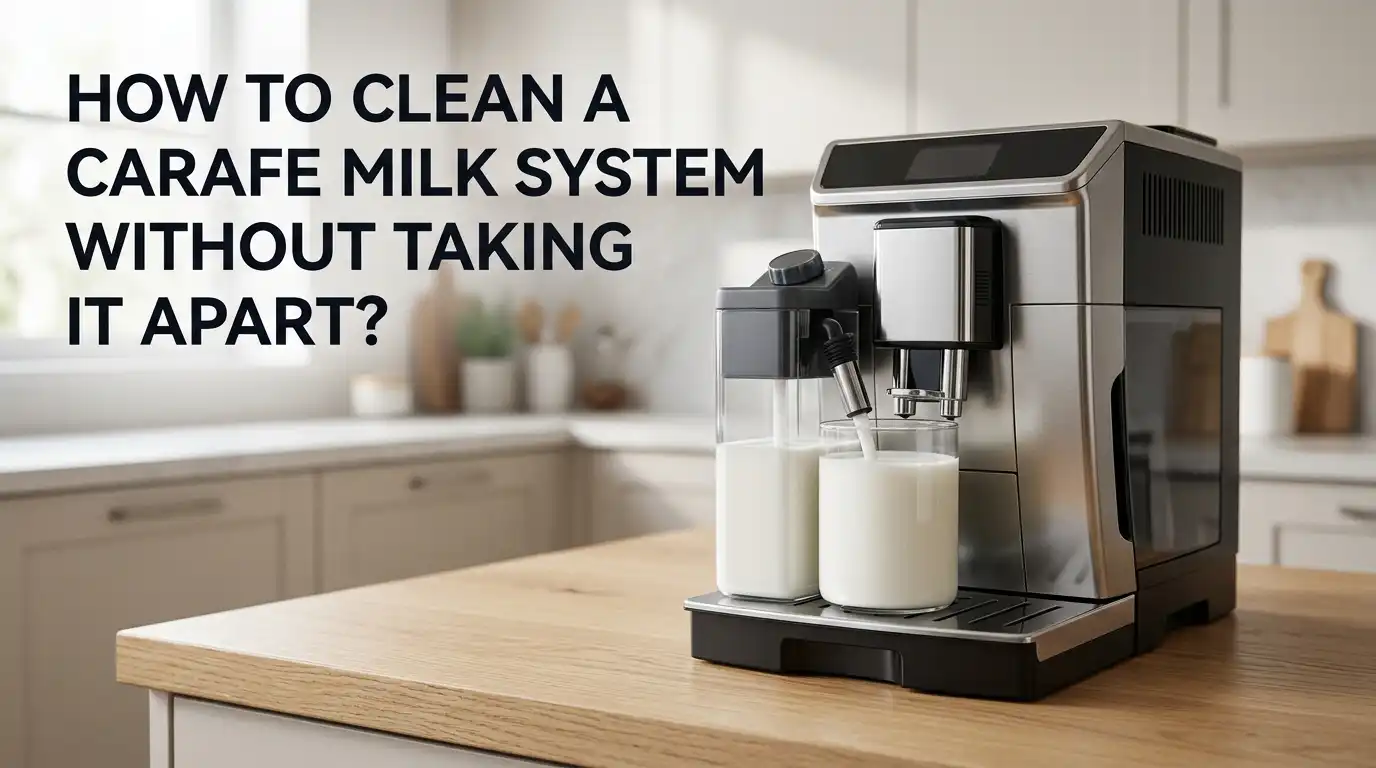
How to Clean a Carafe Milk System Without Taking It Apart?
A carafe milk system makes lattes and cappuccinos easy. But milk leaves residue inside the tubes and frothing channels. That residue smells sour after a day or two. It also clogs the spout and ruins your next drink.
Many people think they must take the carafe apart to clean it. That feels stressful. Small parts can break or get lost. The good news is you can keep your milk carafe spotless without unscrewing a single piece. This guide shows you the safest and fastest cleaning methods that real coffee machine owners use every day.
You will learn which liquids work best, how often to run a deep clean, and what mistakes to avoid. By the end, your carafe will smell fresh and pour perfect foam again.
In a Nutshell
- Rinse the carafe with cold water after every single use. Cold water stops milk proteins from sticking to the inside walls and tubes.
- Run a hot water purge cycle through the milk spout daily. This pushes leftover milk out of the internal channels without any disassembly needed.
- Use a dedicated milk system cleaner once a week. Brands like Urnex Rinza or your machine’s own cleaner break down milk fat and protein safely.
- Try a mild vinegar and water mix as a budget option. A 50/50 solution works well, but never use it on parts marked as not vinegar safe.
- Always store the carafe in the fridge between uses. Cold storage slows bacteria growth and keeps milk fresh inside the container.
- Deep clean the carafe monthly with a longer soak cycle. This removes hidden buildup in the frothing nozzle that quick rinses miss.
Why Cleaning a Carafe Milk System Matters
Milk is a living food. It contains protein, fat, and sugar. These ingredients stick to plastic and metal surfaces inside your carafe. Within hours, bacteria start to grow on the leftover film.
A dirty milk system causes three big problems. First, your coffee starts to taste sour or rancid. Second, the foam quality drops because clogged tubes block airflow. Third, you risk getting sick from bacteria buildup over time.
Most coffee machine brands like Jura, De’Longhi, Gaggia, and Philips all recommend daily rinsing. They also warn that skipping cleaning voids the warranty. So a clean carafe protects your health, your taste, and your machine investment.
Quick Daily Rinse Method
This is the easiest method and takes less than two minutes. After you finish making your last drink of the day, pour out any leftover milk. Then fill the carafe with fresh cold water up to the same line where the milk was.
Place the carafe back on the machine. Run the steam or milk function through the spout for ten to fifteen seconds. The hot water and steam push milk residue out of the internal tubes. Stop the cycle and pour out the dirty water. Repeat once with fresh water.
Pros: Fast, free, no chemicals needed, safe for daily use. Cons: Does not remove deep buildup, must be done every single day, will not kill all bacteria in long term.
Using Hot Water and Dish Soap
This method works well for mid week cleaning when a rinse is not enough. Fill the carafe halfway with hot tap water. Add one or two drops of mild dish soap like Dawn or Fairy. Avoid lemon scented soaps because they leave a strong aftertaste.
Swirl the carafe gently for thirty seconds. Then place it on the machine and run the milk cleaning cycle. The soapy water travels through the same path milk takes. After the cycle ends, rinse with two full carafes of clean water to remove all suds.
Pros: Cheap, effective against milk fat, available in every kitchen. Cons: Can leave soap taste if not rinsed well, may damage rubber seals over time, not strong enough for stubborn dried milk.
The White Vinegar Cleaning Method
White vinegar is a natural acid that dissolves milk protein and calcium at the same time. Mix one part white vinegar with one part warm water. Pour the solution into your milk carafe until it reaches the maximum fill line.
Run the milk frothing or cleaning cycle as you normally would. Let the vinegar mix sit inside the carafe and tubes for about ten minutes. Then run two or three rinse cycles with fresh water to remove the vinegar smell and taste.
Pros: Cheap, natural, kills bacteria, also removes light scale. Cons: Strong smell during use, can damage some plastic or rubber parts, not approved by every brand like Jura which warns against vinegar use.
Baking Soda Soak for Stubborn Residue
When your carafe has dried milk crust that water cannot reach, try baking soda. Fill the carafe with warm water. Add two tablespoons of baking soda and stir until it dissolves completely.
Let the solution sit inside the carafe for at least thirty minutes. The baking soda lifts stuck milk proteins from the walls and tubes. After soaking, run the cleaning cycle through the spout. Finish with two clean water rinses to remove any baking soda taste.
Pros: Gentle on all materials, no harsh chemicals, removes odors effectively. Cons: Slower than dedicated cleaners, will not kill bacteria as well as commercial products, needs longer contact time to work properly.
Commercial Milk System Cleaners
Brands like Urnex Rinza, Cafiza Milk Cleaner, Jura Milk System Cleaner, and De’Longhi EcoDecalk Milk are made for this exact job. They contain enzymes and surfactants that break down both protein and fat at the same time.
Read your machine manual to find the correct dose. Usually you add fifteen to thirty milliliters of cleaner to the carafe and fill the rest with water. Run the milk clean cycle and let the machine do the work. Most cycles take three to five minutes.
Pros: Designed for milk systems, safe for all internal parts, kills bacteria, fast acting, brand approved. Cons: Costs more than home remedies, must be ordered or bought from specialty stores, some have strong chemical smell during use.
The Citric Acid Soak Method
Citric acid is a powder that dissolves easily in warm water. It works like vinegar but has no strong smell. Mix one tablespoon of food grade citric acid into a full carafe of warm water.
Pour the solution into the milk carafe. Run a short milk cycle to push the liquid into the tubes. Then turn off the machine and let it sit for fifteen minutes. Run two full water rinses afterward to clear all acid from the system.
Pros: Odorless, food safe, removes both milk and calcium buildup, cheaper than commercial cleaners. Cons: Must be bought separately, weaker on fat than enzyme cleaners, can corrode metal if left too long without rinsing.
Using the Built In Auto Clean Cycle
Most modern machines from Jura, De’Longhi, Saeco, and Philips have an automatic milk cleaning program. This is the best feature for lazy mornings. The machine knows exactly how much water and pressure to use.
Press the settings or maintenance menu. Find the option called “Clean Milk System” or “Milk Cycle.” Add the recommended cleaner or just water to the carafe. Press start and walk away. The machine handles the timing, temperature, and rinsing on its own.
Pros: Hands free operation, brand approved, perfect dosing, no risk of damaging parts. Cons: Uses more water and electricity, depends on machine working correctly, may need cleaner cartridge refills which cost money.
Cleaning the Milk Spout and Frother Tip
The spout is where most clogs happen. Even without taking the carafe apart, you can clean the spout from the outside. Wipe it with a damp microfiber cloth right after every use while it is still warm.
Once a week, fill a small cup with hot soapy water. Place the cup under the spout so the tip sits inside the liquid. Run a short steam cycle. The bubbles travel up into the spout and loosen any dried milk inside.
Pros: Targets the most problem prone area, quick to do, prevents foam quality drops. Cons: Requires extra attention each week, hard to see inside the spout, may not reach the deepest buildup.
How Often Should You Clean Each Part
Cleaning frequency makes a big difference. Rinse the carafe daily with cold water after every use. Run a hot water purge through the spout at the end of each day.
Once a week, do a full cleaning cycle with either dish soap, vinegar, or a commercial cleaner. Every month, run a deep soak with baking soda or citric acid to clear hidden residue. Replace the carafe entirely every two to three years if you use it daily, because plastic absorbs odors over time.
Sticking to this schedule prevents 95 percent of all milk system problems. Your foam will stay thick and your coffee will taste fresh every morning.
Common Mistakes to Avoid
The biggest mistake is leaving milk in the carafe overnight at room temperature. Bacteria double every twenty minutes in warm milk. Always store the carafe in the fridge or empty it completely.
Never use bleach or strong disinfectants. They damage seals and leave toxic residue. Avoid steel wool or abrasive brushes on the outside, because they scratch the plastic and create new places for milk to stick. Also, do not skip the rinse step after using any cleaner. Even small amounts of soap or vinegar ruin the next batch of milk you froth.
Finally, never run the machine without water in the tank during a cleaning cycle. This can damage the pump permanently and cost hundreds in repairs.
When to Consider a Professional Deep Clean
Sometimes home methods are not enough. If your coffee still tastes off after cleaning, or if the foam never gets thick again, the problem is inside the machine valves. These parts sit behind the carafe connector and you cannot reach them.
Take your machine to an authorized service center once a year if you use it daily. Technicians have special tools to flush the brewing unit and milk valves without breaking them. A professional service usually costs less than buying a new machine.
Signs you need help include strange noises during frothing, milk leaks under the carafe, or error messages that will not clear after cleaning. Do not ignore these warnings because they often point to bigger problems.
Final Tips for a Fresh Milk Carafe Every Day
Small habits make the biggest difference. Always use fresh cold milk rather than milk that has been sitting out. Pour only what you need for that session, because leftover milk in the carafe spoils faster than milk in the original carton.
Keep a small kitchen towel near your machine just for milk wiping. Wipe the spout, the connector, and the outside of the carafe after every drink. Set a phone reminder once a week for your deep cleaning cycle so you never forget.
Treat your carafe like a baby bottle. The cleaner it stays, the better your coffee tastes and the longer your machine lasts.
Frequently Asked Questions
Can I put my milk carafe in the dishwasher?
Most modern carafes have dishwasher safe parts, but check your manual first. The electronic connector and frothing nozzle usually must stay out of the dishwasher. Place only the main jug on the top rack and use a gentle cycle with low heat.
How long can milk stay in the carafe between uses?
Milk can stay in the carafe for up to two days only if you store it in the fridge. At room temperature, milk goes bad within two hours. Always smell the milk before your next use and pour it out if it smells sour.
Is vinegar safe for all milk carafe brands?
No. Brands like Jura specifically warn against vinegar because it damages internal seals. De’Longhi and Gaggia allow diluted vinegar in some models. Always check the user manual or contact the brand support before using vinegar based cleaners.
Why does my milk foam look thin even after cleaning?
Thin foam usually means the air intake hole is blocked with dried milk. Run an extra cleaning cycle with warm soapy water. If the foam still looks flat, the issue may be old milk, low fat content, or a worn frothing seal that needs professional service.
How do I remove the sour smell from my carafe?
Fill the carafe with warm water and add two tablespoons of baking soda. Let it sit overnight. In the morning, run a full cleaning cycle and rinse twice. The sour smell should disappear completely after one or two treatments.
Can I use lemon juice instead of vinegar?
Yes, but only fresh lemon juice without pulp. Lemon juice has similar acid strength to vinegar and a more pleasant smell. Use one part juice with two parts water. Rinse very well afterward because lemon sugar can attract ants if any residue stays inside.

Hi, I’m Emma Lee — the coffee-obsessed creator behind Morning Drip Vault. I spend my days testing coffee machines, exploring brewing techniques, and reviewing the latest coffee gear. My mission is simple: helping you find the perfect machine to brew your best cup, every single morning.