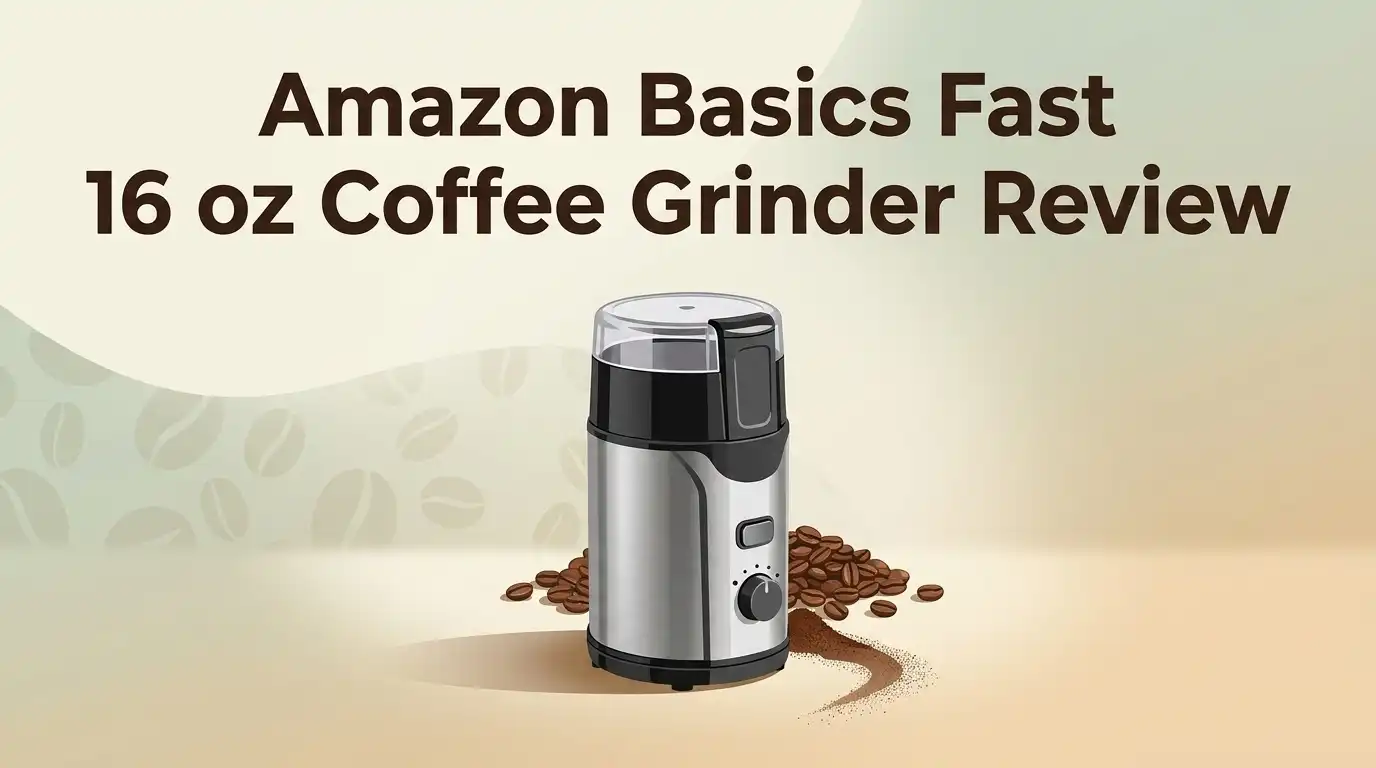
Amazon Basics Fast 16 oz Coffee Grinder Review 2026: Worth Buying?
Fresh coffee starts with fresh grounds. That simple fact pushes thousands of people toward cheap electric grinders every year.
The Amazon Basics Fast Coffee Grinder sits right in the middle of that search. It costs less than two bags of specialty beans. It promises ground coffee in about ten seconds. It also carries the weight of a big name on a small appliance.
But cheap tools make big promises all the time. Does this one actually hold up in a real kitchen, with real beans, on a busy Monday morning? I used it for daily drip brewing, French press batches, and a few messy spice experiments. I measured grind times. I listened to the noise. I counted the chunks left behind.
In a Nutshell:
- Speed is the headline feature. The 150 watt motor turns roughly 30 grams of beans into drip grind in about ten seconds. Coarse grinds take eight to ten seconds. A fine grind needs around thirty seconds of pulsing.
- Capacity is smaller than the name suggests. The manual lists a maximum of 2.1 oz, or 60 grams, of beans per batch. That covers about four to six cups of drip coffee. The larger size numbers you see online usually describe the housing or packaging, not the bean load.
- Grind consistency is average at best. This is a blade grinder, not a burr grinder. It chops beans instead of milling them. You get powder and boulders in the same batch. Shaking the unit while grinding helps a lot.
- Cleaning takes effort. The grinding chamber does not detach. You wipe the bowl with a cloth and brush the blades by hand. Only the lid is dishwasher safe.
- Value is genuinely strong under $25. For drip, French press, and cold brew, it beats pre ground coffee by a wide margin. For espresso, it falls short.
- Build quality feels light but tidy. Stainless steel blades, a stainless bowl, a plastic body, and a cord storage compartment underneath.
Unboxing the Amazon Basics Coffee Grinder


Last update on 2026-11-19 / Affiliate links / Images from Amazon Product Advertising API
The box arrived small and light, close to the size of a large coffee mug carton. Inside sat the grinder wrapped in a thin plastic sleeve, a clear lid, and a folded instruction sheet. No scoop. No cleaning brush. No bonus accessories. The presentation feels exactly as budget as the price tag suggests.
The unit weighs about 1.5 pounds. It feels lighter in hand than photos imply. The black plastic body has a matte finish that hides fingerprints well. The stainless bowl inside looked clean and polished with no manufacturing debris.
Setup took under a minute. I unwound the cord from the storage compartment on the base, wiped the bowl with a damp cloth, and plugged it in. There is no assembly at all. You remove the lid, add beans, press down, and go. That simplicity is the whole point of this product.
Design and Build Quality Explained
The design follows a familiar blade grinder shape. A round plastic housing holds a stainless steel bowl. A single stainless blade spins at the bottom. A clear plastic lid snaps on top so you can watch the grind progress.
The lid acts as the safety switch. Press it down and the motor runs. Release it and the motor stops instantly. This hold to run design prevents accidental starts and keeps fingers away from sharp blades.
The base measures roughly 3.7 inches long, 3.5 inches wide, and 6.9 inches tall. It slides into a cabinet or sits beside a kettle without crowding the counter. The cord wraps neatly into a channel on the underside.
The weak point is the plastic body. It flexes slightly under pressure. It will not survive a drop onto tile. Treat it gently and it holds up fine.
Grinding Performance and Real Speed Tests
Speed is where this grinder earns its name. I timed several batches with medium roast beans at room temperature.
A coarse French press grind finished in nine seconds. A drip grind took twelve seconds. A fine grind needed about thirty seconds of short pulses. Those numbers match the manufacturer guidance closely, which is rare for budget appliances.
The 150 watt motor pulls beans down fast once they start moving. The first two seconds sound rough because whole beans bounce around before the blade catches them. After that, the sound smooths out into a steady whirr.
The motor has limits. The manual allows 45 seconds of continuous running, followed by a three minute cool down. Ignoring that rule is the fastest way to burn out the motor. I respected it and never smelled hot plastic or felt excessive heat on the base.
Top 3 Alternative for Amazon Basics Fast Coffee Grinder

Last update on 2026-11-18 / Affiliate links / Images from Amazon Product Advertising API
Hamilton Beach Fresh Grind Electric Coffee Grinder

Last update on 2026-11-18 / Affiliate links / Images from Amazon Product Advertising API
KRUPS F203 Electric Spice and Coffee Grinder

Last update on 2026-11-18 / Affiliate links / Images from Amazon Product Advertising API
Cuisinart Coffee Bar Electric Coffee Grinder
Grind Consistency: The Honest Truth
Here is where budget meets reality. A blade grinder chops. A burr grinder mills. Those are different jobs with different results.
Every batch I ground contained a mix of fine powder and larger chunks. The ratio improved when I shook the grinder gently during operation. It improved further when I ground in short pulses instead of one long burst. Still, perfect uniformity never happened, and no technique will make it happen.
For drip coffee, the inconsistency barely matters. The paper filter and brew time smooth over the differences. For French press, the powder slips through the mesh and creates sludge at the bottom of your cup.
If you taste bitterness and sourness in the same sip, inconsistent grind size is the cause. Fine particles over extract while chunks under extract. That is the honest trade you accept at this price.
Capacity and What 16 oz Really Means
Shoppers get confused by the capacity numbers, and the confusion is understandable.
The official manual states a maximum capacity of 2.1 oz, which equals 60 grams of whole beans. Larger figures floating around product listings usually describe hopper volume in liquid ounces or the brewed coffee the grounds produce, not the bean weight.
Sixty grams of beans brews roughly four to six standard cups of drip coffee. That suits a single person or a couple. A household of four coffee drinkers will run two batches every morning.
Overfilling the bowl does not help. Beans above the blade line just rattle around without getting chopped. Grind smaller amounts for better results. Thirty grams produces a far more even grind than sixty grams in my testing.
Noise Level During Operation
Nobody buys a quiet blade grinder. This one is loud, and I want to be clear about that.
The noise sits somewhere around a kitchen blender on low speed. The first few seconds are the harshest because whole beans clatter against the stainless bowl. The volume drops once the beans break down.
Each session lasts only ten to fifteen seconds, which keeps the annoyance short. Still, this is not the appliance for grinding beans at five in the morning in a small apartment with thin walls.
Placing a folded dish towel under the base reduced the rattle noticeably. The towel absorbs vibration that otherwise travels through the countertop. That small trick made my early morning grinding far less disruptive to the rest of the house.
Ease of Cleaning and Maintenance
Cleaning is the biggest daily frustration with this grinder. The grinding chamber does not detach from the body. You cannot rinse it under the tap because the motor sits directly underneath.
The routine goes like this. Unplug the unit. Wipe the stainless bowl with a slightly damp cloth. Use a small dry brush to sweep coffee dust from around the blade. Dry everything before storage.
The clear lid is dishwasher safe, which is a small mercy. Everything else is a manual job.
Coffee oils build up over weeks and turn rancid. Old residue makes fresh coffee taste stale. Wipe the bowl after every single use and you avoid that problem entirely. Skip it for a month and you will taste the neglect in your cup.
Pros of the Amazon Basics Coffee Grinder
- Genuinely fast grinding. Ten seconds for drip grind beats most grinders in this price bracket.
- Very low price. It usually costs less than a single bag of good specialty beans.
- Simple one button operation. Press the lid down, release to stop. There is nothing to learn.
- Compact footprint. It fits in small kitchens, dorm rooms, and office drawers without hassle.
- Safety switch built in. The motor only runs while the lid stays pressed down.
- Stainless steel blades and bowl. These resist rust and handle daily use well.
- Cord storage underneath. A small touch that keeps counters tidy.
- Grinds more than coffee. Nuts, grains, and dried herbs all work in short bursts.
Cons and Clear Weaknesses
- Inconsistent grind size. Powder and chunks appear in every batch. That is physics, not a defect.
- No espresso capability. The grind never gets fine or even enough for a proper pump espresso machine.
- Awkward cleaning. The fixed bowl means wiping by hand every time.
- Loud operation. Expect blender level noise for the full grinding cycle.
- No grind settings. You control coarseness only by counting seconds.
- Strict duty cycle. Forty five seconds on, three minutes off, with no exceptions.
- Light plastic body. It does not feel like a lifetime appliance.
- Static cling. Fine grounds stick to the lid and fly out when you open it.
- Small batch size. Larger households need repeat grinding sessions.
What This Grinder Does Not Do Well
Let me be direct about the failures, because honest reviews need them.
It cannot make espresso grind. Full stop. I tried thirty second runs and pulse techniques. The result still produced channeling and weak shots in a pump machine. Buy a burr grinder if espresso matters to you.
It does not give repeatable results. Two batches ground for the same twelve seconds can differ noticeably depending on bean density and roast level. You adjust by feel, not by setting.
It does not handle wet or oily ingredients. The manual specifically limits intended use to coffee beans. Oily dark roasts also gum up the bowl faster than medium roasts.
It does not replace a $150 grinder, and it never claimed to. Measure it against pre ground supermarket coffee instead, and it wins easily.
Best Brew Methods for This Grinder
Match the tool to the job and this grinder shines.
Drip coffee makers work best. A twelve second grind produces medium particles that filter papers forgive. The flavor jump over pre ground coffee is immediate and obvious.
Cold brew works beautifully too. Coarse grinds and long steep times hide almost every consistency flaw. I made my best cold brew batches with an eight second grind.
Percolators and coffee urns handle the coarse setting well. Pour over brewing works acceptably if you accept slightly uneven extraction.
French press sits in the middle. The coarse grind works, but fine dust creates sediment in your cup. A quick decant through a mesh strainer fixes most of it.
Espresso and Moka pot brewing remain the weak spots. Those methods demand precision this grinder cannot deliver.
Grinding Spices, Nuts and Other Ingredients
Many owners use this grinder as a dedicated spice mill, and it performs that job surprisingly well.
Whole peppercorns, coriander seeds, cumin, and dried chilies all break down in ten to fifteen seconds. Flax seeds and rolled oats turn into usable flour. Almonds and walnuts chop fine for baking, though a few seconds too long creates nut butter.
One important note: the official manual states the product is intended for coffee beans only. Using it for spices falls outside the stated intended use, so you accept that risk yourself.
Practical advice if you do it anyway: buy two units. Spice oils linger in the stainless bowl and taint coffee flavor for weeks. Cumin coffee is a mistake you only make once.
Durability and Long Term Motor Life
Budget grinders live or die by their motors. This one holds up reasonably well under normal use.
Owner feedback across years of this model shows a common pattern. Units used once or twice daily for short bursts often last two to four years. Units pushed past the duty cycle fail much sooner, sometimes within months.
The blade stays sharp far longer than people expect because coffee beans are softer than they look. Blade dullness is rarely the failure point. Motor burnout and switch wear cause most breakdowns.
The lid switch takes the most abuse. Pressing hard every day eventually loosens the mechanism. Press firmly but gently and it lasts longer.
Respect the 45 second limit and this grinder will outlive its purchase price many times over.
Price and Value in 2026
Pricing hovers in the low twenty dollar range, with frequent dips during sales events. That puts it among the least expensive electric grinders from a recognized brand.
Compare the math. A bag of pre ground coffee costs about the same as this grinder. Fresh grinding improves flavor in every cup you brew afterward, forever. The payback happens within the first week.
Compare it upward instead and the picture changes. Entry level burr grinders start around sixty to eighty dollars. Those deliver real grind consistency and adjustable settings. If your budget stretches that far, the burr option serves you better long term.
This grinder makes sense as a first grinder, a backup grinder, a travel grinder, or a dedicated spice grinder. It makes less sense as a forever purchase for a serious coffee enthusiast.
Who Should Buy This Grinder
Last update on 2026-11-19 / Affiliate links / Images from Amazon Product Advertising API
Buy this if you currently drink pre ground coffee and want a noticeable upgrade for very little money. The flavor difference will genuinely surprise you.
Buy it if you brew drip coffee, cold brew, or percolator coffee. Those methods forgive uneven grinds completely.
Buy it for a dorm room, an office kitchen, a vacation rental, or an RV. The small size and low cost suit those settings perfectly.
Skip it if you own a pump espresso machine. Skip it if you weigh your beans to the tenth of a gram and care about extraction yields. Skip it if household noise is a serious concern.
The right buyer here is a casual coffee drinker who values speed and simplicity over laboratory precision. That describes most people, which explains why this model sells so well.
Tips to Get Better Results From Your Grinder
Small habits improve your cup dramatically with this grinder.
Grind in short pulses of two to three seconds instead of one long burst. Pulsing reduces heat and gives more even particles.
Shake the grinder gently while it runs. This moves unground beans toward the blade and breaks up clumps.
Grind only what you need for the next brew. Ground coffee loses aroma within minutes.
Use thirty grams per batch rather than the full sixty. Smaller loads produce visibly more even grounds.
Tap the lid before opening it. Static makes fine particles cling, and tapping releases them.
Store beans in an airtight container at room temperature. Frozen beans grind fine too and stay fresh for up to two months.
Wipe the bowl after every use. This single habit prevents stale oils from ruining future batches.
Final Verdict on the Amazon Basics Coffee Grinder
This grinder does exactly one thing well, and it does it fast. Press the lid, count to twelve, and you have fresh grounds for drip coffee. That reliability at this price deserves respect.
The flaws are real and predictable. Grind consistency falls short. Cleaning takes manual effort. Espresso stays out of reach. Noise fills the kitchen for fifteen seconds.
None of those flaws surprise anyone who understands blade grinders. They are the known cost of a twenty dollar appliance.
My verdict: a solid buy for casual coffee drinkers and a poor buy for espresso enthusiasts. If you want fresh coffee without thinking about it, this grinder delivers. If you want control, precision, and repeatability, save your money and buy a burr grinder instead.
Frequently Asked Questions
How much coffee can this grinder hold at once?
The manual lists a maximum of 2.1 oz, which equals 60 grams of whole beans. That produces roughly four to six cups of drip coffee. Larger capacity numbers in listings usually refer to housing volume rather than bean weight. Smaller batches of about thirty grams grind more evenly.
Can this grinder make espresso grind?
Not reliably. Thirty seconds of grinding produces a fine texture, but the particle sizes stay uneven. Pump espresso machines need consistent fine grounds to avoid channeling. A burr grinder handles espresso properly. This model suits drip, cold brew, and percolator brewing much better.
How long should I grind for each brew method?
Coarse grinds for percolators take eight to ten seconds. Medium grinds for drip machines take ten to fifteen seconds. Fine grinds need about thirty seconds. Never exceed 45 seconds of continuous running, and let the motor rest three minutes before the next batch.
Is the grinding bowl removable for washing?
No. The stainless bowl stays fixed to the motor body. You clean it by wiping with a slightly damp cloth and brushing the blade area with a small dry brush. Only the clear plastic lid is dishwasher safe. Never submerge the main body in water.
Can I grind spices and nuts in this grinder?
Physically yes, and many owners do. The official manual states the product is intended for coffee beans only, so you take that risk yourself. Spice oils linger in the bowl and affect coffee flavor afterward. Buying a second unit for spices solves the problem cleanly.
How loud is this coffee grinder?
It produces noise similar to a kitchen blender on low speed. The first few seconds are loudest because whole beans bounce against the stainless bowl. Each session lasts only ten to fifteen seconds. Placing a folded towel underneath reduces vibration and lowers the overall sound noticeably.
How long does this grinder typically last?
With daily short bursts and proper rest periods, owners commonly report two to four years of service. Pushing past the 45 second duty cycle causes early motor failure. The lid switch and motor wear out before the blades dull. Gentle handling extends lifespan considerably.

Hi, I’m Emma Lee — the coffee-obsessed creator behind Morning Drip Vault. I spend my days testing coffee machines, exploring brewing techniques, and reviewing the latest coffee gear. My mission is simple: helping you find the perfect machine to brew your best cup, every single morning.