Coffee Gator French Press Review 2026: Worth Buying?
Your coffee goes cold in fifteen minutes. You pour a second cup and it tastes like sad, lukewarm disappointment. Glass presses look pretty, but they crack, they leak heat, and they shatter when your elbow meets the counter at 6am.
The Coffee Gator French Press promises a fix. It uses double wall vacuum insulated stainless steel, a spring loaded filter setup, and a 34 oz body that serves a household instead of one person. It sells for roughly $38, which places it above the budget glass crowd and well below the premium presses.
This review covers what the Coffee Gator gets right, what it gets wrong, and who should skip it entirely. No fluff. Just the stuff you need before you spend the money.
In a Nutshell:
- Heat retention is the headline feature. The double wall vacuum body keeps coffee hot for around 60 minutes. Glass presses lose drinkable temperature in roughly 15 to 20 minutes. If you sip slowly, this single feature justifies the purchase.
- Build quality feels genuinely tough. The 304 food grade stainless steel body shrugs off drops, dents, and camping trips. There is no glass to break. It weighs noticeably more than competitors, which is a good sign, not a flaw.
- Filtration is decent but not grit free. The dual screen system catches most coarse grounds. Fine particles still reach your cup. Anyone chasing a perfectly clean brew should look at four layer or micro filter systems instead.
- Cleanup is a real chore. It is not dishwasher safe. You disassemble the plunger, rinse both screens, and dry everything by hand after every brew.
- You cannot see inside. Steel walls mean zero visibility. You brew blind and rely on the internal measurement markings and a timer.
- Best value pick for slow drinkers. At under $40, insulated stainless steel at this capacity remains uncommon. Fast drinkers gain nothing from the insulation and may prefer a cheaper glass press.
Coffee Gator French Press Coffee Maker 34 oz

Last update on 2026-10-22 / Affiliate links / Images from Amazon Product Advertising API
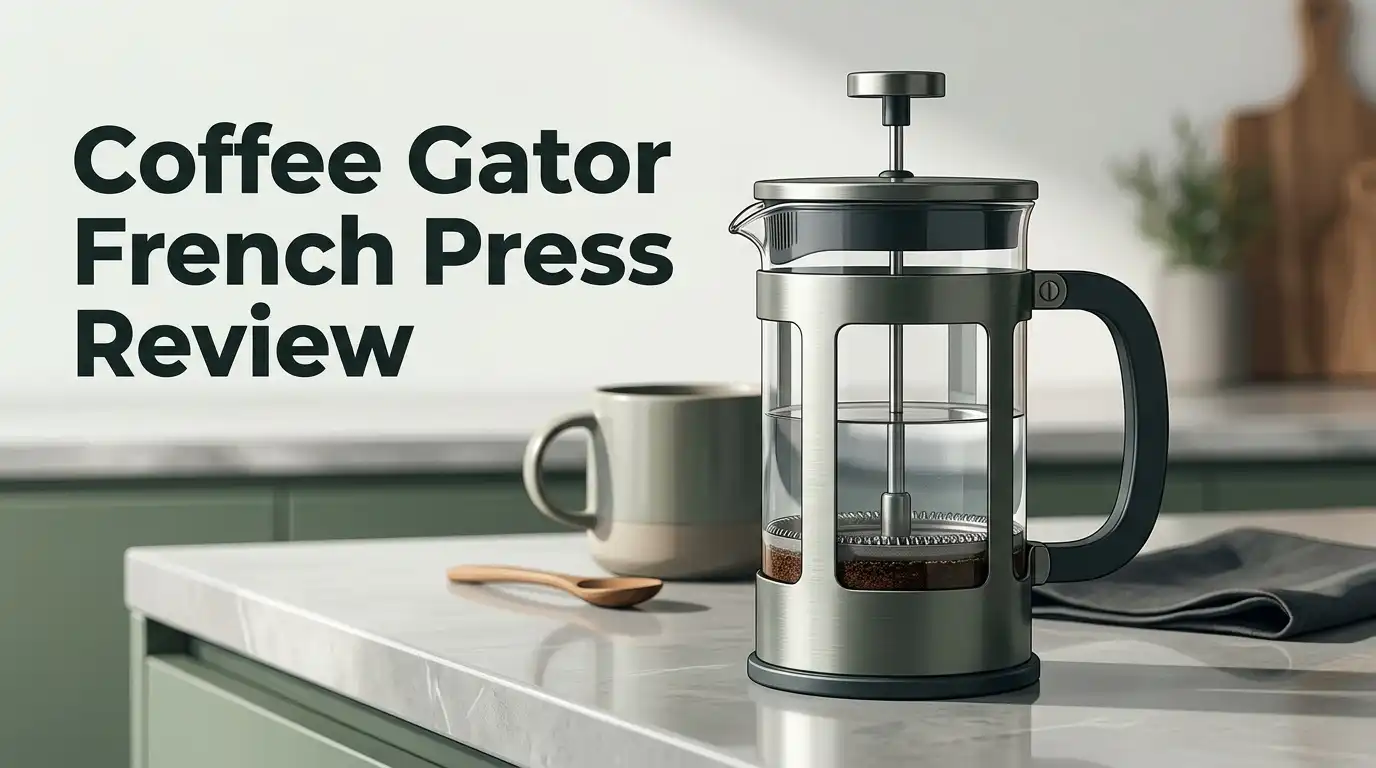
The Coffee Gator French Press is a 34 oz insulated brewer built from 304 grade stainless steel. It brews up to four standard cups per cycle, which suits couples, small families, and anyone who refills more than once.
The body uses double wall vacuum construction. That means two steel shells with a vacuum gap between them. Heat stays in the coffee instead of escaping into your kitchen air.
The plunger uses a spring loaded dual screen filter. The spring presses the mesh against the inner wall, which helps trap grounds along the edges where cheap presses leak.
You get a cool touch handle, a stainless lid, and internal measurement markings for coffee to water ratios. Colors include gray, orange, and silver. It is the kind of tool that looks like it belongs in a camp kitchen and a nice apartment equally.
The Unboxing Experience
The box arrives smaller and heavier than you expect. Coffee Gator ships in a printed cardboard sleeve with the alligator logo across the front, and the press sits inside a molded foam cradle.
Lift it out and the weight registers immediately. This thing feels like a small dumbbell. The heft is the first thing every person who handles it comments on.
Inside you find the press body, the lid with the plunger assembly attached, and two spare filter screens in a small bag. Coffee Gator includes a compact brewing guide card with grind and ratio suggestions.
The steel arrives with a brushed finish and a light factory film. Wash everything before your first brew. The plunger unscrews in seconds with no tools. Total setup time runs under three minutes, and nothing about the process feels cheap or confusing.
Top 3 Alternatives for Coffee Gator French Press


Last update on 2026-10-23 / Affiliate links / Images from Amazon Product Advertising API
Bodum Chambord 34oz French Press Coffee Maker

Last update on 2026-10-22 / Affiliate links / Images from Amazon Product Advertising API
Secura French Press Coffee Maker 34 Ounce 304 Stainless Steel Insulated

Last update on 2026-10-21 / Affiliate links / Images from Amazon Product Advertising API
ESPRO P3 French Press Coffee Maker 32oz
Build Quality and Materials
Coffee Gator uses 304 food grade stainless steel throughout the body, lid, and plunger rod. This is the same grade used in commercial kitchen equipment. It resists rust, acid, and repeated thermal shock.
The wall thickness is the standout detail. Coffee Gator claims the steel runs around 33 percent thicker than typical competitors, and the press weighs roughly 20 percent more as a result. You feel that difference the moment you lift it.
There is no plastic in contact with your coffee. The handle uses a heat resistant design that stays cool during brewing, so you can pour barehanded right after pressing.
Seams and welds look clean. The lid seats firmly and rotates to close the pour spout. After weeks of use, mine shows no scratches, no rust spots, and no loosening at the plunger threads. This press is built for years, not seasons.
How the Filter System Performs
The plunger uses a dual screen mesh setup backed by a spring ring. The spring keeps the mesh pressed tight against the inner wall as you plunge.
In practice, the filter catches the bulk of coarse grounds. Your first cup pours clean. Your last cup will show a thin layer of silt at the bottom. That is normal French press behavior, and no mesh filter eliminates it completely.
Grind size matters enormously here. A coarse, even grind produces a much cleaner cup. Pre ground supermarket coffee, which skews fine and inconsistent, will muddy your brew.
Coffee Gator includes two spare screens in the box, which is a thoughtful touch since mesh wears out over time. Compared to four layer systems or the ESPRO micro filter, the Gator lands in the middle. It is better than a bare single screen and clearly behind premium filtration.
Heat Retention Tested
This is where the Coffee Gator earns its price. I brewed at roughly 200°F and tracked the temperature with a probe thermometer.
After 30 minutes, the coffee sat comfortably above 150°F. After 60 minutes, it still poured warm enough to drink without a microwave. A comparable glass press dropped below drinkable temperature in under 20 minutes during the same test.
One trick improves results noticeably. Preheat the press with hot water for 60 seconds, dump it, then brew. Cold steel absorbs heat from your coffee, and preheating removes that penalty.
The insulation also works in reverse for cold brew. Your concentrate stays cold on the counter instead of warming to room temperature.
If you nurse a pot over an hour, this feature changes your morning. If you drink one cup and leave, the insulation gives you nothing that a $20 press cannot.
Brewing Great Coffee With It
Use a coarse grind that resembles sea salt. Fine grinds clog the mesh and push sediment through.
Start with a 1 to 15 ratio. That works out to roughly 60 grams of coffee for the full 34 oz. Adjust from there based on taste.
Heat your water to about 200°F, which is just off the boil. Pour a small amount first, wait 30 seconds for the bloom, then fill the rest of the way.
Steep for four minutes. Stir the crust gently, skim the foam, then press slowly. Rushing the plunge forces grounds through the mesh and creates bitterness.
Pour everything out immediately. Coffee left sitting on the grounds keeps extracting and turns harsh, even in an insulated press.
Decant into mugs or a separate carafe if you plan to drink over a long stretch. The insulation holds heat, but it will not stop over extraction.
Cold Brew Performance
The Coffee Gator handles cold brew well, and the insulation is a quiet bonus here.
Add coarse ground coffee at a stronger ratio, around 1 to 8 for concentrate. Fill with cold filtered water. Stir, seal the lid, and refrigerate for 12 to 18 hours.
Press slowly the next morning and pour over ice. The dual screen catches most grounds, though a paper filter pass will clean it up further if you want clarity.
The steel body fits most refrigerator shelves upright without tipping. The sealed lid prevents your coffee from absorbing refrigerator odors, which glass presses with loose lids often fail to do.
One limitation applies. At 34 oz, you brew a moderate batch, not a week’s supply. Heavy cold brew drinkers will want a dedicated larger vessel.
Cleaning and Daily Maintenance
Here is the honest downside. The Coffee Gator is not dishwasher safe. Every brew ends with hand washing.
The routine goes like this. Scoop the wet grounds into your compost or trash. Rinse the body. Unscrew the plunger assembly, separate both screens, and rinse each one under running water to clear trapped particles.
Dry everything before reassembly. Water left between the screens can leave mineral deposits over time.
Coffee oils build up on steel just like they do on glass. Once a month, soak the parts in warm water with a spoonful of baking soda. Skip abrasive pads, which scratch the brushed finish.
Do not submerge the outer body for long periods. Vacuum insulated vessels can trap water in seams if handled carelessly. The whole process takes about two minutes, which adds up across a year.
What the Coffee Gator Does Not Do Well
Authentic reviews cover failures, so here they are.
You cannot see your brew. Steel walls block all visibility. You cannot watch the bloom, judge the color, or see how much coffee remains without opening the lid.
Sediment persists. The dual screen is competent, not exceptional. Anyone who hates silt should buy a micro filter press instead.
Hand washing is mandatory. No dishwasher. Ever. This is the complaint that shows up most in owner reviews.
The lid can drip. Pouring fast sometimes sends a dribble down the spout edge.
Replacement parts are not always easy to source. Coffee Gator includes spare screens, but the rubber gasket and spring ring are harder to find separately.
It is heavy. Full of coffee, it weighs enough that people with grip strength issues may struggle to pour one handed.
Pros and Cons
Pros
- Double wall vacuum insulation keeps coffee hot for roughly 60 minutes, which beats glass by a wide margin
- Thick 304 food grade stainless steel resists rust, dents, and drops
- No plastic touches your coffee, and no glass can shatter
- Two spare filter screens are included at no extra cost
- Internal measurement markings simplify your coffee to water ratio
- 34 oz capacity serves two to four people per cycle
- Cool touch handle stays comfortable during pouring
- Priced under $40, which is strong value for insulated steel
- Works for hot brew and cold brew equally well
Cons
- Not dishwasher safe, so hand washing is required after every use
- Dual screen filtration allows fine sediment into the cup
- Zero visibility means you brew without watching the process
- Heavier than glass and plastic competitors, which some users dislike
- Occasional dripping from the pour spout
- Replacement gaskets and springs are hard to source
- Too large for reliable single cup brewing
Coffee Gator vs Bodum Chambord
The Bodum Chambord is the most recognized French press on earth. It uses borosilicate glass, a chrome frame, and a three part mesh filter.
The Chambord wins on looks and visibility. You watch the bloom, judge the color, and enjoy a genuinely handsome object on your counter. It also runs cheaper in most listings.
The Coffee Gator wins on everything practical. Glass loses heat fast, and the Chambord gives you maybe 20 minutes of good temperature. The Gator gives you an hour.
Glass also breaks. Bodum sells replacement carafes for a reason.
Choose the Chambord if you drink immediately and value the classic look. Choose the Coffee Gator if you drink slowly, travel, camp, or share your kitchen with people who knock things over.
Price and Long Term Value
The Coffee Gator sells for roughly $38 depending on color and promotions. That places it above basic glass presses and below premium options like the ESPRO P7 or Fellow Clara.
At that price, you get vacuum insulation, 304 steel, and two spare filters. Finding all three under $40 remains genuinely difficult.
Long term value depends on durability, and this press scores well there. Steel does not shatter, so you avoid the replacement carafe cycle that glass owners eventually face.
The only recurring cost is filter mesh, which wears out after a year or two of daily use. Spares run a few dollars.
Compared against a $5 daily coffee shop habit, the press pays for itself in about eight days. That math holds for almost any press, but the Gator’s lifespan makes it hold longer.
Who Should Buy the Coffee Gator
Buy it if you drink your coffee slowly. That is the single clearest use case. The insulation transforms a pot that you finish over an hour.
Buy it if you camp, travel, or brew in a busy kitchen. Steel survives environments that destroy glass.
Buy it if you brew for two to four people regularly. The 34 oz capacity fits that group perfectly.
Skip it if you drink one cup and rinse immediately. You pay for insulation you never use.
Skip it if you demand a grit free cup. Buy a micro filter press instead.
Skip it if dishwasher convenience matters more to you than heat retention. Be honest with yourself about that one, because hand washing every day wears people down.
Final Verdict
The Coffee Gator French Press does one thing extremely well and several things acceptably. Heat retention is the reason to buy it, and the reason it beats nearly everything at this price.
The build quality is real. Thick steel, clean welds, no plastic near your coffee, and a weight that signals seriousness the moment you pick it up.
The filtration is fine, not remarkable. The cleanup is annoying. The lack of visibility bothers some people more than others.
I rate it 4.3 out of 5 for the right buyer.
Recommended for slow sippers, families, campers, and anyone tired of replacing broken glass carafes. Not recommended for grit sensitive drinkers or dishwasher loyalists. At under $40, it remains one of the smartest insulated press purchases available in 2026.
Frequently Asked Questions
Is the Coffee Gator French Press dishwasher safe?
No. Coffee Gator recommends hand washing only. Disassemble the plunger, rinse both screens, wash the body with warm soapy water, and dry everything before reassembly. Dishwasher cycles can damage the vacuum seal and dull the brushed finish.
How long does it keep coffee hot?
Around 60 minutes at drinkable temperature. Preheating the press with hot water before brewing extends that meaningfully. Glass presses typically fall below drinkable temperature within 20 minutes.
How many cups does it make?
The 34 oz capacity produces about four standard 8 oz cups, or three generous mugs. It suits two to four drinkers per cycle.
Does it leave grounds in the coffee?
Some, yes. The dual screen catches most coarse particles, but fine sediment reaches your cup. A coarse, even grind reduces this considerably.
Can I make tea in it?
Yes. Loose leaf tea works well. Use a separate press or wash thoroughly, since coffee oils transfer flavor to delicate teas.
Is it good for camping?
Yes. Steel construction, no glass, and insulation that keeps coffee hot in cold weather make it a strong camping choice. It is heavier than dedicated backpacking presses, so car campers benefit most.
Where are replacement filters available?
Coffee Gator includes two spares in the box. Additional screens are sold on Amazon and the Coffee Gator site. Gaskets and spring rings are harder to source, so contact customer support directly.
Does it contain BPA or plastic?
The brewing surfaces are 304 stainless steel with no plastic contact. Coffee Gator markets the press as non toxic and BPA free.

Hi, I’m Emma Lee — the coffee-obsessed creator behind Morning Drip Vault. I spend my days testing coffee machines, exploring brewing techniques, and reviewing the latest coffee gear. My mission is simple: helping you find the perfect machine to brew your best cup, every single morning.