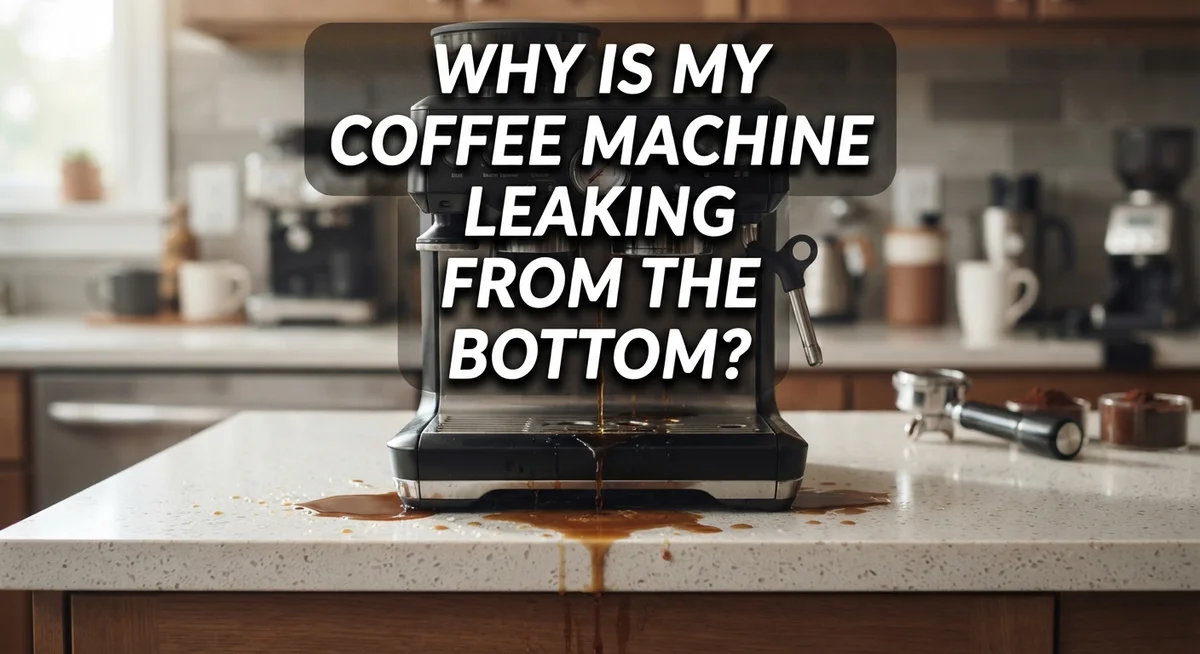
Why Is My Coffee Machine Leaking From The Bottom?
A puddle under your coffee machine can ruin your morning. You reach for your favorite mug, but instead you grab a towel. This problem happens to many coffee lovers, and it feels frustrating every time.
The good news is that bottom leaks have clear causes. Your machine might have a worn seal, a full reservoir, or a drip tray that sits the wrong way. Sometimes pressure builds up inside and pushes water out from below.
This leaking can happen while you brew your coffee. It can also happen when the machine sits off and unused. Both situations point to different problems, and knowing the difference helps you fix things fast.
In a Nutshell
- Worn seals near the tank bottom often let water escape. This happens even when the machine sits idle.
- A damaged reservoir can crack over time. This lets water drip straight through the base.
- Pressure buildup inside the machine may force water out from weak points. This often occurs during brewing.
- An improperly fitted drip tray causes spills to pool underneath. Always check that it clicks into place.
- Do not rely fully on the pop up float. It can fail without warning and cause overflow.
- Overflow from above can trickle down and look like a bottom leak. Always trace the water path first.
Common Causes of Bottom Leaks in Coffee Machines
Water leaks from your coffee machine’s bottom happen for specific reasons. Understanding these causes helps you fix the problem faster and prevent damage to your countertop or floor.
Reservoir issues are the most common culprit. Your machine’s water tank holds gallons of water under slight pressure. Over time, cracks form in plastic reservoirs from temperature changes and normal wear. These cracks let water seep out slowly or quickly depending on their size. Check your reservoir carefully by removing it and looking for visible damage.
Defective seals around the tank connection point fail regularly. These rubber or silicone rings create a watertight seal between the reservoir and the brewing chamber. Age, mineral buildup, and constant exposure to hot water weaken these seals. When they fail, water drips out during brewing or even when the machine sits idle.
Pressure buildup inside your machine forces water through weak points. Coffee machines heat water and create steam pressure. If internal valves malfunction, excess pressure builds up and pushes water out from the bottom. This typically happens during the brewing cycle.
Drip tray problems cause water to pool underneath your machine. A drip tray that sits incorrectly or has a cracked lid allows water to spill onto your counter. Water then runs under the machine, making it look like an internal leak. Always verify your drip tray is seated properly before assuming an internal problem exists.
Float mechanism failures lead to overflow issues. The float inside your reservoir rises and falls with water levels. A broken float gets stuck, allowing the reservoir to overfill. Water then spills down through internal channels and exits from the bottom.
Each of these causes requires different solutions. Identifying which component fails first saves you time and money. Start by inspecting your reservoir for cracks, then check seal tightness, and finally examine your drip tray placement.
How to Diagnose the Source of the Leak
To find where your coffee machine leaks, you need to observe the water carefully. Start by running your machine empty to see if water drips during brewing or only when the machine sits idle. This tells you whether the leak happens under pressure or from a stationary component.
Next, examine the drip tray closely. Remove it and check if the tray itself is cracked or warped. Look at how the tray sits in its slot. A loose or improperly seated tray lets water escape underneath rather than collecting inside it.
Inspect the water reservoir next. Fill it completely and watch for drips around the connection points where the tank attaches to the machine. Small cracks in plastic reservoirs often hide along the bottom seam. Run your finger along these joints to feel for moisture.
Check the seals around your tank. These rubber rings prevent water from leaking where the reservoir connects to the machine body. If you see water pooling at this connection point, the seal likely needs attention.
Pay attention to when the leak occurs. Does water drip during brewing when pressure builds up? This suggests a seal failure or pressure issue. Does it leak only when the machine sits off? This points to a reservoir crack or faulty float mechanism.
Look underneath your machine with a flashlight. Trace where the water actually originates. Sometimes overflow from the top trickles down and pools at the bottom, making you think the leak starts there.
Keep a paper towel under the suspected area for several minutes. This helps you see the exact drip pattern and flow direction. Mark the spot where water first appears.
Document your findings. Note the time of day, whether the machine was brewing, and exactly where water emerged. This information helps you identify the real problem and decide whether you need a simple seal replacement or a more complex repair.
Checking and Fixing Reservoir and Seal Issues
Your coffee machine’s reservoir and seals work together to hold water safely. When either fails, water escapes from the bottom. Understanding how to check and fix these parts stops leaks quickly.
Start by examining your water reservoir itself. Remove it from your machine and look for cracks or splits in the plastic. Hold it up to light and inspect the entire surface carefully. Even small cracks leak water slowly over time. If you find damage, the reservoir needs replacement.
Next, focus on the seals around your tank. These rubber or silicone gaskets create a watertight connection between the reservoir and machine body. Pull out your reservoir gently and look at where it connects to the machine. You should see a rubber ring or seal in this area.
Check if the seal looks cracked, flattened, or discolored. Worn seals lose their ability to grip tightly. Water then drips past them during brewing or when pressure builds inside. A damaged seal is often replaceable, which costs far less than a new reservoir.
Make sure your reservoir sits properly when you reinstall it. Push it firmly into place until you hear or feel it click. An improperly seated reservoir lets water escape at connection points.
Also inspect the drip tray beneath your machine. The tray has a small opening that connects to the tank area. If this opening gets blocked or if the tray doesn’t fit snugly, water backs up and pools underneath. Empty your drip tray regularly to prevent overflow.
Run your machine briefly after checking these areas. Watch where water appears. This simple test confirms whether your reservoir, seal, or tray caused the leak. Most bottom leaks stop once you fix the seal or secure the reservoir correctly.
Drip Tray Problems and Proper Installation
Your drip tray plays a bigger role than you might think. This simple component sits below your machine to catch water during normal brewing. When it’s not installed correctly, leaks appear underneath your coffee machine even though the machine itself works fine.
The drip tray must fit snugly into its designated slot. Check that all corners sit flush against the machine’s body. If the tray tilts or sits at an angle, water spills onto your counter and floor instead of staying inside. Remove the tray completely and look at how it should align.
Make sure the tray is empty before you use your machine. An overfull drip tray overflows during brewing. Water backs up and leaks from underneath. Empty your tray regularly, especially if you make multiple cups daily. Gently remove it to avoid splashing water onto the floor.
The drip tray lid also matters. Some machines have removable lids that help contain splashes. These lids must sit properly on top of the tray. A loose or missing lid allows water to escape sideways and drip down.
When you reinstall your drip tray, push it firmly until you hear a click or feel it lock into place. Different machines have different locking mechanisms. Some use simple slots while others have clips or latches. Check your machine’s manual to confirm the correct installation method.
Inspect the tray itself for cracks or damage. A cracked tray leaks water directly onto your floor. If you find damage, the tray needs replacement. Even small cracks grow larger over time.
Poor installation causes many false alarms about machine leaks. Before you assume your seals or reservoir failed, verify that your drip tray sits correctly and remains empty. This simple check often solves the problem immediately.
Understanding Pressure Buildup and Overflow Leaks
Pressure buildup happens inside your coffee machine during the brewing cycle. Hot water gets forced through coffee grounds at high pressure. This pressure can cause water to escape from weak points in your machine’s structure.
Overflow leaks occur when pressure builds faster than water can exit normally. The water needs somewhere to go. When it cannot flow through the coffee grounds fast enough, it backs up inside the machine. This backup forces water toward the bottom of your machine.
Your machine has internal pathways designed to handle normal pressure. When these pathways get blocked, pressure increases significantly. A clogged shower head or blocked coffee basket can trigger this problem. The machine then forces water through alternative routes, including downward toward your drip tray area.
Understanding when the leak happens helps you identify pressure issues. If water drips from the bottom during brewing, pressure buildup is likely the cause. The machine is actively pushing water through your grounds at that moment. If water leaks when your machine sits idle, a different problem exists like a failing seal or reservoir issue.
The overflow valve on your machine prevents excessive pressure from building. This valve should release extra water safely. When the overflow valve malfunctions, pressure continues climbing. Water then escapes through the bottom or sides of your machine instead of through the proper outlet.
Check your brewing basket for coffee grounds or debris. A tightly packed basket restricts water flow and increases pressure. Make sure you use the correct amount of coffee. You should also verify that water actually flows through the group head during brewing. If no water comes out, pressure is definitely building inside.
Pressure issues often develop gradually. Your machine may work fine for months, then suddenly leak. Pay attention to changes in how your machine brews. Slower brewing or unusual sounds can signal pressure problems developing inside.
Mistakes to Avoid When Troubleshooting Leaks
When troubleshooting a leaking coffee machine, avoid these common mistakes that waste your time and delay finding the real problem.
Do not rely solely on the pop-up float mechanism to tell you if your water reservoir is full. This float can stick or fail without warning. Always check the actual water level with your eyes before brewing. Fill the reservoir to the marked line and verify it sits completely full.
Improper drip tray installation causes many false leak reports. People assume water coming from below means internal damage, but often the tray simply isn’t seated correctly. Push your drip tray firmly into place until it locks. Check that the tray lid closes completely. An unsecured tray allows water to escape sideways rather than collecting properly.
Do not ignore overflow signs during the first brew cycle. If water pools around your machine’s base while brewing, stop immediately. This tells you something blocks normal water flow. The problem might be a clogged filter basket or a misaligned internal component, not a seal failure.
Avoid assuming the leak location shows you the leak source. Water can travel along internal surfaces before dripping. A bottom leak might originate from the reservoir, seals, or overflow valve. You must trace water backward to find where it actually starts.
Do not mix up drip tray overflow with machine leaks. An overfull tray spills water onto your floor. Empty your tray before each use. This simple step eliminates one major source of confusion.
Never skip checking whether your machine leaks while off versus during brewing. These two scenarios point to different problems. Off leaks suggest seal or reservoir issues. Brewing leaks often indicate pressure or overflow problems. Knowing when the leak happens narrows down your search significantly.
Take your time with diagnosis. Rushing through these steps leads to replacing parts you do not actually need.
Troubleshooting: Leaks During Brewing vs. When Machine Is Off
A leak from the bottom of your coffee machine can happen at different times, and when it occurs matters greatly for diagnosis. Understanding the timing helps you pinpoint the exact problem.
Leaks during brewing often point to pressure issues or overflow situations. When your machine is actively brewing, water moves through internal channels under pressure. If something blocks this flow, pressure builds up and forces water out through weak points. A clogged brew basket or filter basket packed too tightly with coffee grounds restricts water movement. This causes pressure to increase faster than normal, pushing water downward and out the bottom.
Overflow leaks during brewing also happen when your drip tray fills too quickly. Water collects faster than the tray can hold it, especially if the tray wasn’t empty before you started. The excess water has nowhere to go and spills onto your floor. This looks like a machine leak but actually comes from a full tray.
Leaks when your machine is off tell a different story. These leaks point to seal or reservoir problems. When the machine sits idle and water still drips out, a worn seal at the tank bottom is likely failing. Seals deteriorate over time from repeated heating and cooling cycles. A defective seal allows water to escape even when no brewing happens.
Check your reservoir connection point carefully. Look for cracks in the water tank itself. A cracked reservoir leaks constantly, whether the machine runs or not.
The timing of your leak gives you crucial information. Leaks during brewing suggest pressure buildup or a full drip tray. Leaks when the machine is off suggest seal failure or tank damage. Start your troubleshooting by observing exactly when water appears. This simple observation saves you time and points you toward the real solution.
Final Thoughts
A leaking coffee machine feels frustrating, but most causes are simple to find. Your machine tells you a story through when and where the leak happens.
Bottom leaks usually trace back to a few culprits. Worn seals, a faulty reservoir, or a loose drip tray cause most problems you see.
Take time to watch your machine during brewing. Notice if water appears while it runs or after you turn it off.
This single detail helps you narrow down the actual problem fast. Seals fail over time, and reservoirs can crack or lose their fit.
Both issues need different fixes, so proper diagnosis saves you effort. Check each part step by step instead of guessing.
Start with the easiest checks first. Look at your drip tray placement and reservoir seal before assuming bigger problems exist.
Many leaks come from small, fixable issues rather than major internal damage. A seal replacement often solves the problem completely.
Sometimes the fix requires patience and careful inspection. Other times, you simply need to reseat a part correctly.
Don’t panic if you spot water under your machine. Most leaks have straightforward explanations and simple solutions.
Your coffee machine can last for years with proper care. Regular cleaning and inspection prevent many leak problems before they start.
Check seals and connections every few months to catch wear early. Small maintenance steps protect your machine long term.
If a leak continues after basic fixes, the issue might involve internal components. At that point, professional repair becomes your best option.
Trust what you observe about your specific leak pattern. This information guides you toward the right solution every time.
A leaking machine doesn’t always mean a broken one. Often, it just needs a closer look and a small adjustment to work perfectly again.
Frequently Asked Questions
Why does my coffee machine leak when it’s turned off?
A leak while your machine sits idle usually points to seal failure or reservoir problems. Water sits in your tank, and if the seal degrades, it escapes slowly. The reservoir connection point may also loosen over time, allowing water to drip from below.
Check your tank’s bottom connection first. Tighten it gently by hand. If water still drips, the seal likely needs replacement.
Can a leaking coffee machine be fixed?
Yes, most leaks are fixable. Replacement seals are straightforward to install at your tank’s base. You simply remove the old seal and slide a new one into place.
Reservoir cracks require replacement of the entire tank. This costs more but still keeps your machine working. The good news? Most leaks come from worn seals, not cracked reservoirs.
Is my drip tray causing the leak?
Absolutely. An improperly fitted drip tray causes water to overflow and drip from underneath. The tray lid must sit flush and secure.
Remove your tray and check for cracks or warping. Reinstall it firmly until you hear it click or lock. Empty the tray regularly so it doesn’t overflow during brewing.
What does pressure buildup have to do with bottom leaks?
Excess pressure inside your machine forces water downward through weak points. This often happens in espresso machines or when your drip tray is too full.
Pressure builds when steam has nowhere to escape. Check your machine’s pressure release valve. Make sure it’s clean and unblocked so air flows freely.

Hi, I’m Emma Lee — the coffee-obsessed creator behind Morning Drip Vault. I spend my days testing coffee machines, exploring brewing techniques, and reviewing the latest coffee gear. My mission is simple: helping you find the perfect machine to brew your best cup, every single morning.