
L’OR Espresso Machine Review 2026: Worth Buying?
Coffee lovers want café quality shots without café prices. The L’OR Barista promises exactly that. It brews espresso and full mugs of coffee from capsules, and it does both in under a minute.
But does it deserve your counter space in 2026? I spent weeks pulling shots, cleaning drip trays, and comparing capsule prices. This review covers the good, the frustrating, and the stuff the marketing pages skip.
You will learn how the dual capsule system actually works, how much pods really cost per cup, and which three machines beat it in specific situations. Keep reading before you spend a dollar.
In A Nutshell:
- It brews two drink types from one machine. Small espresso capsules make 1.4 oz, 2.7 oz, or 3.7 oz shots. Larger coffee capsules make 5 oz, 8 oz, or 12 oz mugs. One button press handles each size. That flexibility is the main selling point.
- The 19 bar pump produces real crema. Every shot arrives with a thick caramel colored layer on top. The flavor is full bodied and rich. It genuinely tastes better than most pod machines in this price range.
- Heat up takes roughly 25 to 30 seconds. You can walk into the kitchen and have espresso before your toast pops.
- There is no built in milk frother on the base model. You buy the frother separately or choose the combo bundle. This annoys buyers who expect lattes out of the box.
- The body is almost entirely plastic. It looks premium in matte black with gold lettering. Pick it up and the illusion fades fast.
- Nespresso Original capsules fit. You are not locked into one brand, which keeps running costs reasonable.
L’OR Barista Coffee And Espresso System

Last update on 2026-11-17 / Affiliate links / Images from Amazon Product Advertising API
This is the flagship model and the one most people buy. It measures roughly 11 inches tall, 7 inches wide, and 16 inches deep. The water tank holds 40 ounces, which is generous for a compact machine.
The front panel is matte black with the L’OR name printed in gold. Four buttons sit on the top rear surface: power, small, medium, and large. The machine detects which capsule you inserted and adjusts the volume automatically.
A 19 bar pump drives the extraction. Heat up runs about 25 seconds. The used capsule drawer holds several spent pods before it needs emptying.
It sells for around $139 to $189 depending on sales and bundles. For a pod machine that pulls both espresso and long coffee, that price sits in fair territory.
Unboxing Experience: What Arrives In The Box
The box is smaller and lighter than you expect. Lift it and you immediately sense this is a plastic appliance, not a steel one.
Inside, foam inserts hold the machine firmly. Mine arrived with zero scratches. The water tank ships separately in its own plastic sleeve. A two piece dispensing spout, drip tray, and cup tray sit in a side compartment.
Most units include a starter pack of capsules. Mine came with one box of espresso pods and one box of coffee pods. Some retail bundles add glass mugs.
The quick start guide is mostly pictures. Roughly one sentence of text sits beside three to nine images per page. It works, but you will reread a page or two.
Setup took me eight minutes. Wash the parts, fill the tank, run one cycle without a capsule, and you are brewing.
Design And Build Quality
From three feet away, this machine looks like a $400 appliance. The matte finish resists fingerprints. The gold branding catches light nicely. It sits flush against a backsplash because the water tank slides in at the rear.
Then you touch it. Nearly every component is plastic, including the capsule lever and the spout assembly. The machine weighs so little that it can shift on the counter when you pull the lever.
The lever itself feels surprisingly sturdy. It clicks shut with a satisfying snap. Long term testers report no cracking, melting, or loose parts after eighteen months of regular use.
The build is good enough, not great. If you want metal and glass, this is not your machine. If you want something light, compact, and easy to clean, the plastic actually helps.
Top 3 Alternative For L’OR Barista Espresso Machine
No products found.
Nespresso Essenza Mini Coffee and Espresso Machine


Last update on 2026-11-17 / Affiliate links / Images from Amazon Product Advertising API
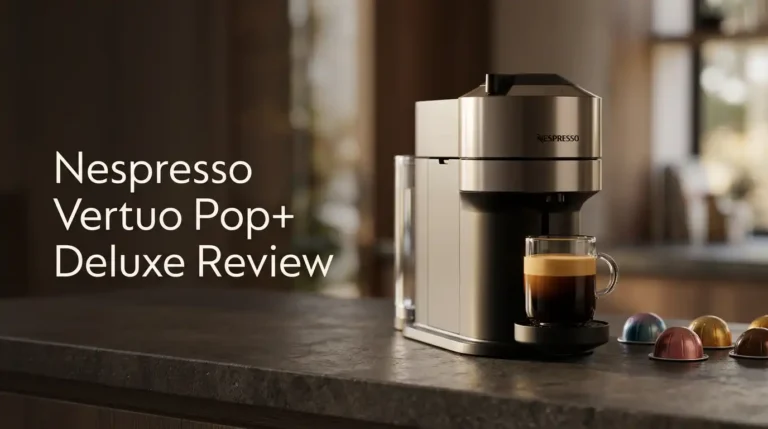
Nespresso Vertuo Pop+ Coffee and Espresso Machine by De’Longhi

Last update on 2026-11-17 / Affiliate links / Images from Amazon Product Advertising API
Keurig K Café SMART Single Serve Coffee Maker with Frother
How The Dual Capsule System Works
This is the feature that separates the L’OR Barista from standard pod machines. The brewing chamber accepts two capsule sizes.
Small capsules are standard espresso pods. Drop one in, and the machine recognizes the shape. Press small, medium, or large and you get 1.4 oz, 2.7 oz, or 3.7 oz of espresso.
Larger coffee capsules hold more grounds. The same three buttons then produce 5 oz, 8 oz, or 12 oz of brewed coffee. You never change a setting manually.
Some models also accept a double capsule. The machine splits the flow through both spouts for a true double shot.
The detection works reliably. In dozens of brews, mine never confused a coffee pod for an espresso pod. That consistency makes mornings easier than fiddling with programmable volumes.
Brewing Performance And Crema Quality
This is where the machine earns its keep. The 19 bar pump pushes water through the grounds hard enough to build a genuine crema layer.
Espresso shots pour thick with a tan foam cap that lingers for a minute or two. The body is noticeably fuller than what a Keurig produces. Medium roast coffee capsules deliver clear fruit and caramel notes rather than flat bitterness.
Temperature holds steady across back to back brews. I pulled four shots in a row with no drop in heat or crema.
Longer 12 oz coffees taste slightly thinner, which is expected when you push more water through one capsule. Stick to 8 oz for the best balance.
Dark roast capsules like Onyx taste smoky and aggressive. That is the roast, not the machine.
The Six Cup Sizes Explained
Six sizes from three buttons confuses some new owners. Here is the simple breakdown.
With an espresso capsule loaded, small gives you 1.4 oz, medium gives 2.7 oz, and large gives 3.7 oz. Think ristretto, standard espresso, and lungo.
With a coffee capsule loaded, small gives 5 oz, medium gives 8 oz, and large gives 12 oz. These are mug sizes, not shot sizes.
The volumes are also programmable. Hold a button during brewing to set your own preferred length, and the machine remembers it.
Most people settle into two favorites and ignore the rest. I drink 2.7 oz espresso in the morning and an 8 oz coffee after lunch. Having the extra options costs nothing, and the flexibility helps when guests arrive.
L’OR Barista System With Frother Bundle

Last update on 2026-11-18 / Affiliate links / Images from Amazon Product Advertising API
If lattes matter to you, buy this version instead. The bundle pairs the machine with a hands free milk frother and a starter pack of capsules.
The frother heats and whips milk without you holding anything. Pour in milk, press the button, and walk away. It produces dense microfoam that pours decently for basic latte art.
Buying the frother separately costs around $89. The bundle usually prices better than buying both pieces individually.
Some listings of this bundle include a guided touch screen version of the machine with a longer 36 second heat up. Read the listing details carefully before you order.
This is the configuration I recommend for most households. Espresso alone gets boring. Cappuccinos, flat whites, and iced lattes all become possible, and the frother cleans in under a minute.
Pros And Cons
Here is the balanced verdict after extended testing.
Pros
- Brews both espresso shots and full coffee mugs from one compact machine
- 19 bar pump creates a thick, genuine crema layer on every shot
- Heats up in roughly 25 to 30 seconds with no warm up ritual
- Accepts L’OR, Peet’s, and Nespresso Original capsules, so you avoid brand lock in
- Generous 40 ounce removable water tank means fewer refills
- Dual spouts and automatic capsule detection remove guesswork
- Descale alert tells you exactly when maintenance is due
- Small footprint fits under most kitchen cabinets
Cons
- No milk frother included on the base model
- Body is almost entirely plastic, which undercuts the premium look
- Lightweight chassis slides on the counter during lever operation
- Capsule costs add up fast if you drink three cups daily
- No bean grinder, so you depend on pods permanently
- 12 oz coffee setting tastes watery compared to smaller sizes
- Quick start guide relies heavily on pictures instead of clear text
What The L’OR Barista Does Not Do Well
Honest reviews name the weaknesses. This machine has several.
It cannot grind beans. You are committed to capsules for the life of the machine. If pod waste bothers you, buy a different category of machine entirely.
The pump is loud. It emits a sharp whirring buzz for the full brew cycle. Early risers in apartments will notice.
The drip tray is shallow. Tall mugs force you to remove the cup tray, and then splashes land on the counter.
The used capsule drawer fills quickly. It holds fewer pods than the capacity suggests, because wet capsules swell slightly.
Milk drinks require a separate purchase. That omission feels cheap on a machine priced near $189.
Finally, replacement parts are harder to source than Nespresso equivalents. Plan on treating this as a three to five year appliance.
Daily Use, Cleaning And Descaling
Maintenance is genuinely simple, which matters more than people admit.
The drip tray, cup tray, and capsule drawer all pull out by hand. Rinse them in warm soapy water. The water tank lifts off completely for refilling at the sink.
Empty the capsule drawer every few days. Wet pods left sitting will smell within a week.
The two piece spout detaches for a deeper clean. Coffee oils collect there, so rinse it weekly.
A descale light illuminates when mineral buildup reaches a threshold. Run a descaling solution cycle, rinse twice with fresh water, and the light resets.
Filtered water extends the gap between descaling cycles significantly. I descale roughly every two months with moderately hard tap water, and once every four months with filtered.
Capsule Compatibility And Running Costs
Capsule choice is this machine’s quiet strength. You are not trapped.
L’OR sells espresso capsules in 100 count boxes priced between $58 and $79. That works out to roughly 58 to 79 cents per shot. Coffee capsules come in 30, 50, and 100 counts from $27 to $79.
Nespresso Original capsules also fit the brewing chamber. Peet’s capsules work too, and third party compatible pods widen the field further.
That competition keeps prices honest. Shop sales and you can land near 40 cents per cup.
Compare that to $4 for a café espresso. Two cups a day pays the machine back in roughly two months.
Still, run the math over a year. Heavy drinkers spend $400 or more annually on pods alone.
Who Should Buy It And Who Should Skip It
Buy it if you want espresso and drip style coffee from one small appliance. Buy it if speed and zero cleanup matter more than ritual.
It suits small kitchens, offices, dorm rooms, and anyone who hates grinder mess. Households with mixed tastes benefit most, because one person can drink ristretto while another drinks a 12 oz mug.
Skip it if you already own a grinder and enjoy weighing doses. Skip it if you want steel construction that lasts a decade.
Skip the base model entirely if you drink lattes daily. Pay for the frother bundle instead, or choose a machine with frothing built in.
Serious hobbyists chasing pressure profiles and single origin beans will outgrow this machine within months.
Price And Value In 2026
List price sits around $189. Street price drifts between $129 and $159 through most of the year.
The compact Sublime variant appears far cheaper, sometimes near $59 to $89 on promotion. That model is smaller, drops some features, and uses the same dual capsule concept.
At $139, the full size Barista is good value. At $189 it faces real pressure from Nespresso machines that include a frother in the box.
Holiday sales bring the frother bundle close to the price of the base machine alone. Wait for those windows if you are not in a hurry.
Factor capsule costs into your decision. The machine is the cheap part. Pods are the ongoing expense, and they determine whether this purchase feels smart in year two.
Final Verdict
The L’OR Barista is a solid pod machine with one standout trick. The dual capsule system genuinely delivers espresso and brewed coffee from the same brewing chamber, and the 19 bar pump produces crema that embarrasses most competitors in this price band.
The plastic build and missing frother are real compromises. Neither ruins the experience, but both explain why this machine is not a long term heirloom appliance.
Score: 4 out of 5.
Buy the frother bundle, use filtered water, stick to 8 oz coffees, and shop capsules on sale. Do those four things and you will drink good coffee every morning for a fraction of café prices.
Want full control over grind, dose, and pressure? Look at a proper semi automatic machine instead.
Frequently Asked Questions
Does the L’OR Barista work with Nespresso capsules?
Yes. Nespresso Original line capsules fit the brewing chamber and brew normally. Vertuo capsules do not fit, because they use a different shape and barcode system. Peet’s capsules and most third party Nespresso compatible pods also work.
Does the L’OR Barista include a milk frother?
The base model does not. L’OR sells a hands free frother separately for around $89, and bundled versions pair the machine with the frother at a better combined price. Check the listing title before ordering.
How long does the L’OR Barista take to heat up?
Roughly 25 to 30 seconds on the standard model. Touch screen versions take closer to 36 seconds. Either way, your drink is ready in under a minute from a cold start.
How often should I descale the machine?
Every two to three months with average tap water. The descale indicator light tells you when the machine detects buildup. Filtered water stretches that interval considerably.
Can the L’OR Barista make iced coffee?
Yes. Brew a small or medium espresso directly over ice, then top with cold milk. Use a stronger capsule, because ice dilutes the shot as it melts.
Is the L’OR Barista better than a Keurig?
For espresso, clearly yes. The 19 bar pump produces pressure that Keurig machines cannot match, so you get crema and body. For large mugs of plain coffee and carafe brewing, Keurig offers more convenience.

Hi, I’m Emma Lee — the coffee-obsessed creator behind Morning Drip Vault. I spend my days testing coffee machines, exploring brewing techniques, and reviewing the latest coffee gear. My mission is simple: helping you find the perfect machine to brew your best cup, every single morning.