
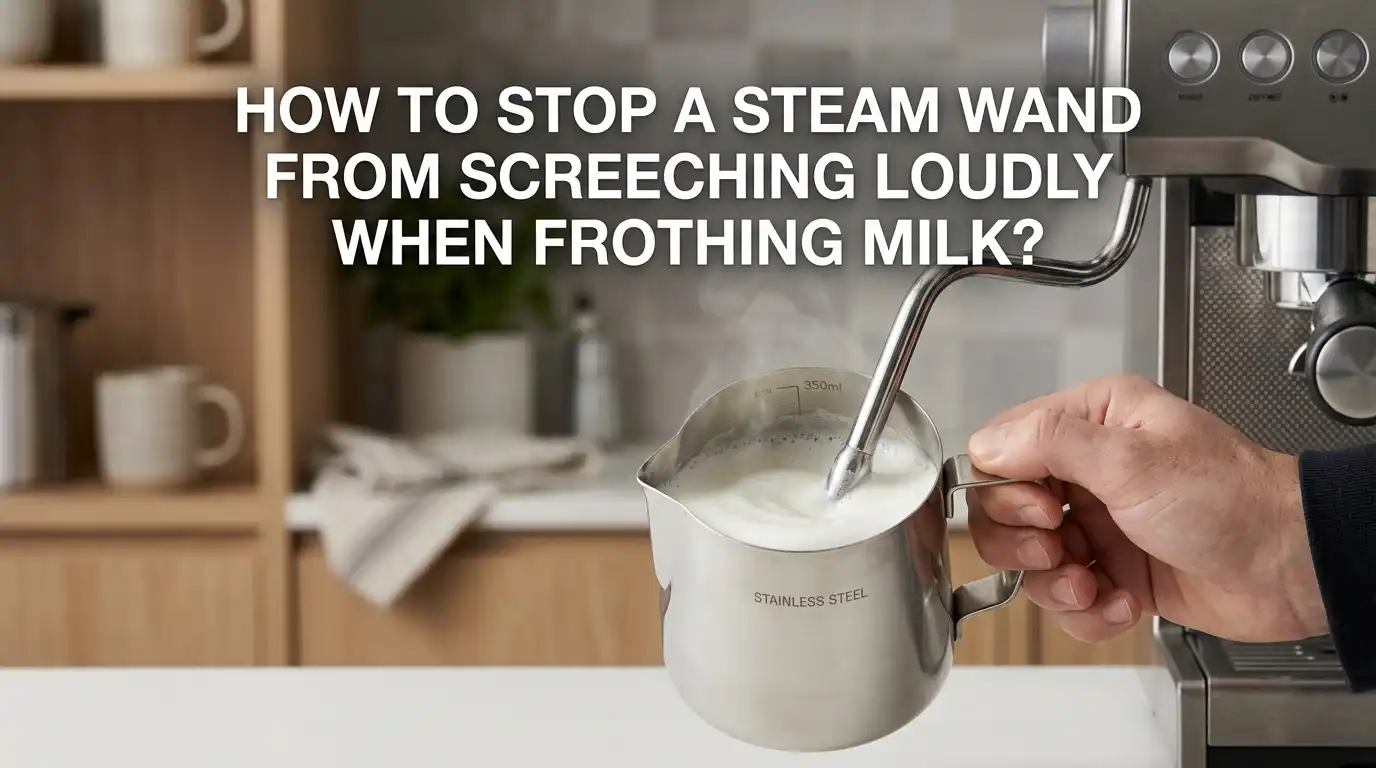
How to Stop a Steam Wand From Screeching Loudly When Frothing Milk?
That high pitched scream from your steam wand can ruin a quiet morning fast. It hurts your ears, scares your pets, and tells you something is wrong with your milk. The good news is that this noise is fixable in seconds once you understand what causes it.
Most home baristas hear this sound during their first few weeks of practice. Even seasoned coffee shop workers face it on busy mornings. The screech itself is harmless, but it warns you that your milk texture, temperature, and flavor are heading the wrong way.
This guide breaks down every reason your steam wand screeches and gives you simple steps to silence it. You will learn the right angle, depth, and pitcher size. You will also get cleaning tips, machine checks, and small habit changes that turn loud frothing into smooth, quiet steaming.
Key Takeaways
- The screech happens when the wand cannot pull in enough air or when steam hits the pitcher walls at a sharp angle. Fixing the position of the wand solves the noise in most cases.
- Wand depth matters more than anything else. Keep the tip just below the milk surface at the start, then sink it slightly deeper as the milk grows. Too deep equals screaming.
- Pitcher size and milk volume must match. Fill the pitcher about one third full with cold milk. Less milk means more noise and bad foam.
- Always start with fresh, cold milk in a chilled pitcher. Reused or warm milk screams loudly and tastes burnt.
- Open the steam valve fully on most machines, but smaller home machines may need a gentler touch. Learn your machine’s personality.
- Clean the wand tip after every use. A clogged hole changes steam pressure and makes the screech worse over time.
What Causes the Loud Screech From Your Steam Wand?
The screech comes from one main reason. The steam wand is not pulling in enough air while pushing steam into the milk. When steam moves fast through a tight space without air mixing in, it creates a sharp whistle. This sound is the same physics behind a tea kettle.
Several small mistakes lead to this airflow problem. You might be holding the wand too deep, using the wrong pitcher size, or letting milk hit the pitcher walls at a sharp angle. Cold steam pressure issues, clogged tips, and worn seals can also cause noise. Once you know the root cause, the fix takes only a few seconds.
The screech also signals that your milk is heating without proper foam forming. Fixing the noise also fixes your latte texture, which is a nice bonus.
Check the Depth of Your Steam Wand Tip
Wand depth is the number one cause of screeching. If the tip sits too deep in the milk, steam has nowhere to release air. The result is a loud, painful whistle and overcooked milk at the bottom of the pitcher.
Place the tip just below the milk surface when you start. You should hear a soft hissing or paper tearing sound, not a scream. This light sound tells you the wand is pulling air in properly. As the milk volume grows, slowly lower the pitcher so the tip moves slightly deeper.
Pros of fixing wand depth: Quick to fix, no tools needed, improves foam quality right away.
Cons: Takes practice to find the sweet spot. New baristas may overshoot and splash milk.
Keep a steady hand and watch the milk surface for swirling motion.
Adjust the Angle of the Steam Wand
The angle of the wand changes how milk moves inside the pitcher. A bad angle pushes steam straight into the pitcher wall, which causes loud rattling and screeching. Aim for a 45 degree angle with the wand tip slightly off center.
This setup creates a swirling whirlpool inside the pitcher. The milk spins, folds in on itself, and pulls air down naturally. The swirl is your best friend when frothing milk. It builds smooth microfoam and keeps the wand quiet.
Pros of correct angle: Creates silky foam, reduces noise, mixes air evenly.
Cons: Requires a tall enough pitcher to keep the angle steady. Short pitchers make this harder.
If your milk just bubbles without spinning, tilt the pitcher more or move the wand slightly closer to the side.
Use the Right Pitcher Size for Your Milk Volume
Pitcher size has a huge impact on noise. A big pitcher with a small amount of milk screams every time. The steam wand cannot stay submerged at the right depth, so it sucks in too much air or hits the pitcher wall.
Match your pitcher size to your drink. For a single latte, use a 12 ounce pitcher. For two drinks, step up to a 20 ounce pitcher. Fill the pitcher about one third full with cold milk before you start. This leaves room for foam to grow without overflow.
Pros of right pitcher size: Quiet steaming, perfect foam volume, no waste.
Cons: You may need to own two or three pitcher sizes for different drinks.
Buying a second pitcher is a small price for peace and good foam.
Always Start With Fresh, Cold Milk
Cold milk froths better and screams less. Warm or reused milk causes the proteins to break down, which kills the foam structure and makes the wand whistle loudly. Reheating milk also tastes burnt and bitter.
Pour milk straight from the fridge into a chilled pitcher. Some baristas keep their pitchers in the freezer between drinks. Cold pitcher plus cold milk gives you more time to build foam before the milk gets too hot.
Pros of cold milk: Better foam, quieter steaming, sweeter taste.
Cons: Requires planning ahead. You cannot rescue leftover steamed milk.
If you have extra steamed milk, pour it over ice for an iced latte rather than reheating it. Your ears and taste buds will thank you.
Open the Steam Valve Properly
Each espresso machine has its own personality. Some need the steam valve fully open, while others work best half open. A partly open valve on a powerful machine makes steam screech through a narrow opening. This is like blowing across a bottle opening.
For commercial machines and most prosumer models, open the valve all the way. For small home espresso machines, try opening the valve more slowly and watch how the milk reacts. If the milk explodes upward, ease back a little.
Pros of full valve opening: Strong steam power, faster frothing, less screech from narrow gaps.
Cons: Can overwhelm beginners or small pitchers. Practice is needed.
Get to know your machine over a few sessions. Within a week, you will find its sweet spot.
Clean the Steam Wand Tip After Every Use
A dirty steam wand causes noise problems that grow worse over time. Old milk dries inside the tip holes and blocks steam flow. Blocked holes change pressure inside the wand and create a loud whistle.
Wipe the wand with a damp cloth right after frothing. Then open the steam valve for one second to purge any milk inside. Once a week, unscrew the tip and soak it in hot water with a steam wand cleaner. Use a thin pin to clear stuck milk from the holes.
Pros of regular cleaning: Prevents clogs, keeps steam pressure steady, extends machine life.
Cons: Adds a small step to your routine. Takes about ten seconds per drink.
A clean wand is a quiet wand. This habit alone fixes many screech problems.
Descale Your Machine Regularly
Hard water leaves mineral buildup inside your boiler and steam pipes. This buildup shrinks the inside of the wand and changes steam flow. The result is uneven pressure and a screeching sound that gets worse month by month.
Descale your machine every two or three months if you use tap water. Use a descaling solution made for espresso machines, never vinegar, because vinegar can damage seals. Follow your machine’s manual for the exact steps.
Pros of descaling: Restores steam power, removes screech causing buildup, extends machine life.
Cons: Takes about thirty minutes. Some machines need special descaling products.
If your wand started screeching after a descale, run extra water through the system to flush out leftover solution. Trapped descaler can cause odd noises for a day or two.
Check the Steam Wand Tip for Wear and Damage
Steam tips wear out over time. The small holes can stretch or crack from heat cycles. A damaged tip changes how steam exits and often creates a screech that no position change can fix.
Inspect the tip every few months. Look for cracks, enlarged holes, or rough edges. Replace the tip if you see damage, since new tips are cheap and easy to swap. Most tips screw on and off by hand or with a small wrench.
Pros of replacing the tip: Quick fix, restores steam power, ends mystery noises.
Cons: Need to find the right tip for your machine model. Some older machines have hard to find parts.
A fresh tip also lets you upgrade the number of holes. More holes mean faster frothing with less noise.
Watch Milk Temperature During Steaming
Milk that gets too hot starts to scream. Once milk passes 160 degrees Fahrenheit, the proteins break down and the wand whistles loudly. Burnt milk also tastes flat and loses sweetness.
Use a thermometer or learn to feel the pitcher with your hand. Stop steaming when the pitcher feels too hot to hold for more than three seconds, around 140 to 150 degrees Fahrenheit. This is the perfect range for latte art and sweet flavor.
Pros of temperature control: Sweeter milk, quieter steaming, better latte art.
Cons: Adds a tool to your setup if you use a thermometer. Hand feel takes practice.
Stopping at the right temperature also protects your milk from burning, which keeps your drink tasting smooth and creamy.
Try a Different Type of Milk
Milk type changes how the wand sounds. Whole dairy milk froths the easiest and screams the least because of its protein and fat balance. Skim milk creates more bubbles but can squeal under steam pressure.
Plant milks behave differently. Barista blend oat milk and soy milk usually steam quietly when fresh. Almond and coconut milk often screech because they have less protein. Look for barista versions of plant milks for the best results.
Pros of switching milk: Quieter frothing, better foam, more options for diet needs.
Cons: Barista blends cost more. Some milks need a different technique.
If you keep getting noise with one milk, try another brand or type. Small recipe changes by brands make a big difference.
Build the Right Frothing Technique With Practice
Technique is the final piece of the puzzle. Even with perfect gear, a rushed motion creates screeching every time. Slow, steady hands give you control over depth, angle, and swirl.
Start with the tip just below the milk surface. Listen for a soft tearing sound. Move the pitcher down slowly as the milk grows to keep the tip at the right depth. Once the milk doubles, sink the tip a bit deeper to heat without adding more air.
Pros of good technique: Free to learn, fixes most noise problems, works on any machine.
Cons: Takes a few days of practice. Wastes a little milk during learning.
Record your sessions on your phone if you want to spot mistakes. Watching back helps you adjust quickly.
When to Call a Technician for Help
If you have tried every fix above and your wand still screeches, the problem may be inside the machine. Worn boiler seals, faulty steam valves, and pressure sensor issues can all cause loud noise that you cannot fix at home.
Call a certified espresso technician if you notice steam leaks, pressure drops, or sudden noise changes. Most repairs cost less than buying a new machine and can extend the life of your espresso setup by years.
Pros of professional help: Fixes deep issues, saves your machine, peace of mind.
Cons: Costs money, may take a few days without your machine.
Ask the technician to inspect the steam path, boiler, and pressure stat. These three parts cause most stubborn screech problems in older machines.
FAQs
Is a screeching steam wand bad for my espresso machine?
The screech itself does not damage the machine. However, the causes behind it, like buildup or worn parts, can shorten machine life. Fix the noise early to avoid bigger repairs later.
Why does my milk taste burnt when the wand screeches?
Screeching often means the milk is overheating and the proteins are breaking down. This burnt taste comes from the milk passing 160 degrees Fahrenheit or from reusing already steamed milk.
Can I steam plant milk without the screech?
Yes, but use barista blend versions. Regular almond or oat milk often screams because of low protein levels. Barista blends are made with extra protein and fat for smooth steaming.
How long should I steam milk for a latte?
For a 12 ounce pitcher, aim for about 15 to 20 seconds. Watch the pitcher temperature with your hand, and stop when it feels too hot to hold comfortably. This usually means around 140 to 150 degrees Fahrenheit.
Do I need to clean the steam wand every single time?
Yes, wipe it right after each use. Dried milk hardens fast inside the holes and can cause clogs within a day. A quick wipe and steam purge takes only a few seconds and keeps your wand quiet for years.

Hi, I’m Emma Lee — the coffee-obsessed creator behind Morning Drip Vault. I spend my days testing coffee machines, exploring brewing techniques, and reviewing the latest coffee gear. My mission is simple: helping you find the perfect machine to brew your best cup, every single morning.