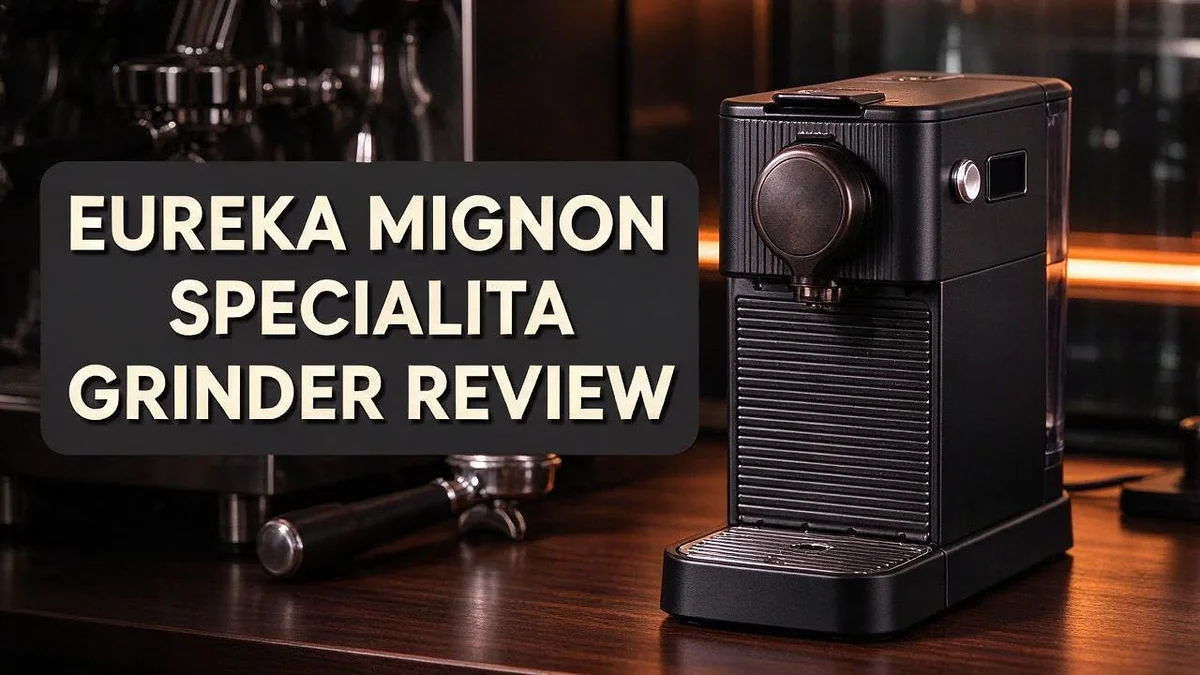
Eureka Mignon Specialita Grinder Review: Worth It in 2026?
If you want better espresso at home, your grinder matters more than almost anything else. The Eureka Mignon Specialita is a compact grinder that many home baristas trust every day. It packs serious performance into a small footprint.
This grinder uses 55mm flat steel burrs. You get stepless micrometric adjustment for precise dialing. Its 0.1 second digital timed dosing keeps each dose consistent.
Many owners praise how quiet it runs. It also covers a wide grind range, from fine espresso to coarse filter. Some users even call it a major upgrade from a Lelit Fred.
Let’s look at what makes this grinder stand out, who it suits best, and how it compares with its rivals.
In a Nutshell
-
Wide grind range: This grinder moves from fine espresso to coarse filter coffee with ease. You can brew many styles without buying a second grinder.
-
Hands free timed dosing: The 0.1 second digital timer delivers a consistent dose every time. You press a button, then walk away while it works.
-
Compact footprint: The grinder fits well on small counters and in tight kitchen corners. Space rarely becomes a problem, even in a crowded setup.
-
Two model options: The Black version offers a white on black display and noise insulation. The Smart version adds SMART tech, burr distance detection, and a 2.8 inch multicolour touch display.
-
A clear upgrade path: Many home baristas treat it as the default next step for espresso machines. One user said it was a major step up from a Lelit Fred.
-
An honest limit: One reviewer notes that it is not a top tier grinder. Serious perfectionists may want to look higher, or compare it with the Eureka Libra if they prefer grinding by weight.
Burr Set and Grind Range

Last update on 2026-11-18 / Affiliate links / Images from Amazon Product Advertising API
The burr set does most of the real work inside any grinder. Every bean passes between two rotating surfaces that crush and cut it. On this model, those surfaces are 55mm flat steel burrs.
Flat burrs behave differently from conical burrs. They tend to produce a more even particle size. Even particles mean water extracts flavor at a similar speed from each grain. That balance often leads to cleaner, more balanced flavor in the cup.
Steel burrs also hold their edge well over long periods. Steel is a common choice for home use. Good burrs keep the grind consistent during daily brewing.
The stepless micrometric adjustment lets you move the burrs in tiny increments. You do not click through fixed settings. Instead, you turn the collar until the shot runs right. This freedom makes dialing in much easier.
Most dialing happens on the espresso side. Espresso needs fine tuning. Filter coffee forgives small errors more easily.
Small changes matter a lot. A tiny turn can shift shot time by several seconds. Take notes on each setting you try. Over time, you learn the sweet spot for each bean.
Burr care keeps performance steady. Brush out grounds after each session. Old oily residue can change flavor over time. Clean burrs help every shot taste fresh.
Bean choice matters too. Dark roasts are oilier and can gum up burrs faster. Lighter roasts usually stay drier during grinding. Pick the roast that suits your routine.
Think about your daily routine as well. Quick weekday shots need a grinder that changes settings fast. Weekend brewing may allow slower, careful tuning.
In short, the burr set gives this grinder real flexibility. It handles espresso and filter with the same machine. Overall, you get control without fuss. Good tuning starts with small steps and clear notes.
Timed Dosing and Daily Workflow
Your daily routine decides how well this grinder fits your kitchen. Count how many shots you pull each morning. That number shapes your whole workflow.
Start by saving one timed dose as your baseline. Run a single shot and weigh the grounds. Then compare that weight with the amount your basket needs.
Small timer changes add up fast. Adding half a second can shift your dose more than you expect. Write each setting on a sticky note near the machine.
Many people keep two timer presets. One handles straight espresso shots. The other handles a double shot for a larger basket.
Keep the grinder clean between sessions. Brush out loose grounds after each use. This habit keeps flavor consistent across the week.
Work in a clear order each morning. Check the hopper, set the dose, then pull your shot. A simple checklist saves time on busy days.
Listen for changes in the sound. A shift in pitch can signal that the burrs need attention. Trust your ears as well as your timer.
Plan for busy mornings too. Grind only what you need for the next hour. Freshly ground coffee tastes best soon after grinding, so avoid leaving grounds sitting out.
Make the routine part of your day. Set out your cup, tamper, and scale the night before. Small habits make the grinder feel effortless every single morning.
Weigh your coffee beans before grinding when you can. A scale keeps your dose steady from day to day. It also helps you track changes in your results.
Log your settings for each bean. Write the dial position and timer length. You can return to a great shot in seconds.
Weekend brewing can feel slower. Give yourself extra time to taste and adjust. Relaxed sessions often lead to the best cups. Enjoy the process as much as the result.
Build Quality and Footprint
The Specialita feels sturdy from the first touch. Its body stays firmly planted on the counter, even during a long grind.
Stability matters more than most people expect. A grinder that shifts can make dosing feel messy. This model stays put, so you can focus on your portafilter and cup.
Think about the space under the spout next. You need room for your portafilter, a filter basket, and a scale. Measure that gap before you set the grinder in place.
The bean hopper sits on top and should seat firmly. A snug fit keeps beans secure while the burrs spin. It also helps limit stray grounds and dust on your counter.
Access to the burr area makes daily care easier. You can reach inside without much fuss. Easy access means you clean more often, and clean burrs keep your grind consistent.
Check the height too. Many kitchens have cabinets or shelves close to the counter. Measure from the counter to the top of the hopper, then add room for your hand to reach the lid.
The grinder runs quietly, which helps in shared spaces. You can grind early in the morning without waking the whole house. A calm motor also means less vibration traveling through the counter.
Small details shape the overall feel. Knobs, switches, and the grind adjuster should turn smoothly. Smooth controls make small changes easier and reduce guesswork.
Overall, the build suits a home kitchen that values solid construction. It fits well into a busy routine, and it stays steady while you work.
Top 3 Alternatives
Baratza Encore ESP


Last update on 2026-11-17 / Affiliate links / Images from Amazon Product Advertising API
The Baratza Encore ESP is a great pick for beginners. It offers 40 grind settings, so you can adjust your coffee from fine espresso to coarse French press. Its 40mm conical burrs stay sharp for years. The controls are clear and simple to learn. Cleanup takes only a few minutes. If you want an easy start in espresso, this grinder fits well.
Niche Zero

Last update on 2026-11-18 / Affiliate links / Images from Amazon Product Advertising API
The Niche Zero takes a different approach. It uses a single dose design, so very little coffee stays trapped inside. Fresh grounds drop straight into your portafilter. Its 63mm conical burrs produce even particles for a clean, balanced cup. Many home baristas also like its compact size and quiet operation. It takes a little practice to dial in, but the results are rich and sweet.
Breville Smart Grinder Pro

Last update on 2026-11-17 / Affiliate links / Images from Amazon Product Advertising API
The Breville Smart Grinder Pro brings extra features to the table. It has a digital display, a built-in timer, and 60 grind settings. You can set your dose by time or by cup size. It works well for both espresso and drip coffee. The hopper is easy to fill, and the container is simple to remove. If you like having more control over each shot, this grinder is a solid choice.
Noise Level and Motor Operation
Noise is one of the first things many home baristas notice about a grinder. The Eureka Mignon Specialita keeps its sound low.
The motor does most of the work behind that calm sound. It turns the burrs at a steady pace, so the grinding stays smooth from start to finish.
Many people choose the black version for extra quiet. It includes noise insulation that helps dampen the hum in small kitchens.
Quiet operation matters more than people expect. A loud grinder can wake a partner or roommate before your first coffee even starts.
Eureka shares this silent motor with the Mignon Silenzio. That tells you the quiet design sits at the core of the Mignon line.
The Silenzio offers fewer features, so the Specialita gives you more control without adding much noise.
Noise changes how a grinder fits into your day. A calm machine makes grinding feel relaxed instead of rushed.
Try a quick sound test at home. Place the grinder on your counter and run one dose. Walk to another room and listen to how far the sound travels.
Hard surfaces like tile or stone can bounce noise around the room. A cutting board or rubber mat can help soften the vibration.
Let the motor rest between large batches. Long sessions can warm the motor over time. Short pauses give it a chance to cool down.
Steady motor performance also helps the grind feel consistent. When the motor holds its speed, each dose comes out with less variation.
You can also keep grinding sessions short on busy mornings. A single dose takes only a few seconds, so the noise stays brief.
Quiet and steady performance work together in daily use. You get a calm grinder that does the job without drawing attention. Overall, the Specialita fits well in shared spaces, and its quiet motor makes early mornings and late night coffee much easier to enjoy.
Smart Version and Display Options
The Smart version adds a different layer to the Specialita. It includes SMART tech and a 2.8″ multicolour touch display. Many home baristas find this version fits a more active daily routine.
The touch screen changes how you interact with the grinder. Instead of relying only on physical controls, you tap the screen to check and adjust your setup. The colour display also makes the readout easy to scan from across the counter.
Compare that with the black version. It uses a white on black display that looks clean and simple. The Smart version takes a different route with bright, multicolour visuals.
Burr distance detection is the headline feature. The grinder senses the gap between the burrs. This gives you a clearer picture of what happens inside the grinder without opening it up. People who enjoy technical details often find this part rewarding.
Think about how you like to work. If you enjoy tweaking your grind, the screen shows each step clearly. If you prefer a simple setup, the extra features may feel like more than you need.
A display only helps if you actually read it. Spend a few sessions learning the menu before you rely on it. Once the layout feels familiar, the screen becomes a quick reference during busy mornings.
The Smart version also suits shared kitchens. Guests may find the colourful display fun to watch. Family members can see the current setup at a glance.
Keep your expectations realistic, though. The screen adds convenience, but the taste of your espresso still depends on your beans, your dose, and your technique. Use the display as a helpful guide, not a shortcut.
Ask yourself one simple question before you choose. Do you want more information and control on screen, or a clean look that stays out of the way? Your answer will point you to the right model.
Pros and Cons
Pros
- Wide grind range from fine espresso to coarse filter
- Timed dosing that works without much hands-on effort
- Compact build that suits daily use in a home kitchen
- Quiet operation that fits well in shared spaces
- One user calls it a major upgrade from a Lelit Fred
Cons
- The research sources list no explicit cons
- One reviewer says it is not a top tier grinder
- It lacks the grind by weight feature found on the Eureka Libra
- Users who want a single dose workflow may prefer the Eureka Mignon Single Dose
Who Should Buy It
The Eureka Mignon Specialita suits a specific kind of home coffee lover. It works best for people who already own a capable espresso machine and want better results from it.
Home baristas who want to grow their skills often love this grinder. It rewards small adjustments. A tiny change in grind size can shape the flavor in your cup.
Couples and busy households can also benefit. Two people can share one machine and make quick changes without guessing. Each person can find a setting that suits their taste.
Think about how you brew. If you make both espresso and pour over at home, one grinder can handle both styles. You do not need a second machine for filter coffee.
Some buyers plan to upgrade their espresso machine later. This grinder keeps pace with that growth. It suits prosumer setups, so it will not hold your brewing back as your gear improves.
New coffee fans may need time to learn the controls. Plan a few weeks of regular testing. Steady practice builds confidence and better habits.
Enthusiasts who enjoy coffee gear often love the hobby side. Tuning a grinder becomes part of the fun. Many people find that ritual relaxing after a long day.
Who should look elsewhere? Buyers who want the most refined grinder available should compare other models first. Those who only brew one cup at a time may prefer a different workflow. Anyone who wants a fast, simple routine may also feel slowed down.
Finally, match the grinder to your space. Keep a clear counter corner nearby so the machine feels easy to reach. A convenient spot makes daily use far more enjoyable.
Final Verdict
The Eureka Mignon Specialita earns a firm spot on your shortlist. It gives home espresso fans a capable grinder that grows with their skills. Few options in this space offer that kind of staying power.
Think of this grinder as a foundation rather than a finish line. Your taste will change over time. Your brewing gear will change too. A grinder that handles many brew styles gives you room to experiment.
Your final decision depends on your priorities. If you want the most refined grinder available, look at other models first. If you want a dependable daily machine that rewards practice, this one deserves a close look.
Before you buy, check how it fits your setup. Measure your counter space and confirm your espresso machine pairs well with it. Read recent owner feedback too, since long term reports show how it holds up over time.
Test it in person when possible. Visit a café or shop that stocks it and try the adjustment control. Feel how the dial responds in your hand. Small details like that often shape long term satisfaction.
Keep maintenance in mind from day one. Brush out retained grounds regularly and clean the burrs as the manual advises. A little care keeps your shots consistent and protects the grinder for years.
Who should wait? Anyone still unsure about daily espresso may want more time first. Good habits matter more than gear at the start. Build those habits, then upgrade when your needs become clear.
The bottom line is simple. The Specialita offers solid performance, a clean daily workflow, and room to grow. Collectors chasing the very best may look further.
Most home coffee lovers, however, will find it a satisfying partner.
Frequently Asked Questions
What kind of burrs does the Specialita use?
The grinder uses 55mm flat steel burrs. Flat burrs cut beans evenly, which helps create a consistent particle size. The stepless micrometric adjustment lets you make very small changes, so you can dial in your shot with care.
What is the difference between the Black and Smart versions?
The Black version has a white-on-black display and noise insulation. The Smart version adds SMART tech, burr distance detection, and a 2.8 inch multicolour touch display. Pick the Smart model if you like touch controls and want to track your settings on screen.
How does it compare with the Niche Zero?
The Niche Zero is another strong choice for home espresso fans. Both grinders can serve a busy kitchen well. Compare them by looking at your counter space and how you like to measure your beans before grinding.
Would a hand grinder be a better fit?
A hand grinder like the 1Zpresso J suits people who want a manual option. It takes more time and effort for each shot. The Specialita works better for people who want a powered grinder that handles daily espresso with less physical work.

Hi, I’m Emma Lee — the coffee-obsessed creator behind Morning Drip Vault. I spend my days testing coffee machines, exploring brewing techniques, and reviewing the latest coffee gear. My mission is simple: helping you find the perfect machine to brew your best cup, every single morning.