Cafelat Robot Manual Espresso Maker Review 2026: Worth Buying?
Espresso machines keep getting smarter every year. Screens, apps, pumps, and preset buttons promise perfect shots. Then there is the Cafelat Robot, a little aluminium machine with two arms and zero electronics that quietly beats many of them.
This machine looks like a toy from a 1950s science fiction poster. It makes espresso that embarrasses machines costing five times more. It also asks you to do all the work yourself.
I spent months pulling shots on the Robot, breaking a filter screen, cursing the lever arms, and slowly falling for it. This review covers the unboxing, the daily workflow, the shot quality, and the honest flaws nobody mentions in the glossy photos.
In a Nutshell:
- The espresso quality is genuinely excellent. The Robot uses a standard 58mm stainless steel basket, the same size professional cafes use. That thin, wide puck gives classic texture and sweetness. Shots taste as good as machines in the $1,500 range, provided you own a real espresso grinder.
- It needs no electricity at all. There is no boiler, no pump, and no circuit board. You boil water in a kettle, pour it into the basket, and press the arms down. The whole brew takes about two minutes once you know your recipe.
- Build quality is outstanding and repairable. The body and base are die cast aluminium. The portafilter, basket, screen, and arms are stainless steel. The piston seal uses FDA approved silicone. There is no plastic anywhere in the machine.
- The learning curve is real and steep. Expect two to four weeks of mediocre shots. You must learn grind size, puck prep, water volume, and lever pressure at the same time. This is a hobby machine, not an appliance.
- It cannot steam milk or heat water. No steam wand exists. No heating element exists. Cappuccino drinkers need a separate frother and kettle, which adds cost and counter space.
- Pressing the arms takes genuine arm strength. Fine grinds and big doses make the levers very hard to push. People with wrist, hand, or shoulder problems should test one first.
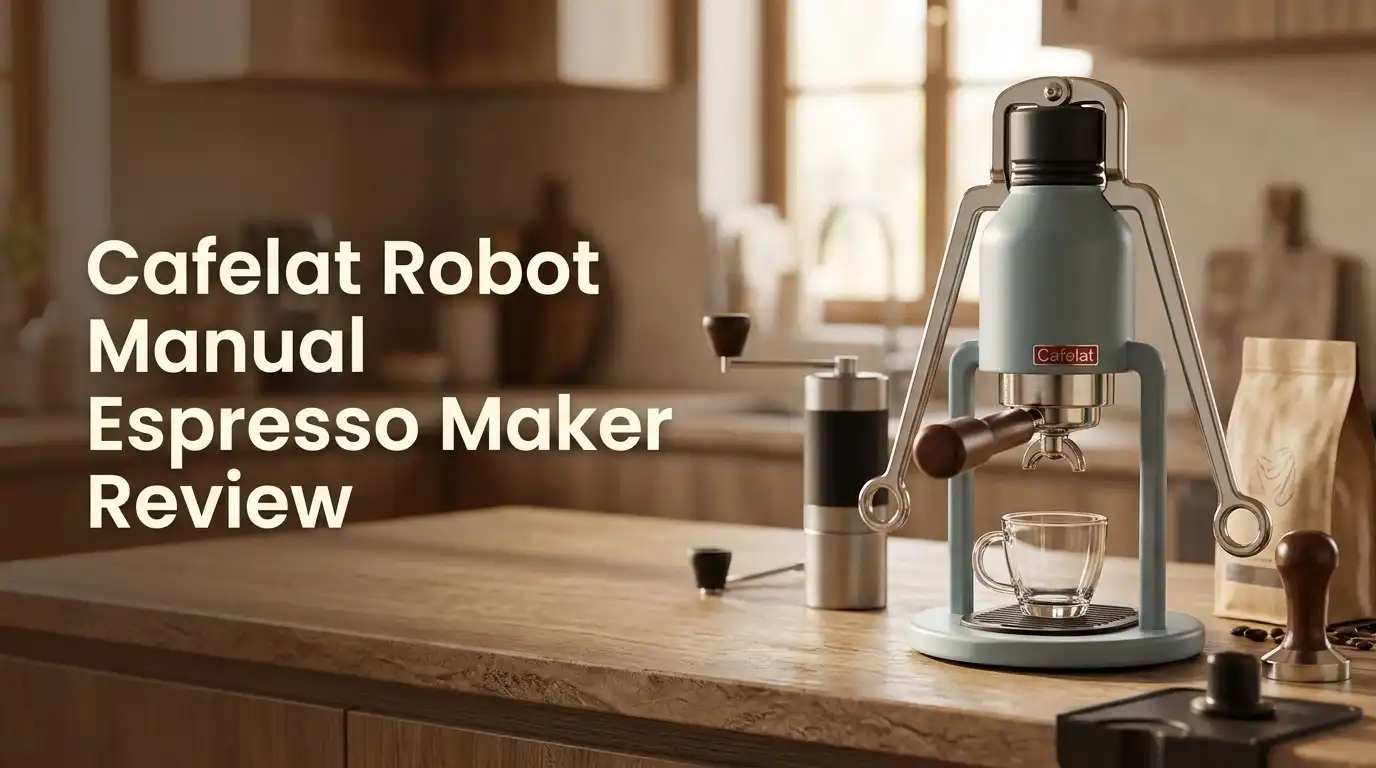
Cafelat Robot Manual Espresso Maker

Last update on 2026-11-18 / Affiliate links / Images from Amazon Product Advertising API
The Cafelat Robot comes from a small Hong Kong company founded by Paul Pratt, a man known for restoring vintage Italian espresso machines. The playful shape comes from Danish designer Karina Mencke, and the inspiration traces back to the 1950s Faemina Baby.
The machine launched on Kickstarter in 2018 and quickly became Cafelat’s flagship product. It is still handmade in small batches, which is why stock sells out within minutes on launch days.
Two versions exist. The standard Robot has plain arms. The Barista version adds a pressure gauge that reads pressure from inside the basket itself, which is a patent pending system. Most buyers pick the Barista model, and I agree with them.
Colours include retro green, blue, red, matte black, and orange. The machine weighs roughly 3kg and stands about 12 inches tall, or 19 inches with the arms raised.
The Unboxing Experience
The box arrives smaller and heavier than you expect. Mine was plain cardboard with simple foam inserts, nothing flashy, which fits the brand perfectly.
Lift the Robot out and the first reaction is always the same. It feels like a solid block of metal with a cheerful face. The powder coating is thick and even. The arms swing with a smooth, weighted motion that feels machined rather than assembled.
Inside the box you find the main body with arms and base already assembled, one bottomless portafilter, one detachable spout, one professional single wall basket, one stainless steel tamper, a filter screen, filter papers, a silicone drip mat, a basket plug, and a small bag of spare parts.
The spare bag includes a piston seal, a teflon washer, a spout o ring, and food safe silicone grease. No paper manual comes inside, so download the PDF before your first shot.
Build Quality and Materials
This is where the Robot earns its price. The body and base use die cast aluminium that feels dense without being heavy enough to annoy you during cleaning.
Every other metal part is stainless steel. The baskets come from the same factory that supplies the best commercial basket brands, and the tolerances show. The tamper is one solid piece of machined steel with tapered walls so grounds do not get sucked back up.
The silicone piston seal is the only soft part in the brew path. It is FDA approved and replaceable in about thirty seconds.
The weak point is the dispersion screen. It is thin metal, and it bends if you press down too hard while squeezing water out of the puck. I destroyed one in my first month. Newer screens include a small rubber tip that reduces the problem, and spares cost very little.
Top 3 Alternative for Cafelat Robot Manual Espresso Maker

Last update on 2026-11-18 / Affiliate links / Images from Amazon Product Advertising API
Flair 49 PRO Manual Lever Espresso Maker

Last update on 2026-11-18 / Affiliate links / Images from Amazon Product Advertising API
SUPERKOP Manual Espresso Maker

Last update on 2026-11-18 / Affiliate links / Images from Amazon Product Advertising API
WACACO Picopresso Portable Espresso Maker
How the Cafelat Robot Actually Works
The design is clever and slightly strange. The oversized filter basket doubles as the brewing chamber, which is why its walls are so tall.
You grind coffee directly into the basket, tamp it, and place the dispersion screen on top of the puck. Then you pour water just off the boil straight onto that screen. The basket holds up to 25g of coffee and about 145ml of total volume.
Next you raise the arms, lock the portafilter into the machine, and place your cup underneath. Pressing the arms down drives the internal piston into the basket.
That piston forces hot water through the puck. Lever machines naturally give a gentle preinfusion and a soft pressure ramp, which makes them forgiving. Cafelat recommends 6 to 8 bar rather than chasing 9 bar.
Espresso Quality in the Cup
The Robot makes outstanding espresso. Shots come out thick, sweet, and layered, with proper crema and the tiger striping that bottomless portafilters reveal.
The 58mm basket is the secret. A wide, shallow puck lets you grind finer and extract evenly, which produces the heavy mouthfeel people associate with cafe machines.
The machine is only as good as the person using it, though. A 2:1 ratio works beautifully, so 18g of coffee yields roughly 36g of espresso. You can stretch that to 40g or 45g for lighter cups.
Medium and medium dark roasts shine with almost no effort. Very light modern roasts are harder work, because they need finer grinds and extra preheating, and the arms become genuinely difficult to press.
The Pressure Gauge and Why It Matters
The Barista version puts a small gauge on one arm, and it reads pressure from inside the basket rather than somewhere upstream. That detail matters, because it shows what the coffee actually feels.
Watching the needle changes how you brew. You can hold a soft preinfusion at 1 or 2 bar, ramp slowly to 6 bar, then let pressure decline as the shot finishes. This is real pressure profiling without a $3,000 machine.
Cafelat advises staying at 8 bar maximum. Push harder and you risk the aluminium body, even though the stainless arms handle far more.
Without the gauge you can still brew well. Place a bathroom scale under the machine, press until it reads about 40lbs, and you are near 7 or 8 bar. The gauge is still worth the extra money.
Daily Workflow and Speed
A full cycle takes two to three minutes once the kettle is hot. Grind, tamp, screen, water, lock in, press, done.
The deep basket makes dosing clean. You can grind straight into it or invert a dosing cup on top and shake the grounds down with almost no mess on the counter.
Carrying a basket full of near boiling water into a tight space feels nerve wracking the first five times. After that it becomes automatic, like locking in a normal portafilter.
Back to back shots are easy because the piston lifts completely out of the basket. You knock the puck straight into a bin, rinse, and reload.
Compared with multi part manual machines, the Robot wins on simplicity. Fewer pieces means fewer things to lose, clean, or misalign during a busy morning.
Temperature Management Without a Boiler
No boiler sounds like a problem. In practice it is handled well.
Water just off the boil drops to around 95 degrees Celsius the moment it hits the basket, which is close to ideal brewing temperature. The coffee leaves the basket at roughly 88 degrees Celsius.
The portafilter touches the basket at very few points, so it steals little heat from the brew. That low thermal mass is the main reason most users skip preheating entirely.
Two exceptions exist. If you attach the heavier spout, soak it in hot water first. If you brew very light roasts, preheat the basket with a splash of boiling water, pour it out, then add your brew water.
You will not get flat temperature profiles like a dual boiler machine. You will get consistent, repeatable shots, which is what actually matters.
Cleaning and Maintenance
Cleaning is the quiet joy of this machine. There is no backflushing, no group head, no descaling schedule, and no pump to service.
After the shot, either press the remaining water through slowly or simply tilt the basket and pour it into the sink. Pouring protects the dispersion screen from bending.
Unscrew the portafilter, lift out the basket, and knock the puck into your bin. The compressed puck usually drops out in one clean disc.
Wipe the bottom of the piston and the base, and you are finished. The whole routine takes under a minute.
Long term care means replacing the silicone piston seal occasionally and greasing it with the supplied compound. Never leave the hot basket locked onto the piston, because the seal deforms under sustained heat and pressure.
What the Cafelat Robot Does Not Do Well
Honest reviews list failures, so here they are.
The arms are shaped like wrenches, not handles. They were machined to hold the tamper, not your palms. Pressing hard on thin metal edges hurts, which is exactly why Cafelat sells aluminium mittens separately. Those should be included.
The gauge sits at an awkward angle. You will crane your neck during every shot until you buy a third party bracket.
The gap between the legs is too narrow for most espresso scales. Brewing by weight needs a slim scale or a workaround.
The dispersion screen bends easily. The machine sells out constantly, so buying one takes patience. Stock drops without warning and disappears in minutes.
Finally, it demands a good grinder, which is a hidden second purchase.
Pros of the Cafelat Robot
- Espresso quality rivals machines at four or five times the price. The 58mm professional basket, even extraction, and gentle lever preinfusion produce sweet, textured shots with reliable crema.
- Build quality is exceptional and completely plastic free. Die cast aluminium body, stainless steel brew parts, and FDA approved silicone seals mean the machine should last decades with basic care.
- Cleaning takes under one minute. No backflushing, no descaling, no boiler, and no pump maintenance. Knock out the puck, rinse, wipe, finished.
- Full manual control over pressure and preinfusion. The basket mounted gauge lets you shape each shot in real time, something most electric machines cannot do at any price.
- No electricity means it works anywhere. Kitchen, office, cabin, or campsite. All it needs is hot water and ground coffee.
- Repairs are cheap and simple. Seals, screens, and baskets cost very little, and spares ship inside the original box.
Cons of the Cafelat Robot
- The lever arms are uncomfortable and need real strength. Fine grinds and large doses turn each shot into a small workout. Comfort mittens cost extra and should have been standard.
- No milk steaming and no water heating. You must own a kettle and a separate frother, which adds cost, clutter, and time to every milk drink.
- The learning curve defeats some buyers. Expect weeks of channelling, sour shots, and frustration before your workflow settles.
- A quality espresso grinder is mandatory. Budget conical grinders will not grind fine or evenly enough, so the real entry cost is much higher than the machine alone.
- The dispersion screen bends easily and the pressure gauge sits at an awkward viewing angle, so most owners buy accessories to fix both annoyances.
- Availability is poor. Small batch production means long waits, and resellers sometimes charge inflated prices.
Cafelat Robot vs Flair 58
These two dominate the manual espresso conversation, and both make excellent coffee.
The Flair 58 uses a removable 58mm portafilter and offers electric preheating, which helps enormously with light roasts. It also uses a single long lever, which feels more comfortable than the Robot’s two short arms.
The Robot wins on simplicity. Fewer parts, faster cleaning, and no cables. Its basket doubles as the brew chamber, so there is no separate heavy brew head to warm up first.
The Flair packs down into a case and travels better. The Robot is a countertop machine that happens to need no power.
Pick the Flair 58 if you chase light roasts and want preheating. Pick the Robot if you want fewer parts, easier cleaning, and a machine that will outlive your kitchen.
Who Should Buy the Cafelat Robot
Buy this machine if espresso is a hobby rather than a chore. People who enjoy dialling in grind settings and tasting the difference between 6 and 8 bar will love it.
It suits small kitchens, because it needs no plug and no plumbing. It suits anyone tired of appliances that die after four years.
It also suits people who already own a decent espresso grinder, since that is the single biggest factor in shot quality.
Skip it if your morning starts with a flat white and you have no patience for frothing milk separately. Skip it if you have wrist or shoulder pain.
Skip it too if you want speed above all else. A semi automatic machine with a steam wand will serve a busy household far better.
Cafelat Robot Price and Value in 2026
Last update on 2026-11-18 / Affiliate links / Images from Amazon Product Advertising API
Pricing varies by region and reseller. The Barista version typically sits somewhere between roughly $400 and $600 depending on where you buy, and the standard version costs less.
That buys a machine with no running costs beyond coffee and electricity for your kettle. There is no pump to burn out and no control board to fail.
Compare that with an electric machine at the same price. You get faster milk drinks, but you also get descaling, gaskets, pump noise, and an eventual repair bill.
The hidden cost is the grinder. Plan on spending a similar amount again for something capable of espresso fineness.
Value depends entirely on how you drink coffee. For straight espresso lovers, the Robot is one of the best value purchases in home coffee.
Final Verdict
The Cafelat Robot is a brilliant machine with real flaws, and both halves of that sentence matter.
It makes espresso that genuinely competes with machines costing thousands. It cleans in under a minute. It should still be working in twenty years. It is also the most rewarding way to learn espresso properly.
In return it asks for arm strength, patience, a good grinder, and a separate solution for milk. The arms hurt your hands, the gauge sits awkwardly, and stock is maddeningly scarce.
If you accept that trade, you will probably never sell it. Robot owners rarely do.
Rating: 4.5 out of 5 for espresso lovers, and 2.5 out of 5 for latte drinkers. Know which one you are before you buy.
Frequently Asked Questions
Does the Cafelat Robot need electricity?
No. The Robot has no boiler, no pump, and no electronics. You supply hot water from a kettle and pressure from your own arms. This makes it usable during power cuts, in offices, and in cabins.
Can the Cafelat Robot steam milk?
No. There is no steam wand and no heating element. The Robot brews espresso only. You can pair it with a separate electric milk frother or a stovetop steamer if you want cappuccino or latte drinks.
Do I need the pressure gauge version?
You do not need it, but most owners recommend it. The gauge reads pressure from inside the basket and makes dialling in far easier. Without it, place a bathroom scale under the machine and press until it reads about 40lbs.
What grinder works with the Cafelat Robot?
You need a true espresso grinder with conical or flat burrs and fine adjustment. Quality hand grinders in the premium range work well. Blade grinders and basic drip grinders will not produce usable espresso.
How much coffee does the basket hold?
The professional basket holds roughly 10g to 25g comfortably, and most people dose 16g to 18g. Remember that larger doses and finer grinds make the lever arms significantly harder to press.
Is the Cafelat Robot hard to use for beginners?
It is harder than a semi automatic machine but easier than people fear. The lever action is forgiving thanks to gentle preinfusion. Expect two to four weeks of practice before your shots become consistent.
Can I use supermarket pre ground coffee?
Only with the optional pressurised double wall basket, which Cafelat sells separately. The standard professional basket requires freshly ground coffee. Shots from pre ground coffee will never reach the machine’s full potential.
What parts wear out on the Cafelat Robot?
The silicone piston seal and the dispersion screen are the main wear items. Both are inexpensive, and spares arrive in the original box. The aluminium body and stainless steel parts should last for decades.

Hi, I’m Emma Lee — the coffee-obsessed creator behind Morning Drip Vault. I spend my days testing coffee machines, exploring brewing techniques, and reviewing the latest coffee gear. My mission is simple: helping you find the perfect machine to brew your best cup, every single morning.