Gaggia Accademia Espresso Machine Review 2026: Worth It?
Most people buy a super automatic machine because they want great coffee without the mess. Then they taste the result and feel a little let down. The Gaggia Accademia tries to fix that problem.
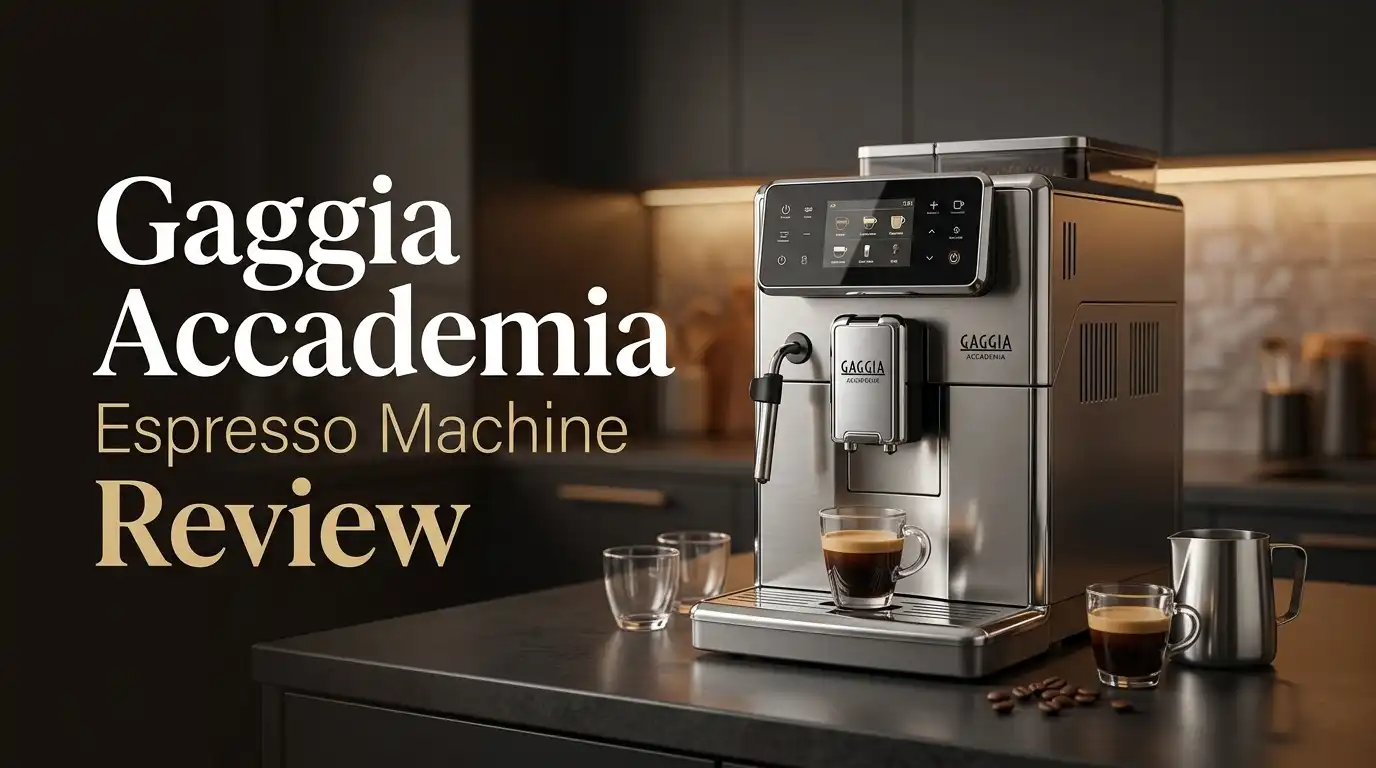
It gives you the push button speed of a bean to cup machine, plus the hands on control of a real espresso setup. You get a ceramic burr grinder, a flow control dial, an automatic milk carafe, and a commercial style steam wand in one stainless steel body.
It costs around $1,999, so it sits in serious territory. This review covers the unboxing, the daily use, the coffee quality, and the things Gaggia got wrong. By the end, you will know if this machine belongs on your counter.
In A Nutshell:
- The Accademia blurs the line between super automatic and manual espresso. It carries a flow control dial on the dispensing spout, three pre infusion settings, five aroma levels, and a Coffee Boost option that adds a ristretto shot. Very few bean to cup machines let you tune this much.
- You get two milk systems in one machine. An automatic self rinsing milk carafe clips onto the front, and a ball joint steam wand sits on the side for latte art practice. This is the standout feature at this price.
- Build quality feels premium. Stainless steel housing, mirrored glass, a 5 inch color touchscreen, a rotary dial, and capacitive buttons. It weighs 39.2 pounds, so it feels planted.
- The coffee leans classic Italian. Expect strong, slightly bitter shots with chocolate notes and heavy body. Light roast fans may find it lacks sweetness and brightness.
- It is not flawless. The touchscreen icons run small, the warranty is only one year, the grinder reaches about 68 decibels, and oily beans will cause trouble.
- Best for people who care about espresso quality but still want a one touch cappuccino on a busy morning.
Gaggia Accademia Espresso Machine


Last update on 2026-11-20 / Affiliate links / Images from Amazon Product Advertising API
The Gaggia Accademia is a fully automatic bean to cup espresso machine built in Italy. It grinds, doses, tamps, brews, and froths on its own. The 2022 redesign changed everything about the older model.
Gaggia dropped the dated LCD panel and added a 5 inch color touchscreen with a glass face. Inside, a ceramic flat burr grinder feeds a removable brew group that handles up to 11.5 grams of coffee per cycle.
The water tank holds 1.6 liters and the bean hopper holds 350 grams. Both have light blocking doors on top, which keeps beans fresher for longer.
The machine runs on 1500 watts with a 15 bar pump and a fast heating thermoblock. You can pull your first shot roughly one minute after switching it on. Nineteen drinks sit in the menu, and almost every one accepts custom tweaks.
Unboxing Experience And First Setup
The box arrives heavy and dense. Lift with your knees, because 39 pounds of stainless steel does not travel politely. Inside, foam blocks hold the machine tight, and the accessories sit in a separate cardboard tray.
You get cleaning tablets, a tube of lubricant for the brew group, a measuring spoon for pre ground coffee, and the instruction booklet. Gaggia does not include a water filter or a milk pitcher in every box, which feels stingy at this price.
Peeling the protective film off the glass front takes a minute and feels oddly satisfying. Setup moves fast.
You rinse the water tank, fill it, drop in beans, plug the machine in, and follow the onscreen prompts. The Accademia runs a priming and rinse cycle on its own. Total time from cardboard to first espresso sits around fifteen minutes.
Design And Build Quality
This machine looks expensive because it is built from real materials. The housing uses stainless steel with plastic internals, and the front panel uses glass.
The brushed stainless version hides fingerprints better than the mirrored black version, which shows every smudge. Dimensions measure roughly 15.2 by 11.1 by 16.9 inches.
Measure your counter depth before buying, because the water tank lid needs clearance underneath upper cabinets. The drip tray slides out smoothly and holds a float indicator. Up top sits a passive cup warmer that you can program to heat at three set times during the day.
That small touch shows someone at Gaggia actually used the machine every morning. The dispensing spout adjusts between 3.0 and 6.5 inches, and you can remove it completely to fit a travel mug. Few rivals allow that.
Top 3 Alternative for Gaggia Accademia Espresso Machine

Last update on 2026-11-20 / Affiliate links / Images from Amazon Product Advertising API
Jura E8 Automatic Espresso Machine

Last update on 2026-11-19 / Affiliate links / Images from Amazon Product Advertising API
De’Longhi Dinamica Plus Connected Espresso and Coffee Machine

Last update on 2026-11-19 / Affiliate links / Images from Amazon Product Advertising API
Philips 5400 Fully Automatic Espresso Machine with LatteGo
Touchscreen And Daily Controls
The Accademia gives you three ways to drive it. You can tap the 5 inch color touchscreen, press the capacitive buttons along the side, or turn the rotary dial. Most owners settle into a mix of the dial and the screen.
The menu layout makes sense right away. Favorites sit on the home screen, and you can rename drinks and reorder them. A question mark icon opens short tips, and a book icon displays a QR code that loads the full manual on your phone.
That beats hunting for a paper booklet in a kitchen drawer. The weak point is icon size. The touch targets run small, so people with larger fingers will mistap. The screen also picks up fingerprints quickly. Response speed is fine, though not iPhone quick. Overall the interface respects your time.
Ceramic Flat Burr Grinder Performance
Gaggia fitted ceramic flat burrs rather than steel. Ceramic stays cooler during grinding, so your beans keep more aroma. The grinder offers eight settings, adjusted by a dial above the hopper. Always adjust while the grinder is running, or you risk damaging the burrs.
Eight steps sound limited next to a dedicated grinder, but the flow control dial fills the gaps nicely. Grind consistency held up well across medium and dark roasts in testing. Noise measures around 68 decibels, which is quieter than older Gaggia units yet still noticeable at 6 a.m.
The pitch is sharper than you might expect from ceramic. Skip oily dark roasts entirely. Oil clogs the chute and the brew group, and that repair is not cheap. A bypass doser next to the hopper accepts pre ground coffee for decaf.
Espresso Taste And Flow Control
This is where the Accademia earns its keep. The Espresso Plus System puts a small dial on the dispensing spout that changes flow rate in real time. Slow the flow and you build body and crema. Speed it up and the shot turns lighter.
Combine that with three pre infusion options and five aroma levels, and you get real control over extraction. The extended pre infusion setting produces the most even shot in testing. Taste leans traditional Italian.
Shots come out strong, full bodied, and slightly bitter, with clear chocolate notes. Sweetness and delicate fruit notes do not shine through as clearly as they would on a manual lever machine.
Lungo and americano style drinks taste surprisingly good, which is rare for this category. Light roast drinkers should temper expectations.
Milk Carafe And Steam Wand
The milk system is the best part of this machine. The insulated carafe lives in your fridge and clips onto the front when you need it. No tubes dangle into a jug. The carry handle doubles as a swinging spout that swivels over your cup.
After each drink, the system blows hot water through the circuit automatically. Foam quality is dense and stable, good enough for a proper cappuccino. Next to it sits a professional style steam wand on a ball joint. Earlier Gaggia wands felt weak, but this one delivers real pressure.
You can texture silky microfoam and practice latte art with a stainless pitcher. Having both options means you can rush in the morning and play barista at night. Milk temperature and foam density both adjust in the menu.
Drink Menu And Customization
Nineteen drinks live in the menu. You get espresso, ristretto, lungo, americano, cappuccino, latte macchiato, flat white, cortado, hot water, and hot milk, plus Italian specialties like macchiatone and melange.
Every drink accepts adjustments to volume, strength, temperature, milk amount, and foam texture. The clever part is live editing. While the machine is brewing, you can change settings on the fly and save the result.
Profiles work as a memo function rather than full named user accounts, which is a small miss for households with several coffee drinkers.
The two cup function works for black coffee only, and the machine correctly runs two separate grind cycles. Coffee Boost adds an extra ristretto shot for anyone who needs a jolt. The variety here easily covers a family with different tastes.
Cleaning And Maintenance Routine
Daily care takes about five minutes. Wipe the body with a damp cloth, empty the drip tray, and rinse the grounds container. The brew group pulls out by hand and gets rinsed under warm water with no soap and no dishwasher.
Lubricate the brew group monthly with the grease Gaggia includes. The milk carafe self rinses, but you should still disassemble and wash the parts each evening. Milk residue hides in corners. Run the brew group cleaning tablet cycle once a month to keep oils from building up.
Skipping this causes a noticeable drop in flavor within weeks. Descaling happens roughly every few months and takes around thirty minutes. An Intenza water filter cuts descaling frequency and improves taste, so buy one. The machine prompts you when each task is due.
What The Gaggia Accademia Does Not Do Well
Honest reviews list the flaws, so here they are. The one year warranty is short for a machine costing nearly two thousand dollars, especially when Jura offers two years. The touchscreen icons are too small and cause mistaps.
There is no app and no real multi user profile system, which feels dated in 2026. The water tank at 1.6 liters empties quickly if you host guests. The drip tray fills faster than expected because of frequent rinse cycles.
Reported service issues include water flow blockages and pump problems, usually tied to scale or oily beans. Parts and authorized service can be hard to find outside major cities.
Finally, the espresso lacks the sweetness and clarity that a skilled person can pull from a prosumer machine. This is excellent super automatic coffee, not cafe grade perfection.
Pros And Cons
Pros
- Stainless steel and glass build that looks and feels premium on any counter
- Two milk systems included, with a self rinsing automatic carafe and a strong steam wand
- Flow control dial, three pre infusion settings, and five aroma levels for real extraction control
- Ceramic flat burrs with eight grind steps that keep heat away from your beans
- Removable dispensing spout that fits tall travel mugs
- Programmable cup warmer and light blocking lids for beans and water
- Nineteen drinks with live customization during brewing
Cons
- Touchscreen icons run small and attract fingerprints
- Only a one year warranty at a premium price
- No app connectivity and only a basic memo style profile system
- Grinder noise sits around 68 decibels, louder than expected
- Oily beans can clog the grinder and brew group
- Espresso leans bitter and lacks sweetness with light roasts
- Heavy at 39.2 pounds and deep enough to crowd a small counter
Gaggia Accademia vs Jura E8
The Jura E8 is the obvious rival, and it usually costs several hundred dollars more. The E8 offers more specialty drinks and a slightly larger 1.9 liter tank. It also uses plastic housing, a single boiler, and an external cappuccinatore frother with no milk container included.
The Accademia counters with stainless steel housing, two boilers, a flow control dial, a real steam wand, and a milk carafe in the box. Jura wins on warranty length and on brand service network. Gaggia wins clearly on value, materials, and hands on control.
If you want the simplest possible experience and a strong dealer network, the Jura makes sense. If you want more espresso control for less money, the Accademia is the better buy. Taste results sit close, with the Gaggia pulling stronger, more traditional shots.
Who Should Buy The Gaggia Accademia
This machine fits a specific person. You drink several milk based coffees a day. You want one touch convenience on weekday mornings. You also enjoy tinkering, and you want the option to steam milk by hand on a Sunday.
You have counter space, a budget near two thousand dollars, and medium roast beans that are not oily. Households with two or three coffee drinkers get the most value here, since the drink menu covers everyone.
Skip it if you only drink one black coffee each day, because a simpler machine will serve you better for far less money.
Also skip it if you chase bright, fruity light roasts, or if you want app control and a long warranty. Espresso purists who already own a grinder and a lever machine will not be converted.
Final Verdict On The Gaggia Accademia
Last update on 2026-11-20 / Affiliate links / Images from Amazon Product Advertising API
The Gaggia Accademia is the most complete super automatic machine most home users will ever need. It looks gorgeous, it feels solid, and it makes genuinely good espresso rather than merely acceptable coffee.
The combination of flow control, pre infusion options, an automatic milk carafe, and a real steam wand does not exist anywhere else at this price. The flaws are real but manageable. Small icons annoy you for a week until muscle memory kicks in.
The short warranty stings. Regular cleaning is not optional. If you accept those trade offs, this machine will reward you every single morning for years.
At around $1,999 it represents strong value next to Jura, and it gives you more control than any De’Longhi or Philips rival in the same bracket. Recommended with open eyes.
Frequently Asked Questions
Is the Gaggia Accademia worth the price in 2026?
Yes, if you drink multiple espresso based drinks daily. The stainless steel build, dual milk systems, and flow control put it ahead of similarly priced rivals. Casual one cup drinkers will not use enough of its features to justify the cost.
Can you use pre ground coffee in the Accademia?
Yes. A bypass doser sits next to the bean hopper and accepts one scoop of pre ground coffee. Most owners use it for decaf in the evening so they do not have to empty the main hopper.
How often does the Gaggia Accademia need descaling?
It depends on your water hardness and whether you use an Intenza filter. Without a filter, expect a descale every two to three months. The machine displays an alert when the cycle is due, and the process takes around thirty minutes.
Does the Accademia make cold coffee drinks?
It brews hot drinks and dispenses hot milk and hot water. There is no dedicated cold brew program. You can brew a strong espresso over ice, but this machine is not built for a full cold drink menu.
What beans work best in this machine?
Medium to medium dark roasts with a dry surface perform best. Avoid visibly oily beans completely, because the oil clogs the grinder chute and the brew group. Fresh beans used within a month of roasting give the cleanest flavor.
Is the milk carafe hard to clean?
No. The machine rinses the milk circuit automatically after each drink. Once a day you should take the carafe apart and wash the three main pieces by hand. The whole task takes about two minutes.

Hi, I’m Emma Lee — the coffee-obsessed creator behind Morning Drip Vault. I spend my days testing coffee machines, exploring brewing techniques, and reviewing the latest coffee gear. My mission is simple: helping you find the perfect machine to brew your best cup, every single morning.