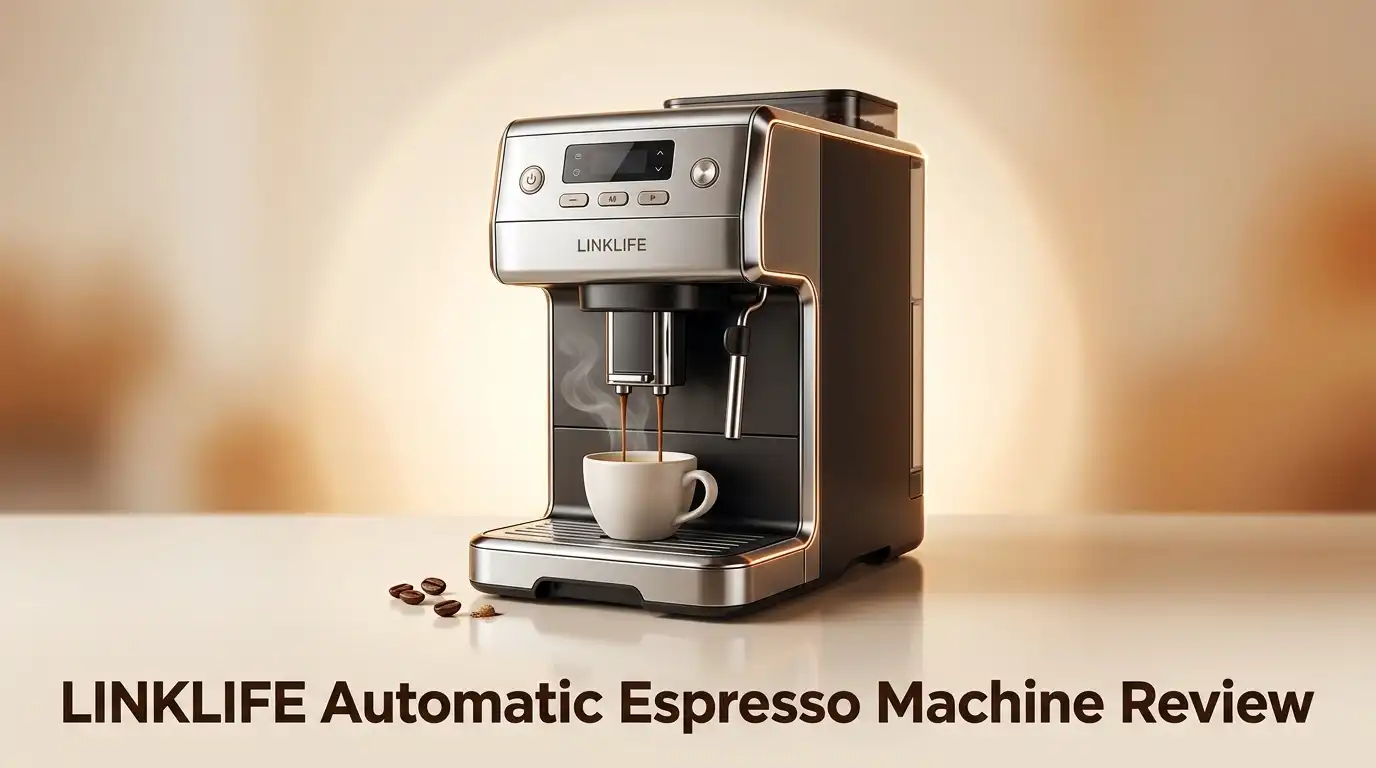
LINKLIFE Automatic Espresso Machine Review 2026: Worth Buying?
Most people want café coffee without café prices. They also want it without learning how to tamp, time, and texture milk at 6 a.m.
That is exactly the gap the LINKLIFE Automatic Espresso Machine tries to fill. It grinds whole beans, brews under high pressure, froths milk, and rinses itself, all from a single button press.
But a budget bean to cup machine always carries trade offs, and the marketing copy never mentions them. So this review covers the good parts and the frustrating parts with equal honesty.
In a Nutshell:
- It is a true bean to cup machine at a budget price. The LINKLIFE grinds, doses, brews, and froths automatically. You press one button and walk away. Most machines with this level of automation cost far more, which is the core appeal here.
- Convenience beats customization. You get roughly seven preset recipes including latte, cappuccino, americano, and flat white. Grind adjustment exists, but the range is narrower than dedicated burr focused rivals.
- The milk system is automatic, not manual. There is no steam wand to learn. The machine heats and textures milk on its own, which is excellent for beginners and limiting for latte art fans.
- Cleanup is genuinely easy. Removable parts go in the dishwasher, and the machine runs rinse and descale cycles on command. This is the single biggest daily quality of life win.
- Build materials feel their price. Plastic dominates the housing. It works fine, but it does not feel like a $700 Italian machine, and you should expect that.
- Espresso quality is good, not exceptional. Expect a sweet, drinkable shot with decent crema. Serious espresso hobbyists will hit a ceiling fast.
What Is the LINKLIFE Automatic Espresso Machine?

Last update on 2026-11-19 / Affiliate links / Images from Amazon Product Advertising API
The LINKLIFE Automatic Espresso Machine is a fully automatic bean to cup coffee maker built for home kitchens. It combines a bean hopper, an integrated grinder, a high pressure pump, and an automatic milk frother inside one compact body. You add beans, water, and milk. The machine handles everything else.
Its headline feature is the preset recipe menu. Buttons cover espresso, americano, latte, cappuccino, flat white, and iced coffee depending on your exact model. Pressing one button triggers the full sequence: grind, tamp, extract, froth, and dispense.
High pressure extraction sits around 19 to 20 bar on the spec sheet, which is standard across this price class. Real brewing pressure regulates down closer to 9 bar inside the group, the same target professional machines use. The machine also includes auto cleaning and descaling programs to protect the internal lines.
Unboxing Experience: What Arrives in the Box
The box is heavier than you expect for a machine this size. Mine arrived double boxed with molded foam on both ends, and nothing had shifted in transit. That matters, because budget appliances often ship with thin padding and arrive with cracked drip trays.
Inside you find the machine, a removable water tank, the milk container with its tube, a drip tray with grate, a cleaning brush, a measuring scoop, and a quick start manual. The manual is short and uses diagrams more than text, which genuinely helps.
Setup took about fifteen minutes. You rinse the tank, fill it with filtered water, load beans, and run the priming cycle. The first two shots should go down the drain, since the lines carry factory residue and the grinder needs beans to purge through. After that, the machine is ready for daily use.
Design and Build Quality on the Counter
The LINKLIFE has a compact footprint that suits apartment counters. It fits under most standard upper cabinets, though you should measure your clearance before ordering, since the bean hopper lid lifts upward during refills.
The shell is primarily plastic with a brushed finish and some chrome accents. It looks far better in person than photos suggest, but your fingertips will tell you the truth within seconds. This is not a stainless steel machine pretending otherwise.
The drip tray slides out smoothly and includes a float indicator that rises when the tray fills. The water tank pulls from the side and holds enough for several drinks before a refill. Button feedback is tactile and clear, which I prefer over cheap touch panels that degrade after years of steam exposure. The spout height adjusts for different cup sizes, though very tall travel mugs will not fit underneath.
Top 3 Alternative for LINKLIFE Automatic Espresso Machine
If the LINKLIFE does not match your budget or your priorities, these three machines cover the realistic alternatives at higher price points.
Philips 3200 Series Fully Automatic Espresso Machine with LatteGo

Last update on 2026-11-19 / Affiliate links / Images from Amazon Product Advertising API
De’Longhi Magnifica Start Automatic Espresso Machine with Milk Frother


Last update on 2026-11-18 / Affiliate links / Images from Amazon Product Advertising API
Philips 3300 Series Fully Automatic Espresso Machine with LatteGo Milk System

Last update on 2026-11-18 / Affiliate links / Images from Amazon Product Advertising API
The Built In Grinder: How It Performs
The integrated grinder is the feature that separates this machine from pod brewers. It grinds beans immediately before extraction, so aromatic oils reach the cup instead of evaporating in a storage bag.
Grind adjustment works through a dial inside the hopper. You turn it only while the grinder is running, a rule the manual states and many owners ignore, which risks jamming the burrs. The adjustment range is useful but limited compared to machines offering fifteen or thirty settings.
In practice, medium roasts performed best. Very dark, oily beans caused occasional sticking in the chute, which is a common complaint across every budget bean to cup machine, not a LINKLIFE specific flaw. Lighter roasts needed a finer setting to avoid thin, sour shots.
Expect to spend your first ten cups dialing things in. The grinder is loud for five to eight seconds, roughly like a small blender.
Espresso Quality and Taste Test
Here is the honest assessment. The LINKLIFE produces a good everyday espresso with a decent crema layer and a sweet, rounded body. Pulled with fresh medium roast beans, it beats any pod machine and most drip coffee by a clear margin.
It does not match a $1,000 machine, and nobody should expect it to. The shots lack the layered complexity and syrupy texture that precise temperature stability produces. Clarity is average. Acidity in light roasts gets flattened rather than highlighted.
The first drink of the day tastes slightly different from the third, because the thermoblock heater needs a few cycles to stabilize. This is normal behavior, not a defect. Running a blank hot water cycle first helps considerably.
For milk drinks, the difference barely registers. Sugar and steamed milk mask most of the gap, which is why this machine shines as a latte and cappuccino maker.
Milk Frother and Latte Performance
The automatic milk system is the reason most buyers choose this machine. You attach the milk container, drop the tube in, and press a milk drink button. The machine draws, heats, aerates, and dispenses without any technique from you.
Foam quality is consistently decent. It is thick enough for a cappuccino cap and smooth enough for a latte. It is not microfoam. The bubbles are slightly larger than what a trained hand produces with a steam wand, and pouring rosettas is not realistic here.
Oat milk frothed acceptably with barista blends. Standard oat and almond milks produced thinner, faster collapsing foam, which is true of nearly every automatic frother.
The milk container capacity is modest, so entertaining four guests means refilling mid service. After use, the system runs a short rinse cycle, and the container goes in the refrigerator or the dishwasher.
Daily Use: Controls and the Learning Curve
Daily operation is genuinely simple. Fill the tank, load beans, press a button, drink coffee. That is the whole routine for most mornings, and it takes under a minute of active attention.
The control panel uses labeled buttons rather than nested menus. You can adjust volume and strength for most recipes by holding a button during dispensing, which the machine then remembers. This small feature matters more than it sounds, because standard presets rarely match personal taste exactly.
Icons light up for low water, low beans, and a full grounds container. The alerts are clear and prevent the lukewarm, under extracted shots that silent machines serve when a tank runs dry.
Learning time is roughly one weekend. Someone who has never made espresso can produce a solid cappuccino on day one. Someone chasing a specific extraction profile will spend longer and still hit a ceiling.
Cleaning, Descaling and Maintenance
Maintenance determines whether this machine lasts three years or seven. The LINKLIFE makes the job easier than most, which is its strongest practical advantage.
The automatic rinse cycle flushes the brew path at startup and shutdown. A dedicated descaling program handles limescale, and you should run it every two or three months with moderate daily use. Do not wait for the warning light, because scale accumulates before any machine notices.
Removable parts including the drip tray, grounds container, and milk components are dishwasher safe. The water tank should be hand washed and refilled with filtered water, which dramatically slows scale buildup inside the boiler.
Wipe the dispensing spouts weekly to stop dried milk residue from souring your drinks. Budget roughly $40 a year for descaling solution and filters. Skipping this routine is the single most common reason budget machines die early.
Noise, Speed and Heat Up Time
Speed is respectable for the price. The machine reaches brewing temperature in well under a minute from cold, which is typical for thermoblock heating. A double espresso takes roughly forty seconds from button press to finished cup, including grinding.
Milk drinks take longer, usually around ninety seconds, because the frothing sequence runs after extraction. Back to back drinks slow slightly, since thermoblocks hold less thermal mass than traditional boilers and need recovery time.
Noise is the honest weak point. The grinder is loud, comparable to a handheld blender for a short burst. The pump adds a mechanical hum during extraction. If you brew before anyone else in the house wakes up, they will know.
Total active noise lasts under fifteen seconds per drink, so it is brief rather than constant. Still, this is not a quiet machine.
What the LINKLIFE Does Not Do Well
Authentic reviews name the weaknesses clearly, so here they are without softening.
Grind adjustment range is narrow. If you enjoy chasing extraction profiles across different roasts, you will exhaust the available settings quickly and want a machine with fifteen or more steps.
The milk foam is serviceable, not professional. Latte art is effectively off the table, and oat milk results depend heavily on which carton you buy.
Build materials are plastic dominant. The machine functions reliably, but the tactile experience does not match machines costing twice as much.
Long term durability remains an open question. LINKLIFE is a newer brand without a decade of field data, and support networks for budget brands are thinner than for De’Longhi or Philips. Tall travel mugs do not fit under the spout, and the milk container is too small for hosting a group.
Pros and Cons
Here is the balanced summary.
Pros:
- Full bean to cup automation at a price far below traditional super automatic machines, covering grinding, brewing, and frothing in one press.
- Seven preset recipes including iced coffee, which removes decision fatigue on busy mornings and suits households with different taste preferences.
- Dishwasher safe removable parts plus automatic rinse and descale cycles, which keeps maintenance realistic rather than aspirational.
- Compact footprint that fits apartment counters and small kitchens without dominating the workspace.
- Beginner friendly interface with clear labeled buttons and low water, low bean, and full tray alerts.
Cons:
- Limited grind adjustment range compared to rivals offering fifteen or more settings, which caps your ability to dial in specialty roasts.
- Automatic foam is not microfoam, so latte art and silky texture remain out of reach.
- Plastic heavy construction that works well but feels budget in the hand.
- Loud grinder that will wake a sleeping household during early brews.
- Small milk container that needs refilling when serving multiple guests.
- Unproven long term reliability from a newer brand with limited service history.
Who Should Buy It and Who Should Skip It
Buy this machine if you drink milk based coffee daily and value speed over control. Students in small apartments, busy parents, and office kitchens get the most value here. If your morning decision is simply latte or cappuccino, this machine answers it in ninety seconds.
It also suits anyone testing whether bean to cup convenience actually fits their life. Spending under $300 to find out beats spending $900 on a machine you may not love.
Skip it if you are an espresso enthusiast. If you own a scale, time your shots, or care about extraction yield, the limited grind range will frustrate you within a month. Buy a semi automatic machine and a separate grinder instead.
Also skip it if you regularly serve four or more people, or if you expect stainless steel construction and a decade of brand backed service support.
Price and Value in 2026
The LINKLIFE typically sells under $300, with some configurations landing closer to the mid $200s and larger recipe models reaching around $300. That places it well beneath the usual super automatic entry point, which starts near $500 and climbs fast.
Value math is straightforward. A daily $6 café habit costs roughly $2,190 a year. At that rate, this machine pays for itself in under two months of consistent home brewing, even after you add beans and descaling solution.
The real comparison is not against $1,000 machines. It is against your coffee shop receipts. Judged that way, the LINKLIFE delivers strong returns.
Prices shift with promotions, so check current listings before buying. Seasonal sales occasionally push Philips and De’Longhi models closer to this range, which changes the calculation if brand longevity matters more to you than upfront savings.
Final Verdict: Is the LINKLIFE Worth It in 2026?
Last update on 2026-11-19 / Affiliate links / Images from Amazon Product Advertising API
The LINKLIFE Automatic Espresso Machine earns a recommendation with clear boundaries. It delivers genuine bean to cup automation, easy cleanup, and solid milk drinks at a price that undercuts almost every established brand in the category.
It is not a machine for people who love the craft of espresso. The grind range is narrow, the foam is good rather than great, and the plastic body will never feel luxurious.
But for the far larger group who simply want a reliable cappuccino without thought or technique, this machine does the job every morning. It removes decisions instead of adding them, which is exactly what a budget super automatic should do.
Treat it well, use filtered water, descale on schedule, and buy fresh beans. Do those four things, and the LINKLIFE will reward you with years of easy coffee.
Frequently Asked Questions
Does the LINKLIFE make real espresso?
Yes. It extracts under genuine high pressure with freshly ground beans and produces a proper crema layer. The shots taste good and clearly beat pod machines, though body and complexity fall short of expensive prosumer machines.
Can I use pre ground coffee in the LINKLIFE?
Many configurations include a bypass chute for pre ground coffee, which is useful for decaf. Check your specific model listing, since not every unit offers this feature. Whole beans always produce better flavor.
How often should I descale the machine?
Every two to three months with moderate daily use. Households with hard water should descale more often. Using filtered water from day one significantly reduces scale buildup and extends the machine’s working life.
Does it work with oat milk and almond milk?
Yes, though results vary. Barista formulated oat milk froths well. Standard oat and almond milks produce thinner foam that collapses faster. Dairy milk still delivers the thickest, most stable result.
How long does the LINKLIFE last?
Budget bean to cup machines typically last three to seven years with consistent descaling and cleaning. LINKLIFE is a newer brand, so long term data is limited. Regular maintenance remains the biggest factor in lifespan.
Is it loud enough to wake someone up?
The grinder runs loud for five to eight seconds per drink, similar to a small blender. The noise is brief but noticeable in a quiet house at early hours.
Can I make latte art with this machine?
No. The automatic frother dispenses foam rather than pourable microfoam. If latte art matters to you, choose a machine with a manual steam wand instead.

Hi, I’m Emma Lee — the coffee-obsessed creator behind Morning Drip Vault. I spend my days testing coffee machines, exploring brewing techniques, and reviewing the latest coffee gear. My mission is simple: helping you find the perfect machine to brew your best cup, every single morning.