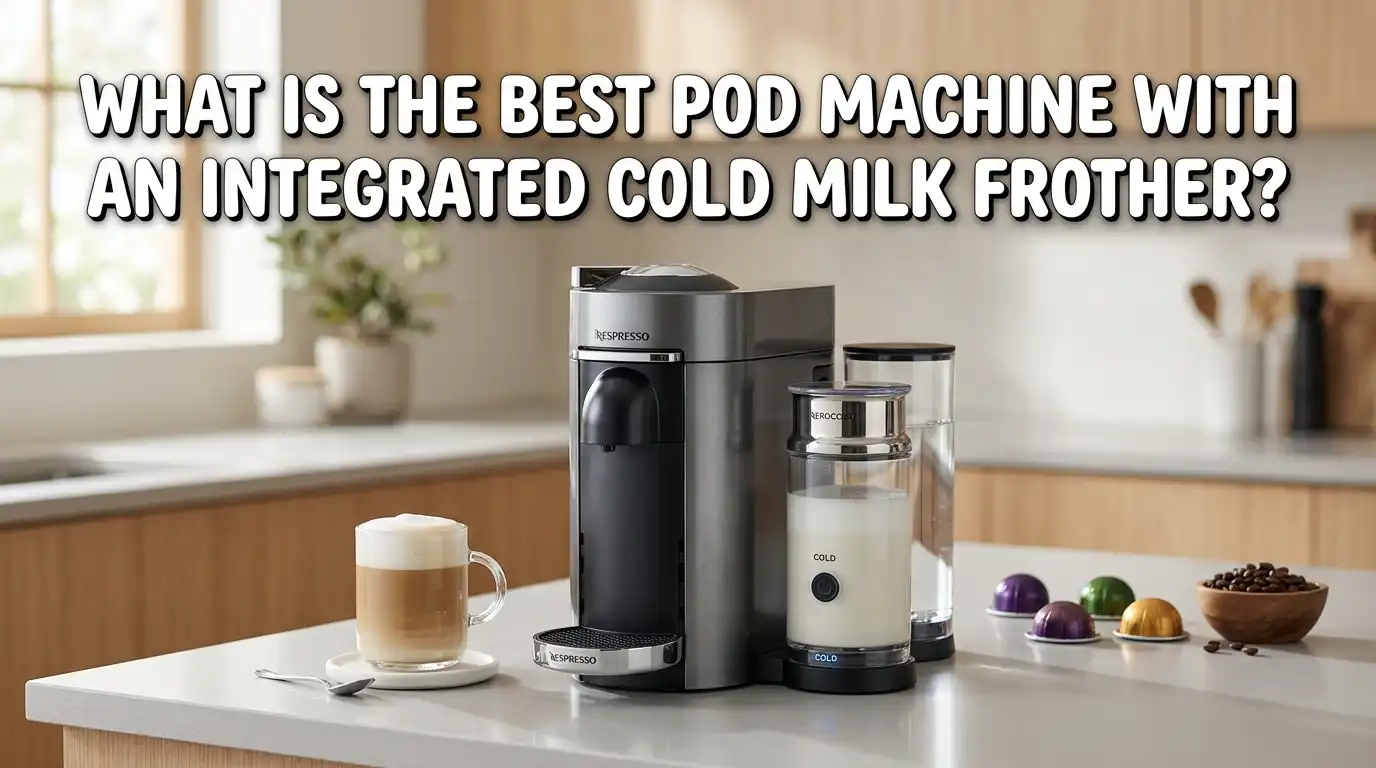
What Is the Best Pod Machine With an Integrated Cold Milk Frother?
Cold foam drinks now rule café menus, and you probably want the same magic at home. The good news is that several pod machines come with a built in cold milk frother, so you can skip the separate gadget on your counter.
The tricky part is figuring out which model actually delivers thick, cold foam and tasty espresso in one go.
This guide breaks down the top pod machines with integrated cold frothers, the features that matter, and the steps to get the best iced latte every morning.
In a Nutshell:
- The Ninja Pods and Grounds Specialty Coffee Maker is the strongest all rounder because its fold away frother handles both hot and cold milk and works with K Cup pods plus grounds.
- The Nespresso Vertuo Lattissima offers a one touch milk system with a dedicated cold milk button, making it the easiest choice for iced lattes from real pods.
- The Keurig K Cafe ships with an attached frother that has a cold froth setting, ideal for fans of K Cups who want cold foam without buying extra tools.
- Cold foam works best with cold whole milk, oat milk, or barista blends because the fat and protein hold air better at low temperatures.
- Always rinse the frother right after use, since dried milk is the top cause of weak foam and motor problems.
- Budget pod machines with steam wands rarely make true cold foam, so check for a spin whisk style frother with a clearly labelled cold setting.
Why Cold Foam Pod Machines Are So Popular Right Now
Iced coffee sales have climbed every year since 2020, and cold foam is the topping that drives most of those orders. People love the creamy cap that floats on iced espresso without melting the ice. A pod machine with a built in cold frother brings that café feel home in under two minutes.
The convenience is huge. You drop a pod, press a button, and the same machine froths cold milk while the coffee brews. You save counter space, dishes, and time.
Pros: all in one design, fast prep, less cleanup. Cons: built in frothers usually offer fewer texture controls than standalone units, and replacement parts can be pricey.
What Makes a Cold Milk Frother “Integrated”
An integrated cold milk frother is physically attached to the coffee machine or sits inside a dock that powers it from the same base. You do not plug it in separately. Most use a magnetic spin whisk, while a few high end models use induction heating with a cold mode.
This setup matters because integration usually means shared controls and synced timing. You can start brewing and frothing with one button on many models.
Pros: clean look, single power cord, button presets that match drink recipes. Cons: if the frother breaks, the whole unit may need service, and you cannot easily swap in a better frother later.
The Top Pod Machines With Built In Cold Milk Frothers
Three machines lead this category in 2026. The Ninja Pods and Grounds Specialty Coffee Maker has a fold away frother arm with a clear cold setting. The Nespresso Vertuo Lattissima uses a milk carafe that clicks onto the side and delivers cold or hot milk through a spout. The Keurig K Cafe Special Edition has a frother cup that sits on a heated base with a cold button.
Each one targets a different buyer. Ninja suits flexible brewers who want pods and grounds. Nespresso suits espresso lovers who want strong shots. Keurig suits K Cup loyalists who want familiar pods with new tricks.
Pros of having choices: you can match your pod brand. Cons: the pods are not cross compatible, so pick the ecosystem first.
Ninja Pods and Grounds Specialty Coffee Maker: A Closer Look
This machine accepts K Cup pods and ground coffee, brews from 6 ounces to a 24 ounce travel mug, and includes a fold away frother on the left side. The frother handles hot foam, cold foam, and warm milk, with separate buttons for each.
The cold setting spins fast without heat, so you get thick, scoopable foam in about 60 seconds. You can use dairy or plant based milk, and the whisk pops out for the dishwasher.
Pros: wide pod and grounds support, true cold foam, easy cleaning, mid range price. Cons: the frother cup is small at around 12 ounces, and the machine takes more counter space than a slim Nespresso.
Nespresso Vertuo Lattissima: One Touch Milk Magic
The Vertuo Lattissima pairs Nespresso’s centrifusion brewing with a side mounted milk carafe. You twist the foam dial to your preferred texture, press the milk button, and the machine pours frothed milk straight into your cup. A dedicated cold milk setting skips the heater.
The foam is silky rather than stiff, which suits flat whites and iced lattes more than heavy cold foam caps. You can store the carafe in the fridge between uses, which is a nice touch.
Pros: premium build, fully automatic milk pour, fridge ready carafe, strong espresso. Cons: higher price, pods cost more than K Cups, foam is thinner than spin whisk styles.
Keurig K Cafe Special Edition: The Familiar Choice
If your kitchen already runs on K Cups, the K Cafe is the easiest upgrade. The frother sits on the left and has four buttons: cappuccino, latte, cold froth, and clean. The cold froth setting spins without heat and makes a stable foam in about 90 seconds.
The machine brews shot, cup, mug, and travel sizes. You can also use the strong button to make a concentrated brew that holds up against ice and milk.
Pros: affordable, huge K Cup pod selection, attached frother, dishwasher safe parts. Cons: foam is lighter than a Ninja, the frother cup tips easily, and some users report frother motor wear after a year or two.
Side By Side: Which Pod Machine Wins for Cold Foam
If we judge purely on foam thickness, the Ninja wins because its high speed cold whisk creates the densest microfoam of the three. The Nespresso Vertuo Lattissima takes second for smoothness and convenience, since you never touch the milk after pouring it in the carafe. The Keurig K Cafe lands third but offers the lowest entry price.
Think about your daily drink. Iced latte fans should pick Nespresso. Cold foam cappuccino fans should pick Ninja. Casual K Cup drinkers should pick Keurig.
Pros of comparing first: you avoid buyer’s remorse. Cons: specs change yearly, so always check the current model’s manual for the cold setting.
How to Make a Perfect Cold Foam Drink Step by Step
Start with cold milk straight from the fridge, ideally whole dairy or barista oat milk. Pour milk to the minimum line on the frother cup. Press the cold foam button and let the whisk spin until it stops on its own.
While the milk froths, brew your pod over a glass filled with ice. Use a short, strong shot so the flavor survives dilution. Once the foam is ready, spoon it over the iced coffee in a slow, steady pour.
Pros of this method: consistent results, no guessing. Cons: plant milks vary in foam quality, so try two or three brands before settling on one.
Best Milk Choices for Cold Foam at Home
Whole dairy milk gives the richest, longest lasting foam because of its fat and protein balance. Two percent milk also works but feels lighter. Skim foams up fast but collapses quickly.
For plant based options, barista oat milk is the gold standard. It contains added oils and stabilizers that mimic dairy foam. Soy comes second, while almond and coconut milks rarely hold a stiff cold foam without help.
Pros of testing milks: you find your favorite flavor and texture. Cons: barista blends cost more than regular plant milks, and dairy alternatives can clog small frother whisks if not rinsed promptly.
Cleaning and Maintenance Tips for the Integrated Frother
Rinse the frother cup with warm water right after each drink. Milk proteins harden fast and stick to the whisk, which is the main reason frothers lose power. Once a week, fill the cup with warm water and a drop of dish soap, then run the cold cycle to self clean.
Remove the whisk every few days and check for milk residue near the magnet. Most whisks are top rack dishwasher safe, but the cup base usually is not.
Pros of regular cleaning: longer machine life, better foam, no sour smell. Cons: it adds a small daily step, and forgetting once can leave a stubborn film.
Common Problems and Quick Fixes
If your cold foam looks thin, the milk is probably too warm or too old. Use fresh milk straight from the fridge. If the frother makes noise but no foam, check that the whisk is seated on the magnet correctly.
A frother that will not start often points to a dirty base contact. Wipe the metal pins under the cup with a dry cloth. If your Nespresso carafe leaks, the rubber seal may need a quick rinse and reseat.
Pros of troubleshooting first: you avoid a service call. Cons: some issues, like a burned motor, need a replacement frother, and warranty terms vary by brand.
Budget vs Premium: Which Pod and Frother Combo Fits You
Under 200 dollars, the Keurig K Cafe and Ninja Pods and Grounds are the strongest picks. They cover most cold foam needs and use widely available pods. You give up some build quality and foam density, but daily performance is solid.
Above 500 dollars, the Nespresso Vertuo Lattissima sits in a different class with automatic milk pour, sleek metal trim, and stronger espresso. You pay for design, materials, and Nespresso’s pod variety.
Pros of going premium: longer warranty, better resale, café style results. Cons: higher pod cost, pricier repairs, and a steeper learning curve on settings.
Final Verdict on the Best Pod Machine With Cold Foam
For most people in 2026, the Ninja Pods and Grounds Specialty Coffee Maker is the best pod machine with an integrated cold milk frother. It balances price, foam quality, and pod flexibility better than any other model on the market. You get true café style cold foam, K Cup compatibility, and a frother that handles dairy and plant milks.
Pick the Nespresso Vertuo Lattissima if you want premium espresso and a hands free milk system. Pick the Keurig K Cafe if you want the cheapest path to cold foam with familiar K Cups.
Pros of choosing carefully: years of happy mornings. Cons: none, if you match the machine to your drink habit.
Frequently Asked Questions
Does the Nespresso Aeroccino make cold foam?
Yes, the Aeroccino 3 and Aeroccino 4 both have a cold foam setting. They are not built into the brewing machine but come bundled with many Nespresso bundles, so they count as paired accessories rather than fully integrated frothers.
Can I use plant based milk in a pod machine’s cold frother?
You can, but results vary. Barista grade oat and soy milks froth best. Almond, coconut, and rice milks usually make thin foam that collapses fast. Always rinse the whisk right after to prevent buildup.
Why is my cold foam runny instead of thick?
The two top causes are warm milk and low fat content. Use milk straight from the fridge and pick whole dairy or barista oat milk. A dirty whisk or worn magnet can also cut foam quality.
How often should I clean the integrated frother?
Rinse after every use and do a full soap clean once a week. Remove the whisk, wipe the magnet base, and check the cup seal. This keeps the motor strong and the foam tasty for years.
Is a pod machine with a cold frother worth it over a separate frother?
If you make cold foam drinks daily, an integrated machine saves counter space and time. If you only make them occasionally, a standalone frother gives more texture control and is cheaper to replace. Pick based on how often you drink cold foam at home.

Hi, I’m Emma Lee — the coffee-obsessed creator behind Morning Drip Vault. I spend my days testing coffee machines, exploring brewing techniques, and reviewing the latest coffee gear. My mission is simple: helping you find the perfect machine to brew your best cup, every single morning.