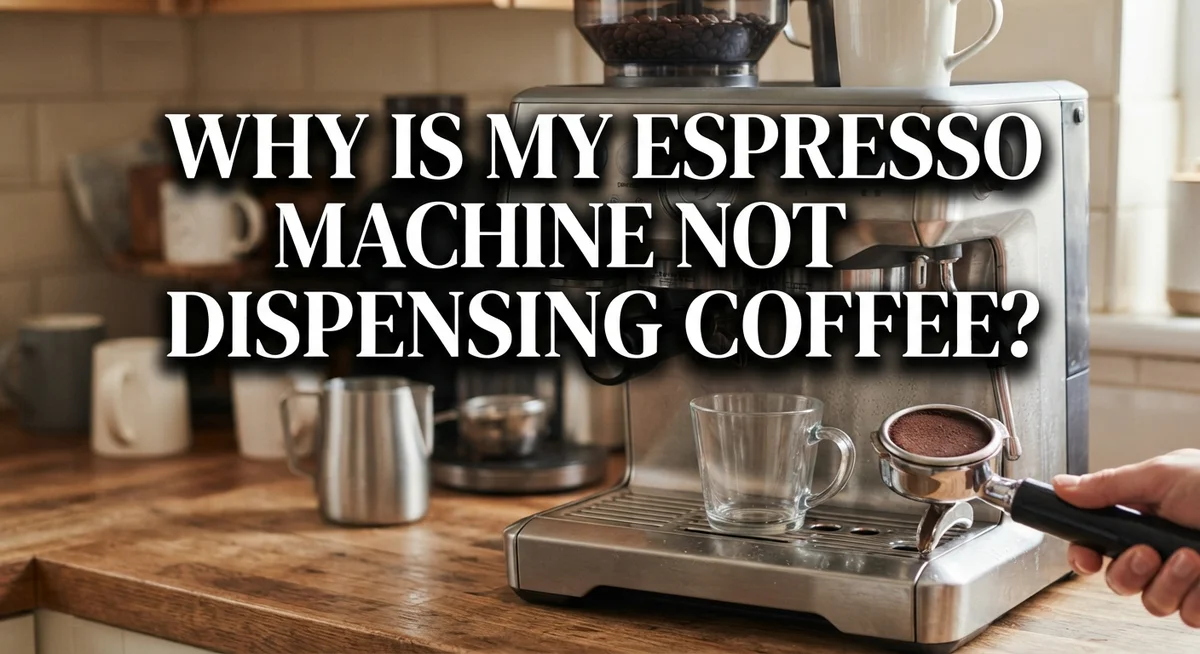
Why Is My Espresso Machine Not Dispensing Coffee?
You wake up, ready for your morning shot. You press the button, and the pump hums to life. But nothing comes out.
No coffee. No stream. Just silence from the spout.
This problem happens to many espresso lovers. Your machine seems to work, but the cup stays empty.
The good news? You can fix this yourself. Most causes are simple and easy to spot.
Poor tamping is often the biggest culprit. Too much pressure or an uneven surface can block water flow completely.
By the end, you will know exactly how to get that rich, steady stream flowing again.
In a Nutshell
- Check your tamp first. Uneven or overly hard tamping blocks water flow. This is the most common cause of a dry shot.
- Look at your grind size. A grind that’s too fine creates too much resistance. Water struggles to pass through, and coffee stops flowing.
- Fresh grounds matter. Stale, pre-ground coffee loses gas and structure. This causes weak extraction or no flow at all.
- Inspect for clogs. Old grounds or milk residue can block the nozzle or spout. A quick clean often solves the issue.
- Test your pump and seals. If the pump runs but nothing comes out, check the portafilter seal and basket for damage or misalignment.
- Confirm your machine setup. Dripping instead of a steady stream usually means a configuration or calibration problem, not a mechanical failure.
How Your Espresso Machine Is Supposed to Work
An espresso machine works by forcing hot water through tightly packed coffee grounds at high pressure. This process creates the rich, concentrated shot you love.
Here’s what happens inside your machine. Water sits in a tank or connects to a line. A pump pressurizes this water, typically to around 9 bars of pressure. This pressurized water then travels through the group head and into your portafilter basket.
Your portafilter holds the ground coffee. You fill it, tamp the grounds down, and lock it into the group head. The hot water pushes through the coffee bed and extracts oils, flavors, and solids. This mixture flows out the spout into your cup.
The key to success is consistency. The water must pass through the grounds evenly and at the right speed. If water moves too fast, you get weak, watery espresso. If water moves too slow or stops entirely, your machine isn’t dispensing properly.
Several parts work together to make this happen. The pump must generate steady pressure. The portafilter seal must be tight so water doesn’t leak around the sides. The basket must sit level inside the portafilter. The group head must deliver water uniformly across all the grounds.
Your grind size controls water flow. Finer grounds create more resistance. Coarser grounds let water rush through too quickly. The sweet spot is a grind that feels like damp sand.
Tamping pressure matters just as much. Even, firm pressure creates a level coffee bed. Uneven or excessive tamping creates channels where water rushes through, leaving other areas dry.
When something breaks in this chain, your espresso machine stops dispensing. Water might drip instead of stream. The pump might run but nothing comes out. Understanding how each part works helps you spot the problem and fix it fast.
Signs Your Machine Isn’t Dispensing Properly
When your espresso machine isn’t dispensing coffee properly, you’ll notice specific warning signs. Learning to spot these signs helps you fix the problem faster.
No coffee output at all is the most obvious sign. You press the button, hear the pump running, but nothing comes out of the spout. This usually means water can’t push through the grounds. The blockage might be in the portafilter basket, the group head, or somewhere in the delivery system.
Water drips slowly instead of flowing is another common sign. A proper espresso shot should pour in a steady stream, not drop by drop. Slow dripping often points to a setup issue rather than a mechanical failure. Your machine might need recalibration or adjustment.
Weak or thin espresso tells you something is wrong too. If coffee comes out but tastes watery or pours too quickly, your grounds aren’t packed tight enough. The water rushes through instead of extracting flavor.
Sputtering or spurting happens when pressure builds up unevenly. You might see coffee spray out suddenly, then stop. This suggests an air pocket or uneven tamping in your portafilter.
Coffee leaking from the sides of the portafilter indicates a poor seal. Water should only come out the bottom spout, not around the edges.
Grinding sounds without any output means your pump is working but something blocks the path. Check if grounds are packed too tightly or if old coffee residue is clogging the system.
Pay attention to these signs before they get worse. Early detection makes troubleshooting much easier. Most of these issues have simple fixes you can do yourself at home.
Common Causes: Tamping, Grind Size, and Coffee Freshness
Tamping is where most people go wrong. When you tamp unevenly or press too hard, you create resistance that stops water from flowing through the grounds. The water needs a clear path, and over tamping blocks it.
Your tamp should be firm but not excessive. Press down with steady, even pressure across the entire portafilter basket. An uneven tamp means water finds the easiest route instead of flowing through all the grounds uniformly. This results in weak espresso or no output at all.
Grind size directly affects how quickly water passes through your coffee. A grind that’s too fine acts like a wall. The grounds pack so tightly that pressure builds up without dispensing any liquid. You’ll hear the pump working but see nothing coming out.
Start with a medium fine grind and adjust from there. If water drips slowly, your grind is probably too fine. If it gushes out too fast with weak flavor, go finer. Finding the right balance takes practice.
Coffee freshness matters more than people realize. Stale, pre ground coffee loses its natural oils and structure. Old grounds compress differently and don’t allow proper water flow. Grind your beans immediately before pulling your shot. This keeps the coffee fresh and ensures consistent results.
Pre ground coffee sitting in a bag loses gases that help maintain proper density. When you grind fresh beans, you get the texture and consistency your machine needs. The difference is noticeable in both taste and dispensing performance.
These three factors work together. Proper tamping creates an even bed. The right grind size allows water to flow at the correct speed. Fresh grounds maintain the structure needed for consistent pressure. Fix any one of these, and your espresso machine should start dispensing properly again.
Step-by-Step Checklist to Diagnose the Problem
Start by checking if your pump is actually running. Listen for the motor sound when you turn on your machine. If you hear nothing, your pump may have failed and needs professional repair.
Next, remove the portafilter and look inside the basket. Coffee grounds should be evenly distributed. If grounds are clumped or packed too tightly, your tamp pressure was too strong. Loosen your tamping technique on the next attempt.
Examine your grind size carefully. If the grounds look like powder instead of sand, they’re too fine. Fine grounds create excessive resistance and block water flow. Adjust your grinder to a coarser setting and try again.
Check the dispensing nozzle at the bottom of the group head. Use a small brush or pipe cleaner to remove any stuck grounds or dried coffee residue. Blockages here prevent water from flowing through properly.
Pull out your portafilter and inspect the rubber seal around the edges. Look for cracks, tears, or hardened rubber. A damaged seal allows water to escape sideways instead of pushing through the grounds. Also check if the basket sits flat in the portafilter without wobbling.
Run water through your machine without any coffee grounds in the portafilter. Water should flow steadily from the nozzle. If it drips slowly or doesn’t flow at all, your pump pressure may be too low or internal lines are clogged.
Fill your water tank and check that it’s seated properly. Low water levels prevent your pump from building adequate pressure.
Finally, use fresh coffee beans ground immediately before brewing. Pre ground coffee loses its ability to hold pressure correctly. Grind only what you need for each shot.
Work through these checks in order. Most dispensing problems come from tamping pressure, grind size, or blocked nozzles. Fixing these issues solves about 90 percent of no output problems.
How to Clean and Clear Blockages in the Dispensing System
Blockages in your espresso machine’s dispensing system stop coffee from flowing properly. The good news is you can clear most clogs with basic cleaning and maintenance.
Start by removing the portafilter and basket from your machine. Run hot water through the group head to flush out any loose grounds or debris. This simple step clears minor blockages that build up during regular use.
Next, inspect the dispensing nozzle at the bottom of the group head. Coffee grounds and dried espresso residue accumulate here over time. Use a small brush or pipe cleaner to gently scrub away buildup. Push the tool through the nozzle opening carefully to avoid damaging the internal passages.
Check your portafilter basket for cracks or damage. A damaged basket allows grounds to escape into the delivery system and create blockages. Replace it if you notice any holes or splits in the metal.
Clean the rubber seal around the portafilter edge. Old coffee residue hardens here and prevents a proper seal. Wipe it clean with a damp cloth. A bad seal forces water around the grounds instead of through them, which causes backup and clogs.
Run water only through your machine without any coffee grounds. This helps you identify where the blockage actually is. If water flows freely, your issue stems from tamping or grind size, not a physical clog.
For stubborn blockages, soak your portafilter and basket in hot water for 15 to 20 minutes. This softens dried coffee oils and makes them easier to brush away.
Descale your machine regularly to prevent mineral buildup inside the pump and pipes. Hard water deposits narrow the internal passages and restrict water flow. Follow your machine’s descaling instructions using appropriate solutions designed for espresso equipment.
Clean your dispensing system weekly to keep blockages from forming. This preventive approach saves you from major clogs and keeps your espresso flowing smoothly.
Mistakes to Avoid When Preparing Your Espresso Shot
Making mistakes during shot preparation is the main reason your espresso machine stops dispensing coffee. Understanding what goes wrong helps you fix the problem quickly.
Over tamping your grounds is the biggest error people make. You press down too hard on the coffee puck inside the portafilter. This creates so much resistance that water cannot flow through. Your pump works harder but produces little or no coffee output. The key is firm pressure without excessive force. A good tamp feels solid but not like you’re crushing the grounds.
Using grounds that are too fine creates similar problems. Fine grounds pack tightly together and block water flow. Your coffee should look like sand, not powder. If it resembles powder, adjust your grinder to a coarser setting. Test your grind before you tamp and pull your shot.
Applying uneven pressure during tamping causes another common mistake. When you tamp at an angle or with inconsistent force, water finds weak spots in the puck. Coffee flows unevenly through the basket. Some areas get over extracted while others stay under extracted. Always tamp straight down with level pressure across the entire puck surface.
Stale pre ground coffee also stops proper dispensing. Old grounds lose their structure and density. They compress differently than fresh grounds. This affects how water moves through them. Always grind your beans immediately before brewing. Whole beans stay fresh much longer than ground coffee.
Finally, avoid filling your portafilter too full. Overstuffing leaves no room for proper tamping. The basket needs space for water to distribute evenly. Fill it level with the basket rim, then tamp gently. These preparation mistakes are fixable once you recognize them. Focus on consistent technique and proper grind size. Your espresso machine will dispense coffee smoothly again.
Advanced Troubleshooting: Pump, Pressure, and Portafilter Seal
Your espresso machine’s pump and pressure system work together to force hot water through coffee grounds. When this system fails, coffee won’t dispense properly. Understanding how these components interact helps you fix the problem quickly.
Pump pressure directly affects water flow through your portafilter. Most espresso machines need 9 bars of pressure to extract coffee correctly. If your pump runs but no coffee comes out, the pressure may be too low or blocked somewhere in the system.
The portafilter seal creates an airtight connection between the basket and group head. A damaged or worn rubber gasket allows water to escape around the edges instead of pushing through the coffee grounds. Water leaking from the sides of your portafilter is a clear sign the seal needs replacement.
Check your portafilter basket for cracks or dents. Even small damage prevents proper water flow and ruins your shot. Hold the basket up to light and look carefully at the bottom and sides.
Pressure buildup happens when grounds are packed too tightly or too finely. Your pump works harder but can’t push water through. This feels like the pump is struggling or making unusual sounds.
Test your pressure system by running water through the group head without any portafilter attached. Water should flow steadily in a thin stream. If it drips slowly or doesn’t flow at all, your pump may have internal issues or blockages.
Listen to your pump while it runs. Normal operation sounds like a steady hum. Grinding, squealing, or sputtering noises suggest mechanical problems inside the pump.
Check all connection points where water lines attach to your machine. Loose fittings can cause pressure loss. Tighten any connections you find loose, but don’t over tighten them.
If your pump runs normally but pressure seems low, descaling removes mineral deposits inside pipes and valves. These deposits restrict water flow and reduce pressure output significantly.
Final Thoughts
Your espresso machine stops dispensing coffee for simple reasons. Most problems come from tamping too hard or grinding too fine. Small fixes solve big frustrations.
Start with the basics every time. Grind fresh beans right before brewing. Fresh grounds create better flow than stale ones.
Check your tamping pressure next. Even, moderate pressure works better than force. Uneven tamping creates weak spots that block water flow.
Clean your machine on a regular schedule. Blockages build up in nozzles and seals over time. A quick cleaning routine prevents most dispensing issues.
Watch your pump and pressure system closely. These parts work together to push water through grounds. When one part fails, coffee stops flowing.
Don’t ignore small clogs or worn seals. They cause bigger problems later. A little maintenance now saves you frustration tomorrow.
Test your machine without coffee sometimes. Running plain water helps you spot issues early. This simple check reveals blockages before they get worse.
Remember that grind size matters as much as tamping. Too fine, and water can’t pass through. Too coarse, and your shot tastes weak.
Most dispensing problems trace back to preparation habits. Fix your technique first before checking mechanical parts. This saves time and effort.
Your machine needs both good technique and proper care. Neither one works well alone. Combine smart habits with regular cleaning for best results.
Espresso machines are simple tools at heart. They respond well to consistent care. Pay attention to grind, tamp, and cleaning, and you’ll enjoy smooth, reliable shots every time.
When problems do occur, work through them step by step. Check the easy fixes first. Most issues resolve quickly once you know what to look for.
Frequently Asked Questions
Why is water dripping instead of dispensing coffee from my machine?
Water dripping slowly means your setup needs attention. This usually happens when your machine isn’t configured correctly or the connection between parts isn’t tight. Check that your portafilter sits firmly in the group head. Make sure all water line connections are secure and not loose.
Sometimes the issue is simpler. Your basket might not be inserted all the way into the portafilter. Push it down until you hear a click. If water still drips, the seal between your basket and portafilter may be worn out.
My pump is running but no coffee comes out. What’s wrong?
This is a blockage or packing problem. Your grounds are packed too tightly or too finely, stopping water from flowing through. The pump works hard but water can’t pass.
Start by checking your grind size. It should feel slightly coarser than powder. If you’re using pre ground coffee, switch to grinding immediately before each shot. The grind loses its freshness quickly.
Next, check your tamping. You don’t need to press hard. Apply steady, even pressure until you feel slight resistance. Over pressing is the most common mistake people make.
How do I know if my nozzles are clogged?
Look at your dispensing spout closely. You might see dried coffee grounds or milk residue stuck inside. Use a small brush or pipe cleaner to gently remove buildup. Run water through the group head without the portafilter attached to flush out loose debris.
Clean this area after every few shots. Buildup happens fast and blocks water flow.
What should my grind look like for espresso?
Your grounds should resemble fine sand, not powder. If they clump together or feel flour like, they’re too fine. This creates too much resistance for water to push through.
Test your grind by tamping lightly. Water should flow out within 25 to 30 seconds.

Hi, I’m Emma Lee — the coffee-obsessed creator behind Morning Drip Vault. I spend my days testing coffee machines, exploring brewing techniques, and reviewing the latest coffee gear. My mission is simple: helping you find the perfect machine to brew your best cup, every single morning.