Casabrews Espresso Machine Review 2026: Worth Buying?
Casabrews arrived in 2020 and moved fast. The brand now sells some of the most popular budget espresso machines on Amazon. Social media helped a lot.
Millions of short videos show shiny stainless steel bodies, thick crema, and latte art in small apartment kitchens.
But hype and taste are two different things. A machine can look expensive and still pull sour, thin shots. So the real question stands. Does a Casabrews espresso machine actually make good coffee in 2026, or does it just look good on a countertop?
In a Nutshell:
- The value is genuinely strong. The CM5418 usually sells between $100 and $140. For that money you get a stainless steel shell, a 51mm portafilter, a pressure gauge, and a rotating steam wand. Most rivals at this price hide plastic under a metal sticker.
- The steam wand is the best feature. It rotates on a ball joint and produces silky microfoam. You can pull off basic latte art with practice. That is rare under $150, since most cheap machines use a pannarello frother that only makes bubbly foam.
- Espresso quality is good, not great. Shots taste chocolatey and syrupy with dark roasts. Clarity and complexity stay limited. Light roasts struggle because the machine only ships with pressurized double wall baskets.
- The accessories feel cheap. The plastic scoop tamper is flimsy and slightly undersized. The filter basket pops out of the portafilter during knock out. Budget an extra $25 for a metal tamper and a proper basket.
- The 3700 Essential is the weaker twin. It costs about $10 less and drips more after brewing. Shot consistency wavers. Spend the extra ten dollars on the CM5418 instead.
- Casabrews suits beginners, not hobbyists. No three way solenoid valve, no single wall baskets in the box, and repairs are difficult. Serious coffee fans outgrow these machines within a year.
Casabrews CM5418 Espresso Machine Review

Last update on 2026-10-22 / Affiliate links / Images from Amazon Product Advertising API
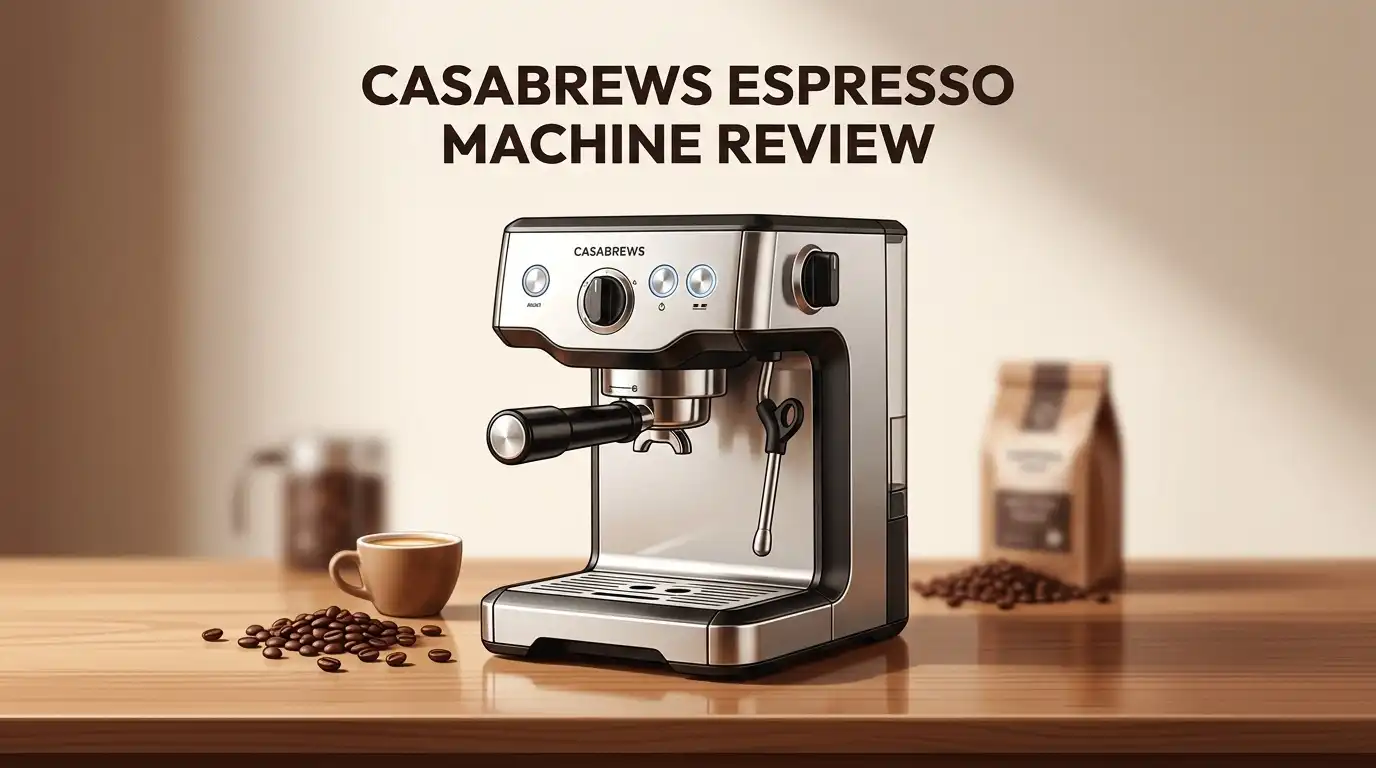
The CM5418 is the machine that built the brand. It measures roughly 12 inches tall, 5.9 inches wide, and 12.3 inches deep. It weighs 8.6 pounds. That footprint fits a dorm desk, an RV counter, or a cramped rental kitchen.
Power sits at 1350 watts. The heating system uses a thermoblock rather than a boiler. Heat up takes under a minute from a cold start. That speed is the single biggest daily convenience. You can go from sleepy to sipping in about two minutes.
The front panel keeps things simple. Four backlit buttons handle power, single shot, double shot, and steam. A large analog pressure gauge sits below them. The gauge does not print exact bar numbers. It does mark an “Espresso Zone,” which is enough to diagnose a grind that runs too fine or too coarse.
The water tank holds 34 ounces and pulls out from the back. The drip tray removes fully, so tall cups fit underneath. A small red float pops up when the tray fills.
Shot volumes are programmable. Hold a button, stop it where you want, and the machine remembers. I recommend doing this on day one, because the factory presets ran long in my testing.
One quirk caught me off guard. The machine has overheat protection after steaming. Espresso will not brew until you open the steam valve for a few seconds to purge heat. Nothing is broken. The manual explains it, but almost nobody reads the manual first.
Casabrews 3700 Essential Espresso Machine Review

Last update on 2026-10-22 / Affiliate links / Images from Amazon Product Advertising API
The 3700 Essential is the cheaper sibling. List price sits near $129, and discounts push it lower. It shares the same 51mm portafilter, the same 20 bar pump rating, and nearly the same dimensions as the CM5418. The water tank is larger at 43.9 ounces. Five colors are available, including green, blue, beige, silver, and black.
On paper it looks like a bargain. In practice it trades away consistency.
The biggest complaint is mess. Without a three way solenoid valve, pressure stays trapped in the puck after extraction. The 3700 Essential suffers from this more than any other Casabrews model I tried. Pulls end with dripping. Pucks come out soupy. One time the portafilter released a wet sneeze of grounds across the drip tray and counter.
You can manage this. Wait ten seconds after the shot ends before you twist the portafilter out. Learn the rhythm of the machine. Still, other machines at the same price simply do not require that ritual.
Shot quality also swings. My first espresso tasted pleasant and looked photogenic. Later shots varied with identical beans, dose, and grind. Side by side with the CM5418, the older model produced more balanced cups every time.
The steam wand remains excellent, which saves the machine. Milk drinks turn out well. If lattes with syrup are your daily order, the 3700 Essential does the job. If you drink straight espresso, skip it.
Top 3 Alternative for Casabrews Espresso Machine


Last update on 2026-10-22 / Affiliate links / Images from Amazon Product Advertising API
Breville Bambino Espresso Machine

Last update on 2026-10-22 / Affiliate links / Images from Amazon Product Advertising API
De’Longhi Stilosa Manual Espresso Machine

Last update on 2026-10-22 / Affiliate links / Images from Amazon Product Advertising API
Gevi 20 Bar Espresso Machine
The Unboxing Experience
The box arrives smaller than expected. Casabrews packs tight. Inside you find the machine wrapped in a cloth style sleeve, with cardboard inserts holding the accessories in a shallow tray on top.
Lift the machine out and the first impression is positive. It feels heavier and colder than the price suggests. The stainless steel front wraps around the sides. The pressure gauge sits behind a clear lens with a chrome ring. It genuinely reads as a more expensive appliance.
Then you reach the accessory tray, and the mood shifts. You get the portafilter handle, two pressurized filter baskets, a plastic scoop that doubles as a tamper, a cleaning pin, and a user manual. That is the whole kit.
The portafilter handle has some weight in it. The baskets feel thin. The scoop tamper is the weak link and you will notice within thirty seconds of holding it.
Setup takes about ten minutes. Wash the tank, the portafilter, and both baskets. Fill the tank. Run two or three blank cycles of water through the group head to flush the lines and warm everything up. Purge the steam wand for a few seconds.
First use sometimes produces no water flow. This is normal air in the pump. Run hot water for roughly twenty seconds and the flow clears. Many one star reviews come from people who skipped this step.
Build Quality and Design in Daily Life
Casabrews made a smart design choice. The narrow profile means the machine hides between a toaster and a kettle without dominating the counter. Under six inches wide is genuinely small for a machine with a steam wand.
The stainless steel panels wipe clean with a damp cloth. Fingerprints show on the darker colors more than on the brushed finish. Buttons click firmly and light up clearly.
The steam knob deserves specific praise. It sits on the right side and carries a silicone grip around its edge. That grip gives real traction when your hands are wet. Cheap metal knobs slip, and slipping means scalded milk.
Now the honest part. The group head is small and the shower screen is basic. The portafilter ears feel slightly loose in the lugs. Filter baskets do not seat snugly, so they fall out into the knock box more often than they should.
Cup clearance measures around four inches with the drip tray installed. Remove the tray and you gain height, but the gap is narrow. A standard wide latte mug will not fit, which frustrated me more than I expected.
Long term durability remains the open question. Casabrews is only a few years old. Community feedback describes these machines as hard to repair and not built for a decade of service. Treat one as a three to five year appliance, not a lifetime purchase.
How Espresso From Casabrews Actually Tastes
Taste is the part that matters. I ran dark, medium, and light roasts through both machines using a burr grinder rather than pre ground coffee.
Dark and medium roasts performed best. A 12 gram dose in the double basket produced a shot in roughly 30 seconds with thick crema on top. The flavor leaned into chocolate, caramel, and a syrupy body. For a machine under $150, that result is impressive.
The limits appear quickly. Shots lacked clarity. Bright fruit notes from a light Ethiopian roast came out flat and slightly sour. That is not really the machine’s fault. It is the pressurized basket’s fault.
Pressurized baskets, also called double wall baskets, force crema through a tiny hole. They fake a good extraction. That design helps beginners who use supermarket coffee, because grind size stops mattering much. It also caps the ceiling on flavor.
Buy a 51mm single wall basket and the CM5418 becomes a noticeably better machine. You will then need a decent grinder and real technique. Shots get harder to dial in and far more rewarding.
Temperature stability is reasonable thanks to PID control, but thermoblock systems still need warming. Pull a blank shot through the portafilter before you brew. Skipping that step makes the first coffee of the day taste dull.
Steam Wand and Milk Frothing Performance
This is where Casabrews beats its price bracket. The wand is a single hole professional style tip on a ball joint that rotates a full 360 degrees. You can position it properly inside a pitcher, which is the whole battle with milk.
Steam pressure is modest compared with a premium dual boiler machine. It is still sufficient. I produced glossy microfoam with whole milk in about 40 seconds using a 12 ounce pitcher. The foam poured smoothly and held a basic heart shape.
Oat milk behaved well too. Barista blends foam best. Skim milk produces stiffer, drier foam, which suits cappuccino.
Technique matters here. Purge the wand before and after steaming. Keep the tip just below the milk surface to introduce air for a few seconds, then submerge it to build a whirlpool. Stop at around 140 degrees Fahrenheit, or when the pitcher becomes too hot to hold comfortably.
The drawback is workflow. You cannot brew and steam at the same time because there is only one thermoblock. Steam first, purge, then brew. Remember the overheat lockout mentioned earlier.
Wipe the wand immediately after every use. Dried milk inside the tip is the number one cause of weak steam on these machines. The included cleaning pin clears the hole in seconds.
Pros and Cons of Casabrews Espresso Machines
Here is the honest balance sheet after weeks of daily use.
Pros
- Excellent price to feature ratio. A pressure gauge, programmable volumes, PID control, and a rotating steam wand rarely appear together under $150.
- Compact footprint that fits tiny kitchens, dorms, offices, and RVs. Under six inches wide is a real advantage.
- Heat up takes less than one minute from cold, thanks to the thermoblock system.
- Genuine stainless steel panels rather than painted plastic. The machine feels solid in the hand.
- The steam wand creates true microfoam, not just bubbly froth. Latte art is possible.
- Simple four button interface. Anyone can learn it in five minutes without watching tutorials.
- Wide color range, including cream, sapphire blue, baby blue, pink, and black.
Cons
- Only pressurized filter baskets in the box. Flavor potential stays capped until you buy a single wall basket separately.
- The plastic scoop tamper is too light, too small, and cracks the puck surface while tamping.
- No three way solenoid valve, so pucks stay wet and the portafilter drips after extraction.
- Filter baskets sit loosely and fall out during knock out.
- Limited cup clearance. Tall travel mugs and wide latte cups will not fit.
- One year warranty and limited repair options. Parts availability is thin compared with De’Longhi or Breville.
- Light roasts taste underwhelming. The machine clearly favors dark roast blends.
What Casabrews Does Not Do Well
Amazon listings will not tell you this, so I will.
Casabrews does not deliver repeatability at a professional level. Dose the same, grind the same, tamp the same, and you can still get two different shots. The CM5418 holds together better than the 3700 Essential, but neither machine offers the rock solid consistency of a machine costing three times more.
Casabrews does not manage puck pressure. The missing solenoid valve means every shot ends with a small mess. You learn to pause before removing the portafilter. That is a habit the machine forces on you, not a feature.
The brand also does not support serious upgrading. There is no bottomless portafilter in the box, no calibrated tamper, and no pressure profiling. Aftermarket 51mm accessories exist, but you must verify fitment carefully because clones vary.
Casabrews does not replace a grinder. Pre ground coffee will always taste stale in a machine like this. Buying a $130 espresso machine and a $20 blade grinder guarantees disappointment.
Finally, Casabrews does not offer long term peace of mind yet. The company launched in 2020. There is no twenty year service history and no network of repair technicians. When a thermoblock fails outside warranty, replacement is usually cheaper than repair.
None of this makes Casabrews a bad buy. It makes Casabrews a specific kind of buy, aimed at beginners who want café style drinks cheaply and quickly.
Cleaning, Descaling, and Maintenance
Maintenance is straightforward, which helps the ownership experience.
Daily care takes two minutes. Rinse the portafilter and basket after each use. Wipe the shower screen with a damp cloth. Purge and wipe the steam wand. Empty the drip tray.
Weekly care adds a little more. Pull the water tank out, wash it with warm soapy water, and refill with fresh filtered water. Stagnant water causes off flavors faster than most people realize. The larger tank on the 3700 Essential actually makes this worse, because water sits longer.
Descaling depends on your water hardness. The CM5418 flashes its lights when a descale is due. Use a citric acid solution or a commercial descaler, run it through the group head and the steam wand, then flush two full tanks of clean water afterward.
Filtered water dramatically extends the life of a thermoblock machine. Scale buildup is the leading cause of weak pressure and slow brewing in budget espresso makers.
If flow slows down, check three things in order. First, grind size, since too fine a grind chokes the machine. Second, dose, since an overfilled basket blocks flow. Third, scale, which calls for descaling. That sequence solves the majority of reported problems.
Keep the cleaning pin somewhere safe. It clears both the steam tip and the basket holes.
Upgrades That Make Casabrews Much Better
Three small purchases transform these machines. Total cost is under $60.
A 51mm single wall filter basket is the biggest single improvement. It removes the fake crema mechanism and lets real extraction happen. Shots gain clarity, sweetness, and definition. Be aware that you now need consistent grinding and proper tamping, so expect a learning curve.
A solid metal 51mm tamper fixes the worst included accessory. A flat base that matches the basket diameter gives an even puck in one push. No more cracked, uneven coffee beds. This alone improves consistency noticeably.
A burr grinder matters more than the machine itself. A hand grinder in the $60 to $100 range beats any electric blade grinder. Fresh grounds change espresso completely. If your budget forces a choice, buy the cheaper machine and the better grinder.
Two optional extras help as well. A small digital scale lets you weigh dose and yield, which turns guessing into measuring. Aim for roughly a 1 to 2 ratio, so 18 grams of coffee yielding 36 grams of espresso.
A bottomless portafilter is also available for the CM5418. It shows extraction flaws instantly through channeling. Useful for learning, though messy while you practice.
Who Should Buy a Casabrews and Who Should Skip It
Buy a Casabrews if you drink milk based coffee. Lattes, cappuccinos, flat whites, and iced vanilla drinks all come out well. The steam wand carries the machine, and slight variation in the espresso hides under milk and syrup.
Buy one if counter space is tight. Very few machines with real steam wands fit in under six inches of width.
Buy one if you are testing the waters. Spending $120 to learn whether home espresso suits your routine is smarter than spending $700 on a hobby you might abandon.
Skip Casabrews if you drink straight espresso and care about flavor clarity. Inconsistency will frustrate you within a month.
Skip it if you plan to go deep into coffee as a hobby. You will want a three way solenoid valve, a 58mm group head, and better temperature stability. Upgrading twice costs more than buying properly once.
Skip it if you want a machine that lasts fifteen years. Established brands still win on parts, service, and durability.
Between the two models, the CM5418 is the clear pick. Ten dollars buys meaningfully better consistency and less mess.
Final Verdict on Casabrews in 2026
Casabrews earned its popularity honestly. The CM5418 delivers a stainless steel body, a usable pressure gauge, programmable shot volumes, PID temperature control, and a steam wand that genuinely outperforms its price. Espresso tastes good with dark roasts. Milk foam looks and feels café quality.
The compromises are equally real. Pressurized only baskets limit flavor. The plastic tamper belongs in a drawer you never open. The missing solenoid valve leaves wet pucks and drips. The 3700 Essential amplifies all of these issues for a $10 saving that is not worth taking.
My verdict: the Casabrews CM5418 is a strong beginner espresso machine and a weak enthusiast machine. Know which one you are before you order.
Score: 4 out of 5 for value, 3 out of 5 for espresso performance, 4.5 out of 5 for milk frothing.
Add a single wall basket, a metal tamper, and a burr grinder. Do that and this $130 machine punches surprisingly close to models costing twice as much. Skip those upgrades and you will get decent coffee that never quite excites you.
For most people starting out at home, that trade is fair.
Frequently Asked Questions
Is Casabrews a good espresso machine brand?
Casabrews is a solid budget brand founded in 2020. The machines offer strong features for the money, including stainless steel bodies, pressure gauges, and professional style steam wands. Build quality sits above most rivals under $150. Long term durability and repair support remain unproven compared with De’Longhi and Breville.
Which Casabrews model is best in 2026?
The CM5418 remains the best pick for most buyers. It costs slightly more than the 3700 Essential and delivers better shot consistency with less post brew dripping. The 5700 Pro suits people who want a built in grinder, though its 15 grind settings limit fine adjustment.
Does 20 bar pressure make better espresso?
No. Espresso extracts best at around 9 bars. The 20 bar figure describes the pump’s maximum rating, not brewing pressure. Marketing uses the bigger number because it sounds impressive. Internal valves reduce actual pressure at the puck, so treat high bar claims as noise rather than quality.
Can you use pre ground coffee in a Casabrews?
Yes, and the pressurized baskets are designed for it. Pre ground espresso will produce drinkable coffee with decent crema. Flavor stays flat because ground coffee loses aroma within days. A burr grinder improves results more than any other change you can make.
Why is my Casabrews not brewing coffee?
Three causes cover most cases. Air in the pump on first use requires running hot water for twenty seconds. A grind that is too fine chokes flow, so go coarser. Scale buildup blocks the thermoblock and calls for descaling. Also check that the tank is seated fully.
Does Casabrews come with a warranty?
Casabrews includes a one year warranty on its espresso machines. Register the product and keep your receipt. Support runs through email, and response times vary. Parts availability is limited, so out of warranty repairs often cost more than a replacement machine.
Can you make latte art with a Casabrews?
Yes. The rotating single hole steam wand creates proper microfoam rather than dry bubbly froth. Whole milk and barista oat milk both work well. Hearts and simple tulips are achievable with practice. Steam pressure is lower than premium machines, so pouring takes a little more patience.

Hi, I’m Emma Lee — the coffee-obsessed creator behind Morning Drip Vault. I spend my days testing coffee machines, exploring brewing techniques, and reviewing the latest coffee gear. My mission is simple: helping you find the perfect machine to brew your best cup, every single morning.